

Technology
News

11 Aug 2020
City University of Hong Kong (CityUHK)
In the era of smart cities and amid the global outbreak of Covid-19, connecting through the internet is getting more important than ever. Researchers have been working day and night on advancing the optical data transmission network to address the demand for faster transmission speed. An international research team has developed a new technology that is equipped with a special chip made by a scientist from City University of Hong Kong (CityU). The team broke the spectral efficiency world record for optical data transmission with a single integrated photonic chip. This allows the transmission speed as fast as downloading 1,000 high-definition movies in less than a second!
10 Aug 2020
Hiroshima University
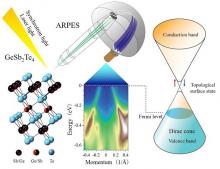
Researchers have found electrons that behave as if they have no mass, called Dirac electrons, in a compound used in rewritable discs, such as CDs and DVDs. The discovery of “massless” electrons in this phase-change material could lead to faster electronic devices.
05 Aug 2020
Asia Research News Partnerships
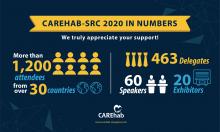
Community rehabilitation; psychological impact of caregiving emerges as top interests
04 Aug 2020
The Chinese University of Hong Kong (CUHK)
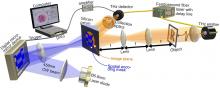
A research team from The Chinese University of Hong Kong (CUHK) and the University of Warwick has reached a crucial milestone towards developing single-pixel terahertz radiation (T-ray) imaging technology. Their single-pixel T-ray camera reached 100 times faster acquisition than the previous state-of-the-art without adding any significant costs to the entire system or sacrificing the sub-picosecond temporal resolution needed for the most sought-after applications, potentially opening the opportunity for them to be used in non-invasive security and medical screening. The breakthrough has been published in the journal Nature Communications.
04 Aug 2020
The Chinese University of Hong Kong (CUHK)
The ever-increasing growth in data traffic requires more powerful transmission networks. To respond to such demand, a group of researchers led by Prof. Xiankai Sun and Prof. Hon Ki Tsang in the Department of Electronic Engineering, The Chinese University of Hong Kong (CUHK) has recently revealed a way to use light to convey large rates of data in advanced optical chips. Their findings and demonstrations shed new light on increasing the data capacity with low insertion loss and crosstalk. These research results have been recently published in the prestigious scientific journal Nature Communications.
30 Jul 2020
Tohoku University
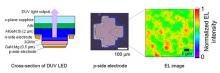
Researchers have solved a major problem for optical wireless communications - the process by which light carries information between cell phones and other devices. Light-emitting diodes (LEDs) pulse their light in a coded message that recipient devices can understand.
27 Jul 2020
Hokkaido University
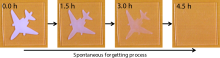
Hokkaido University researchers have found a soft and wet material that can memorize, retrieve, and forget information, much like the human brain. They report their findings in the journal Proceedings of the National Academy of Sciences (PNAS).
27 Jul 2020
Asia Research News Partnerships
Jointly organised by the Agency for Science, Technology and Research (A*STAR) and Science Centre Singapore

16 Jul 2020
UN Sustainable Development Solutions Network - Youth Philippines
IBM teams up with UN SDSN Youth Philippines to deliver a highly trained artificial intelligence chatbot on COVID-19.

16 Jul 2020
UN Sustainable Development Solutions Network - Youth Philippines
Filipino youth organization, UN SDSN Youth – Philippines, is paving the way for accessible information on the current pandemic.
13 Jul 2020
Daegu Gyeongbuk Institute of Science and Technology (DGIST)
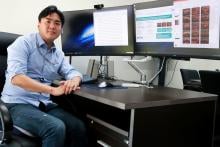
Acute kidney injuries can sometimes trigger the deterioration of small blood vessels and capillaries, leading to chronic kidney disease. But, this process is not completely understood. Now, for the first time, researchers from Daegu Gyeongbuk Institute of Science and Technology, Korea, in collaboration with teams from the University of Pittsburgh and University of Pittsburgh Medical Center, USA, have successfully used ultrasound super-resolution (USR) imaging to observe this process in live mice, revealing the promise of USR as a powerful diagnostic and research tool, and enhancing understanding of the disease.

09 Jul 2020
Asia Research News Partnerships
15 organizations recognized for their exemplary performance and valuable contributions in shaping new trends across Asia-Pacific

30 Jun 2020
Digital edition of CAREhab – Singapore Rehabilitation Conference 2020 postpones to 17 – 18 July 2020 in light of Singapore General Elections
26 Jun 2020
Tohoku University
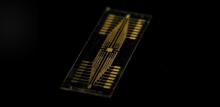
"Neuromorphic" refers to mimicking the behavior of brain neural cells. When one speaks of neuromorphic computers, they are talking about making computers think and process more like human brains-operating at high-speed with low energy consumption.
24 Jun 2020
Ulsan National Institute of Science and Technology (UNIST)
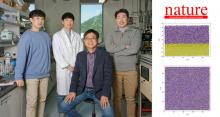
A recent study, affiliated with South Korea's Ulsan National Institute of Science and Technology (UNIST) has unveiled a novel material that could enable major leaps in the miniaturization of electronic devices.

18 Jun 2020
Asia Research News Partnerships
* CAREhab 2020 in conjunction with 6th Singapore Rehabilitation Conference to
take place virtually via tech-enabled CAREhab GO platform live on 10-11 July
* Delegates to have full access to digital library of video content and exhibition
showcase in their own time from 10 July 2020 to February 2021, meeting
convenient learning needs
17 Jun 2020
Tohoku University
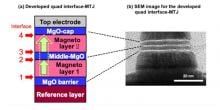
Professor Tetsuo Endoh, leading a group of researchers at Tohoku University, has announced the development of an MTJ (Magnetic Tunnel Junction) with 10 ns high-speed write operation, sufficient endurance (>10<sup>11</sup>), and with highly reliable data retention over 10 years at 1X nm size. Realizing a 1X nm STT-MRAM (Spin Transfer Torque-Magnetoresistive Random Access Memory) and NV(Non-Volatile)-Logic has wide application to a variety of fields.
12 Jun 2020
International Institute for Integrative Sleep Medicine (WPI-IIIS), University of Tsukuba
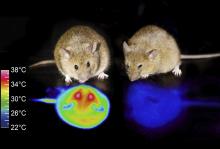
Researchers at the University of Tsukuba and RIKEN in Japan spark a hibernation-like state in mice—a species that does not naturally hibernate

11 Jun 2020
Asia Research News Partnerships
With governments, including Singapore’s, discouraging large-scale events such as conferences, MIT Technology Review and Koelnmesse are shifting their EmTech Asia event online.
10 Jun 2020
Daegu Gyeongbuk Institute of Science and Technology (DGIST)
Metal-organic frameworks (MOFs) are sponge-like organic-inorganic hybrid materials and have a variety of uses due to their ultra-high “porosity,” or the ratio of pores or air pockets to the solid material. Through a technique called “post-synthetic modification,” Professor Jinhee Park and her research team were able to enhance and modify the function of these materials for specific purposes.
05 Jun 2020
Hokkaido University
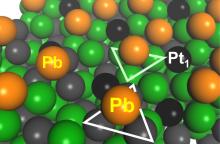
A group of Japanese scientists has developed an ultrastable, selective catalyst for dehydrogenate propane – an essential process to produce the key petrochemical substance of propylene – without deactivation, even at temperatures of more than 600°C.

04 Jun 2020
Asia Research News Partnerships
The MarTech Summit takes its first steps out into the virtual world! Taking place on the 16th and 17th of June, the Virtual MarTech Summit will gather over 1000 attendees from a range of backgrounds, the only common denominator is the love of MarTech.
03 Jun 2020
Institute for Integrated Cell-Material Sciences (iCeMS) at Kyoto University
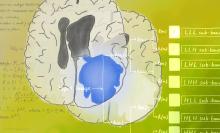
A highly accurate machine learning tool could help doctors tailor individualized treatments for people with glioma brain tumours.
29 May 2020
Ehime University
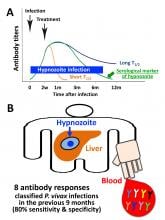
An international collaborative team from PROS Ehime University and CellFee Science, Japan; the Walter and Eliza Hall Institute, Australia; Pasteur Institute, France; and Foundation for Innovative New Diagnostics, Switzerland developed a new diagnostic blood test which detects recent exposure to ‘vivax’ malaria. The new test can also identify people who may harbor dormant liver-stage malaria parasites, which can cause illness. This new diagnostic approach has the potential to enhance malaria surveillance and accelerate elimination.

27 May 2020
Springer Nature
Nature Index 2020 South Korea, published in the May 28 issue of Nature, investigates South Korea’s strategy to become a “first mover” by investing in basic research grants and original discoveries.
27 May 2020
Nagoya University
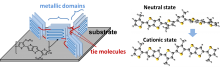
Scientists are unraveling the properties of electricity-conducting plastics so they can be used in future energy-harvesting devices.
22 May 2020
Hokkaido University
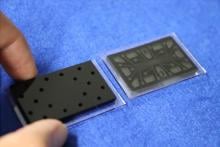
Researchers have succeeded in detecting anti-avian influenza virus antibody in blood serum within 20 minutes, using a portable analyzer they have developed to conduct rapid on-site bio tests. If a suitable reagent is developed, this technology could be used to detect antibodies against SARS-CoV-2, the causative virus of COVID-19.
21 May 2020
Hokkaido University
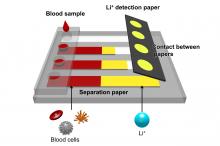
A group of Hokkaido University researchers has developed a paper-based device that can easily and cheaply measure lithium ion concentration in blood, which could greatly help bipolar disorder patients.
18 May 2020
Daegu Gyeongbuk Institute of Science and Technology (DGIST)
Researchers from Daegu Gyeongbuk Institute of Science and Technology develop a simple approach for controlling the otherwise random formation of cracks in flexible thin-film conductors, greatly increasing the durability of flexible electrodes and transistors against bending and folding.

Events

03 Oct 2005
The APCC 2005 provides a technical forum for researchers and engineers from the Asia-Pacific region and other parts of the world to interact and disseminate information on the latest developments in advanced communication technologies and services
04 Dec 2005
The 17th Asia Pacific Microwave Conference (APMC 2005) will be held in the Suzhou International Conference Hall, Suzhou, China, in Dec. 4-7, 2005.
05 Sep 2005
This conference will bridge computational sciences and immunology with the theme: "Nurturing Immune-Based Computing for Wealth Creation and Technology Advancement"
22 Aug 2005
This International Symposium emphasises the usage of GIS as a tool for conducting spatial analyses and for aquatic sciences.
09 Jun 2005
The "2005 Euro-Malaysia ICT Cooperation Event" (or "EuroMalaysia2005") is an event organised at the initiative of the European Commission (DG Information Society) and of MIMOS Berhad.
11 Dec 2005
Field-programmable devices combine the flexibility of software with the performance of hardware and have become an important topic of research for universities, government, and industry worldwide.
20 Jul 2005
CIVR aims to provide an international forum for the discussion of research challenges and the exchange of ideas among researchers and practitioners in image/video retrieval technologies.
31 Oct 2005
The development of optimization techniques is pivotal in pushing technology frontiers in the eBusiness era. The goal of SJOM 2005 meeting is to bring together optimization practitioners and researchers in the areas of optimization theories and practices.
Giants in history

Turkish astrophysicist Dilhan Eryurt (29 November 1926 – 13 September 2012) conducted research on how the sun affects environmental conditions on the moon.
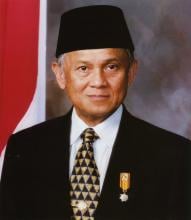
Bacharuddin Jusuf Habibie (25 June 1936 – 11 September 2019) was an Indonesian engineer who was President of Indonesia from 1998 to 1999.

Physicist Narinder Singh Kapany (31 October 1926 – 4 December 2020) pioneered the use of optical fibres to transmit images, and founded several optical technology companies. Born in Punjab, India, he worked at a local optical instruments factory before moving to London for PhD studies at Imperial College. There, he devised a flexible fibrescope to convey images along bundles of glass fibres.

Sir Mokshagundam Srinivasa Shastry Vishveshwarayya (15 September 1860 – 14 April 1962) is widely regarded as India’s most outstanding engineer. In a career that spanned almost his entire life, Vishveshwarayya played a pivotal role in several engineering projects, including designing the Krishnarajasagara dam that is still the source of irrigation and drinking water for parts of Karnataka today.
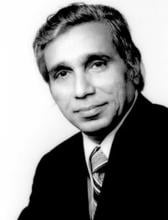
Fazlur Rahman Khan (3 April 1929 – 27 March 1982) was a Bangladeshi-American structural engineer and architect who invented the tube principle, which formed the basis for modern skyscraper design.

A Japanese surgeon, Tetsuzo Akutsu (20 August 1922 – 9 August 2007) built the first artificial heart capable of keeping an animal alive.

Lin Lanying (7 February 1918 – 4 March 2003) was a Chinese material engineer remembered for her contributions to the field of semiconductor and aerospace materials. Lanying was born into a family who did not believe in educating girls and she was not allowed to go to school.

Gregorio Y. Zara (8 March 1902 – 15 October 1978) was a Filipino engineer and physicist best remembered for inventing the first two-way video telephone. Zara’s video telephone invention enabled the caller and recipient to see each other while conversing, laying the foundation for video-conferencing