

Technology
News

12 Jan 2020
Korea Advanced Institute of Science and Technology (KAIST)
The design boosts the image appeal of LCD-generated holographic scenes while retaining the popular flat-panel format.

10 Jan 2020
Korea Advanced Institute of Science and Technology (KAIST)
An implantable device has the potential to revolutionize how neuroscientists study the brain and treat diseases.
09 Jan 2020
Daegu Gyeongbuk Institute of Science and Technology (DGIST)
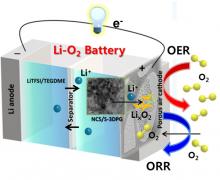
A low-cost catalyst on a sulphur-doped, porous, carbon nanostructure improves the performance of lithium batteries that run on air.
07 Jan 2020
Daegu Gyeongbuk Institute of Science and Technology (DGIST)
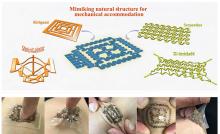
Dramatically improved sensor stability with complex structural design that mimics snake motions, spider webs, and paper craft. Expected to be applied in various fields such as bio-diagnosis, smart skin, clothes, and livestock diagnosis.

06 Jan 2020
Asia Research News Partnerships
In view of the Covid-19 situation in Singapore, CAREhab 2020 has been postponed to 10-11 July. Head on to the CAREhab Singapore website for more information.
31 Dec 2019
Ulsan National Institute of Science and Technology (UNIST)
A research team, affiliated with South Korea's Ulsan National Institute of Science and Technology (UNIST) has unveiled a novel algorithm that identifies optimal pairs for composing metal-organic frameworks (MOFs).
20 Dec 2019
The Chinese University of Hong Kong (CUHK)
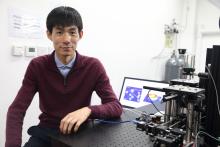
Professor Renjie Zhou, Assistant Professor, Department of Biomedical Engineering, The Chinese University of Hong Kong (CUHK), has been awarded the Croucher Innovation Award 2019 in the amount of HK$5 million in research expenses by the Croucher Foundation for his outstanding research achievements in optical diffraction tomography and in support of his future research works.

20 Dec 2019
The Chinese University of Hong Kong (CUHK)
Four top research academics from The Chinese University of Hong Kong (CUHK) were presented with prestigious awards from the Croucher Foundation. Professor Jianfang Wang, Professor, Department of Physics received the Croucher Senior Research Fellowship 2020. Two scholars from the Department of Medicine and Therapeutics of the Faculty of Medicine, Professor Ronald Ching Wan Ma, Professor and Head of the Division of Endocrinology and Diabetes, and Professor Siew Chien Ng, Professor, Division of Gastroenterology and Hepatology and Associate Director of the Centre for Gut Microbiota Research were awarded the Croucher Senior Medical Research Fellowships 2020. Professor Renjie Zhou, Assistant Professor, Department of Biomedical Engineering was awarded the Croucher Innovation Award 2019.
20 Dec 2019
The Chinese University of Hong Kong (CUHK)
Nine professors of The Chinese University of Hong Kong (CUHK) have earned the honour of being named in the list of “Highly Cited Researchers 2019” as among the world’s top researchers who have demonstrated significant and broad influence reflected in their publication of multiple papers, highly cited by fellow academics.
20 Dec 2019
The Chinese University of Hong Kong (CUHK)
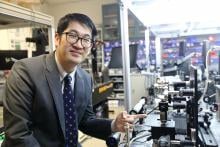
Prof. Zhou Bolei, Assistant Professor from the Department of Information Engineering at The Chinese University of Hong Kong (CUHK), has recently been named as one of the 20 honourees of the regional MIT Technology Review “Innovators under 35”.
20 Dec 2019
The Chinese University of Hong Kong (CUHK)
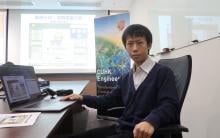
Ultraprecise 3D printing technology is a key enabler for manufacturing precision biomedical and photonic devices. However, the existing printing technology is limited by its low efficiency and high cost. Professor Shih-Chi Chen and his team from the Department of Mechanical and Automation Engineering, The Chinese University of Hong Kong (CUHK), collaborated with the Lawrence Livermore National Laboratory to develop the “Femtosecond Projection Two-photon Lithography (FP-TPL)” printing technology.
20 Dec 2019
The Chinese University of Hong Kong (CUHK)
Malicious third-party advertisers or hackers expose web users to a security threat by injecting malicious JavaScript code to intercept user clicks and trick them into visiting untrusted web content. To investigate the problem of click interception, the research team led by Professor Wei Meng of the Department of Computer Science and Engineering, Faculty of Engineering, The Chinese University of Hong Kong (CUHK) developed a browser-based analysis framework – Observer, which is able to detect three different techniques for intercepting web user clicks.

13 Dec 2019
Ulsan National Institute of Science and Technology (UNIST)
Researchers in Korea have found an effective and inexpensive strategy to transform solar cells from opaque to transparent.
11 Dec 2019
Asia Research News Partnerships
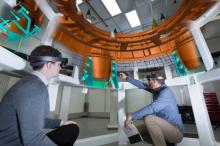
Join Shelley Peterson, Emerging Technologies Lead and Principal Investigator for Augmented Reality at Lockheed Martin, as she speaks at EmTech Asia this February.

10 Dec 2019
Springer Nature
Applications are now open for The Spinoff Prize – a new award for visionary, science- based companies that are on their way to making a commercial impact; winning Spinoff to receive a prize of €30,000; applications open until Feb 28, 2020

10 Dec 2019
Springer Nature
Users of Nature.com to benefit from better off campus user experience
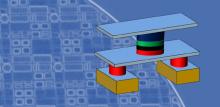
09 Dec 2019
Tohoku University
Researchers have announced the demonstration of high-speed spin-orbit-torque magnetoresistive random access memory cell compatible with 300 mm Si CMOS technology.
09 Dec 2019
Tohoku University
Researchers at Tohoku University have discovered a way to detect carbon impurity in nitride semiconductors using light.
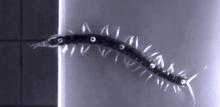
09 Dec 2019
Tohoku University
Centipedes not only walk on land but also swim in water.

04 Dec 2019
Asia Research News Partnerships
MIT Technology Review’s ‘Innovators Under 35’ list for the Asia Pacific region honours 10 women and 10 men. In association with EmTech Asia 2020, the list celebrates 20 researchers, inventors, and entrepreneurs who are changing the world.
03 Dec 2019
Enlit is the new brand for the worldwide series of POWERGEN and Utility Week events
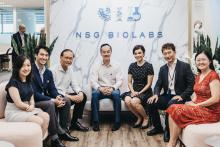
27 Nov 2019
Asia Research News
Singapore’s first and largest co-working laboratory and office space is fully equipped and designed to help biotech start-ups commercialise breakthrough innovations
27 Nov 2019
Asia Research News Partnerships
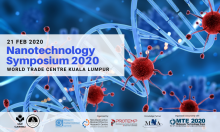
The Nanotechnology Symposium will be held on 21st February 2020 at World Trade Centre Kuala Lumpur, held in conjunction with the 19th edition of Malaysia Technology Expo.

25 Nov 2019
City University of Hong Kong (CityUHK)
Sensing a hug from your friend through a video call with him/her may become a reality soon. A joint-research team consisted of scientists and engineers from City University of Hong Kong (CityU) and Northwestern University in the United States has developed a skin-integrated virtual reality (VR) system, which can be controlled and powered wirelessly. The innovation has great application potential in communications, prosthetic control and rehabilitation, as well as gaming and entertainment.
22 Nov 2019
Asia Research News
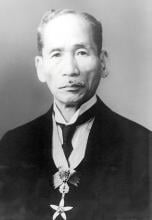
Umetaro Suzuki (7 April 1874 – 20 September 1943) was a Japanese scientist best remembered for his research on beriberi, a disease caused by vitamin B1 deficiency, characterized by limb stiffness, paralysis and pain.
22 Nov 2019
Asia Research News
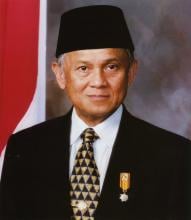
Bacharuddin Jusuf Habibie (25 June 1936 – 11 September 2019) was an Indonesian engineer who was President of Indonesia from 1998 to 1999.
22 Nov 2019
Asia Research News
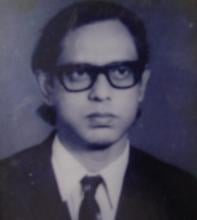
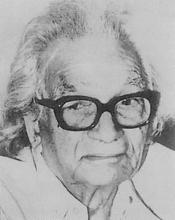
Abdus Suttar Khan (c. 1941 – 31 January 2008) was a Bangladeshi engineer who spent a significant part of his career conducting aerospace research with NASA, United Technology and Alstom.
22 Nov 2019
Asia Research News
Salimuzzaman Siddiqui (19 October 1897 – 14 April 1994) was an artist and chemist from Pakistan whose research focused on natural products from plants.
22 Nov 2019
Asia Research News Partnerships
Forward Leading is to host AI & Big Data Leaders Summit in Hong Kong on December 5 & 6, at the Hyatt Regency Tsim Sha Tsui, bringing together over 150 data and tech leaders from a wide range of industries.

22 Nov 2019
Asia Research News Partnerships
PwC, Rabobank and Temasek launch The Asia Food Challenge Report, highlighting $800 billion investment opportunity in Asia’s Agri-Food sector over the next decade. Report estimates market to grow 7% per year; Asia to double its spending on food to over US$8 trillion by 2030
Giants in history

Turkish astrophysicist Dilhan Eryurt (29 November 1926 – 13 September 2012) conducted research on how the sun affects environmental conditions on the moon.
Bacharuddin Jusuf Habibie (25 June 1936 – 11 September 2019) was an Indonesian engineer who was President of Indonesia from 1998 to 1999.

Physicist Narinder Singh Kapany (31 October 1926 – 4 December 2020) pioneered the use of optical fibres to transmit images, and founded several optical technology companies. Born in Punjab, India, he worked at a local optical instruments factory before moving to London for PhD studies at Imperial College. There, he devised a flexible fibrescope to convey images along bundles of glass fibres.
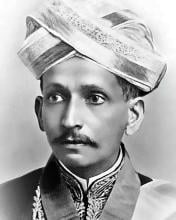
Sir Mokshagundam Srinivasa Shastry Vishveshwarayya (15 September 1860 – 14 April 1962) is widely regarded as India’s most outstanding engineer. In a career that spanned almost his entire life, Vishveshwarayya played a pivotal role in several engineering projects, including designing the Krishnarajasagara dam that is still the source of irrigation and drinking water for parts of Karnataka today.
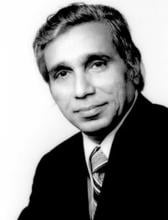
Fazlur Rahman Khan (3 April 1929 – 27 March 1982) was a Bangladeshi-American structural engineer and architect who invented the tube principle, which formed the basis for modern skyscraper design.
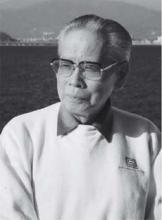
A Japanese surgeon, Tetsuzo Akutsu (20 August 1922 – 9 August 2007) built the first artificial heart capable of keeping an animal alive.

Lin Lanying (7 February 1918 – 4 March 2003) was a Chinese material engineer remembered for her contributions to the field of semiconductor and aerospace materials. Lanying was born into a family who did not believe in educating girls and she was not allowed to go to school.

Gregorio Y. Zara (8 March 1902 – 15 October 1978) was a Filipino engineer and physicist best remembered for inventing the first two-way video telephone. Zara’s video telephone invention enabled the caller and recipient to see each other while conversing, laying the foundation for video-conferencing