
Technology
News
27 Aug 2019
Ulsan National Institute of Science and Technology (UNIST)
Two outstanding scholars, affiliated with UNIST have distinguished themselves with inclusion in the ‘Next Generation of Energy Scientists,’ selected by S. Korea’s most prominent research organization.
27 Aug 2019
Ulsan National Institute of Science and Technology (UNIST)
A recent study, affiliated with South Korea's Ulsan National Institute of Science and Technology (UNIST) gives explanation for how to enlarge 2D materials as single crystals.
27 Aug 2019
Ulsan National Institute of Science and Technology (UNIST)
A recent study, affiliated with South Korea's Ulsan National Institute of Science and Technology (UNIST) has reported a highly flexible Metal-Organic Framework (MOF) with the NPR property.
27 Aug 2019
Ulsan National Institute of Science and Technology (UNIST)
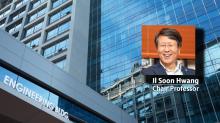
Chair Professor Il Soon Hwang, who joined the School of Mechanical Aerospace and Nuclear Engineering at South Korea's Ulsan National Institute of Science and Technology (UNIST), has been selected to lead the 'Nuclear Convergence Technology Development' project by the Ministry of Science and ICT (MSIT) and National Research Foundation (NRF).
27 Aug 2019
Ulsan National Institute of Science and Technology (UNIST)
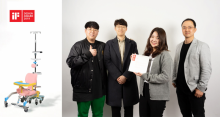
A design team, affiliated with South Korea's Ulsan National Institute of Science and Technology (UNIST) has come up with a brilliant child-friendly design idea to help children have fun during their hospital stays.
27 Aug 2019
Ulsan National Institute of Science and Technology (UNIST)
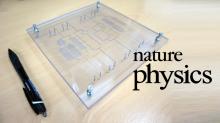
A recent study, affiliated with South Korea's Ulsan National Institute of Science and Technology (UNIST) has successfully modeled network channels similar to our blood capillaries in the simplest way containing one or two loops.
27 Aug 2019
Ulsan National Institute of Science and Technology (UNIST)
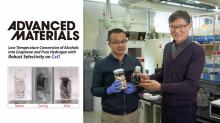
A recent study, affiliated with South Korea's Ulsan National Institute of Science and Technology (UNIST) has unveiled a new way to turn discarded eggshells into hydrogen, an innovative and alternative energy for the future.
27 Aug 2019
Ulsan National Institute of Science and Technology (UNIST)
A recent study, affiliated with South Korea's Ulsan National Institute of Science and Technology (UNIST) has presented noble catalysts for water electrolysis, capable of generating hydrogen and oxygen at the same time.
27 Aug 2019
Ulsan National Institute of Science and Technology (UNIST)
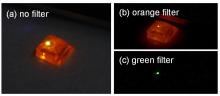
A recent study, affiliated with South Korea's Ulsan National Institute of Science and Technology (UNIST) has demonstrated new solvent-free, single lithium-ion conducting COF.
27 Aug 2019
Tohoku University
Japanese scientists have found a new way to successfully detect the efficiency of crystal semiconductors. For the first time ever, the team used a specific kind of photoluminescence spectroscopy, a way to detect light, to characterize the semiconductors. The emitted light energy was used as an indicator of the crystal's quality. This method potentially culminates in more efficient light-emitting diodes (LEDs) and solar cells. Additionally, it could usher in several other advances in electronics.
26 Aug 2019
Ulsan National Institute of Science and Technology (UNIST)
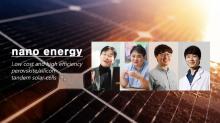
A recent study, affiliated with South Korea's Ulsan National Institute of Science and Technology (UNIST) has challenged themselves with developing tandem solar cells for the first time, thus received much attention for achieving 21.19% efficiency.
26 Aug 2019
Ulsan National Institute of Science and Technology (UNIST)
A recent study, affiliated with South Korea's Ulsan National Institute of Science and Technology (UNIST) has presented a novel approach to identify cancer suppressing microRNA (miRNA) targets and relevant cellular signaling pathways through large-scale gene-expression data analysis.

26 Aug 2019
Ulsan National Institute of Science and Technology (UNIST)
An international team of researchers, affiliated with UNIST has paved the way for the development of next-generation batteries, targeting high-performance electric vehicles (EVs).
26 Aug 2019
Ulsan National Institute of Science and Technology (UNIST)
A recent study, affiliated with South Korea's Ulsan National Institute of Science and Technology (UNIST) has unveiled the dynamics of the bloch point in an asymmetric permalloy disk.
26 Aug 2019
Ulsan National Institute of Science and Technology (UNIST)
A recent study, affiliated with South Korea's Ulsan National Institute of Science and Technology (UNIST) and Korea Research Institute of Standards and Science (KRISS), has succeeded in fabricating highly alligned SnSe thin films through a low-cost and scalable solution process.
26 Aug 2019
Ulsan National Institute of Science and Technology (UNIST)
A joint research team, affiliated South Korea's Ulsan National Institute of Science and Technology (UNIST) has developed a high-performance metal electrode (carbon fiber-metal composite) through a process of penetrating liquid metal into fine gaps of carbon fiber.
26 Aug 2019
Ulsan National Institute of Science and Technology (UNIST)
A recent study, affiliated with South Korea's Ulsan National Institute of Science and Technology (UNIST) has laid a solid foundation for further study of dispersive interaction by verifiying a new mechanism for matter-wave diffraction.

26 Aug 2019
Ulsan National Institute of Science and Technology (UNIST)
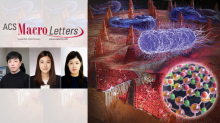
A recent study, affiliated with South Korea's Ulsan National Institute of Science and Technology (UNIST) has introduced a pressure-free approach for creating synthetic graphite with well-oriented crystallites.
26 Aug 2019
Ulsan National Institute of Science and Technology (UNIST)
A recent study, affiliated with South Korea's Ulsan National Institute of Science and Technology (UNIST) has gained sufficient attention among researchers for introducing a powerful antifouling material, inspired from marine plants.
26 Aug 2019
Ulsan National Institute of Science and Technology (UNIST)
A recent study, affiliated with South Korea's Ulsan National Institute of Science and Technology (UNIST) has introduced a novel technology, capable of fabricating highly ordered arrays of graphene quantum dot (GQD). This research has gained much attention from academia since it was introduced in the February 2019 issue of Nature Nanotechnology.
26 Aug 2019
Ulsan National Institute of Science and Technology (UNIST)
A recent study, affiliated with South Korea's Ulsan National Institute of Science and Technology (UNIST) has presented a new perovskite light-emitting diodes (PeLEDs) with high flexibility.
26 Aug 2019
Ulsan National Institute of Science and Technology (UNIST)
A recent study, affiliated with South Korea's Ulsan National Institute of Science and Technology (UNIST) has shed new light on the mysterious origin of such ultra-high-energy cosmic rays (UHECRs) that has puzzled astrophysicists for decades.
23 Aug 2019
Tohoku University
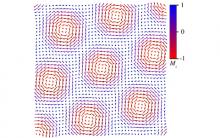
Researchers at Tohoku University show deformation of skyrmion lattice under steady electric-current flow, and is related to possible friction at edges.
09 Aug 2019
Daegu Gyeongbuk Institute of Science and Technology (DGIST)
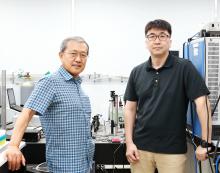
DGIST Research Fellow Jae Young Kim and Chair-professor Dae Won Moon’s team developed a mass spectrometric technology using graphene substrate and continuous wave laser without complex sample preparation. Expected to be used for precise medical diagnosis and surgery with easy high-resolution analysis image processing.
07 Aug 2019
Tohoku University
Researchers at the Center for Innovative Integrated Electronic Systems (CIES) at Tohoku University have successfully observed microscopic chemical bonding states in ultrathin MgO - an important determinant in STT-MRAM performance. The observation was carried out via an angle-resolved hard X-ray photoelectron spectroscopy (AR-HAXPES) in collaboration with Japan Synchrotron Radiation Research Institute (JASRI) at its Spring-8 Synchrotron Radiation facility.

06 Aug 2019
Daegu Gyeongbuk Institute of Science and Technology (DGIST)
Senior Researcher Changsoon Choi's team at DGIST and Dr. Sungwoo Chun at SKKU developed a new tactile sensor mimicking human skin. Can recognize more sensitive tactile than the existing sensors... Expected to contribute greatly to the development of artificial skin.
29 Jul 2019
Daegu Gyeongbuk Institute of Science and Technology (DGIST)
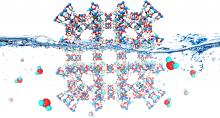
A molecule-trapping material that normally degrades in water remains stable after two years of humidity exposure when treated with a common skin bleach.

29 Jul 2019
Tohoku University
A team of researchers from Tohoku University, J-PARC, and Tokyo Institute of Technology conducted an in-depth study of magnetic quasiparticles called "triplons." The team conducted the study with a low-dimensional quantum magnet, Ba2CuSi2O6Cl2, using neutron inelastic scattering by AMATERAS at J-PARC.
29 Jul 2019
Springer Nature
Major institutions in the US and China dominate the top ranks for output of quality research articles, but a new normalized Nature Index ranking reveals that some smaller institutes are punching well above their weight.
29 Jul 2019
Tohoku University
Applying large enough magnetic fields usually results in the disruption of superconducting states in materials, even at drastically low temperatures.
Giants in history

Turkish astrophysicist Dilhan Eryurt (29 November 1926 – 13 September 2012) conducted research on how the sun affects environmental conditions on the moon.
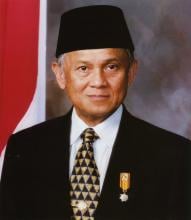
Bacharuddin Jusuf Habibie (25 June 1936 – 11 September 2019) was an Indonesian engineer who was President of Indonesia from 1998 to 1999.
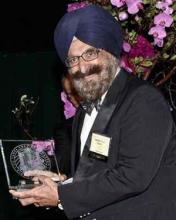
Physicist Narinder Singh Kapany (31 October 1926 – 4 December 2020) pioneered the use of optical fibres to transmit images, and founded several optical technology companies. Born in Punjab, India, he worked at a local optical instruments factory before moving to London for PhD studies at Imperial College. There, he devised a flexible fibrescope to convey images along bundles of glass fibres.

Sir Mokshagundam Srinivasa Shastry Vishveshwarayya (15 September 1860 – 14 April 1962) is widely regarded as India’s most outstanding engineer. In a career that spanned almost his entire life, Vishveshwarayya played a pivotal role in several engineering projects, including designing the Krishnarajasagara dam that is still the source of irrigation and drinking water for parts of Karnataka today.
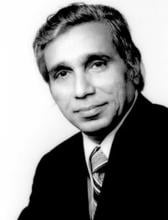
Fazlur Rahman Khan (3 April 1929 – 27 March 1982) was a Bangladeshi-American structural engineer and architect who invented the tube principle, which formed the basis for modern skyscraper design.
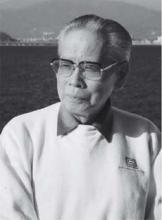
A Japanese surgeon, Tetsuzo Akutsu (20 August 1922 – 9 August 2007) built the first artificial heart capable of keeping an animal alive.

Lin Lanying (7 February 1918 – 4 March 2003) was a Chinese material engineer remembered for her contributions to the field of semiconductor and aerospace materials. Lanying was born into a family who did not believe in educating girls and she was not allowed to go to school.

Gregorio Y. Zara (8 March 1902 – 15 October 1978) was a Filipino engineer and physicist best remembered for inventing the first two-way video telephone. Zara’s video telephone invention enabled the caller and recipient to see each other while conversing, laying the foundation for video-conferencing