

Technology
News
17 Jun 2020
Tohoku University
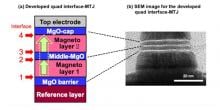
Professor Tetsuo Endoh, leading a group of researchers at Tohoku University, has announced the development of an MTJ (Magnetic Tunnel Junction) with 10 ns high-speed write operation, sufficient endurance (>10<sup>11</sup>), and with highly reliable data retention over 10 years at 1X nm size. Realizing a 1X nm STT-MRAM (Spin Transfer Torque-Magnetoresistive Random Access Memory) and NV(Non-Volatile)-Logic has wide application to a variety of fields.
12 Jun 2020
International Institute for Integrative Sleep Medicine (WPI-IIIS), University of Tsukuba
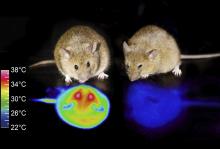
Researchers at the University of Tsukuba and RIKEN in Japan spark a hibernation-like state in mice—a species that does not naturally hibernate

11 Jun 2020
Asia Research News Partnerships
With governments, including Singapore’s, discouraging large-scale events such as conferences, MIT Technology Review and Koelnmesse are shifting their EmTech Asia event online.
10 Jun 2020
Daegu Gyeongbuk Institute of Science and Technology (DGIST)
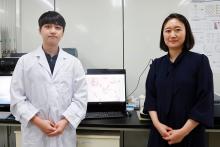
Metal-organic frameworks (MOFs) are sponge-like organic-inorganic hybrid materials and have a variety of uses due to their ultra-high “porosity,” or the ratio of pores or air pockets to the solid material. Through a technique called “post-synthetic modification,” Professor Jinhee Park and her research team were able to enhance and modify the function of these materials for specific purposes.
05 Jun 2020
Hokkaido University
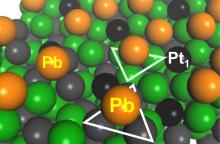
A group of Japanese scientists has developed an ultrastable, selective catalyst for dehydrogenate propane – an essential process to produce the key petrochemical substance of propylene – without deactivation, even at temperatures of more than 600°C.

04 Jun 2020
Asia Research News Partnerships
The MarTech Summit takes its first steps out into the virtual world! Taking place on the 16th and 17th of June, the Virtual MarTech Summit will gather over 1000 attendees from a range of backgrounds, the only common denominator is the love of MarTech.
03 Jun 2020
Institute for Integrated Cell-Material Sciences (iCeMS) at Kyoto University
A highly accurate machine learning tool could help doctors tailor individualized treatments for people with glioma brain tumours.
29 May 2020
Ehime University
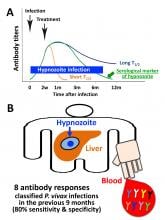
An international collaborative team from PROS Ehime University and CellFee Science, Japan; the Walter and Eliza Hall Institute, Australia; Pasteur Institute, France; and Foundation for Innovative New Diagnostics, Switzerland developed a new diagnostic blood test which detects recent exposure to ‘vivax’ malaria. The new test can also identify people who may harbor dormant liver-stage malaria parasites, which can cause illness. This new diagnostic approach has the potential to enhance malaria surveillance and accelerate elimination.

27 May 2020
Springer Nature
Nature Index 2020 South Korea, published in the May 28 issue of Nature, investigates South Korea’s strategy to become a “first mover” by investing in basic research grants and original discoveries.
27 May 2020
Nagoya University
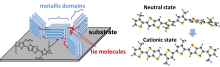
Scientists are unraveling the properties of electricity-conducting plastics so they can be used in future energy-harvesting devices.
22 May 2020
Hokkaido University
Researchers have succeeded in detecting anti-avian influenza virus antibody in blood serum within 20 minutes, using a portable analyzer they have developed to conduct rapid on-site bio tests. If a suitable reagent is developed, this technology could be used to detect antibodies against SARS-CoV-2, the causative virus of COVID-19.
21 May 2020
Hokkaido University
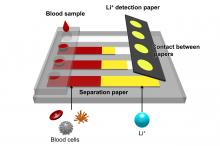
A group of Hokkaido University researchers has developed a paper-based device that can easily and cheaply measure lithium ion concentration in blood, which could greatly help bipolar disorder patients.
18 May 2020
Daegu Gyeongbuk Institute of Science and Technology (DGIST)
Researchers from Daegu Gyeongbuk Institute of Science and Technology develop a simple approach for controlling the otherwise random formation of cracks in flexible thin-film conductors, greatly increasing the durability of flexible electrodes and transistors against bending and folding.

14 May 2020
The Chinese University of Hong Kong (CUHK)
A research team led by Prof. Yi-Chun LU from the Faculty of Engineering at The Chinese University of Hong Kong (CUHK) has taken a critical step forward in improving high-energy batteries by introducing a novel electrolyte to the aqueous lithium-ion (Li-ion) battery. This electrolyte is commonly used in skin cream. It is inexpensive, inflammable, less toxic and is eco-friendly, yet can create stable voltage for common usage. The breakthrough was recently published in the world-leading scientific journal, Nature Materials, a sister journal of Nature.

13 May 2020
Institute for Integrated Cell-Material Sciences (iCeMS) at Kyoto University
Hydrogen fuel cells made with coordination polymer glass membranes could produce as much energy as their liquid-based counterparts while adding strength and flexibility.

13 May 2020
Hokkaido University
Insights into a flipping crystal could further research into the development of autonomous robots.

30 Apr 2020
Tohoku University
A multinational team of researchers from Tohoku University and institutions in the UK, Germany and Switzerland has revealed the magnetic states of nanoscale gyroids, 3D chiral network-like nanostructures. The findings add a new candidate system for research into unconventional information processing and emergent phenomena relevant to spintronics.
28 Apr 2020
Hong Kong Baptist University (HKBU)
A research team led by Hong Kong Baptist University (HKBU) has launched an online cognitive behavioural therapy (CBT) programme. Introduced in April 2020 for Hong Kong people with mild to moderate depressive symptoms, the programme provides them with easy access to counselling services and reduces the stigma associated with depression.
The team will recruit 400 participants aged between 18 and 70 with depressive symptoms and provide training next year to around 200 local mental health professionals on how to operate this online CBT programme, with the aim of serving more people in the long run.

10 Apr 2020
Daegu Gyeongbuk Institute of Science and Technology (DGIST)
A technology to further accelerate the commercialization of Colloidal Quantum Dot(CQD) Photovoltaic(PV) devices, which are expected to be next-generation photovoltaic devices, has been developed.
30 Mar 2020
Osaka City University
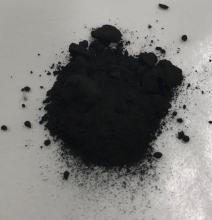
A joint research group at Osaka City University and Sakai Chemical Industry Co., Ltd. have succeeded to synthesize black phosphorus with one-pot solvothermal reaction with red phosphorus in ethylenediamine used as a solvent.

25 Mar 2020
National Supercomputing Centre (NSCC) Singapore
Singapore's National Supercomputing Centre fast track access for researchers involved in COVID-19 research. Applications are open from now until 23 September 2020.
19 Mar 2020
The Hong Kong University of Science and Technology (HKUST)
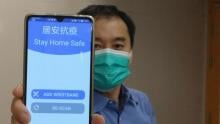
Researchers of the Hong Kong University of Science and Technology (HKUST) have developed a novel geo-fencing technology, offering a smart core solution that helps save the government’s manpower in monitoring those under compulsory home quarantine amid the novel pneumonia (COVID-19) outbreak.
10 Mar 2020
Ulsan National Institute of Science and Technology (UNIST)
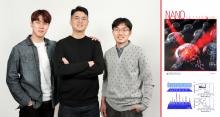
A recent study, affiliated with South Korea's Ulsan National Institute of Science and Technology (UNIST) has introduced a novel technology, which allows carbon nanotubes (CNTs) to be easily observed under room temperature.

10 Mar 2020
Ulsan National Institute of Science and Technology (UNIST)
Two faculty members from South Korea's Ulsan National Institute of Science and Technology (UNIST) have been honored with meritorious citations and awards for their outstanding research performance.
09 Mar 2020
Ulsan National Institute of Science and Technology (UNIST)
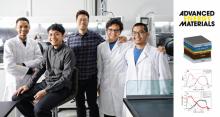
A recent study, affiliated with South Korea's Ulsan National Institute of Science and Technology (UNIST) has developed high‐efficiency, solution‐processed, hybrid series, tandem photovoltaic devices featuring CQDs and organic bulk heterojunction (BHJ) photoactive materials.

07 Mar 2020
International Islamic University Malaysia (IIUM)
Computerized sound-cognitive therapy could be a new potential treatment for children with attention deficit hyperactivity disorder (ADHD).
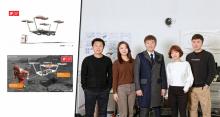
06 Mar 2020
Ulsan National Institute of Science and Technology (UNIST)
A design team, affiliated with South Korea's Ulsan National Institute of Science and Technology (UNIST) has been honored at the international design competition, iF Design Awards 2020.
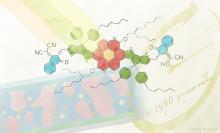
05 Mar 2020
Institute for Integrated Cell-Material Sciences (iCeMS) at Kyoto University
Molecular changes could improve the efficiency of next-generation photovoltaics.
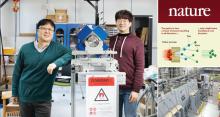
05 Mar 2020
Ulsan National Institute of Science and Technology (UNIST)
An international team of researchers, affiliated with South Korea's Ulsan National Institute of Science and Technology (UNIST) has for the first time succeeded in demonstrating the ionization cooling of muons.
Giants in history

Turkish astrophysicist Dilhan Eryurt (29 November 1926 – 13 September 2012) conducted research on how the sun affects environmental conditions on the moon.
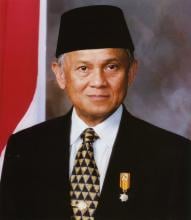
Bacharuddin Jusuf Habibie (25 June 1936 – 11 September 2019) was an Indonesian engineer who was President of Indonesia from 1998 to 1999.

Physicist Narinder Singh Kapany (31 October 1926 – 4 December 2020) pioneered the use of optical fibres to transmit images, and founded several optical technology companies. Born in Punjab, India, he worked at a local optical instruments factory before moving to London for PhD studies at Imperial College. There, he devised a flexible fibrescope to convey images along bundles of glass fibres.

Sir Mokshagundam Srinivasa Shastry Vishveshwarayya (15 September 1860 – 14 April 1962) is widely regarded as India’s most outstanding engineer. In a career that spanned almost his entire life, Vishveshwarayya played a pivotal role in several engineering projects, including designing the Krishnarajasagara dam that is still the source of irrigation and drinking water for parts of Karnataka today.

Fazlur Rahman Khan (3 April 1929 – 27 March 1982) was a Bangladeshi-American structural engineer and architect who invented the tube principle, which formed the basis for modern skyscraper design.
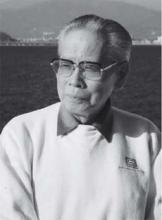
A Japanese surgeon, Tetsuzo Akutsu (20 August 1922 – 9 August 2007) built the first artificial heart capable of keeping an animal alive.

Lin Lanying (7 February 1918 – 4 March 2003) was a Chinese material engineer remembered for her contributions to the field of semiconductor and aerospace materials. Lanying was born into a family who did not believe in educating girls and she was not allowed to go to school.

Gregorio Y. Zara (8 March 1902 – 15 October 1978) was a Filipino engineer and physicist best remembered for inventing the first two-way video telephone. Zara’s video telephone invention enabled the caller and recipient to see each other while conversing, laying the foundation for video-conferencing