Daegu Gyeongbuk Institute of Science and Technology (DGIST)
30 Mar 2026
- Applications for the DGIST Summer Undergraduate Research Fellowships (D-SURF) surged compared to the previous year, demonstrating the university’s growing global research competitiveness
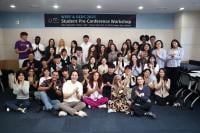
- Hosted WEEF & GEDC 2025, featuring lectures by Nobel laureates and marking the success of its proactive global initiatives
- Set to host the Asian Engineering Deans’ Summit (AEDS 2026) in May, positioning DGIST as a leader in education and research across Asia
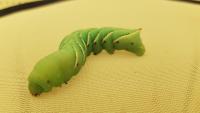
Published in Nature Ecology and Evolution, a novel study led by National Taiwan University connects plant and insect physiology, chemical ecology, molecular function, and evolutionary analysis to offer a new perspective on plant–insect coevolution.
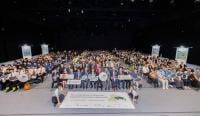
Asian turtles face a severe conservation crisis caused by illegal poaching and the wildlife trade. Supported by Ocean Park and the Ocean Park Conservation Foundation Hong Kong, Lingnan University is hosting the inaugural International Conference on Integrated Conservation of Asian Turtles (ICAT) from today, 27 March, through 30 March 2026.
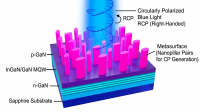
Researchers from The University of Osaka have proposed a compact LED design that directly emits circularly polarized light using a nanoscale GaN metasurface integrated onto the device. This design removes the need for bulky optical components traditionally used to create polarized light and could help enable smaller optical systems for applications such as 3D displays, augmented reality, and photonic technologies.
- Extraction of key behavioral elements from videos
- Robustness against variations in action speed and duration
- Selected for Oral Presentation (acceptance rate: 0.74%) at CVPR, the top computer vision conference
Researchers at The University of Osaka have developed a polymer material that combines high mechanical durability with controllable enzymatic degradation. The material contains movable cross-links formed by cyclodextrin rings that slide along polymer chains. By using light to control the position of these rings, enzymatic degradation can be switched on or off and even spatially patterned.
Lingnan University has achieved outstanding results in the international higher education organisation Quacquarelli Symonds (QS) World University Rankings by Subject 2026. Nine broad and individual subjects were designated, and more than half moved up.
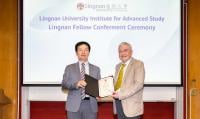
The Lingnan University Institute for Advanced Study (LUIAS) held a conferment ceremony today, 25 March, to officially appoint Prof Eugene Tyrtyshnikov, distinguished mathematician, Academician of the Russian Academy of Sciences, and Professor and Chairman at Lomonosov Moscow State University, as a Lingnan Fellow, recognising his outstanding academic achievements in computational mathematics and numerical analysis, as well as the significant societal impact of his work.
A study by Professor Tae-Youn Park of the SKKU Business School, examining the implications of pay transparency policies for the labor market, has been published online in the Harvard Business Review (HBR).
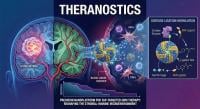
National Taiwan University researchers have engineered a dual-targeting nanocarrier that safely sneaks potent chemotherapy past the blood-brain barrier. By homing in on a specific protein (FAP) expressed by both the glioblastoma cells and their protective “helper” cells, this approach directly shrinks the deadly tumor while reprogramming the immune system to join the fight.
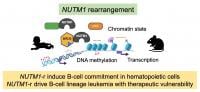
Researchers from The University of Osaka found that leukemia caused by NUTM1 rearrangements is distinguished from other forms of B-cell acute lymphoblastic leukemia (B-ALL) by a unique pattern of gene activity and gene regulation. Unlike the common form of B-ALL caused by KMT2A rearrangement, which is resistant to treatment, leukemic cells with NUTM1 rearrangements are highly sensitivity to chemotherapy.
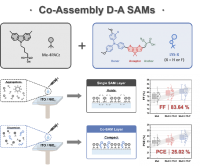
This study introduces a co-assembly strategy using two newly designed donor–acceptor self-assembled materials, LYS-H and fluorinated LYS-F, to overcome aggregation, wettability, interfacial contact, and crystallinity limitations of Me-4PACz in inverted perovskite solar cells.
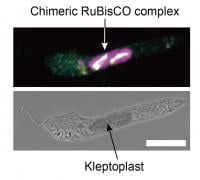
A single-celled predator maintains stolen chloroplasts with its own proteins, linking the host cell and stolen organelles at the molecular level. This process, now supported by biochemical evidence, may offer clues to early steps in the evolution of plant cells.
Metal oxide semiconductor gas sensors can detect harmful pollutants in the air, but they only operate at extremely high temperatures. A new material design guideline using vanadium oxide may help us overcome this challenge.
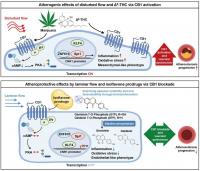
A research team at National Taiwan University found that abnormal blood flow activates CB1 receptors in endothelial cells, promoting vascular inflammation and dysfunction. Soy-derived isoflavone prodrugs that inhibit CB1 may help protect blood vessels and prevent atherosclerosis.
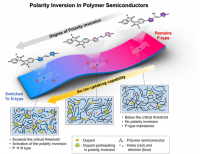
A research team led by Prof. Boseok Kang at Sungkyunkwan University has uncovered the origin of polarity inversion—a long-standing phenomenon in polymer semiconductors that occurs only in certain materials—attracting significant attention.
Daegu Gyeongbuk Institute of Science and Technology (DGIST)
24 Mar 2026
- Designed a novel peptide (MLPH) using computational modeling to extract only the active region that promotes hair growth
- Overcomes the limitations of existing drugs, such as hormone-related side effects or skin irritation and gender limitations
- Published in the internationally renowned pharmacology journal Biomedicine & Pharmacotherapy
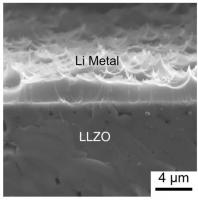
Move over lithium-ion batteries – researchers found a creative way to combine materials (lithium metal and a ceramic surface) that may prove to be better for energy storage used in electric vehicles and portable electronics.
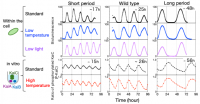
Researchers from The University of Osaka studying simple cyanobacteria found that one protein keeps their internal clock ticking reliably, even outside a living cell. By testing over 20 variants with clock periods ranging from 15 to 60 hours, they discovered that timekeeping precision appears to be built directly into the protein itself, independent of cell activity or environmental changes.
Researchers have discovered a new way to control magnetic “spin” using electric current, enabling states that were previously considered unstable. This breakthrough could move computing beyond simple binary systems by harnessing continuously fluctuating signals. The findings may lead to more powerful and efficient technologies for AI and next-generation devices.
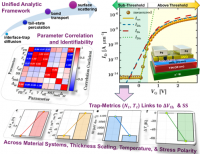
Researchers at National Taiwan University developed a unified model that explains how thickness, defects, interface quality, and roughness together control the behavior of ultrathin oxide transistors. The work provides practical design rules for building low-leakage, normally-off devices suitable for future 3D chip stacking.
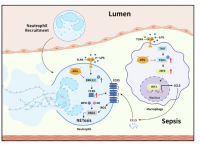
Scientists discovered a natural “brake” protein in immune cells that stops harmful overreactions during serious infections. When this brake is missing, the body’s defense cells go out of control and damage organs, but restoring it could open the door to better treatments for life-threatening sepsis.
Kavli Institute for the Physics and Mathematics of the Universe (Kavli IPMU)
23 Mar 2026
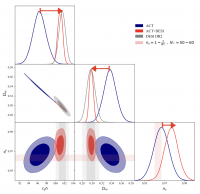
A team of researchers led by the University of Tokyo Kavli Institute for the Physics and Mathematics of the Universe (Kavli IPMU, WPI) Project Assistant Professor Elisa Ferreira has shown that a discrepancy in a key cosmic measurement in the early universe originates from a subtle statistical interplay between measurements of the cosmic microwave background (CMB) and baryon acoustic oscillations (BAO).