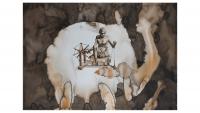
From an ancient Buddhist symbol representing the wheel of law to an enduring icon of self-reliance and resistance in the early twentieth century, the charkha, a hand-driven spinning wheel, and the chakra, the flat-spoked wheel with which it is often conflated, have lived many lives in South Asia.
At Duke-NUS Medical School scientists are pioneering breakthroughs in precision medicine and regenerative therapies, targeting everything from muscle loss to dramatically extending our years of health.
Touch sensors for robots and bionic applications can now work from 100 mm away, offering new sensitivity for 3D recognition and wireless data transmission.
An inclusive Myanmar must include all voices. One voice is from the Rohingya, who have faced persecution for many years. IDRC’s Knowledge for Democracy Myanmar supports scholars and research from and about the Rohingya people to generate evidence-based policy advice and empower a new generation of thought leaders.
Electron spin states can now be efficiently explored at much higher resolution, opening new opportunities for faster electronics including quantum computers.
Kavli Institute for the Physics and Mathematics of the Universe (Kavli IPMU)
24 Jan 2025
Astronomer John Silverman works just outside of Tokyo but spends his days with some of the world's biggest telescopes in Hawaii, Chile, and space to study the earliest black holes in the Universe.
To celebrate the upcoming Chinese New Year of the Snake, Prof Cai Zongqi, Director of the Advanced Institute for Global Chinese Studies of Lingnan University, and Mr Jerry Wang Junzhe, Research Officer of the Advanced Institute for Global Chinese Studies, searched the rich anecdotes related to the snake zodiac sign. They explained that while contemporary literature and religious stories often fuel fear of snakes, the symbolism in ancient Chinese mythology paints a different picture.
A symposium that will discuss how to address multifaceted challenges of inequality and promote science for sustainability will take place in person and online on February 8, 2025.
Researchers from Osaka University have developed a groundbreaking method to expand the palette of bioluminescent protein colors for cell labeling. By creating 20 distinct colors, they have enabled the simultaneous detection of multiple labeled cells using a standard camera. This innovative approach simplifies the tracking of individual cells within a population and holds significant potential for applications such as monitoring cell fate or identifying rare cells with unique responses to drugs.
A group of researchers have analyzed thousands of reports from the past decade, identifying a tin-based catalyst that aids the production of formic acid, an indispensable chemical in various industries, and makes the process greener.
Researchers from the Yong Loo Lin School of Medicine, National University of Singapore (NUS Medicine) and Duke-NUS Medical School have provided compelling evidence that short-course antibiotic treatments can be a game-changer in tackling ventilator-associated pneumonia (VAP), a serious infection common in critically ill patients.
Juvenile dolphins were found to have specialized receptors for fatty acids on their tongues, offering new insights into their growth and feeding habits.
Prof Xin Yao, Vice-President (Research and Innovation) and Tong Tin Sun Chair Professor of Machine Learning of Lingnan University in Hong Kong has been elected Fellow of the Hong Kong Academy of Engineering (HKAE) for the year 2024. The Induction Ceremony of the 11 new Fellows of the HKAE was held on 20 January 2025. Prof Yao has the distinction of being the third Lingnan scholar to receive this honour, following Prof S.
Daegu Gyeongbuk Institute of Science and Technology (DGIST)
20 Jan 2025
- A research team led by Senior Researcher Sangkyoo Lim has successfully developed biomass-based shape memory polymer fibers capable of simultaneously producing and storing energy.
- These artificial muscle fibers, which can lift loads exceeding 56,000 times their own weight, are expected to find applications in industries such as medical robotics, advanced textiles, and wearables industries
- The findings of the study were published in the Chemical Engineering Journal
Daegu Gyeongbuk Institute of Science and Technology (DGIST)
20 Jan 2025
DGIST Professor Hongsoo Choi Selected as a Fellow of the Institute of Electrical and Electronics Engineers (IEEE), One of the World’s Most Renowned Academic Societies