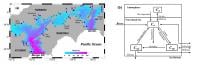
Tropical cyclones hundreds of kilometers away from the Philippines are often more responsible for heavy rainfall than those that hit the country directly during the annual “Habagat” or southwest monsoon season from July to September.
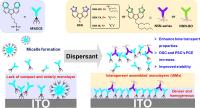
Scientists introduced a second molecule to achieve a donor–acceptor (push–pull) effect, aiming to enhance both the efficiency and stability of perovskite and organic solar cells.
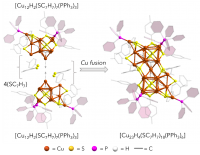
In a significant step towards a carbon-neutral future, researchers developed an atomically precise copper nanocluster that demonstrates high stability and exceptional selectivity in electrochemical carbon dioxide reduction reactions.
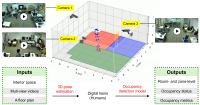
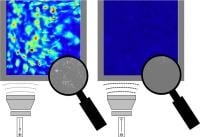
Researchers at The University of Osaka have developed a novel framework for measuring occupancy in open-plan offices with unprecedented precision. This innovative system uses computer vision and AI to analyze occupancy at a micro-scale level, focusing on specific functional zones within the office. This addresses a significant gap in current occupancy tracking methods, which typically only provide macro-level data and struggle to capture detailed usage patterns within shared spaces.
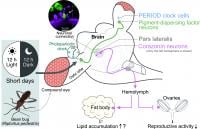
As the days grow shorter, many animals prepare for the approaching winter by suspending reproduction. Insects, for example, accumulate energy stores while halting ovarian development through a process known as reproductive diapause.
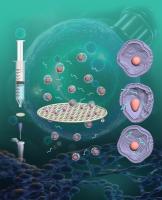
SUTD researchers leveraged their expertise in microfluids to develop a novel method for deforming cells mechanically to facilitate intracellular delivery, revolutionising personalised treatments at the cellular level.
SUTD researchers demonstrate a new 3D printing method that produces electrically conductive structures from sustainable materials, enabling potential applications in sensors, electronics, and wearables.
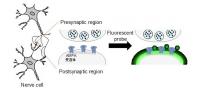
By just sprinkling it on top and waiting 10 seconds, researchers can use this new fluorescent probe to clearly show synapses, the connection points between brain cells.
To encourage more young people to learn about and appreciate the Chinese culture, Lingnan University has mounted an exhibition, which opened today, 10 July, entitled “The Art of Ho Wing-cheong and Collaborative Painting with Lingnan Students” at its off-campus learning hub Lingnan@WestKowloon, where the painting “The Spring Blossoms”, a collaborative creation by Mr Ho Wing-cheong, the renowned Lingnan School painter, President of the Hong Kong Art Instructors Association, and Senior Instructor
Households, cars, and factories generate heat, much of which goes to waste. Likewise, the increasing usage of solar panels means heat needs to be stored at large amounts for longer periods of time. Thus, thermal storage is critical for carbon-neurtrality. A collaboration between Tohoku University and Japan Atomic Energy Agency has developed nanosheets of layered manganese dioxide that can store heat even below 100°C.
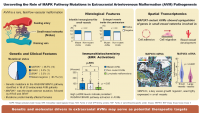
Researchers from The University of Osaka have identified key genetic mutations linked to extracranial arteriovenous malformations (AVMs), a rare and potentially serious vascular disorder. They have revealed that these mutations activate the RAS/RAF/MEK signaling pathway and that the MAP4K4 gene may drive pathological angiogenesis. This may mean that existing cancer drugs that target the same pathway could be effective for AVM treatment, potentially paving the way for novel therapies.
A new real-time monitoring system captures minute-by-minute changes in toxic metals resulting from traffic pollution. Research indicates that non-exhaust sources, including brake wear, significantly contribute to urban health risks.
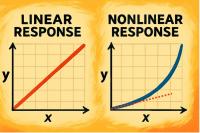
Nonlinear quantum dynamics are complicated, but they don’t have to be. A new, real-time simulation may help demystify these unusual dynamics, serving as a guide to develop next-gen quantum devices.
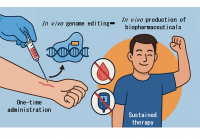
Researchers from The University of Osaka found that a one-time genome editing treatment introducing a gene encoding the glucagon-like peptide-1 receptor agonist Exendin-4, marketed as the weight-loss drug Exenatide, results in sustained secretion of the drug, reduced food intake, and enhanced weight loss in mice.
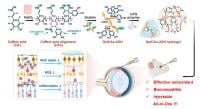
This research introduces a soft, injectable material designed for use in the eye to help protect and support damaged retinal tissue. It offers a gentle, biocompatible way to stabilize the inner eye environment and may assist future treatments like cell therapy and drug release.
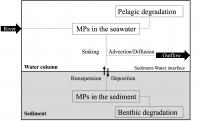
Spatial and seasonal variations of polychlorinated biphenyl (CB-153) in the Seto Inland Sea and its response to declines in atmospheric and riverine input
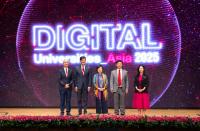
Lingnan University, in partnership with Times Higher Education (THE), launched Digital Universities Asia 2025 on 8 July at its Tuen Mun campus. Held over two days, 8-9 July, the summit was themed “Powering social innovation with digital transformation”, and brought together more than 300 leading scholars, industry leaders, and policy experts from over 90 universities and 140 organisations worldwide.
A daily mismatch between temperature and humidity, observed in certain mountain and waterside regions, helps regulate atmospheric dryness. However, this protective effect may weaken under global warming.
Lingnan University has delivered its best-ever performance in the latest 2025/26 funding exercise carried out by the Research Grants Council (RGC), covering the General Research Fund (GRF), Early Career Scheme (ECS), and Humanities and Social Sciences Prestigious Fellowship Scheme (HSSPFS).
Lingnan University’s Science Unit recently published Hong Kong’s first-ever scientific Hong Kong Newt Roadkill Survey Programme. Their findings show that over 1,400 Hong Kong newts were killed by vehicles in two months, accounting for more than 90 per cent of total wildlife carcasses found.
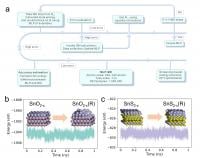
Machine learning potential can create accurate, large-scale models of catalytic activity for a reaction that turns carbon dioxide into a sustainable energy source.
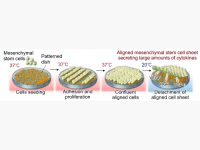
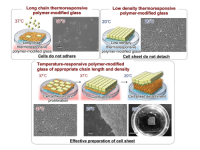
Cell sheet preparation for use in tissue engineering and regenerative therapies could be significantly improved with the use of thermo-responsive polymer brushes, adjusted in length and density according to specific cell types
Phosphorus forms the backbone of DNA, RNA, and cellular membranes. But scientists have struggled to pinpoint the specific conditions under which phosphorus developed in Earth’s younger years. A research group from Tohoku University has recently unearthed evidence pointing to submarine hydrothermal alteration, which released phosphorus from the rocks into the surrounding seawater, enriching early oceans with this essential nutrient.
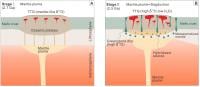
Geologists from The University of Hong Kong (HKU) have made a breakthrough in understanding how the Earth’s early continents formed during the Archean time, more than 2.5 billion years ago.