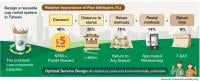
A new study from Taiwan combines consumer behavior research and life cycle assessment to design reusable cup systems that people are more willing to use. The findings show that convenience and incentives strongly shape participation, while well-designed reusable cup systems can still reduce environmental impacts compared to single-use cups.
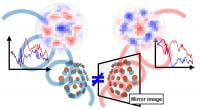
A remarkable new method of distinguishing chiral (mirror-image) molecules could eventually detect distortions inside quantum and soft materials, find abnormal protein aggregates linked to disease, and more.
The Philippines can strengthen national energy security by harnessing tidal power for a clean, predictable, and locally-rooted alternative to imported fossil fuels.
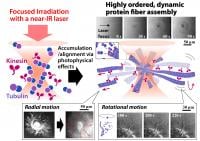
Researchers at The University of Osaka used a focused laser beam to make in vitro models of cytoskeletal networks that exhibit dynamic cell-like motions. This technique provides spatiotemporal control of the network structure, unlike conventional methods based on self-organization and photochemical reactions.
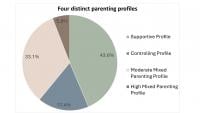
To understand how parenting styles influence adolescent mental health, the Department of Psychology at Lingnan University, collaborating with researchers from the School of Psychology of South China Normal University and the Department of Applied Psychology of Guangdong University of Education, conducted a one-year longitudinal study.
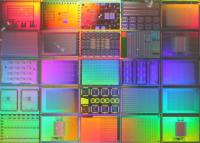
Researchers at Tohoku University used state-of-the-art semiconductor fabrication technologies to demonstrate how we could be ready for large-scale spintronic p-computers.
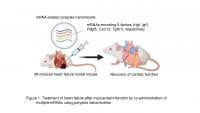
Researchers from The University of Osaka found that nanomicelle-mediated delivery of five mRNAs involved in angiogenesis, heart cell contraction, immune and hematopoietic stem cell recruitment, and immune response suppression promoted cardiac repair and increased overall survival in a mouse model of myocardial infarction–induced heart failure.
Daegu Gyeongbuk Institute of Science and Technology (DGIST)
01 Jun 2026
- DGIST found post-capitalism clues through international collaborative research... Identifying conditions for the sustainability of the social market economy
- Research results published in Cities—a world-renowned academic journal in urban studies and sociology
Daegu Gyeongbuk Institute of Science and Technology (DGIST)
01 Jun 2026
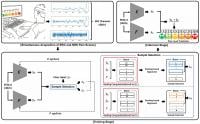
- In collaboration with GIST, Principal Researcher An Jinung’s team has implemented an AI that classifies pain intensity by analyzing brain waves based on thermal stimuli.
- The limitations of subjective expressions that vary from patient to patient are overcome...
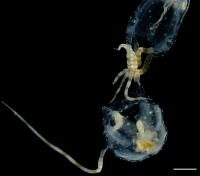
Researchers at Tohoku University look beyond the life-taking venomous stings of box jellyfish, and focus on life-creating processes in a new comprehensive study of their reproductive traits.
Daegu Gyeongbuk Institute of Science and Technology (DGIST)
01 Jun 2026
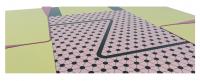
- Prof. Hyuk-Jun Kwon’s team at DGIST develops a high-performance photodetector (light-sensing sensor) in a two-dimensional semiconductor material using a single laser process
- Expected to enable next-generation flexible and image sensor applications without complex stacking or transfer processes
- Published in the international journal Advanced Optical Materials
Researchers have developed a new way to generate realistic synthetic training data for agricultural robots by recreating tomato cultivation environments in a virtual world. The approach could help overcome one of the biggest barriers in agricultural robotics: the time and labor required to collect and manually label real-world data under challenging greenhouse conditions such as changing lighting, dense foliage, and fruit occlusion.
The JC STEM Lab of Circular Bio-economy (the Lab) at City University of Hong Kong (CityUHK) has recently achieved a breakthrough in the field of sustainable development technologies.
At his first graduation as Dean, Patrick Tan presides over a record class of 135 graduates, with Guest of Honour Mdm Rahayu Mahzam and keynote speaker Dr Robert Califf
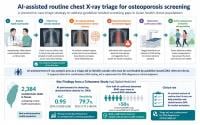
Scientists from National Taiwan University and St. Paul’s Hospital have demonstrated how AI can leverage routine chest X-rays to detect asymptomatic bone loss, closing critical gaps in screening healthy Asian populations.
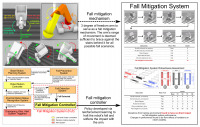
SUTD researchers have developed a reinforcement-learning-based safety system that teaches a stair-traversing service robot to brace itself mid-fall, addressing one of the biggest barriers to deploying autonomous robots on staircases.
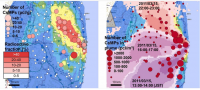
By quantitatively analyzing 100 soil samples collected across Fukushima Prefecture in 2011, researchers found that cesium-rich microparticles (CsMPs) were distributed over a wide area, with abundances ranging from 0 to 52.3 particles g⁻¹ and accounting for up to 61.9% of the total radioactivity in some samples.
Daegu Gyeongbuk Institute of Science and Technology (DGIST)
28 May 2026
-Offering a total prize pool of KRW 200 million and overseas acceleration opportunities, the program provides full-scale support for student startup teams preparing to debut on the global stage.
Daegu Gyeongbuk Institute of Science and Technology (DGIST)
28 May 2026
- Held at DGIST from May 18 to 20.
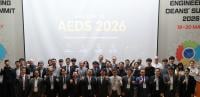
- Seventeen prestigious engineering colleges from nine countries gathered to explore innovative directions for artificial intelligence (AI)-based engineering education.
- Leaders in Asian engineering education have discussed nurturing future talent and strengthening global cooperation networks.
Daegu Gyeongbuk Institute of Science and Technology (DGIST)
28 May 2026
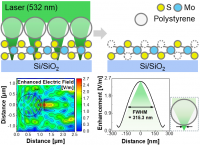
- Professor Hyuk-Jun Kwon's team developed ultrahigh-resolution optical doping technology based on microlenses
- The technology could potentially be implemented in next-generation 2D semiconductor-based CMOS
- The study was published in Small, an international journal in the nanotechnology field
Daegu Gyeongbuk Institute of Science and Technology (DGIST)
28 May 2026
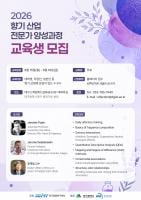
- Daegu Scale-up Hub (DASH) will hold a practice-oriented 'Fragrance Industry Expert Training Program' from June 15 to 19.
- Promoting the discovery of olfactory convergence startup needs and supporting practical applications for participating companies and prospective entrepreneurs in the training program.
Daegu Gyeongbuk Institute of Science and Technology (DGIST)
28 May 2026
DGIST Partners with Sambo Motors to Advance AX Innovation in the Robotics Industry, Establishes “Joint Research Lab” to Support Technological Self-Reliance
Spin waves are a promising way to reduce the energy-consumption of computing. New research shows that sending spin waves along a zig-zag path boosts the signal over 5,000 times compared to previous methods.
Humans have evolved to be able to link intentions to emotions or physical actions. This is why we may approach someone with open arms but flee if someone approaches using threatening body language. While AI can accurately identify emotions, it struggles to derive intention from them. A research group, with the help of performers from Japan and Taiwan, has helped facilitate a means to bridge this gap.
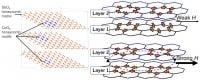
Researchers from The University of Osaka created stable cobalt-based honeycomb structures inside a layered material and observed ferromagnetic-like ordering at low temperatures. By introducing a small amount of cobalt into NaSbO3, the team demonstrated a new platform to study Kitaev materials using abundant 3d transition metals, potentially supporting future cost-effective quantum technologies.
The LIGO–Virgo–KAGRA Collaboration published today a new catalog of gravitational wave events. A total of 161 events, detected between April 2024 and the end of January 2025, have been added to the collection, bringing the total number of gravitational wave signals detected to date to 390.
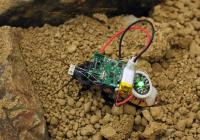
Researchers from The University of Osaka and collaborators proposed the Insect Synergy Circuit (ISC), a new concept for bio-hybrid control that uses AI to interpret internal biological signals from insects. By integrating heartbeat, neural signal features, and body movement data, the team developed a cyborg cockroach system that can estimate environment-associated internal states and guide movement while reducing unnecessary stimulation.