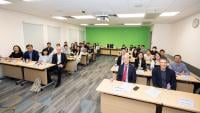
Lingnan University and Yuanpei College of Peking University (PKU) organised the Lingnan-Yuanpei STEM Summer Academy (LYSSA) jointly for the third consecutive year.
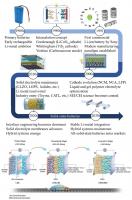
In collaboration with Clarivate, Professor Nam-Gyu Park’s research team highlights the rapid growth of solid-state implementation since its first successful realization in 2012
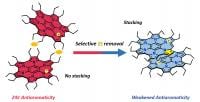
An Ehime University research group has discovered that antiaromatic molecules, typically unstable, can form stable dimers through π-stacking. The homoHPHAC cation, despite its positive charge, adopts a slightly offset stacked structure. This interaction induces electronic reorganization, partially attenuating antiaromaticity. The findings reveal a new mode of molecular assembly for antiaromatic molecules and provide insights for designing functional π-conjugated materials.
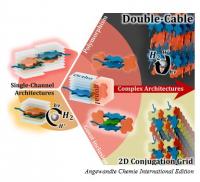
Researchers uncovered that an orthogonal molecular architecture directs the formation of a rare double-cable structure, offering a new blueprint for advancing the fundamental design of energy-active materials. By guiding charges to move along separate pathways, the new design minimizes energy loss and boosts clean energy generation.
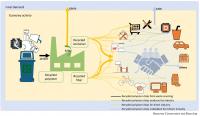
This study uses an IO-MFA model to reveal that recycled polyester is currently concentrated in low-value industries, identifying high-value invisible pathways in indirect supply chains to foster strategic industrial matchmaking. It provides a data-driven framework for policymakers to design "pull" mechanisms, such as mandatory recycled content, to redirect materials toward higher-margin economic streams.
Researchers have created a new database that employs AI to filter jargon and eliminate the need for users to have specialist programming skills. Called StableOx-Cat, the database identifies stable metal oxide electrocatalysts, making it easier to discover better materials for clean energy technologies.
Kavli Institute for the Physics and Mathematics of the Universe (Kavli IPMU)
17 Apr 2026
Researchers including Kavli IPMU's Tadayuki Takahashi have achieved the world's first direct observation of muonic molecules in resonance states using a high-resolution x-ray detector.
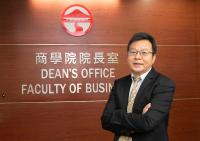
The Hong Kong SAR imports over 90 per cent of its food, and it can be very difficult when food safety incidents occur to trace the source across a complex supply chain. Prof Leng Mingming, Dean of the Faculty of Business and Chair Professor of Operations and Risk Management at Lingnan University, has published a new study proposing the introduction of a unified product tracing system across the food supply chain.
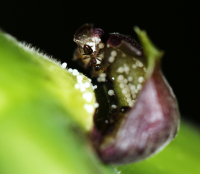
New research reveals unexpected intruders in a classic tropical tree–ant relationship, raising concerns for forest recovery in human‑altered landscapes.
What if AI could discover breakthrough materials before we even test them? A new physics-informed AI model makes discovery faster and more reliable. This approach could reshape the future of electronics.
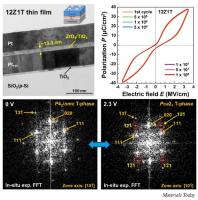
Researchers from National Taiwan University break traditional frameworks by unveiling a new symmetry-transition mechanism in ZrO2 thin films, achieving ultra-stable antiferroelectric behavior for up to one hundred million cycles.
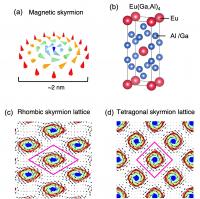
A once-theoretical structure is now shaping the future of computing. Researchers have uncovered key properties of magnetic skyrmions, ultra-stable, 2 nm vortex-like structures that could enable next-gen memory with extremely low power consumption. Even more surprising? They can form in materials once thought impossible.
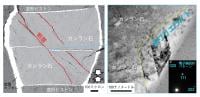
Seismicity decreases with depth, though it turns to increase in the mantle transition zone. It has been believed that pressure-induced phase transitions of olivine are the cause of high seismicity in the mantle transition zone. We experimentally showed that a diffusionless phase transition of olivine to poirierite triggers faulting. Our findings provide a natural explanation for the cause of high seismicity in the strongly deformed areas of ‘cold’ deep subducted slabs.
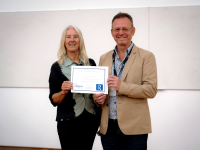
Prof Richard M. Walker, Head of the Department of Government and International Affairs and Lee Shau Kee Foundation Chair Professor of Public Administration at Lingnan University, has been given the prestigious Routledge Lifetime Achievement Award by the International Research Society for Public Management (IRSPM) in recognition of his sustained dedication and outstanding contributions to the field.
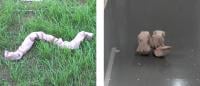
Researchers have succeeded in improving mobility efficiency by having the snake-like robot move using an “undulating motion” on uneven terrain and a “rolling motion” on level ground.
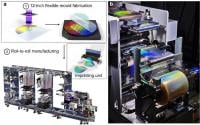
Researchers are investigating how 3D printers could achieve unprecedented levels of precision when creating batteries, opening the door for new innovations.
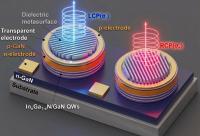
Researchers in Japan have developed a new LED structure that generates circularly polarized light from a single chip. The advance could support smaller and more energy-efficient optical devices for AR/VR, 3D displays, quantum communication, and optical security. By combining a semipolar InGaN light-emitting structure with a stripe-shaped silicon nitride metasurface, the team created a compact light source that reduces energy-conversion loss and operates at room temperature.
Matcha surprise, Smart sea urchin spines, Breaking biomass bonds, Hybrid air-conditioning, Alga in gloom & A touch of tech. Read all in the latest Editor's Choice. Plus Early Bird submissions for Asia Research News 2027
Kavli Institute for the Physics and Mathematics of the Universe (Kavli IPMU)
14 Apr 2026
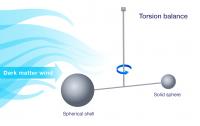
A team of researchers have shown torsion-balance experiments — precision instruments originally built to test the equivalence principle — could double as detectors for very light dark matter.
A mysterious layer of particles that occupies the lower regions of Venus’s atmosphere has long puzzled astronomers. However, a research team has finally solved the mystery of the “lower haze,” discovering that the haze comes from cosmic dust left by shooting stars that constantly rain down on Venus.
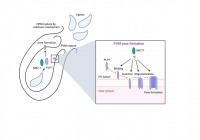
Researchers from The University of Osaka have shown that the MIC11 gene of Toxoplasma gondii is essential for the parasite to egress, or exit, the host cell, a key part of the lifecycle. Deletion of MIC11 caused parasites to be unable to permeabilize host cell membranes and prevented egress. This study identifies potential new therapeutic targets for human diseases caused by parasites, such as toxoplasmosis and malaria, which represent a major global health problem.
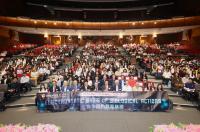
The Department of Psychology at Lingnan University hosted an academic symposium on campus yesterday, 13 April, titled “Navigating the Work-Family Interface in the Digital Era: Challenges and Strategies”. Around 40 local and international psychology scholars gathered to examine how contemporary work practices in the digital era influence mental health, job performance, and family life, and to present their latest research findings along with practical strategies to build resilience.
To enhance the business acumen and practical experience of students from Hong Kong and Greater Bay Area (GBA) tertiary institutions, the Hong Kong Institute of Business Studies (HKIBS) at Lingnan University organised the third Business Case Competition (LUBCC) 2026. The Final Presentation Day and Award Presentation Ceremony were successfully held yesterday (12 April).
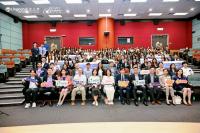
Lingnan University today, 13 April, hosted its University Assembly with guest of honour Prof Arieh Warshel, Nobel Laureate in Chemistry in 2013 and widely recognised as one of the founding figures of computational chemistry.
A team led by Professor Julia Beatty, Chair Professor of Veterinary Medicine and Infectious Diseases at Jockey Club College of Veterinary Medicine and Life Sciences of CityUHK, recently published a review in the prestigious journal Nature Reviews Cancer, exploring how feline tumour viruses offer vital insights into human oncology and viral carcinogenesis from a comparative oncology perspective.
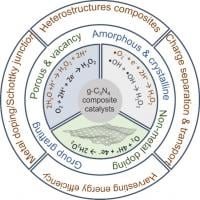
This deep dive explains the ins and outs of a catalyst called graphitic carbon nitride that speeds up the production of hydrogen peroxide – a highly useful oxidizing agent used widely in both industrial and household settings.