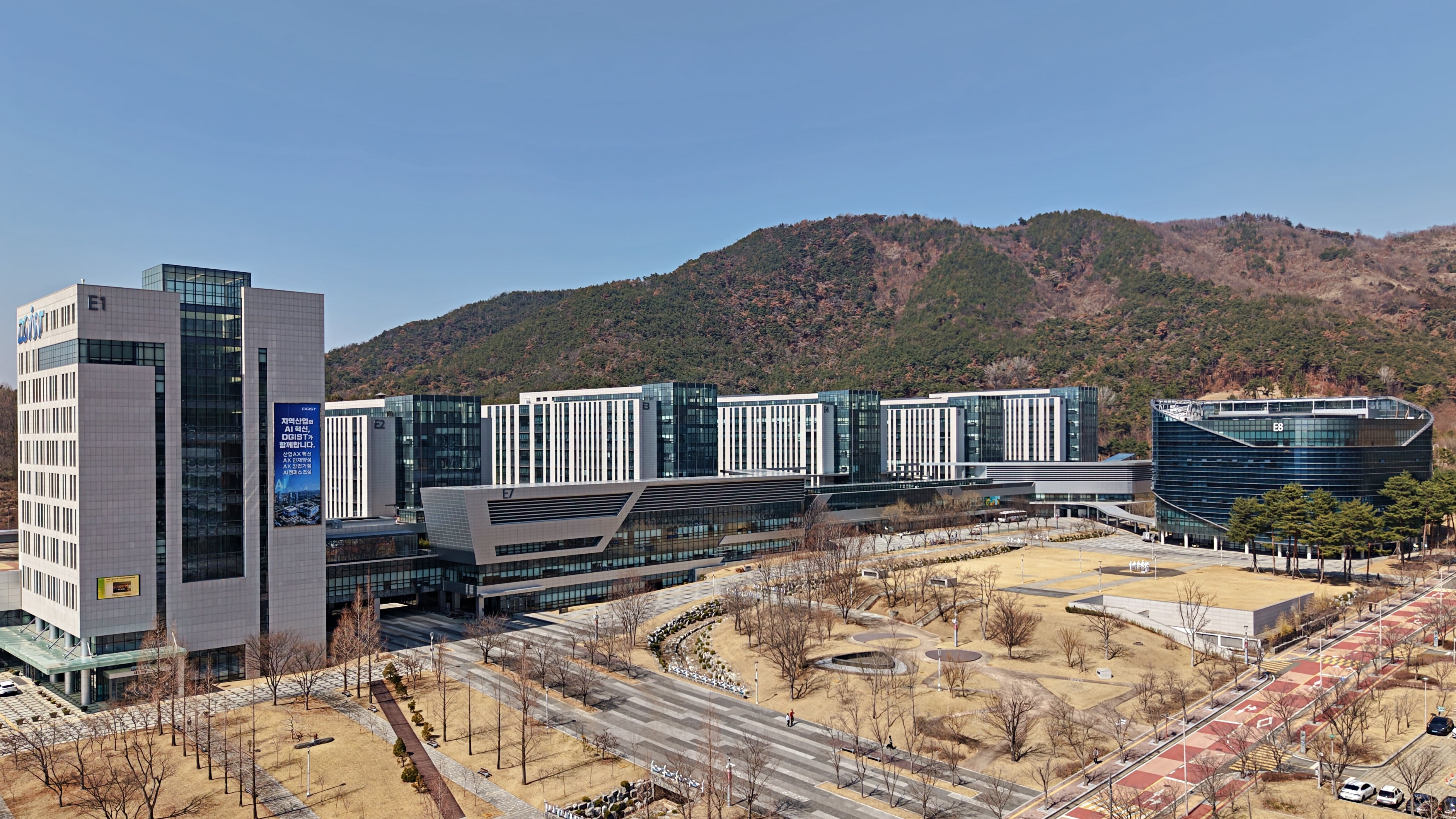
□ DGIST (President Kunwoo Lee) announced that its Convergence Talent Academy will officially launch the “High School Science Inquiry Club Program with DGIST” to enhance advanced scientific inquiry capabilities among students at local general high schools and to foster future science and technology talent.
□ This program is a new educational model in which DGIST faculty and high school teachers collaborate to systematically support club activities, which are part of the formal student curriculum. As the educational environment rapidly evolves—marked by a shift toward qualitative evaluation in college admissions and the full implementation of the high school credit system—the program was designed to provide general high school students with more specialized and advanced opportunities for scientific inquiry, thereby broadly strengthening their career planning and inquiry competencies.
□ The program will run from March to December 2026. Participating schools consist of 10 general high schools in the Daegu region—Gyeongbuk High School, Kyungpook National University High School, Gyeseong High School, Daegu Girls’ High School, Daejin High School, Dowon High School, Suseong High School, Posan High School, Hamji High School, and Hwawon High School—with one team per school, for a total of 10 teams (up to 15 students per club). Each club will be matched with a DGIST professor whose expertise aligns with the research topic, and students will receive close guidance jointly from their high school teacher and the DGIST professor.
□ The detailed curriculum is systematically structured into on- and offline inquiry mentoring during the semester (approximately 11 sessions in total) and intensive research during the vacation period. During the semester, students will receive guidance on fundamental theory, literature review, and setting research directions. During the vacation, 4–5 outstanding students from each club will be selected to participate in an advanced research program. Those students will spend five days (30 hours in total) in DGIST laboratories, engaging in experiments, analysis, and final presentations while experiencing a real research environment.
□ The program’s key feature is that it enables students to directly utilize advanced research infrastructure and receive expert guidance beyond simple experience, thereby deeply connecting high school inquiry activities with university research resources. At the end of the year, students will submit club activity reports and participate in a final presentation session, and outstanding students will be awarded the DGIST President’s Award.
□ “This program is significant in that it enables students at local general high schools to engage in advanced scientific inquiry through their regular club activities, while experiencing both DGIST’s outstanding research capabilities and the instructional expertise of school teachers,“ stated Changwon Seok, Director of DGIST Convergence Talent Academy. “We will continue to expand education collaboration with the local community to contribute to nurturing future science and technology talent and strengthening regional educational competitiveness.”
□ Meanwhile, by establishing this collaborative system, DGIST plans to enhance high school teachers’ expertise in guiding inquiry clubs and to support students in linking their activities to school records and producing research outcomes, thereby expanding a regional ecosystem for cultivating scientific talent.