
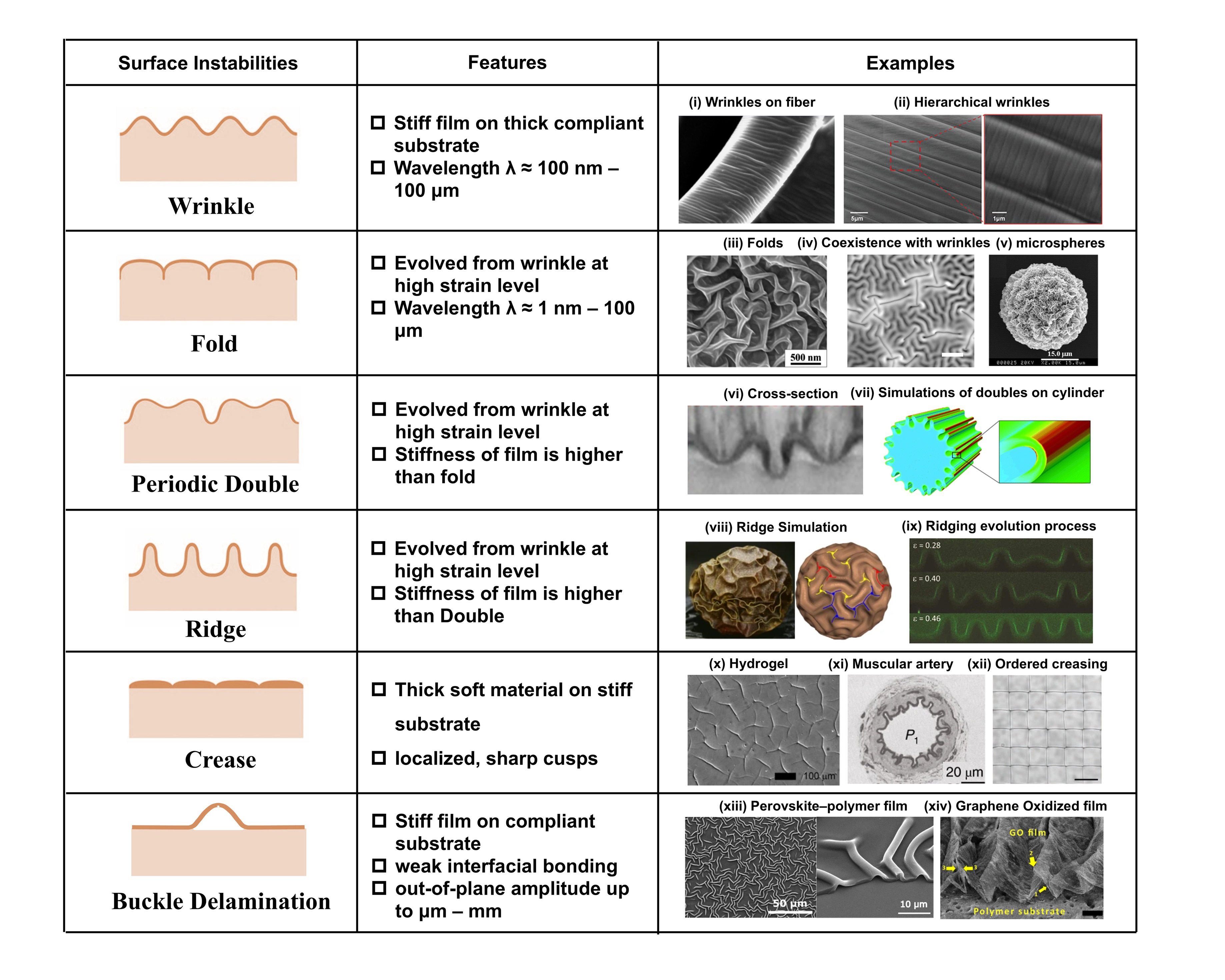
In a recent collaborative study, researchers from Lingnan University propose that naturally formed surface textures in materials could in future be combined with AI-assisted design to develop novel functional materials.
The cross-institutional research team chosen by the Wu Jieh Yee School of Interdisciplinary Studies (WJYSIS)at Lingnan University, Beihang University, and Northeastern University, reviewed international advances in functional materials research comprehensively and propose a new technological design framework. This aims to transform surface features traditionally regarded as signs of ageing or damage - such as microscopic wrinkles, folds, and deformation structures - into “functional structures”. According to the team, AI-assisted design could enable researchers to predefine desired functionalities and then use AI algorithms to optimise surface wrinkle architectures and regulate morphological changes under mechanical force, heat, light exposure, humidity, or chemical stimuli, facilitating the development of novel materials with anti-counterfeiting, information encryption, waterproofing, self-cleaning, or biomimetic biomedical functions.
The team noted that these novel materials, which integrate material mechanics, surface structures, and device-level applications, have broad application potential. Their surface textures contain microscale and nanoscale patterns that are extremely difficult to replicate, enabling the creation of very secure anti-counterfeiting “artificial fingerprints”. Previous studies have shown that the information density of such materials can be up to ten billion times higher than that of human fingerprints, greatly increasing the difficulty of forgery.
In biomedical applications, the research team noted that hydrogels and other materials have already been used to fabricate artificial tissues with folded structures, including those that mimic brain folds, mucosal tissues, and organ surface morphologies, providing new directions for artificial organs and tissue engineering. In addition, these wrinkle structures may support the development of stretchable batteries and flexible electronic devices, including wearable electronic skin systems that allow sensors to maintain stable conductivity and sense performance even under large mechanical deformation.
Prof Chen Xi, Dean of the WJYSIS and Chair Professor of Interdisciplinary Studies at Lingnan University, points out that conventional fabrication methods for microstructures, such as photolithography, mould imprinting, and laser processing, often require complex equipment, multiple processing steps, and rigid templates, making them less suitable for soft and stretchable materials. By contrast, using the intrinsic mechanical properties of materials and AI-assisted design algorithms would enable more efficient micro- and nanostructures, and offer advantages in both cost and flexibility.
Prof Chen said “Over the past several decades, mechanicians have devoted substantial effort to eliminating wrinkles on material surfaces. However, once we understand the underlying mechanical principles these patterns can be transformed into intelligent materials and engineered surface structures with specific functionalities. We hope this research will support researchers and engineers in Hong Kong and the Greater Bay Area in developing simpler and lower-cost methods for fabricating micro- and nanoscale surface patterns.”
The corresponding authors of the paper include Prof Chen Xi and Prof Ke Yujie, Assistant Professor of the WJYSIS at Lingnan University. Prof Zhang Qiuting of Beihang University and Researcher Lin Gaojian of Northeastern University also participated in the study.
Currently Nano-Micro Letters has an impact factor of 36.3 and ranks second globally in the field of Nanoscience and Nanotechnology. It is also recognised as a top-tier journal in the Category 1 Materials Science division of the Chinese Academy of Sciences.
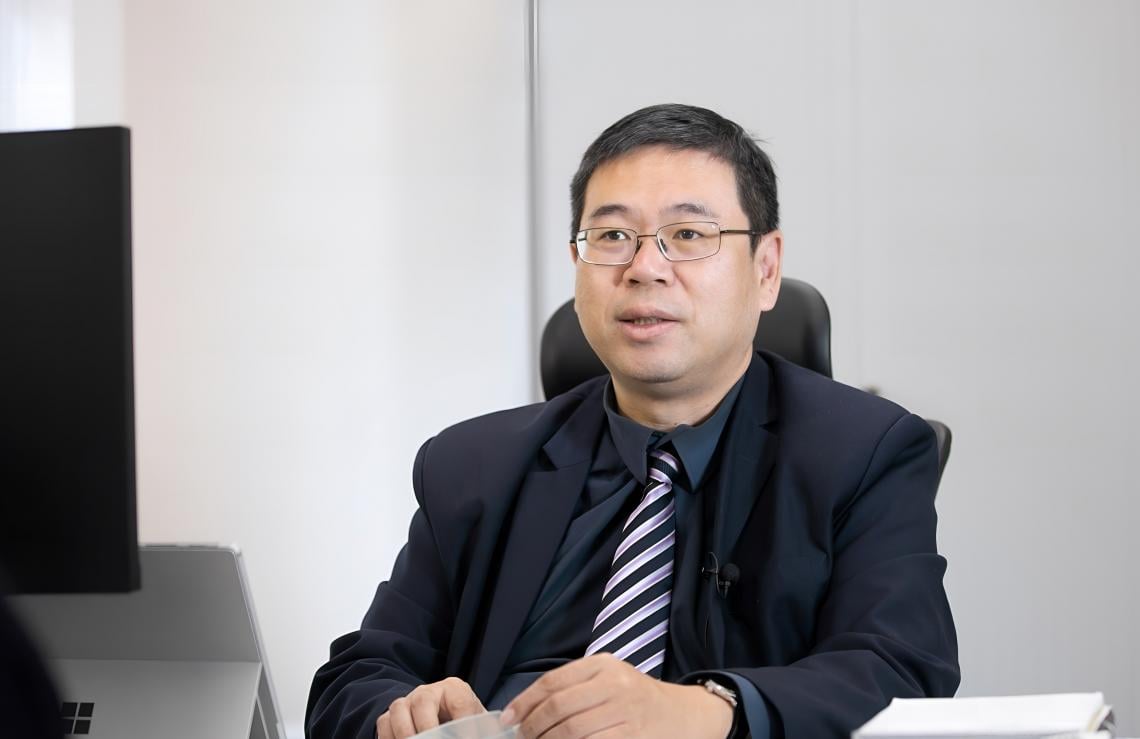
Prof Chen Xi, Dean of the WJYSIS and Chair Professor of Interdisciplinary Studies at Lingnan University.
Advertisement