
Materials
News

09 Oct 2026
Lingnan University
Lingnan University has achieved remarkable results in the 2026 edition of the World’s Top 2% Scientists list published by Stanford University. The 54 Lingnan scholars named represent an increase of about 25 per cent over last year’s 43. Among them, 21 are ranked in the world's top 100, and six are ranked first either in China or the Hong Kong SAR in their respective disciplines, underscoring international recognition of Lingnan’s academic influence as it transforms into a research-oriented liberal arts university comprehensive in arts and sciences in the digital era.

09 Oct 2026
Asia Research News
DNA breakdown in real time, How crystals bend without breaking, Mini-brain for Parkinson’s,
Heavy water helps weather forecasts, Exploring fish diversity and Mindfulness and self-stigma. Read it all in this month's Editor's Choice
07 Oct 2026
Daegu Gyeongbuk Institute of Science and Technology (DGIST)
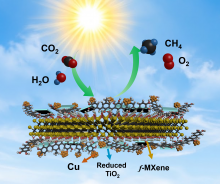
- Polymer protective layer applied to moisture-sensitive MXene surface improves stability
- Combining MXene with copper nanoparticles promotes electron transfer and methane formation
- Published in Advanced Energy Materials (IF: 25.5), an international journal in the fields of energy and materials
07 Oct 2026
Sungkyunkwan University
World-class p-type perovskite transistor performance achieved; research published in Nature
06 Oct 2026
Sungkyunkwan University
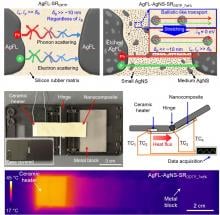
Uniform dispersion of 3.4-nanometer silver particles in stretchable rubber enhances both thermal and electrical conductivities under strain
01 Oct 2026
National Taiwan University
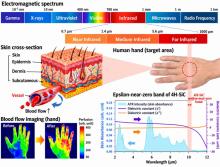
This study published in Advanced Science reports a wavelength-matched far-infrared approach for enhancing peripheral blood circulation using silicon carbide (SiC), which exhibits epsilon-near-zero behavior near 10.3 μm. By matching the selective thermal emission of SiC with the low-absorption optical window of human skin, the study demonstrates enhanced cutaneous blood flow compared with a conventional broadband graphite emitter. After 20 minutes of irradiation, SiC increased blood perfusion by 30.2%, compared with 18.6% for graphite, while maintaining skin temperature below 36 °C and without significant changes in blood pressure or heart rate. These results demonstrate the potential of wavelength-selective ENZ emitters for localized and thermally safe biomedical thermal modulation.
01 Oct 2026
Institute of Industrial Science, The University of Tokyo (UTokyo-IIS)
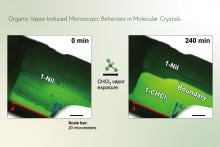
A study from the Institute of Industrial Science, The University of Tokyo used special instruments to investigate how crystals smaller than a strand of hair change and move as they draw in chloroform vapor
01 Oct 2026
YOKOHAMA National University
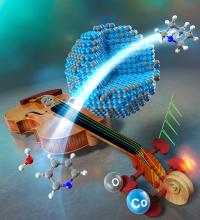
Controlling cobalt’s oxidation state during electrolysis enables highly selective hydrogenation without relying on scarce precious metals
30 Sep 2026
Tohoku University
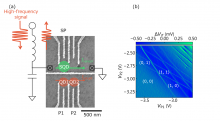
Researchers at Tohoku University and collaborators have demonstrated key technologies for controlling and measuring electrons in zinc oxide quantum dots, an important step toward developing spin-based quantum devices. Their results provide a new platform for exploring how electron spins behave in this promising material.
30 Sep 2026
Sungkyunkwan University
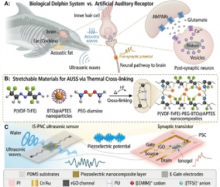
New organic–inorganic nanocomposite combines stretchability and piezoelectric properties, maintaining stable performance even under 50% strain
30 Sep 2026
Tohoku University
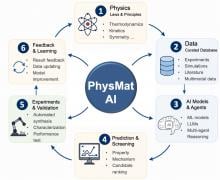
Correlation does not imply causation. Using AI to discover new materials is becoming more common, but data-driven approaches sometimes rely heavily on correlations and make testing AI-based predictions difficult. A new perspective paper published by Tohoku University researchers developed a framework for incorporating physics-based principles into AI to generate more interpretable, testable, and meaningful predictions.
29 Sep 2026
Tohoku University
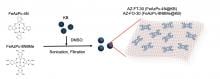
What if the blue pigment in your ink or dye could help power the future of clean energy? A research group has fine-tuned blue pigment molecules to create a blue-pigment based catalyst that is high-performing and free of the more expensive platinum.
23 Sep 2026
National Taiwan University
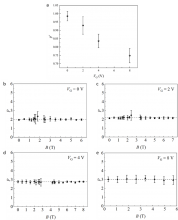
Scientists have shown that the two exponents (inelastic scattering exponent and dephasing exponent) commonly used to describe electron scattering in graphene do not necessarily follow the same behavior. Using gated epitaxial graphene, a multi-institutional team of researchers independently extracted the two exponents through current-heating measurements and weak-localization analysis. The contrasting gate-voltage dependence provides evidence that energy relaxation and loss of quantum phase coherence can be governed by different microscopic processes.
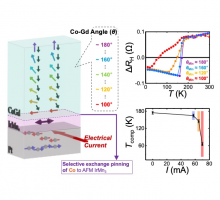
22 Sep 2026
Daegu Gyeongbuk Institute of Science and Technology (DGIST)
- DGIST Professor Jung-Il Hong’s team successfully controls magnetic properties using only “current pulses,” without complex chemical processing
- Reorienting only the material’s internal spins lowers the compensation temperature by up to 110 K
- The study was published in the international journal Advanced Functional Materials
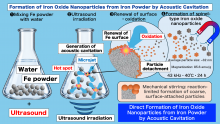
18 Sep 2026
Tohoku University
Rust usually takes months or years to form naturally, but researchers at Tohoku University found a way to speed it up dramatically. By blasting iron powder in water with ultrasound, they triggered the formation of spinel-type iron oxide nanoparticles in as little as 24 hours, no chemicals required. The technique could offer a greener route to materials used in magnets, catalysts, and biomedical applications.
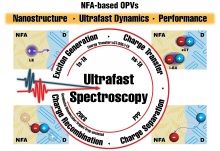
15 Sep 2026
Sungkyunkwan University
Advancing the Future of Renewable Energy: Decoding the Secret Dynamics of Organic Photovoltaics
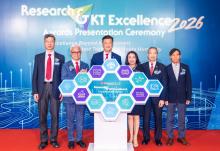
14 Sep 2026
Lingnan University
Lingnan University recently hosted the Research and Knowledge Transfer Excellence Awards Presentation Ceremony 2026. At the “Excellence Beyond Achievement Where Technology Meets Humanity” ceremony, 53 Lingnan scholars were presented with the Outstanding Researcher Award, the Early Career Researcher Award, and the Research & Knowledge Transfer Fund Award for their exceptional contributions to academic research and knowledge transfer that advance societal development. The University’s overall innovation and technology performance reached new heights in the 2025/26 academic year, with the number of granted patents for research projects increasing sixfold year-on-year to set a new record.
14 Sep 2026
City University of Hong Kong (CityUHK)
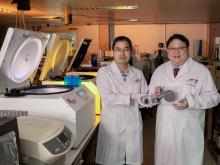
A research team from City University of Hong Kong (CityUHK), in collaboration with researchers from several other universities, has successfully developed a novel functionalised membrane that significantly improves the efficiency of collecting and detecting marine organisms’ eDNA, providing a more sensitive and reliable technical tool for monitoring marine biodiversity.
11 Sep 2026
Tohoku University
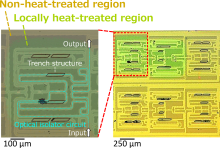
Kyocera Corporation and Tohoku University have developed a new technology that integrates optical isolators directly onto silicon photonics chips using laser annealing. Building on their previous collaboration, the two organizations will continue working toward commercialization and more efficient, sustainable information technologies.
10 Sep 2026
Tohoku University
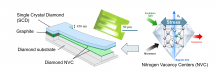
When tiny devices called MEMS (used in microphones, biosensors) undergo physical stress, their performance is compromised. Researchers found a new way to track this stress using a sensor that is part of the device.

10 Sep 2026
Tohoku University
Many cutting-edge technologies rely on molecules that can be switched on and off with light, but making them respond efficiently to visible light without losing stability has long been a challenge. Researchers at Tohoku University, working with Heinrich Heine University Düsseldorf, solved this by attaching a "molecular antenna" that captures visible light and funnels the energy directly into the photoswitch, achieving some of the highest visible-light sensitivities ever reported.

09 Sep 2026
Tohoku University
Researchers at Tohoku University have discovered that changing the number of layers in a crystal can systematically tune both the magnetic and topological properties of a material. By synthesizing a brand-new compound, the team showed how adding spacer layers shifts magnetic order from antiferromagnetic to ferrimagnetic - while also producing a highly tilted "type-II" Dirac electron state that can't exist for particles in a vacuum.
09 Sep 2026
Tohoku University
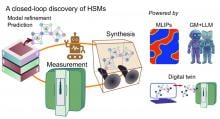
Finding better materials to store hydrogen safely and efficiently is key to clean energy, but AI models trained on incomplete data can recommend candidates that don't actually work in practice. An international team led by Tohoku University, drawing on insight from 69 researchers, has proposed a "physics-aware" framework that combines thermodynamic constraints, reproducible data, and real experimental feedback to make AI-guided materials discovery more reliable. The roadmap could help accelerate the search for practical hydrogen storage solutions to support future clean-energy systems.
08 Sep 2026
Tohoku University
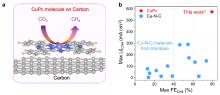
Scientists have turned a common blue pigment into a powerful tool for fighting climate change. Researchers at Tohoku University, Hokkaido University, and AZUL Energy created a copper phthalocyanine catalyst that converts carbon dioxide directly into methane fuel in a single step, reaching nearly 80% efficiency and sustaining performance for 80+ hours. The breakthrough could make carbon recycling more practical and scalable using an inexpensive, readily available material.

07 Sep 2026
National Taiwan University
Based on the layered design to decouple polarization, tunneling, and screening for the functionality of each constituent material, it is possible to overcome the drawback of conventional ferroelectric tunneling memories and reach low-power consumption and high on/off ratio.
04 Sep 2026
Tohoku University
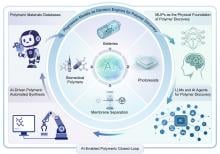
Researchers at Tohoku University have combined multiple tools to create an automated, self-improving AI workflow that may improve our search for polymer material candidates so that it is less expensive, less costly, and more environmentally friendly.

04 Sep 2026
Osaka Metropolitan University
Mapping interacting galaxies reveals how turbulence can suppress star formation
03 Sep 2026
The University of Osaka
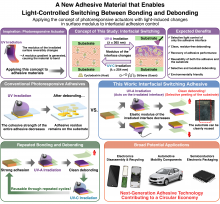
Researchers led by the University of Osaka developed a reusable light-responsive adhesive that switches adhesion at the interface instead of weakening the whole material. UV-A light reduces interfacial adhesion, enabling selective peeling without observable residue, while UV-C light restores adhesion. The response was retained through repeated cycles without solvent processing. The approach could simplify disassembly, repair, and recycling of electronics, vehicles, and semiconductor components, supporting more circular manufacturing across industries.

03 Sep 2026
Institute of Industrial Science, The University of Tokyo (UTokyo-IIS)
A team led by researchers from the Institute of Industrial Science, The University of Tokyo shows that controlling the spin of hydrogen atoms can regulate chemical reactions
Events

16 Dec 2026
Researchers, industry specialists and innovators will gather in Bangkok for the 7th International Conference on Materials Research and Innovation (7th ICMARI 2026), bringing together expertise in polymers, rubber, circular materials and advanced materials.

16 May 2024
Dive into the future of technology at ITEX 2024, where "Generative AI" takes centre stage, revolutionising how we approach Artificial Intelligence (AI). This groundbreaking theme shifts away from the ordinary, showcasing AI's power to create entirely new content and solutions.

11 Sep 2023
Join us for the 𝟭𝟮𝘁𝗵 𝗜𝗻𝘁𝗲𝗿𝗻𝗮𝘁𝗶𝗼𝗻𝗮𝗹 𝗖𝗼𝗻𝗳𝗲𝗿𝗲𝗻𝗰𝗲 𝗼𝗻 𝗔𝗽𝗽𝗹𝗶𝗲𝗱 𝗦𝗰𝗶𝗲𝗻𝗰𝗲 𝗮𝗻𝗱 𝗧𝗲𝗰𝗵𝗻𝗼𝗹𝗼𝗴𝘆 (𝟭𝟮𝘁𝗵 𝗜𝗖𝗔𝗦𝗧 𝟮𝟬𝟮𝟯) hybrid conference, on 11-12 September 2023 in Penang, Malaysia.
With the conference theme of "𝗥𝗲𝘃𝗼𝗹𝘂𝘁𝗶𝗼𝗻𝗶𝘇𝗶𝗻𝗴 𝗦𝗰𝗶𝗲𝗻𝗰𝗲 𝗮𝗻𝗱 𝗧𝗲𝗰𝗵𝗻𝗼𝗹𝗼𝗴𝘆 𝗳𝗼𝗿 𝗮 𝗕𝗲𝘁𝘁𝗲𝗿 𝗪𝗼𝗿𝗹𝗱", 12th ICAST 2023 aims to bring together academics, researchers, practitioners, and industry experts to share their knowledge and experiences on the latest advancements, applications, and innovations in the field of science and technology. We invite submissions of original and innovative research in various fields of science and technology.
In addition to the technical program, the conference will also feature a 𝗙𝗥𝗘𝗘 𝘄𝗼𝗿𝗸𝘀𝗵𝗼𝗽 for all participants titled 𝗜𝗻𝘁𝗿𝗼𝗱𝘂𝗰𝘁𝗶𝗼𝗻 𝘁𝗼 𝗕𝗶𝗯𝗹𝗶𝗼𝗺𝗲𝘁𝗿𝗶𝗰 𝗔𝗻𝗮𝗹𝘆𝘀𝗶𝘀 𝘄𝗼𝗿𝗸𝘀𝗵𝗼𝗽, which will be delivered by Assoc. Prof. Ts. Dr. Aidi Ahmi, author of the books “Bibliometric Analysis for Beginners” and “Bibliometric Analysis using R (for non-coders)”.
Submit now at
http://icast.arms.org.my/openconf/
For more information, please visit our conference website at
http://icast.arms.org.my/
#ICAST #ICAST2023 #HybridConference #Callforpapers
17 Apr 2023
To achieve Net Zero, the governments of the UK and Singapore are targeting ambitious carbon reduction goals, and electromobility has emerged as a key strategy. Now, Newcastle University (UK) and ERI@N (Singapore) are jointly hosting an international event, known as the Electromobility symposium, in Singapore to debate and discuss experiences in implementing land transport electrification in Singapore and the UK, evaluate policy landscapes, and identify successes and obstacles to inform future strategies.

18 Mar 2022
What does it take for Additive Manufacturing (AM) to move beyond? This webinar will continue explore the grand challenges of AM and its potential for growth.
03 Nov 2020
The Singapore Centre for 3D Printing is pleased to share our first online webinar in collaboration with HP-NTU Digital Manufacturing Corporate Lab.

The Khwarizmi International Award (KIA) acknowledges the efforts made by researchers, innovators and inventors from across the globe and to appreciate their high quality research work and contributions to different fields of science and technology.
South Korea's Ulsan National Institute of Science and Technology (UNIST), jointly with Ulsan Metropolitan City, held the "Graphene Symposium in Ulsan" on Wednesday, May 8, 2019.
09 Oct 2019
This 3-day event will showcase green technology solutions represented by 350 exhibitors from 35 countries.
Researchers
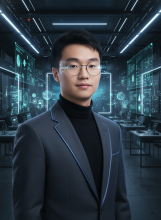
Dr. Changfang Zhao, is a Associate Professor at Hefei University of Technology. He is an active and young scholar, born on September 19, 1995. His research activities are focused on fiber reinforced plastics, mechanical metamaterials, and some engineering structures. He received his Bachelor’s degree and Doctorate in Engineering from Nanjing University of Science and Technology (NJUST) in Jun. 2018 and Jun. 2023, respectively. From Nov. 2021 to Oct. 2022, he was a joint-training Ph.D. student at the National University of Singapore, supported by a scholarship from the Ministry of Education of China (i.e., CSC). From Jan. 2022 to Nov. 2022, he conducted collaborative research at Newcastle University (UK) as a Visiting Scholar. From Jul. 2023 to Jul. 2025, he was employed as a Postdoctoral Fellow at Tsinghua University. From Jan. 2025 to Jan. 2026, he was appointed as a Visiting Professor at Lomonosov Moscow State University.
To date, he has published over 100 papers and obtained over 10 patents. He currently serves as the host for the National Natural Science Foundation of China, the China Postdoctoral Science Foundation, and the Postdoctoral Fellowship Program of CPSF. He has served as host for the China Scholarship Council, the Postgraduate Research & Practice Innovation Program of Jiangsu Province, and the Excellent Doctor Training Fund of NJUST. He has been the recipient of the National Scholarship for Doctoral Students from the Ministry of Education of China, the President’s Medal from NJUST, the ScienceFather Young Scientist Award, and the IAAM Young Scientist Medal. He is a member of both the Chinese Society for Composite Materials and the Chinese Society of Theoretical and Applied Mechanics. It is also noteworthy that he is a Vebleo Fellow Jr. He currently serves as a Guest Editor for the journals of Polym. Int., Polymers, Adv. Polym. Technol., Front. Mater., and Processes. Additionally, he is a peer reviewer for the journals of Addit. Manuf., Compos. Part B-Eng., Int. J. Impact Eng., Thin-Walled Struct., Ocean Eng., Compos. Struct., J. Alloys Compd., etc. He maintains an open, interdisciplinary, and pure research attitude, embracing a commitment to rigorous scientific inquiry.
City University of Hong Kong (CityUHK)
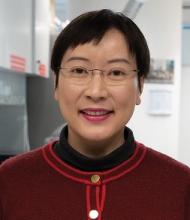
Prof. Lin focuses on technological advancement of circular waste-based biorefinery for sustainable production of chemicals, materials and fuels, that contributes to reduction of environmental burden of waste disposal and resource efficiency.

Dr. Muhammad Abdul Basit is an established academician who is concomitantly working in science and arts, accomplishing the publications of multiple books as well as more than 100 international research publications in the field of nanomaterials, thin-film techniques, and photoenergy applications. Dr. completed did his PhD & Post-Doc. from Hanyang University, south Korea and currently serving as an Associate Professor at the Institute of Space Technology, Pakistan where he is leading the Nanomaterials for Advanced Energy Applications research group and lab. Dr. Basit has won multiple intellectual capability awards from various agencies such as HEC Pakistan, PCK Korea and DAAD-Germany.

Dr. Umedjon Khalilov is a computational materials scientist with over 20 years of experience in atomistic modeling of nanostructures. His research integrates molecular dynamics (MD), Monte Carlo (MC), and density functional theory (DFT) simulations to investigate the synthesis, stability, and functionality of carbon-based and silicon-based nanomaterials. He has led or contributed to numerous international projects focused on hydrogen storage, carbon nanotube growth, and surface reactions in plasma environments. Dr. Khalilov is also actively involved in AI-driven materials discovery and collaborative platforms bridging simulation with experiment.
He has authored 40+ peer-reviewed publications in leading journals.

National Institute for Materials Science (NIMS)
Group Leader at the Magnetic Functional Device Group, the Research Center for Magnetic and Spintronic Materials at the National Institute for Materials Science (NIMS), Japan.

I am an efficient Professor able to Develop courses with IT skills & sound teaching skills in a manner attractive to students. I have vast experience in supervising postgraduate research & Contribute in a well manner to the ongoing academic development of the School’s postgraduate courses and research.

Professor Mikiya Fujii is an expert on materials informatics at Nara Institute of Science and Technology (NAIST), Japan.

National Taiwan University
Professor Ru-Shi Liu, based at the Department of Chemistry, National Taiwan University (NTU) research interests span several areas, including investigating phosphor materials for light-emitting diodes (LEDs), exploring materials for energy conversion (such as water splitting, fuel cells, and batteries), and delving into the application of nanomaterials in medicine, particularly for photodynamic therapy.

Institute for Integrated Cell-Material Sciences (iCeMS) at Kyoto University
Prof Jun Suzuki is a biochemist and the deputy director at the Institute for Integrated Cell-Material Sciences (iCeMS), Kyoto University, Japan.

National Institute for Materials Science (NIMS)
Group Leader, Frontier Molecules Group, Nanomaterials Field, Research Center for Materials Nanoarchitectonics (MANA) at the National Institute for Materials Science (NIMS), Japan.

Institute for Integrated Cell-Material Sciences (iCeMS) at Kyoto University
Lecturer at the Institute for Integrated Cell-Material Sciences (iCeMS), Kyoto University, Japan.

Chief Physician at Shanghai Ninth People’s Hospital, Shanghai Jiaotong University School of Medicine, China.

Dr. Mariyappan Shanmugam is a Professor of Physics at Hindustan Institute of Technology and Science, Chennai, India. He carries out research in the areas of Materials for Energy related applications. He completed his PhD at South Dakota State University, USA in 2011. He was a Postdoctoral Research Fellow at the College of Nanoscale Science and Engineering, State University of New York and Worcester Polytechnic Institute, USA during 2011-2015. He established a research and development division in a Silicon Valley-based start-up company, Macromolecular Inc., to develop photovoltaic materials and devices for space PV applications. Semiconductor Nanomaterials, Thin films, 2D-Layered Materials, Graphene, h-BN for Optoelectronics are his primary research interests.

I'm currently an adjunct professor at the Asian Institute of Management in Manila. I crafted a course called Art-Science Thinking based on my dissertation on Culture as Transformative Innovation: Filipino Care in the Practice of Family Medicine. Since 2017, my consultancy & studio has been collaborating with the Dept. of Science & Technology in the Philippines.

Professor Madhu Bhaskaran is a Fellow of the Australian Academy of Technology and Engineering. She is a multi-award winning electronics engineer and innovator. She proudly co-leads Women in STEMM Australia.
Daegu Gyeongbuk Institute of Science and Technology (DGIST)
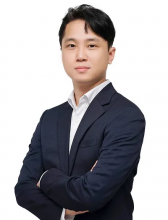
Professor Dae-hyun Nam is dedicated to advancing electrocatalysts for sustainable energy conversion and storage. By leveraging expertise in materials science, engineering, and chemistry, he aims to address pressing energy and environmental challenges, paving the way for a sustainable future.

ChM. Ts. Dr. Uganeeswary Suparmaniam, AMIChemE (UK) is a multiple award-winning young scientist, sustainability advocate, and climate activist attached to the HICoE-Centre for Biofuel and Biochemical Research, Institute of Self-Sustainable Building, PETRONAS University of Technology, Malaysia.

Mahidol University
Taweechai Amornsakchai is an Associate Professor at Mahidol University. With a Ph.D. in Polymer Physics, his research focuses on reinforcing plastics with pineapple leaf fiber and exploring pineapple stem starch for biodegradable packaging.
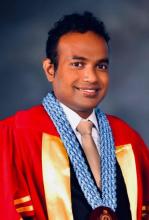
Chameera Udawattha, a pioneering architect and researcher, investigates eco-friendly construction materials, exploring alternative solutions for construction and building issues. His work promotes sustainable building practices.
Dr Fabien Grasset is a Research Director at the Centre national de la recherche scientifique (CNRS) and currently serving as Director of Research for Rennes Institute of Chemical Sciences (ISCR). His areas of expertise include materials chemistry, solid-state chemistry, nanotechnology, nanoparticles, optical coatings and thin films.
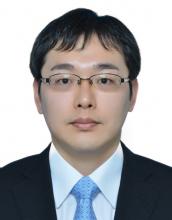
Taishi Yokoi is an Associate Professor of the Institute of Biomaterials and Bioengineering at Tokyo Medical and Dental University. His research areas include biomedical engineering, inorganic compounds and inorganic materials chemistry.
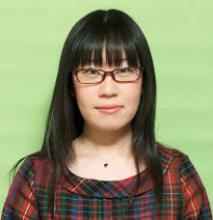
National Institute for Materials Science (NIMS)
Dr Naoka Nagamura is senior researcher at the National Institute for Materials Science (NIMS) and visiting associate professor at Tokyo University of Science. She researches advanced materials, electrochemistry and photoemission spectroscopy.
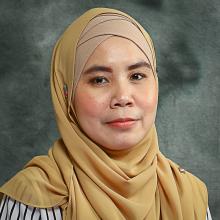
Universiti Malaysia Sarawak
Ts Dr. Siti Kudnie Sahari is a senior lecturer at the Department of Electrical and Electronic Engineering, Faculty of Engineering, Universiti Malaysia Sarawak (UNIMAS). Her current research interests include thin film, advanced semiconductor materials, semiconductor processing and solar devices.
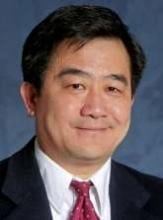
City University of Hong Kong (CityUHK)
Professor Alex Jen Kwan-yue is Chair Professor of Materials Science and Director of the Hong Kong Institute for Clean Energy at the City University of Hong Kong (CityU). His expertise includes the use of molecular engineering and self-assembly for hybrid materials.
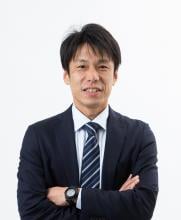
Dr. Hiroki Ago is a Distinguished Professor of the Global Innovation Center at Kyushu University. His research focuses on nanomaterials, particularly graphene and related 2D materials, and their applications.
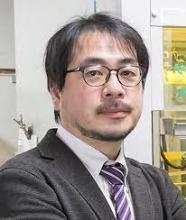
Tohoku University
Prof. Hiroshi Yabu is a Professor and Principal Investigator at the Advanced Institute for Materials Research (WPI-AIMR) at Tohoku University. His research interests include self-organization, biomimetics, and bio-inspired materials for energy and low environmental impacts.
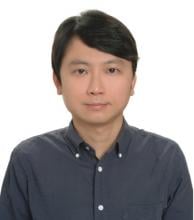
Dr. Zong-Hong Lin is a Professor at the Institute of Biomedical Engineering, National Tsing Hua University and at the Department of Biomedical Engineering, National Taiwan University.
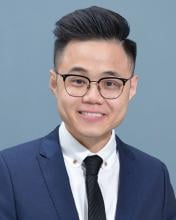
Nanyang Technological University
Dr. Edison Huixiang Ang is a Singaporean Materials Scientist who born in 28 July 1987. He has a background in materials science and engineering along with a diverse skill set. He completed his undergraduate studies, earning B.S. degrees, at Nanyang Technological University in Singapore in 2012. Later, in 2017, Dr. Ang received his Ph.D. from the same university. He gained additional experience as a Postdoctoral Fellow at the National University of Singapore from 2016 to 2017 and later served as a Research Fellow at Nanyang Technological University from 2017 to 2019. In mid-2018, he also took on a Visiting Scholar role at the Technical University of Munich in Germany.
Currently, Dr. Edison H. Ang serves as an Assistant Professor at the National Institute of Education/Nanyang Technological University.
His expertise encompasses various areas, including 2D Nanomaterials and Nanotechnology, Energy Storage and Conversion, Sensor Technology, Membrane Technology, Additive Manufacturing, Catalysis, Waste-to-Wealth, Surface Coating and Film, Circular Economy, Renewable Energy, Sustainability, and Chemistry and Chemical Engineering.

Her current research focuses on the synthesis of semiconducting polymers for organic electronics and has published >100 papers in this area of research.
Giants in history

Abdus Suttar Khan (c. 1941 – 31 January 2008) was a Bangladeshi engineer who spent a significant part of his career conducting aerospace research with NASA, United Technology and Alstom.

Lin Lanying (7 February 1918 – 4 March 2003) was a Chinese material engineer remembered for her contributions to the field of semiconductor and aerospace materials. Lanying was born into a family who did not believe in educating girls and she was not allowed to go to school.