

Materials
News

16 Jun 2026
Tohoku University
Discovering new catalysts to power hydrogen production often involves a time-consuming trial-and-error process. Not only that, but materials scientists often have to comb through troves of scientific data and experimental data. Yet these days may be over thanks to a new AI-powered platform that enables researchers to identify new catalysts for methane pyrolysis— a promising technology for producing hydrogen with lower carbon emissions.
16 Jun 2026
Tohoku University
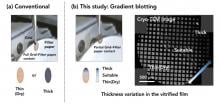
Cryo-electron transmission microscopy helps scientists observe biological specimens in a state that closely resembles their natural environment, especially those dispersed in water. But applying the technique outside of aqueous systems has proved relatively difficult. However, researchers at Tohoku University have created a new technique that enabled cryo-TEM to be applied to frozen methanol, opening a new avenue for studying materials in a wider variety of natural states.

16 Jun 2026
Tohoku University
Mechanoluminescent materials, which convert mechanical energy into light, are great for self-powered sensors. However, they have traditionally been made using rare earth materials or complex material compositions, making them relatively expensive to manufacture. Now, a research team has developed a zinc oxide material that not only possesses highly sensitive mechanoluminescence but is made from cheap, earth-abundant materials.
12 Jun 2026
Tohoku University
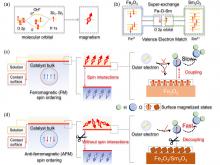
An exciting new strategy involving a specially designed iron-based catalyst can speed up the reaction that powers next-gen zinc-air batteries. This means cleaner, more efficient energy for everyone.
11 Jun 2026
Osaka Metropolitan University
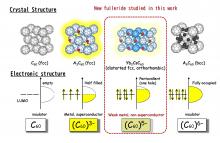
An international research collaboration, including OMU, IJS, NIST and AUT, has unveiled a robust metallic state in the molecular material ytterbium cesium fulleride (Yb₂CsC₆₀) that directly tests conventional theories of electron behavior. Normally, strong interactions between electrons are expected to suppress their movement and turn materials into insulators through a process called a Mott transition. However, Yb₂CsC₆₀ represents a case where metallicity survived, suggesting that the material’s electrons were continuing to move collectively, stabilized by a different mechanism. The discovery is of relevance to future research in fields such as superconductivity, quantum matter, and next-generation electronic technologies.

10 Jun 2026
Osaka Metropolitan University
Researchers innovated artificial photosynthesis technology by optimizing the electrolyzer part of the system. This tweak enables the continuous production of solar fuel, even with fluctuations in sunlight intensity.
10 Jun 2026
Kanazawa University
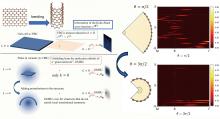
New “GMBU” procedure reveals band structures in finite, curved nanomaterials, linking nano‑ARPES and theory for next‑generation device design.
08 Jun 2026
Tohoku University
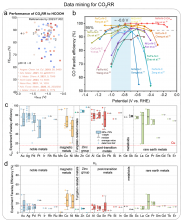
Exciting new research at Tohoku University’s Advanced Institute for Materials Research (WPI-AIMR) explains how to transform decades of scattered literature data into design rules for catalysts.
08 Jun 2026
The University of Osaka
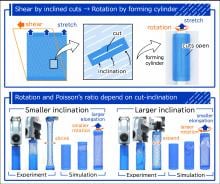
Researchers at The University of Osaka have developed novel kirigami structures with periodic parallel inclined cuts. Stretching these materials longitudinally causes them to twist and rotate. Thus, these structures provide a mechanism for coupling tension and rotation. The mechanical deformation of these structures can be characterized in terms of a geometrical property, the chirality. Some of the developed chiral structures were auxetic, longitudinal stretching resulting in lateral expansion, instead of contraction. The findings have applications in soft robotics and soft actuators.
08 Jun 2026
Osaka Metropolitan University
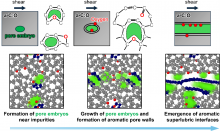
Scientists found that certain chemical impurities, such as hydrogen and oxygen, help amorphous carbon form graphite-like, ultralow-friction interfaces under mechanical stress. The findings reveal how impurities can enable self-forming lubricating surfaces, offering a new strategy for designing durable, energy-efficient materials.
04 Jun 2026
Lingnan University
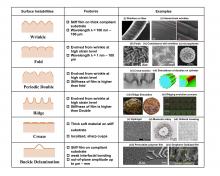
Wrinkles or dents appearing on material surfaces are often regarded as signs of damage or deformation. In a recent collaborative review paper published in the internationally recognised journal Nano-Micro Letters and titled Harnessing Surface Instabilities for Functional Materials: Mechanics, Morphology, and Emerging Applications, researchers from Lingnan University propose that naturally formed surface textures in materials could in future be combined with artificial intelligence (AI)-assisted design to develop novel functional materials. The technology would potentially support applications in intelligent anti-counterfeiting, artificial organs, and stretchable batteries.
04 Jun 2026
Lingnan University
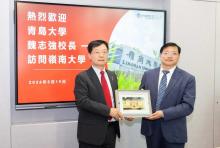
On 19 May 2026, a delegation led by Prof Wei Zhiqiang, President of Qingdao University, visited Lingnan University, and was warmly received by Prof S. Joe Qin, President and Wai Kee Kau Chair Professor of Data Science at Lingnan University, and other University representatives. Prof Qin and Prof Wei signed a university-level Memorandum of Understanding (MoU) witnessed by representatives from both institutions to further coordinate development and reinforce collaboration between higher education institutions in Shandong and the Hong Kong SAR.
03 Jun 2026
Tohoku University
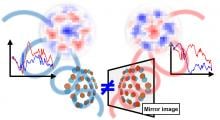
A remarkable new method of distinguishing chiral (mirror-image) molecules could eventually detect distortions inside quantum and soft materials, find abnormal protein aggregates linked to disease, and more.

02 Jun 2026
Tohoku University
Researchers at Tohoku University used state-of-the-art semiconductor fabrication technologies to demonstrate how we could be ready for large-scale spintronic p-computers.
01 Jun 2026
Daegu Gyeongbuk Institute of Science and Technology (DGIST)
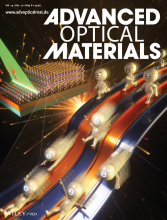
- Prof. Hyuk-Jun Kwon’s team at DGIST develops a high-performance photodetector (light-sensing sensor) in a two-dimensional semiconductor material using a single laser process
- Expected to enable next-generation flexible and image sensor applications without complex stacking or transfer processes
- Published in the international journal Advanced Optical Materials
28 May 2026
Tohoku University
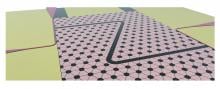
Spin waves are a promising way to reduce the energy-consumption of computing. New research shows that sending spin waves along a zig-zag path boosts the signal over 5,000 times compared to previous methods.
26 May 2026
City University of Hong Kong (CityUHK)
A research team led by Professor Steven Wang, Associate Vice-President (Resources Planning) and Associate Professor in the Department of Mechanical Engineering and School of Energy and Environment, has designed a revolutionary capillary structure that can trigger the Leidenfrost effect, offering a practical solution for the temperature-regulated Leidenfrost effect without requiring complex surface engineering.

26 May 2026
Tohoku University
A newly designed magnesium-tin alloy is bringing magnesium batteries a step closer to reality. The new alloy design improves both stability and magnesium-ion transport inside solid-state batteries, helping address one of the long-standing challenges in next-generation battery technology.

25 May 2026
Impart
From temporary pits drawn in sand to finely crafted wooden boards, pallanguzhi has been played across South India for generations. Associated especially with women’s leisure and festival gatherings, the game reflects traditions of strategy, arithmetic, and social exchange, alongside possible links to older mancala traditions circulating across the Indian Ocean trade routes.
25 May 2026
Tohoku University
Researchers from Tohoku University have developed a new kind of filter that overcomes a long-standing challenge, creating a special material that makes separating CO2 from other gases both fast and highly accurate.
22 May 2026
Tohoku University
What if some of the most important scientific discoveries are already hidden in data collected years ago? Researchers at Tohoku University are exploring how AI and data-driven science can reveal new insights from past experiments and scientific literature. Their review highlights how old data could help accelerate discoveries in chemistry and materials science.

22 May 2026
Tohoku University
Studying molecules in liquid solution is notoriously difficult. However, this just got easier thanks to a new X-ray technique developed by an international group of scientists. The technique can capture ultrafast molecular changes in extremely dilute liquid samples.
21 May 2026
Tohoku University
Researchers at Tohoku University have uncovered a new principle that could help accelerate the development of cheaper and more efficient fuel cells. The team discovered that dual-atom catalysts follow a previously unknown “dual-Sabatier optima” pattern, overturning long-standing assumptions in catalyst science and opening new possibilities for clean energy technologies.
20 May 2026
National Institute for Materials Science (NIMS)
Engineered carbon-based nanomaterials can interfere with the aggregation of misfolded proteins linked to neurodegenerative diseases, offering a new direction for future therapeutic exploration.
13 May 2026
Tohoku University
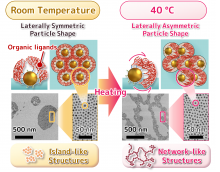
A tiny change to the arrangement of organic molecules in nanoparticle systems can result in a massive change to material properties. By synthesizing gold nanoparticles coated with two different types of organic molecules, a research team has uncovered new insights into this phenomenon.
13 May 2026
Osaka Metropolitan University
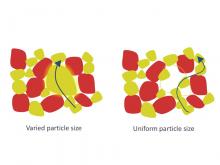
Solid electrolyte particle sizes affect ion pathways

13 May 2026
Tohoku University
Many secrets lie deep beneath the Earth’s surface. Researchers from Tohoku University uncovered one of them when they discovered a hidden natural lubricant inside an active fault. Their findings may explain why the Atotsugawa Fault System produces surprisingly few large earthquakes despite being located in a tectonically active region.

12 May 2026
Asia Research News
Dolphin secrets, Iron-rich Moon, Squeezing diamonds, Sweat the small stuff, Muonic molecules. Read all in the latest Editor's Choice. Plus: SciCom Coffee speaker.
11 May 2026
National Taiwan University
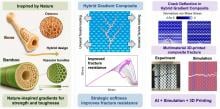
Researchers at National Taiwan University developed bioinspired composites that mimic bone and bamboo structures to improve strength and toughness simultaneously. Using artificial intelligence, simulations, and 3D printing, the team discovered how soft layers near cracks can prevent catastrophic failure.
08 May 2026
Tohoku University
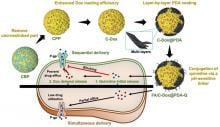
Stubborn cancer tumors were completely (and safely) eliminated in a mouse model with a small but mighty treatment method using nanoparticles, controlled drug release in stages, and light from lasers.
Events
Sorry, no events coming up for this topic.
Researchers

Hokkaido University
Professor, Faculty of Environmental Science, Hokkaido University
The Chinese University of Hong Kong (CUHK)
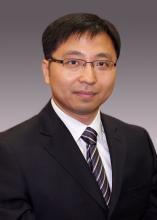
Li Zhang is an Associate Professor in the Department of Mechanical and Automation Engineering (MAE) and an associate faculty member in Chow Yuk Ho Technology Centre for Innovative Medicine (TIM) and T Stone Robotics Institute (CURI) at The Chinese University of Hong Kong (CUHK). He is also the co-director of CAS SIAT-CUHK Joint Laboratory of Robotics and Intelligent Systems.
Hong Kong Baptist University (HKBU)
Dr. Zhifeng Huang is a professor at Hong Kong Baptist University, and associate director of nanomaterials at HKBU's Golden Meditech Centre for NeuroRegeneration Sciences. He co-founded Mat-A-Cell Ltd.
National Institute for Materials Science (NIMS)
Materials scientist studying structure and microstructure of metal and alloys by transmission electron microscopy. Specialize in light metals and quasicrystals.
Hokkaido University
Prof. Yuichi Kitagawa is a specially appointed lecturer at the Institute for Chemical Reaction Design and Discovery (ICReDD), Hokkaido University, Japan.
Hong Kong Baptist University (HKBU)
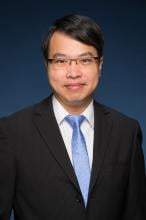
Dr. Leung is an Associate Professor and Programme Director at the Department of Chemistry, The Hong Kong Baptist University (HKBU), Hong Kong SAR, P. R. China. He concurrently holds the Honorary Associate Professorship at the Faculty of Dentistry, The University of Hong Kong (HKU). He is a Chartered Scientist, Chartered Chemist of the Royal Society of Chemistry in UK and a member in the State Key Laboratory of Environmental and Biological Analysis at HKBU. He was elected as a Founding Member of The Hong Kong Young Academy of Sciences. His research interests are in the field of supramolecular chemistry, organic materials catalysis, nanoscience, and nanomedicine.
Korea Advanced Institute of Science and Technology (KAIST)
Professor in Electrical Engineering at Korea Advanced Institute of Science and Technology (KAIST).
National Institute for Materials Science (NIMS)
Current: Deputy and Administrative Director & Principal Investigator of International Center for Materials Nanoarchitectonics (WPI-MANA) .
Professor at the Graduate School of Pure and Applied Sciences, University of Tsukuba
Daegu Gyeongbuk Institute of Science and Technology (DGIST)
Prof. SU-IL IN has been working at DGIST (Daegu Gyeongbuk Institute of Science & Technology) since 2012. He served as Dean of International and External Affairs 2016 ~ 2017. He received his Ph.D. in Chemistry from University of Cambridge in 2008. Subsequently he was a postdoctoral researcher at Technical University of Denmark by 2010. Then he joined the Pennsylvania State University as a postdoctoral researcher in the Department of Chemistry before joining DGIST. Professor In’s current researches include synthesis and analysis of functional nano (bio)-materials for environmentally friendly renewable energy such as photovoltaic, heterogeneous catalysis and biocatalysts. (https://insuil.dgist.ac.kr/)

Nagoya University
Dr. Omachi is Associate Professor, Research Center for Materials Science, Nagoya University

Ulsan National Institute of Science and Technology (UNIST)
Prof. Kyoung- Jin Choi leads the Energy Conversion Materials Lab at Ulsan National Institute of Science and Technology (UNIST). He is also the editor of Electronic Materials Letters.

Korea Advanced Institute of Science and Technology (KAIST)
Prof. Oh is the director of the Creative Research Initiative Center for Functionally Antagonistic Nano-Engineering, and the director of the Active Materials and Dynamic Systems Lab at KAIST.

Professor in Agriculture and Education in the Iloilo Science and Technology University Leon Campus (ISAT U). Leon, ILOILO, PHILIPPINES
- « first
- ‹ previous
- 1
- 2
- 3
- 4
Giants in history

Abdus Suttar Khan (c. 1941 – 31 January 2008) was a Bangladeshi engineer who spent a significant part of his career conducting aerospace research with NASA, United Technology and Alstom.

Lin Lanying (7 February 1918 – 4 March 2003) was a Chinese material engineer remembered for her contributions to the field of semiconductor and aerospace materials. Lanying was born into a family who did not believe in educating girls and she was not allowed to go to school.