

Materials
News
08 Jul 2026
Tohoku University
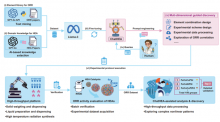
An AI assistant for high-entropy alloy (HEA) electrocatalysis named ChatHEA provided a helping hand not just to extract data from the literature, but provide suggestions for promising catalysts, design experiments, and analyze data.

08 Jul 2026
Newcastle University in Singapore
Pineapple leaf fibres gain strength through alkali treatment, supporting stronger and more sustainable biobased composites.

07 Jul 2026
Osaka Metropolitan University
Researchers break a fundamental rule to create a new concept: heat that can be directed and “programmed”. In most materials, heat absorption and heat emission are linked, meaning a surface that absorbs thermal radiation well from a particular direction will also emit it in the same way. A team from OMU in Japan has designed a reconfigurable device that breaks this symmetry, enabling heat to be absorbed and emitted differently depending on the direction of absorption. This technology could eventually lead to smarter thermal-management systems and infrared sensors.
02 Jul 2026
Osaka Metropolitan University
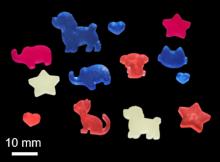
The end of colored plastic downgrading could be near with new approach
02 Jul 2026
Ehime University
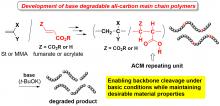
Base-mediated degradation of carbon−Carbon main chain polymers bearing alkoxycarbonylmethylene repeating units
02 Jul 2026
Lingnan University
Prof Chen Xi, Dean of the Wu Jieh Yee School of Interdisciplinary Studies (WJYSIS) and Chair Professor of Interdisciplinary Studies at Lingnan University, has been elected an ICCES Distinguished Fellow by the International Conference on Computational & Experimental Engineering and Sciences. This prestigious honour recognises his outstanding contributions in distributed carbon dioxide capture and utilisation, advanced materials and structures of AI adoption, soft robots, and flexible batteries.
01 Jul 2026
Osaka Metropolitan University
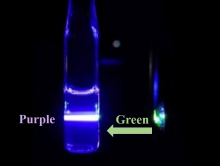
A research group has developed “TP-An,” a molecule that enables even low-energy, long-wavelength light to be used more effectively by solar cells and photocatalysts. The molecule can be used even at high concentrations that are difficult for traditional materials, suggesting their usefulness in technology.
30 Jun 2026
Tohoku University
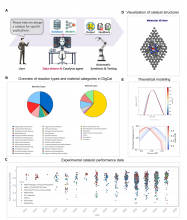
Catalysts play a vital role in the chemical reactions used to produce fertilizers, fuels, pharmaceuticals, and hydrogen, to name a few. AI-driven catalyst discovery is revolutionizing the field of materials science. But AI is only as reliable as the data it learns from. Therefore, researchers from Tohoku University have introduced an AI-powered digital catalysis platform that serves as a one-stop source for experimental data, theoretical calculations, and scientific literature.
29 Jun 2026
Lingnan University
Lingnan University has secured funding for 49 research projects in the 2026/27 competitive funding rounds of the Research Grants Council (RGC), including the General Research Fund (GRF), the Early Career Scheme (ECS), and the Humanities and Social Sciences Prestigious Fellowship Scheme (HSSPFS), with total awarded funding approaching HK$27 million.
Of these, 48 projects were supported under the GRF and ECS schemes, marking a record high for the University. Funding secured under the ECS scheme alone increased by nearly 30 per cent year-on-year, underscoring the strong research capability and academic excellence of Lingnan’s early-career scholars.
25 Jun 2026
Tohoku University
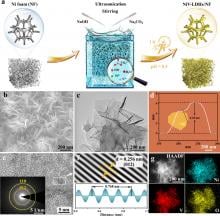
A new electrochemical system simultaneously converts plant-derived materials and nitrate pollutants into valuable industrial chemicals. Developed by Tohoku University researchers, the system provides a more sustainable way to manufacture chemicals while helping address wastewater pollution.
25 Jun 2026
Tohoku University
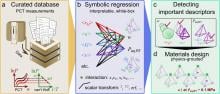
Hydrogen can store renewable energy, but then what stores the hydrogen? A new AI-powered, logic-based method provides probable materials for the job – and explains the reasoning behind its decision.
24 Jun 2026
Hiroshima University
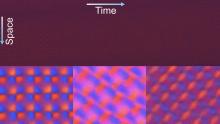
New experimental evidence demonstrates that discrete space-time crystals can be realized in classical soft-matter systems, thereby moving beyond the traditional complexities of quantum mechanics.
24 Jun 2026
National Taiwan University
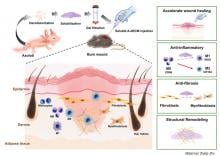
Researchers in Taiwan have developed a cell-free extracellular matrix material from axolotl skin that helped mouse burn wounds close faster and showed signs of reduced fibrotic scarring. The findings suggest that one of nature’s most remarkable regenerators may inspire future strategies for burns, chronic wounds, and surgical injuries, but the approach is not yet a treatment for human wounds.
24 Jun 2026
Tohoku University
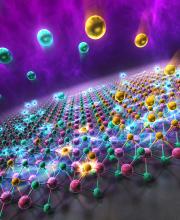
Janus 2D materials, named after the two-faced Roman god, boast bottom surfaces composing two different elements. This asymmetry gives them unique properties, and Janus two-dimensional semiconductors are becoming more common. While scientists have long known how to produce Janus 2D materials, they have yet to grasp the underlying physics behind the process. Now, researchers from Tohoku University have solved the mystery.

22 Jun 2026
Impart
Seen in funerary architecture, homes, and religious buildings across regions spanning modern-day India and Pakistan, pinjrakari involves transforming wood into intricate latticed screens that filter light, allow ventilation, and create privacy. Drawing from Central Asian and broader Islamicate design traditions, the craft evolved through architectural exchange, regional patronage, and highly skilled woodworking practices across South Asia.

19 Jun 2026
Kanazawa University
Kanazawa University-led researchers developed a one-step recycling method that recovers toxic lead (Pb) and valuable metals including gold (Au) and indium (In) from flexible perovskite solar cells, supporting sustainable solar energy technologies.

18 Jun 2026
Asia Research News
Sweet power nanogenerator, Cosmic fossil, Dopamine and Alzheimer's link, Sustainable 3D printing, Quantum dots for brain diseases, Smart trolley and Bamboo and bone. Read all in the latest Editor's Choice. Plus SciCom Coffee talk: Inside a University Merger.

17 Jun 2026
Tohoku University
Researchers demonstrate a systematic screening method that can help find promising catalyst candidates without the tedious trial-and-error of every single possible combination.

16 Jun 2026
Tohoku University
Discovering new catalysts to power hydrogen production often involves a time-consuming trial-and-error process. Not only that, but materials scientists often have to comb through troves of scientific data and experimental data. Yet these days may be over thanks to a new AI-powered platform that enables researchers to identify new catalysts for methane pyrolysis— a promising technology for producing hydrogen with lower carbon emissions.
16 Jun 2026
Tohoku University
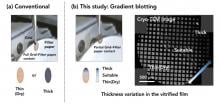
Cryo-electron transmission microscopy helps scientists observe biological specimens in a state that closely resembles their natural environment, especially those dispersed in water. But applying the technique outside of aqueous systems has proved relatively difficult. However, researchers at Tohoku University have created a new technique that enabled cryo-TEM to be applied to frozen methanol, opening a new avenue for studying materials in a wider variety of natural states.

16 Jun 2026
Tohoku University
Mechanoluminescent materials, which convert mechanical energy into light, are great for self-powered sensors. However, they have traditionally been made using rare earth materials or complex material compositions, making them relatively expensive to manufacture. Now, a research team has developed a zinc oxide material that not only possesses highly sensitive mechanoluminescence but is made from cheap, earth-abundant materials.
12 Jun 2026
Tohoku University
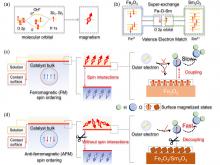
An exciting new strategy involving a specially designed iron-based catalyst can speed up the reaction that powers next-gen zinc-air batteries. This means cleaner, more efficient energy for everyone.
11 Jun 2026
Osaka Metropolitan University
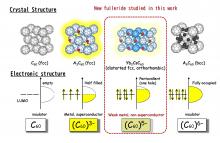
An international research collaboration, including OMU, IJS, NIST and AUT, has unveiled a robust metallic state in the molecular material ytterbium cesium fulleride (Yb₂CsC₆₀) that directly tests conventional theories of electron behavior. Normally, strong interactions between electrons are expected to suppress their movement and turn materials into insulators through a process called a Mott transition. However, Yb₂CsC₆₀ represents a case where metallicity survived, suggesting that the material’s electrons were continuing to move collectively, stabilized by a different mechanism. The discovery is of relevance to future research in fields such as superconductivity, quantum matter, and next-generation electronic technologies.
10 Jun 2026
Osaka Metropolitan University
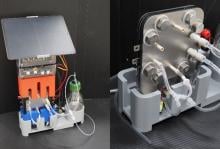
Researchers innovated artificial photosynthesis technology by optimizing the electrolyzer part of the system. This tweak enables the continuous production of solar fuel, even with fluctuations in sunlight intensity.
10 Jun 2026
Kanazawa University
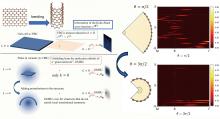
New “GMBU” procedure reveals band structures in finite, curved nanomaterials, linking nano‑ARPES and theory for next‑generation device design.
08 Jun 2026
Tohoku University
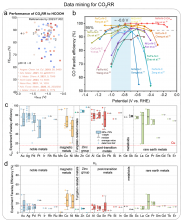
Exciting new research at Tohoku University’s Advanced Institute for Materials Research (WPI-AIMR) explains how to transform decades of scattered literature data into design rules for catalysts.
08 Jun 2026
The University of Osaka
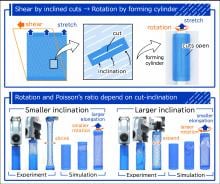
Researchers at The University of Osaka have developed novel kirigami structures with periodic parallel inclined cuts. Stretching these materials longitudinally causes them to twist and rotate. Thus, these structures provide a mechanism for coupling tension and rotation. The mechanical deformation of these structures can be characterized in terms of a geometrical property, the chirality. Some of the developed chiral structures were auxetic, longitudinal stretching resulting in lateral expansion, instead of contraction. The findings have applications in soft robotics and soft actuators.
08 Jun 2026
Osaka Metropolitan University
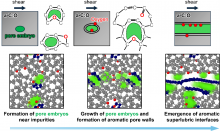
Scientists found that certain chemical impurities, such as hydrogen and oxygen, help amorphous carbon form graphite-like, ultralow-friction interfaces under mechanical stress. The findings reveal how impurities can enable self-forming lubricating surfaces, offering a new strategy for designing durable, energy-efficient materials.
04 Jun 2026
Lingnan University
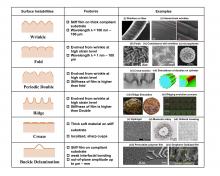
Wrinkles or dents appearing on material surfaces are often regarded as signs of damage or deformation. In a recent collaborative review paper published in the internationally recognised journal Nano-Micro Letters and titled Harnessing Surface Instabilities for Functional Materials: Mechanics, Morphology, and Emerging Applications, researchers from Lingnan University propose that naturally formed surface textures in materials could in future be combined with artificial intelligence (AI)-assisted design to develop novel functional materials. The technology would potentially support applications in intelligent anti-counterfeiting, artificial organs, and stretchable batteries.
04 Jun 2026
Lingnan University
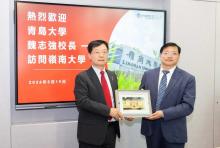
On 19 May 2026, a delegation led by Prof Wei Zhiqiang, President of Qingdao University, visited Lingnan University, and was warmly received by Prof S. Joe Qin, President and Wai Kee Kau Chair Professor of Data Science at Lingnan University, and other University representatives. Prof Qin and Prof Wei signed a university-level Memorandum of Understanding (MoU) witnessed by representatives from both institutions to further coordinate development and reinforce collaboration between higher education institutions in Shandong and the Hong Kong SAR.
Events
Sorry, no events coming up for this topic.
Researchers
City University of Hong Kong (CityUHK)
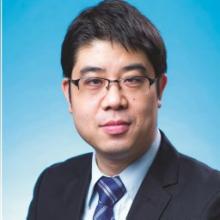
Prof Yang obtained his bachelor degree from Peking University in 2001, and PhD from Princeton University in 2007. His research interest includes the development of advanced alloys, including metallic glasses, high entropy alloys, low dimensional metals/ceramics and metamaterials.
Hong Kong Baptist University (HKBU)
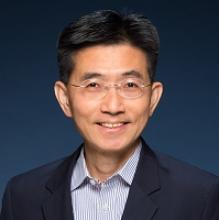
Ricky Wong Man-shing is a Professor of the Chemistry Department at the Hong Kong Baptist University

International Islamic University Malaysia (IIUM)
Dr. Nor Aiman Sukindar has joined International Islamic University Malaysia in 2019 and currently working as Assistant Professor in Manufacturing and Materials Department and at the same time holding a position as Chairman of the Advanced Manufacturing and Material Research Unit (AMTech). Before joining IIUM, Dr. Aiman was working with Politeknik Kuching Sarawak for more than seven years from 2011 until 2019.
Dr. Aiman has extensive experience in research pertaining to additive manufacturing technologies including the design and development of 3D printers, fabricating scaffold structures for bone replacement using biomaterials, optimization printing parameters, and any other related field. Dr. Aiman was awarded grants from industries and the government including PPRN, Tin Grant, and Sponsored research grant.
Recently, Dr. Aiman won several awards including a silver medal in Asia Innovation Festival 2022, Gold Medal in RITEC 2021 Competition in 2021, and a silver medal and Outstanding Award in SDG MTE 2021 Competition also in 2021.

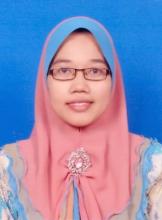
Zunaida Zakaria is researcher at Faculty of Chemical Engineering Technology, Universiti Malaysia Perlis (UniMAP). She has more than 15 years of experience in Polymeric Materials, Processing, and Characterization. Her main research interest are in Polymeric Foam, Syntactic Foam, Epoxy Macroballoon, Failure Mechanism in Polymeric Foam, Microbeads/Porous, and Activated Carbon from RHA for wastewater treatment.

University of Malaya
Ridha is a Senior Lecturer in the Department of Mechanical Engineering and is jointly an associate member of Advanced Manufacturing and Materials Processing (AMMP) Center at the University of Malaya.
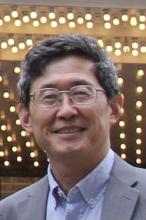
City University of Hong Kong (CityUHK)
Professor Ren Yang is a physicist and Chair Professor at the Department of Physics at City University of Hong Kong. His research interests focus on the structure-property relationship studies of materials by utilizing synchrotron X-ray and neutron scattering and other techniques.
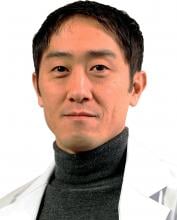
Professor Shinya Maenosono leads his research group at Japan Advanced Institute of Science and Technology (JAIST). His research in JAIST has focused on two main areas of interest in the field of materials chemistry and nanotechnology. The first area involved wet chemical synthesis of semiconductor nanoparticles with controlled size, shape and composition for energy conversion device applications. The second area has focused on the synthesis and bioapplication development of monometallic and alloyed multimetallic nanoparticles.

Singapore University of Technology and Design
Robert E Simpson is an Associate Professor at the Singapore University of Technology and Design (SUTD). Rob’s research interests are focused on designing new materials for applications in electronics, photonics, data storage, and biosensing.

Singapore University of Technology and Design
Mr. Lee Cheng Pau is currently pursuing his Ph.D in the Singapore University of Technology and Design (SUTD) focusing on 3D Food Printing.
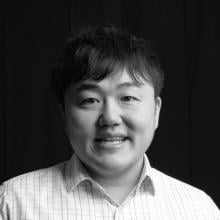
Singapore University of Technology and Design
Dr Michinao Hashimoto's research interest is on low-cost device fabrication and their application in point-of-care setting.

Lecturer in Forensic Chemistry field. Actively engaging in agricultural waste upcycling into nanatechnology products.
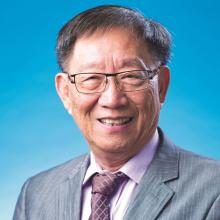
City University of Hong Kong (CityUHK)
Professor Liu Chain-Tsuan is University Distinguished Professor at City University of Hong Kong, and Senior Fellow of the Hong Kong Institute for Advanced Study (HKIAS).
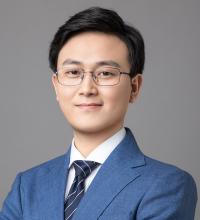
City University of Hong Kong (CityUHK)
Dr. Zhu Pingan is currently an Assistant Professor at the Department of Mechanical Engineering of City University Hong Kong.

Nanyang Technological University
Dr. Arun works as a Research Assistant Professor (RAP) at the Rolls-Royce@NTU Corporate Lab, Nanyang Technological University, Singapore. Through cutting-edge technology development and commercialization, he contributes to the Singapore 2030 Advanced Manufacturing Hub (AMH) and Jurong Innovation District (JID) initiatives. He also acts as an IPT-Lead of the Manufacturing Technologies programme at Rolls-Royce@NTU and leads several projects, researchers, and students.

Prasanna Lakmal is a lecturer at the Department for Commerce & Financial Management of the University of Kelaniya, Sri Lanka.
Prof. Jooyong Kim's research interest includes the development of smart fashion products based on electronic textiles.

Dr. Chi Cuong Vu is currently a research assistant at Soongsil University, Seoul, South Korea where he focuses on developing flexible wearable sensors and their applications in human activity monitoring or personal healthcare.

Dr. Eng. Hafsa Jamshaid C Text FTI is working as Associate Professor at National Textile University. She is an experienced textile professional in the field of weaving, knitting technologies for technical fabrics and composites.
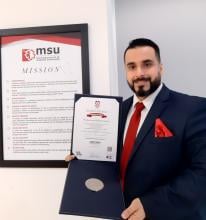
Dr. Mohammed N. Abdulrazaq is currently an Assoc. Prof. at Department of Engineering & Technology, Management & Science University (MSU), Malaysia.
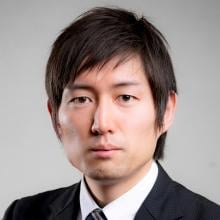
National Institute for Materials Science (NIMS)
Ken-ichi Uchida is a group leader in the Spin Caloritronics Group, Research Center for Magnetic and Spintronic Materials under the National Institute for Materials Science (NIMS), Japan
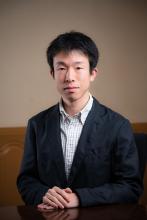
National Institute for Materials Science (NIMS)
Satoshi Ishii is a principal researcher at International Center for Materials Nanoarchitectonics (MANA), National Institute for Materials Science (NIMS), Japan. He also holds an adjunct associate professorship at University of Tsukuba.

Universiti Malaysia Sabah
Dr. Connie Cassy Ompok is an early childhood education expert and a Senior Lecturer at the Faculty of Psychology and Education, Universiti Malaysia Sabah. She Started her career in Early Childhood Education as a preschool teacher (2004-2007), a lecturer in early childhood education at the Malaysian Institute of Teacher Education (2008-2016) before serving as a Senior Lecturer in Early Childhood Education at UMS (2016 until now).

Universiti Teknologi MARA (UiTM)
Senior lecturer at School of Chemical Engineering, Universiti Teknologi MARA, Cawangan Pulau Pinang, Malaysia. He is also Head of Lab EMZI-UiTM Nanoparticles Colloids

Rabin Mahat is a result-oriented and multifaceted doctoral student in Experimental Condensed Matter Physics at The University of Alabama, USA. He is currently working under the guidance of Dr. Patrick LeClair, and Dr. Arunava Gupta. He received M.Sc. in Physics in 2013 from Tribhuvan University, Nepal. He also received his second M.Sc. in experimental Condensed Matter Physics from the University of Alabama in 2019. Rabin's main research is focused on the discovery of novel half-metallic Heusler compounds for potential spintronics device applications. He excels academic and professional expertise in process engineering, research procedures and material science.
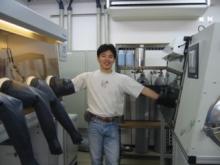
Institute for Integrated Cell-Material Sciences (iCeMS) at Kyoto University
Hiroshi Kageyama is a professor in the Institute for Integrated Cell-Material Sciences (iCeMS), Kyoto University, Japan.
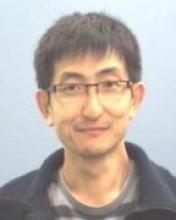
Newcastle University in Singapore
I am the Director of Research and Associate Professor (Reader in Mechanics of Composite Materials) at the Newcastle University in Singapore.
Fei Zhuge is a professor at Ningbo Institute of Materials Technology and Engineering (NIMTE), Chinese Academy of Sciences (CAS).

Daegu Gyeongbuk Institute of Science and Technology (DGIST)
Koteeswara Reddy Nandanapalli is a researcher in the Bio-Harmonized Device Lab at the Department of Emerging Material Science, Daegu Gyeongbuk Institute of Science & Technology (DGIST), South Korea.

Daegu Gyeongbuk Institute of Science and Technology (DGIST)
Sungwon Lee is a materials scientist and leads the Bio-Harmonized Device Lab at the Department of Emerging Material Science, Daegu Gyeongbuk Institute of Science & Technology (DGIST), South Korea.
Giants in history

Abdus Suttar Khan (c. 1941 – 31 January 2008) was a Bangladeshi engineer who spent a significant part of his career conducting aerospace research with NASA, United Technology and Alstom.

Lin Lanying (7 February 1918 – 4 March 2003) was a Chinese material engineer remembered for her contributions to the field of semiconductor and aerospace materials. Lanying was born into a family who did not believe in educating girls and she was not allowed to go to school.