
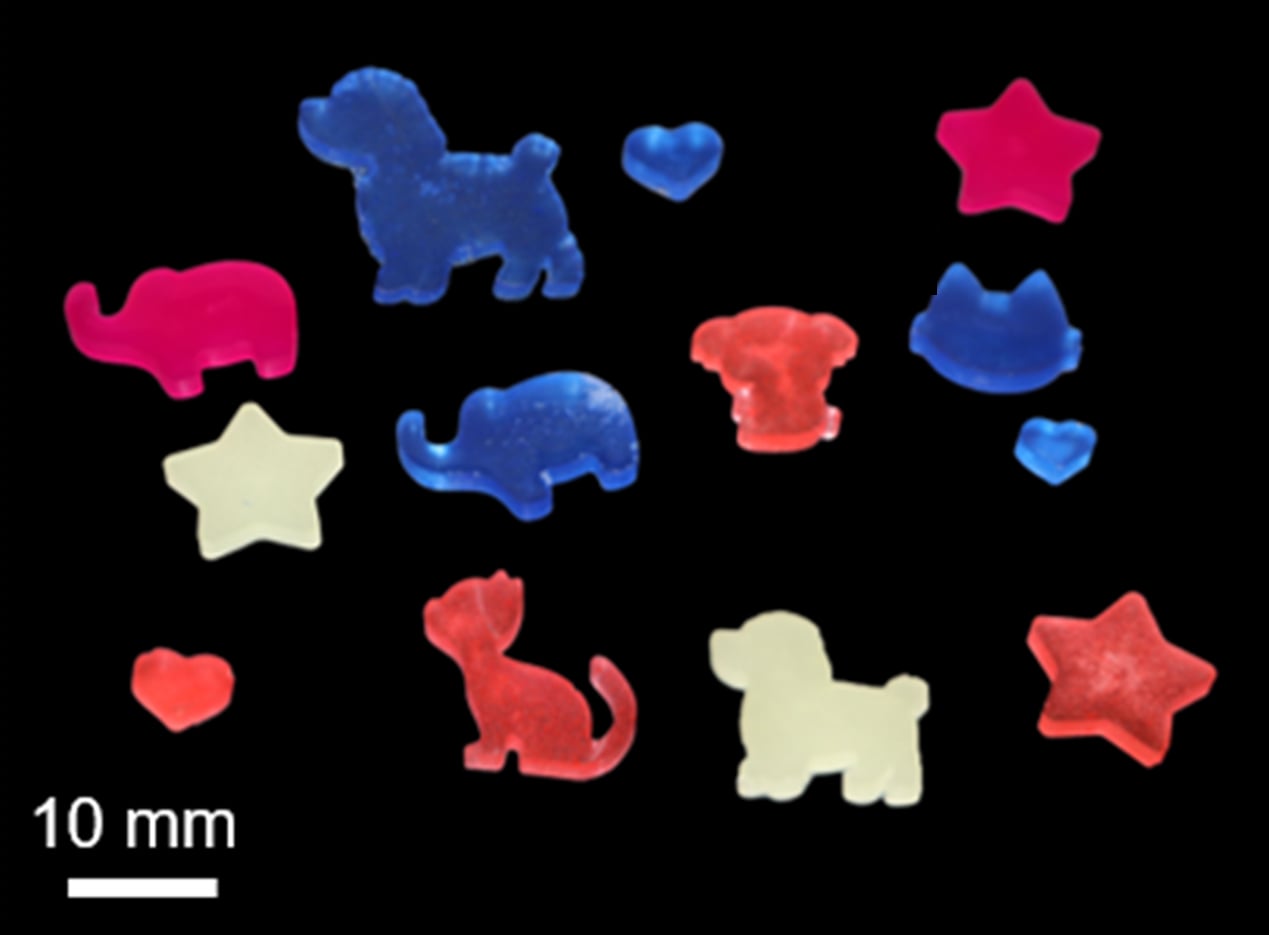
Fully recyclable plastic shapes: Color-embedded silica and plastic were combined to form various shapes. Reusability was tested over multiple generations of molding, decomposition, and reuse.
In the world of market competition, having the best and brightest package could send company sales into the millions. On the other hand, the amount of colored plastic waste increases, adding to the growing challenge of recycling it.
When these plastics are recycled, the various colors mix to create dark, low-value materials in a process known as downcycling. Conventional recycling methods cannot effectively separate colorants from plastics. Alternatively, chemical decomposition methods to remove colorants exist, but they require high temperatures of 300–500°C and lead to substantial energy consumption. These limitations thus present a growing need for upcycling technologies that enable efficient separation of colorants under milder conditions and allow plastics to be repeatedly reused as high-quality materials.
In search of a solution, a research team led by Associate Professor Kenji Okada and Professor Masahide Takahashi from Osaka Metropolitan University’s Graduate School of Engineering, in collaboration with Fuji Pigment Co., Ltd., developed a novel approach using silica microspheres to encapsulate colorants utilizing a spray-drying method. Silica, a primary component of sand and glass, is highly resistant to heat and chemicals, which allows these color capsules to withstand harsh manufacturing processes while maintaining vivid coloration in plastic products.
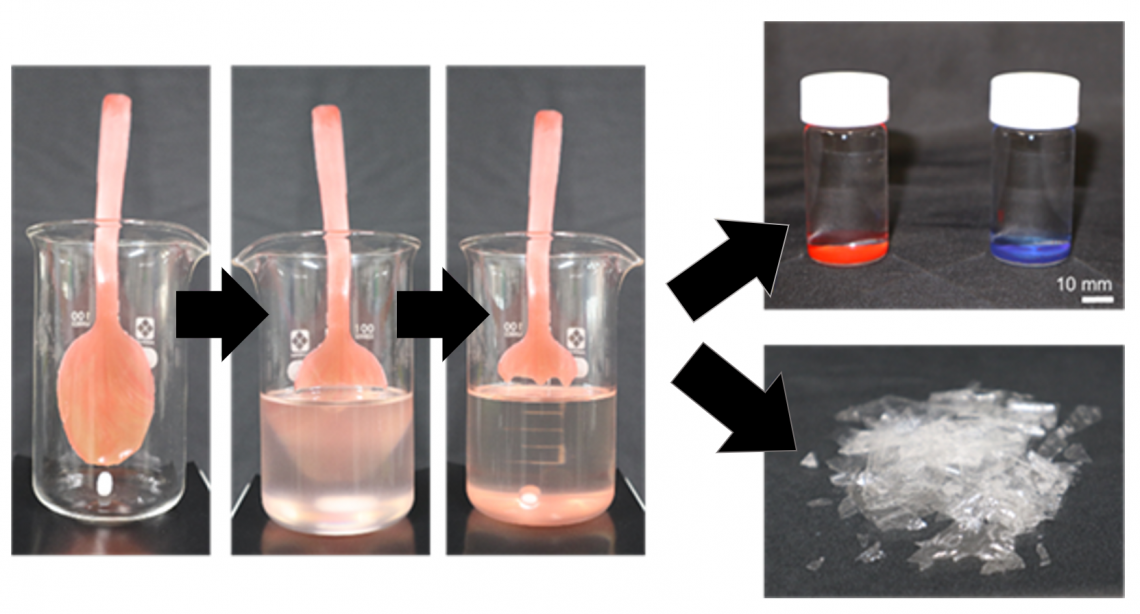
Colorant-embedded silica microspheres and plastic separate into their respective components.
“A key advantage of this technology lies in its ease of recycling,” said Professor Okada. “When the plastic is dissolved in a solvent such as acetone, only the plastic dissolves, while the color capsules remain intact. Using centrifugation, both the colorless plastic solution and the capsules can be recovered separately with nearly 100% efficiency.”
Furthermore, by using capsules of different sizes for different colors, the researchers demonstrated that the colors can be selectively separated using simple mesh sieves. Even after repeated recycling over multiple generations, the materials retained their original color and quality without degradation.
“This approach enables used colored plastics previously destined for disposal or downcycling to be repeatedly reused as high-value resources,” stated Professor Takahashi. “Moreover, because the process operates at room temperature and avoids energy-intensive decomposition, it significantly reduces energy requirements and environmental impact. In the future, we hope this technology is widely applied to used plastics, such as PET bottles and polyethylene bags, and potentially contribute to the realization of a sustainable circular recycling society."
Conflicts of interest
There are no conflicts to declare.
###
About OMU
Established in Osaka as one of the largest public universities in Japan, Osaka Metropolitan University is committed to shaping the future of society through the “Convergence of Knowledge” and the promotion of world-class research. For more research news, visit https://www.omu.ac.jp/en/ and follow us on social media: X, Instagram, LinkedIn.
Advertisement