
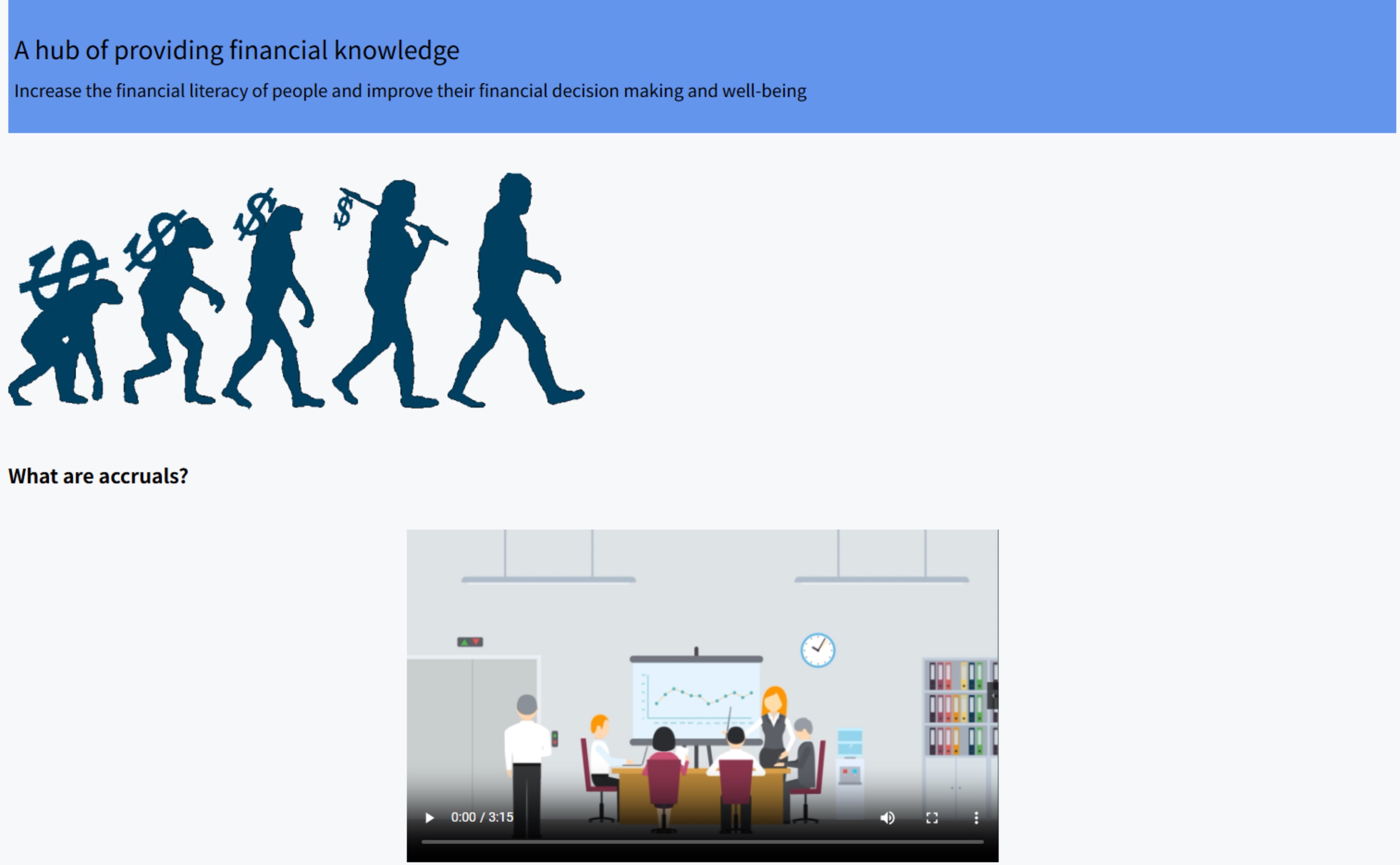
The research team creates a dedicated investment-education website and sets up a separate webpage for each stock in the study, providing basic concepts of “reported earnings” and “actual cash flows”, as well as methods for calculating and analysing the relevant data.
These findings were recently published in the leading international Journal of Accounting and Economics (JAE).
The research team, comprising Prof Zhao Xiaofeng, Associate Professor of the Department of Finance at Lingnan University, and scholars from Henan University and The Chinese University of Hong Kong, Shenzhen, examined 2,284 publicly listed Chinese stocks and 2,387 US stocks. They created a dedicated investment-education website and set up a separate page for each stock, providing learning resources on the basic concepts of “reported earnings” and “actual cash flows”, as well as methods for calculating and analysing the data.
The research team then divided the stocks into four random groups and, about 19 days before the companies announced their earnings, they published relevant content through Weibo, Xueqiu, Guba on EASTMONEY, X, and Stocktwits. One group received information about the upcoming earnings announcements together with basic concepts of “reported earnings” and “actual cash flows”. Another group was given the basic concepts as well as practical instructions on how to calculate and analyse the data, including the use of tools to analyse companies’ accruals. The third group received only information about the upcoming earnings announcements, without any investment learning resources, and served as a control group. The fourth group received no related information and also served as a comparison. Over 30 million views were recorded across all social media platforms.
The research team then compared changes in stock prices before and after earnings announcements across the four groups, as well as retail investors’ buying and selling behaviour. Previous research had found that investors place too much weight on “reported earnings”, and when they buy the relevant stocks, this results in a larger increase in prices after an earnings announcement, followed by a subsequent reversal. The team therefore conducted a targeted test to examine whether this pattern would change when investors understood the relevant accounting concepts and analytical methods.
The results show that guidance providing only basic accounting concepts did not significantly reduce the tendency for stock prices to rise and then fall following an earnings announcement. By contrast, education combining basic concepts with practical analytical methods produced a stronger effect. Compared with the control group that received only earnings information, stocks in the full education group recorded returns approximately 4.2 percentage points higher over the following year in the Chinese market, and approximately 3.9 percentage points higher in the US market. The study also found that full education reduced retail investors’ tendency to buy stocks with larger differences between “reported earnings” and “actual cash flows”. This suggests that understanding a concept alone is not sufficient, and that practical analytical methods help investors to make informed judgements.
The study also found a particularly clear effect of education on the investment behaviour of retail investors. After receiving the full education, retail investors in both the Chinese and US markets bought significantly fewer stocks around earnings announcements, with similar results. This shows that such education may make retail investors less likely to buy stocks based on “reported earnings” alone, thereby reducing the tendency for the relevant stock prices to rise and then fall following earnings announcements.
The research team also examined investors’ engagement with the educational content, and found that the educational effect was more pronounced for stock webpages that received higher levels of engagement, including more views, interactions, comments, and sharing. This indicates that the more investors engage with educational content, the stronger its effect, and that the effect of full education was more pronounced for stocks from regions in both the Chinese and US markets that previous studies had identified as having lower levels of financial literacy. This suggests that targeted stock-specific education has a stronger effect on investors’ judgement.
Prof Zhao Xiaofeng said that social media has increasingly become a channel through which investors access a large volume of stock-related information online. Some content promotes the prospect of making profits within a short period, which may encourage investors to follow the crowd and buy stocks without fully understanding the underlying fundamentals of the companies, potentially resulting in losses.
He pointed out that “The experiment demonstrates that providing specific and practical educational content tailored to the knowledge investors actually need when analysing stocks can change their buying behaviour and reduce purchases driven by a focus on ‘reported earnings’ alone. If investors only look at whether a company’s earnings are high or low, they may not be able to assess the quality of those earnings accurately, or the value of the stock. An increase in a company’s earnings does not necessarily mean that the stock is worth buying. It is also important to consider how much is reflected in ‘actual cash flows’ and whether it can be sustained. As an international financial centre, Hong Kong SAR should go beyond introducing basic financial concepts, and place greater emphasis on teaching investors how to interpret financial data, helping citizens make more sensible investment decisions and reducing the likelihood that investors will buy stocks that are simply popular or driven by market sentiment.”
Prof Zhao added that education combining conceptual understanding with practical analytical methods is more effective in reducing purchases driven by excessive attention to “reported earnings” than providing concepts alone. This is particularly important for enabling retail investors to make their own judgements when they encounter large amounts of investment information through online channels such as social media.
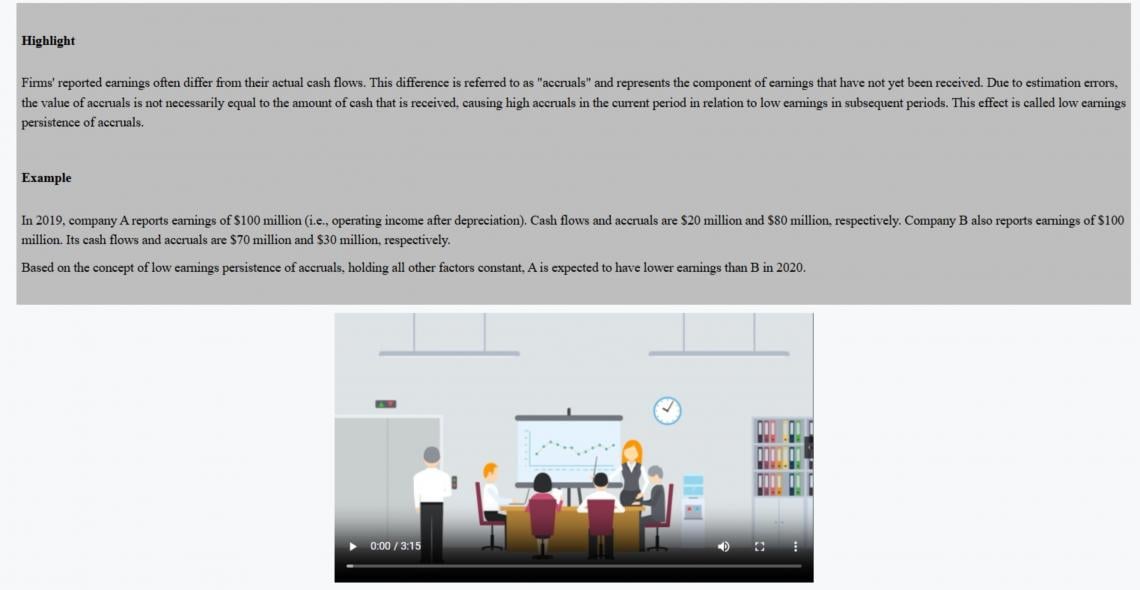
One group receives information about the upcoming earnings announcements together with basic concepts of “reported earnings” and “actual cash flows”.
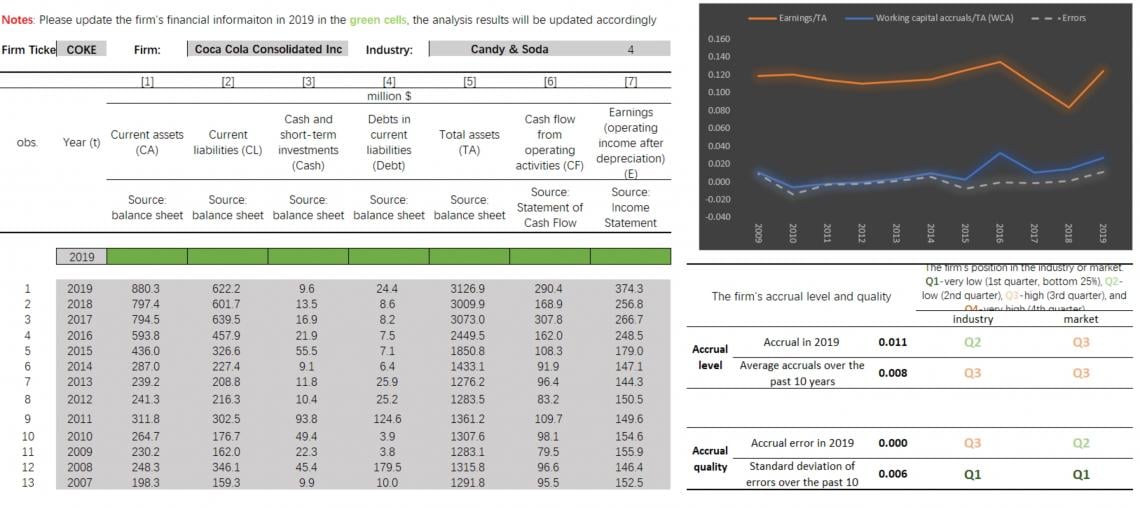
Another group is given the basic concepts as well as practical instructions on how to calculate and analyse the data, including the use of tools to analyse companies’ accruals.