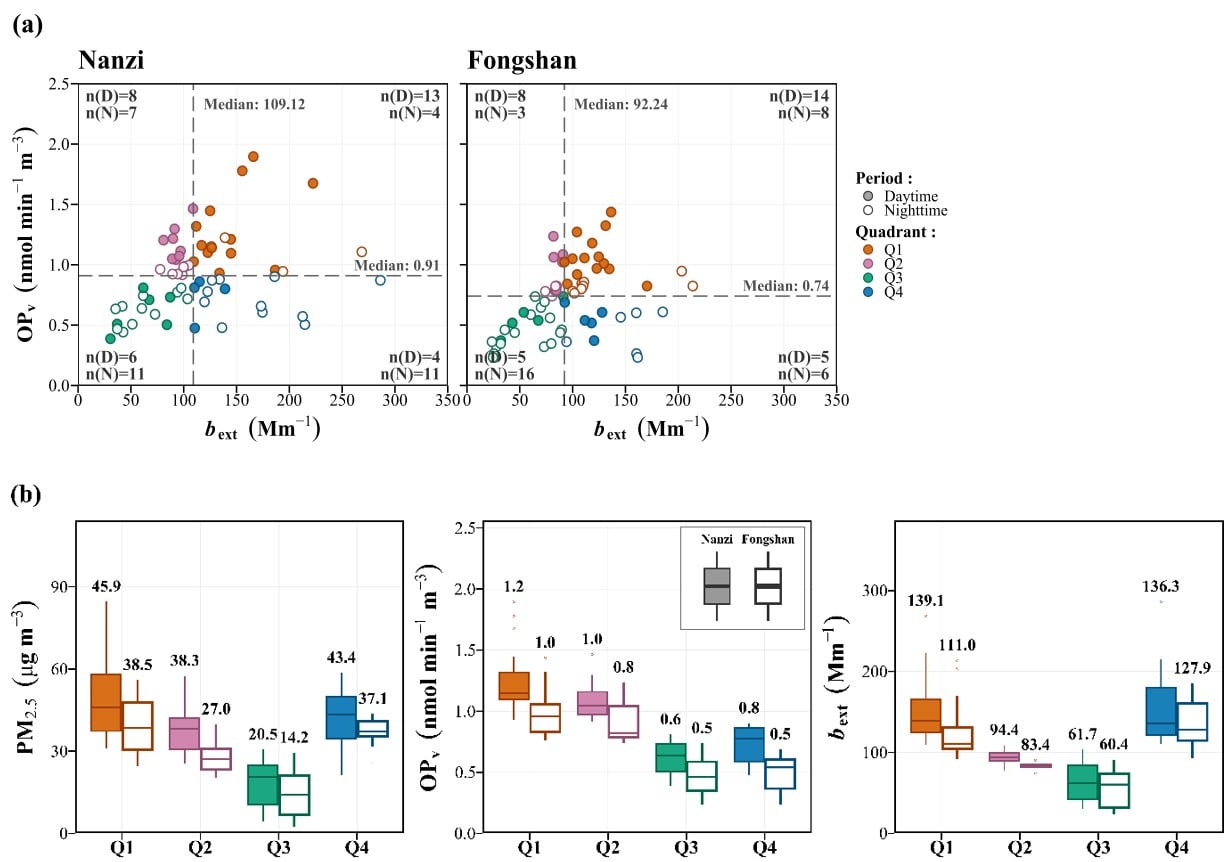
Figure 1. Relationship between particle oxidative potential and light extinction at the two study sites. (a) Samples are classified into four oxidative–optical regimes, while (b) PM2.5 mass, oxidative potential, and light extinction are compared across these regimes.
Fine particulate matter (PM2.5) is commonly associated with both health concerns and poor visibility. However, these two effects do not necessarily improve or worsen at the same time. Prof. Yu-Chieh Ting and his research team examined this relationship by comparing particle oxidative potential (OP), a laboratory measure of the ability of particles to participate in reactions related to oxidative stress, with their ability to reduce atmospheric visibility. The study is published in Journal of Hazardous Materials.
The central finding of the study (Figure 1)
By grouping the samples according to their OP and light extinction (bext), the researchers identified four different pollution conditions. Notably, some samples showed relatively high oxidative potential even when light extinction was low. The comparison also showed that PM2.5 mass concentration alone could not fully explain either the oxidative activity of the particles or their effects on visibility. In other words, air that appears visually cleaner does not necessarily contain particles with proportionally lower oxidative activity.
The researchers then investigated why these two properties sometimes became separated. The amount of water contained in atmospheric aerosols played an important role (Figure 2). When aerosol water content (ALWC) was high, water uptake and particle growth enhanced light scattering and therefore increased visibility impairment. Under drier conditions, oxidative activity became relatively more important compared with light extinction. Particle acidity was also related to this balance, but its influence was weaker than that of ALWC. These results suggest that changes in atmospheric conditions can alter how the same particle pollution is expressed in terms of oxidative and optical effects.
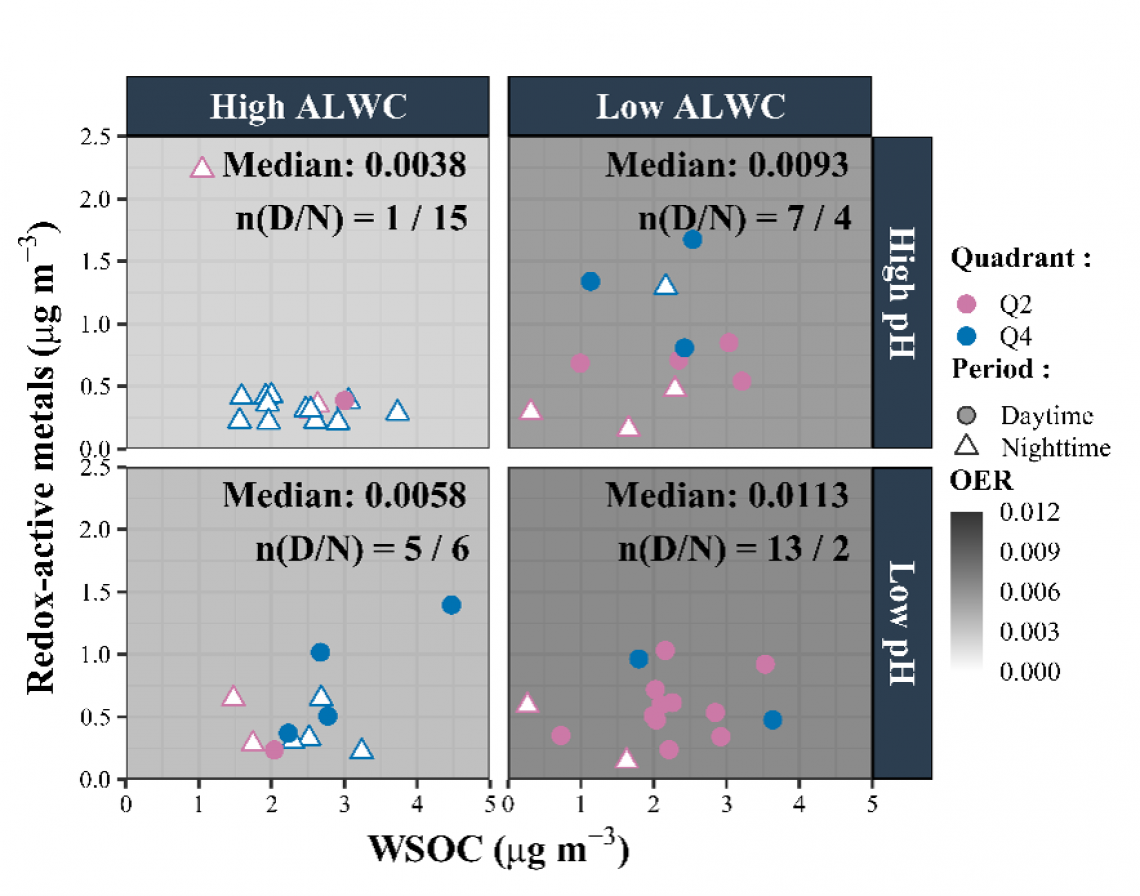
Figure 2. Influence of aerosol water content and acidity on the balance between particle oxidative potential and light extinction under decoupled conditions.
The source analysis presented in Figure 3 further shows that different types of pollution do not affect oxidative potential and visibility equally. Secondary sulfate and organic aerosols, traffic-related emissions, and fossil-fuel combustion contributed to both properties. In contrast, secondary nitrate strongly affected light extinction but contributed very little to oxidative potential. This difference helps explain why improving visibility alone may not produce an equivalent reduction in particle oxidative activity.
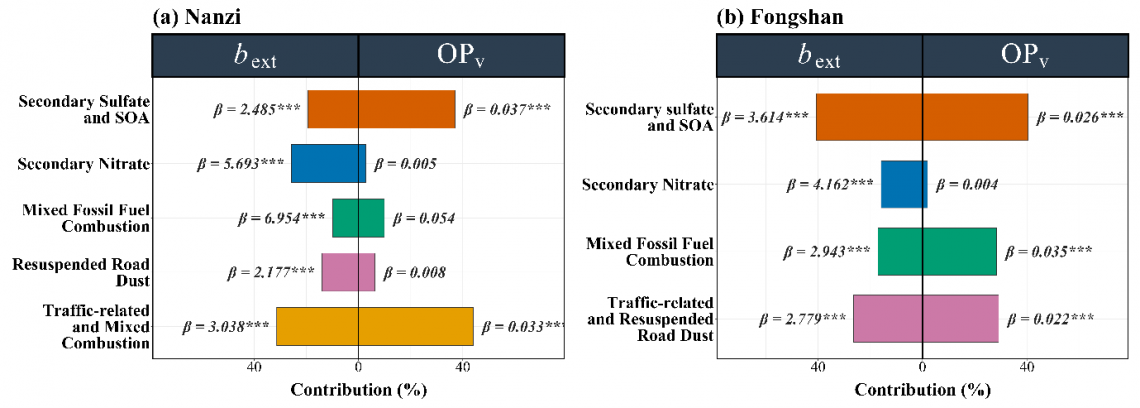
Figure 3. Source-specific contributions to particle oxidative potential and light extinction at the Nanzi and Fongshan sites.
Translating these findings into implications for air quality management (Figure 4)
Modeled source-reduction scenarios showed that controlling some pollution sources can provide benefits for both oxidative potential and visibility, while controlling others mainly improves one of the two. Although the most important sources differed between the two study locations, the results highlight the value of targeting sources with effects on both particle oxidative activity and light extinction, rather than relying only on strategies designed to improve visibility.
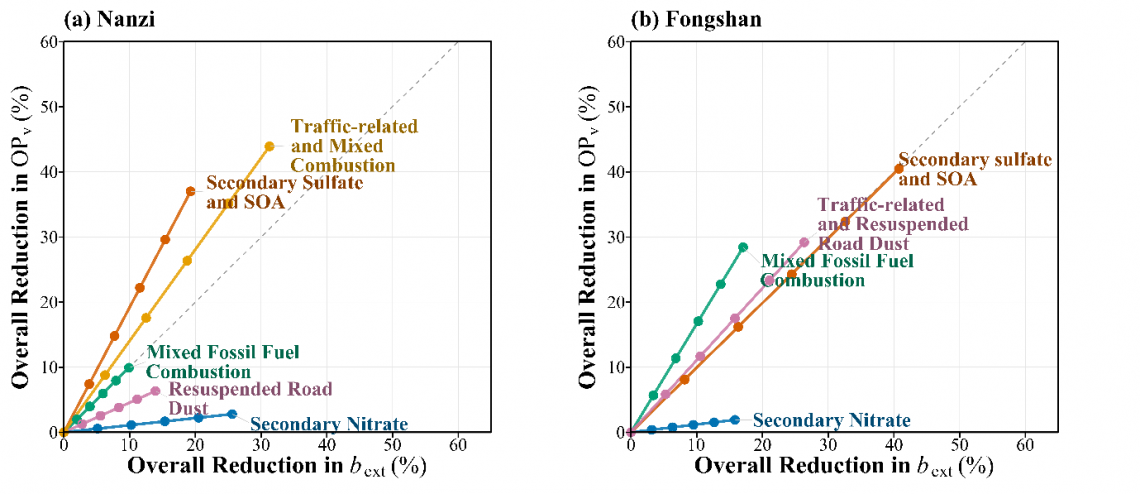
Figure 4. Modeled co-benefits of controlling different pollution sources for reducing particle oxidative potential and light extinction.
“Better visibility does not necessarily mean that the oxidative activity of fine particles has decreased to the same extent. Our findings show that air quality management should consider both visibility and oxidative potential, and target pollution sources that affect both,” says corresponding author Prof. Yu-Chieh Ting of Graduate Institute of Environmental Engineering at National Taiwan University.
Prof. Yu-Chieh Ting‘s email address: [email protected]