

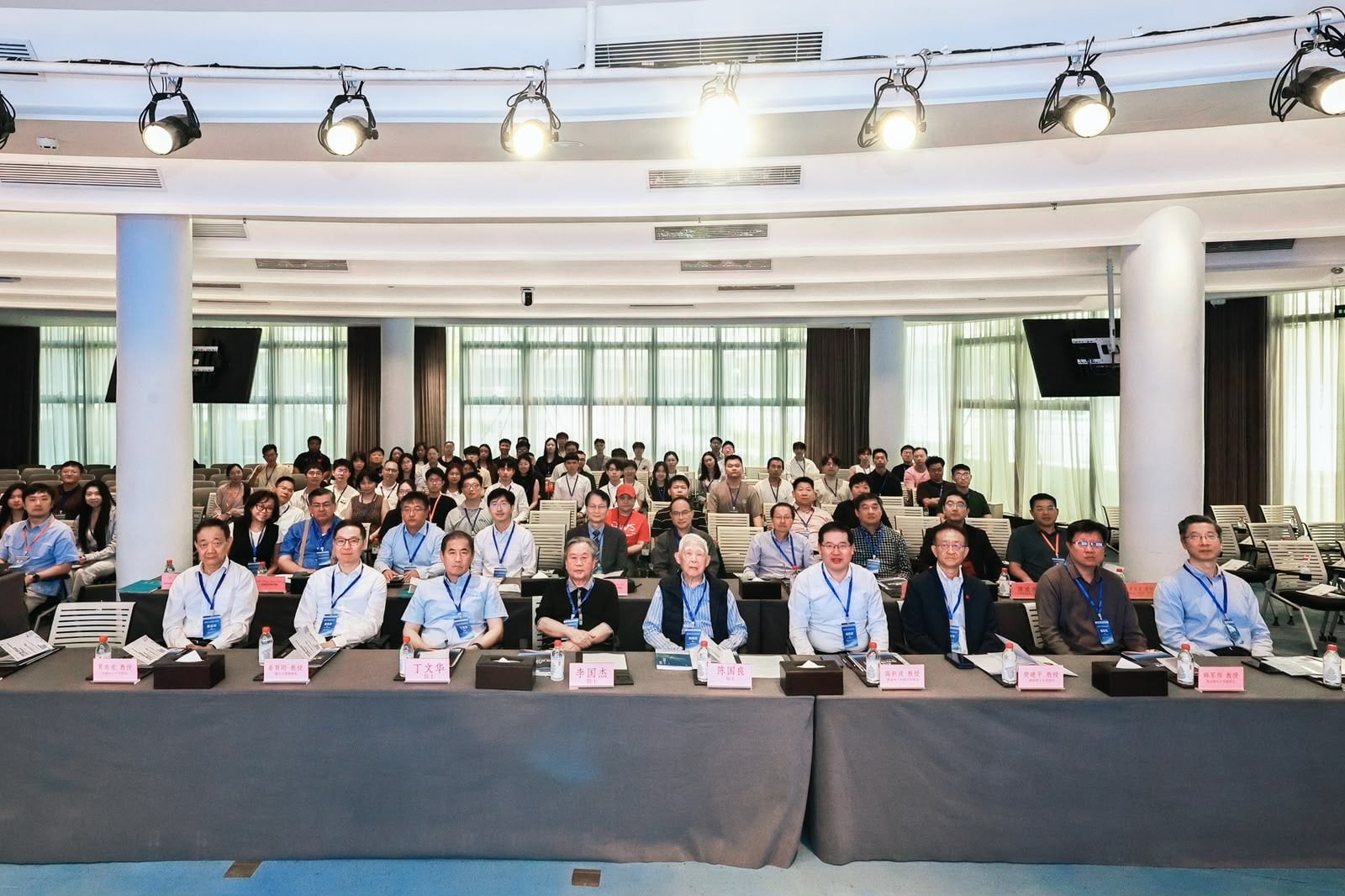
Lingnan University co-hosts the 2026 Summit on AI Ethics and Governance with Harbin Institute of Technology, Shenzhen.
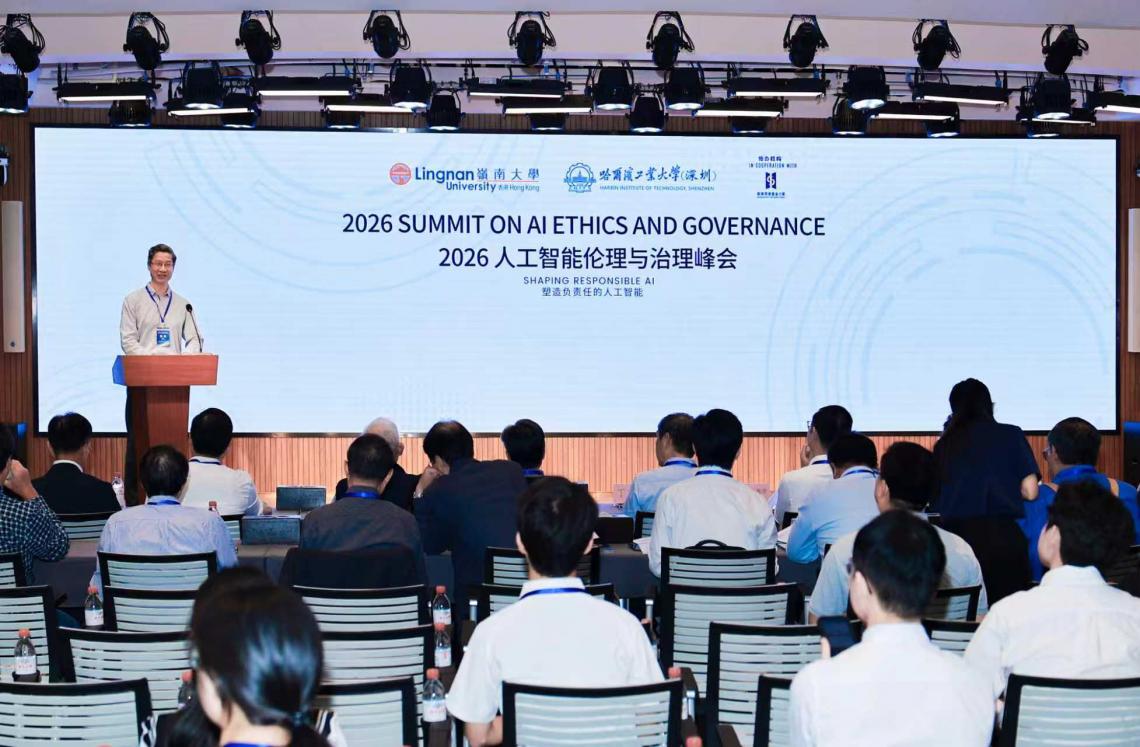
Prof Xin Yao, Vice-President (Research and Innovation) and Tong Tin Sun Chair Professor of Machine Learning at Lingnan University, delivers the opening remarks.
Prof Xin Yao, Vice-President (Research and Innovation) and Tong Tin Sun Chair Professor of Machine Learning at Lingnan University, said in his welcome address, “AI has progressed from assisting humans as a tool to becoming autonomous agents with increasingly sophisticated capabilities. Its impact extends from security risks, such as personal data breaches, to broader social and environmental challenges, including fairness and energy consumption. We advocate the development of a responsible AI governance framework grounded in the principles of Environmental, Social and Governance (ESG) and the United Nations Sustainable Development Goals (SDGs). While China has established a world-leading position in AI technologies and applications, differing regulatory regimes across jurisdictions present new challenges. In response, academia and industry are strengthening collaboration in both AI technologies and governance, and this Summit provides a valuable platform for AI experts and scholars from around the world to exchange experiences and explore pathways for advancing the responsible development of AI.”
The Summit featured an Academicians' Forum, a University Presidents Forum, and a series of Distinguished Speaker Presentations, where internationally renowned AI scholars shared their latest research findings and insights on topics such as the development of AI agents, system security, and other emerging challenges and opportunities in AI.
Ms Anni Lai, Co-Chair of Generative AI Commons, pointed out that generative AI is rapidly evolving into AI agents capable of autonomously executing workflows, accessing sensitive data and even modifying production systems. This transformation presents new challenges for AI governance, and she emphasised that as the capabilities of AI agents continue to expand, human accountability must not be diminished. Instead, the human role should evolve towards reviewing, validating, authorising, and overseeing AI-generated outputs and decisions.
Prof Tang Ke, Chair Professor and Head of the Department of Computer Science and Engineering at Southern University of Science and Technology, said that the autonomy and adaptability demonstrated by recent AI agents, such as Muse and Claude, have to some extent fulfilled long-standing concepts of artificial life over the past decades. From an evolutionary perspective, he analysed how AI agents self-evolve and co-evolve with their environments and peer agents, contributing to critical insights on their potential emergence as a dominant "species" in future cyberspace.
Prof Cho Sung-bae, a Fellow of the Institute of Electrical and Electronics Engineers (IEEE) and Professor at Yonsei University, Seoul, Korea, pointed out their experience in formulating principles for AI ethics. He said that the establishment of the “Basic Act on the Development of Artificial Intelligence and the Establishment of a Foundation for Trustworthiness” encourages the adoption of AI across society and government departments. The legislation has since become the foundation for the development of AI ethics standards and guidelines in the country.
The Summit also marked the official book launch of AI for Good and Sustainable Development: Responsible AI Governance from an ESG Perspective, co-authored by Prof Xin Yao and Prof Huang Changwu, Associate Professor in the School of AI and Liberal Arts at Beijing Normal-Hong Kong Baptist University. The book was recommended on-site by three esteemed academicians: Academician Li Guojie, and Academician Chen Guoliang.
The book is centred on the principles of "human-centred, AI for good", and innovatively proposes a "Responsible AI—ESG—SDGs" collaborative governance framework. It indicates that AI technologies should evolve in alignment with governance, social, and environmental values. The book also reviewsexisting AI-related policies, regulations, industry standards, and governance practices adopted by leading enterprises worldwide, and advocates the establishment of an actionable "AI Impact Assessment Methodology". By providing clear and practical guidance for governments, businesses, academia and the public, it seeks to transform AI ethics and governance from external constraints to internal organisational capabilities.