

Physics Molecular physics
News
16 Jul 2026
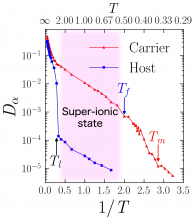
Using a simple physical model, researchers at the University of Osaka, The National Institute of Advanced Industrial Science and Technology (AIST), RIKEN, and the Institute of Science Tokyo revealed how superionic conduction emerges when mobile ions undergo sublattice melting while the surrounding crystal framework remains intact. Near this transition, ions move cooperatively in spatially heterogeneous, string-like patterns, aided by anharmonic lattice motion. The findings identify general physical principles connecting lattice softness and collective transport, potentially guiding more efficient development of solid electrolytes for batteries and energy-conversion technologies.
01 Jul 2026
A research group has developed “TP-An,” a molecule that enables even low-energy, long-wavelength light to be used more effectively by solar cells and photocatalysts. The molecule can be used even at high concentrations that are difficult for traditional materials, suggesting their usefulness in technology.
11 Jun 2026
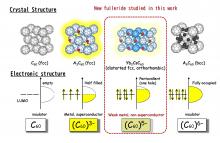
An international research collaboration, including OMU, IJS, NIST and AUT, has unveiled a robust metallic state in the molecular material ytterbium cesium fulleride (Yb₂CsC₆₀) that directly tests conventional theories of electron behavior. Normally, strong interactions between electrons are expected to suppress their movement and turn materials into insulators through a process called a Mott transition. However, Yb₂CsC₆₀ represents a case where metallicity survived, suggesting that the material’s electrons were continuing to move collectively, stabilized by a different mechanism. The discovery is of relevance to future research in fields such as superconductivity, quantum matter, and next-generation electronic technologies.
18 May 2026
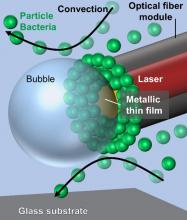
Researchers have developed an optical fiber that uses laser-induced heating and bubble-driven convection to rapidly concentrate bacteria and nanoparticles in liquid samples. The method collects thousands of targets in 60 seconds with over tenfold higher efficiency than conventional approaches. This approach allows for faster and more sensitive detection in biomedical and environmental applications.

20 Jan 2026
Quantum effects in Kondo lattices can determine whether a system behaves magnetically or non-magnetically, opening new avenues for designing future quantum materials and technologies
25 Sep 2025
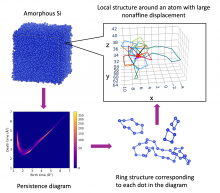
Researchers from The University of Osaka, AIST, Okayama University, and the University of Tokyo applied an innovative computational-analysis technique to clarify the atomic structure of soft, easily deformable regions in amorphous silicon. They discovered that these regions combine medium-range order with local disorder, a finding that will guide the design of more durable amorphous materials.

22 Apr 2025
New light-powered DNA detection enables more accessible, affordable genetic analysis

25 Mar 2025
The Super-Kamiokande and Tokai-to-Kamioka (T2K) Collaborations have produced a first joint analysis of their data

13 Feb 2025
Microdroplets of acidic solution on small aluminum surfaces were subjected to an electric current, transforming the metal into glass-like TAlOx.


16 Oct 2024
Photoswitching and thermal switching properties allow writing by irradiation or heat and erasing by visible light

19 Sep 2024
Light-induced immunoassay coated with novel coronavirus spike proteins found highly sensitive even with weak light like a laser pointer

24 Jun 2024
Approach could have applications for microchemistry, quantum dots
06 Oct 2023
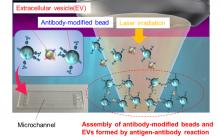
Osaka Metropolitan University researchers have used the power of laser light to accelerate the reaction between cancer cell-derived extracellular vesicles—a kind of nanoparticle—and antibody-modified microparticles. The three-dimensional structure of the resulting aggregates was then analyzed using a confocal optical system. The results demonstrated the ability to measure, within 5 minutes, approximately 1,000 to 10,000 nanoscale EVs contained in a 500 nL sample.

27 Mar 2023
An Osaka Metropolitan University joint research group has discovered that near-infrared absorbing dyes, which had previously been considered to have closed-shell electronic structures, have an intermediate electronic structure, between closed- and open-shell structures. They also found that as the wavelength of near-infrared light that can be absorbed becomes longer the contribution of open-shell forms increases within the dye. These newly discovered characteristics are expected to be utilized to develop new near-infrared absorbing dyes that can absorb longer wavelength near-infrared light.
06 Mar 2023
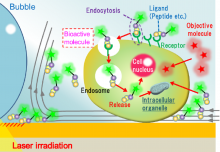
Osaka Metropolitan University researchers have used 100 seconds of laser irradiation to generate convection currents that selectively accelerate biochemical reactions—due to the photothermal effect—by concentrating biofunctional molecules at the cell surface. Using this method, useful molecules can be transported into cells at concentrations a hundred to a thousand times lower than with conventional methods. Furthermore, they also succeeded in selectively introducing small molecules into intracellular organelles usually impossible at low concentrations (hundreds of pmol/L) as well as inducing cell death in targeted cells by concentrating anticancer active peptides into them at concentrations so low that they would not be conventionally effective (several tens of nmol/L).
22 Feb 2023
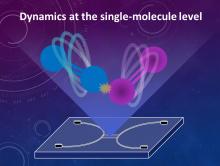
Researchers from Osaka Metropolitan University have developed principles and technologies of nanofluidic devices to freely manipulate nanomaterials, biomaterials, and molecules at the single-molecule level using fundamental technologies such as nanofluidic processing, functional integration, and fluidic control and measurement, which has pioneered the way to integrate various fields under nanofluidics.
24 Jan 2023
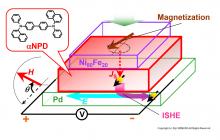
A research group, at the Osaka Metropolitan University Graduate School of Engineering, has succeeded in measuring spin transport in a thin film of αNPD molecules—a material well-known in organic light emitting diodes—at room temperature. They found that this thin molecular film has a spin diffusion length of approximately 62 nm, a length that could have practical applications in developing spintronics technology. In addition, while electricity has been used to control spin transport in the past, the thin molecular film used in this study is photoconductive, allowing spin transport control using visible light.
22 Dec 2022
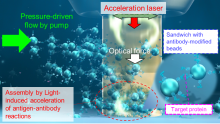
Osaka Metropolitan University scientists discovered the principle of light-induced acceleration of antigen–antibody reaction, allowing for simple, ultrafast, and highly sensitive detection of proteins. The researchers introduced target proteins and probe particles with modified antibodies selectively binding to the target proteins into a small channel and applied irradiation with infrared laser light. They achieved, for the first time, the rapid measurement of trace amounts of attogram-level target proteins after only 3 minutes of laser irradiation. These findings will potentially contribute to breakthroughs in the development of systems for ultra-early diagnosis of various diseases.

29 Sep 2022
Linked lanthanides shine light on crystal engineering, New technique reveals hidden genome, Red, white and blue alerts for dangerous bacteria & Windows gain competitive edge over global warming. Read all in the September's Editor's Choice plus this month's Asia Research News 2022 magazine pick - Floating sensors to gather ocean data.
12 Aug 2022
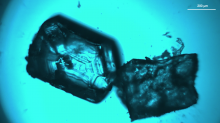
Rare earth metals, when linked, can act as a conduit for energy flow, and show promise for the development of novel materials.
17 Jun 2022
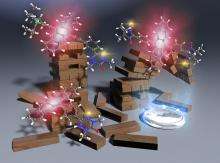
A research group led by Professor Yoshio Teki of the Osaka Metropolitan University Graduate School of Engineering has succeeded in developing a new pentacene derivative that is more than 100 times more photostable than TIPS-pentacene, a photostable pentacene derivative. Additionally, the team has further clarified the ultrafast excited state dynamics in this system. In the pentacene moiety of this system, we were able to demonstrate that the transition from the excited singlet state to the excited triplet state occurs ultrafast in the time region of a 10-13 seconds. In purely organic materials without heavy atoms such as rare metals, such intersystem crossing usually occurs on time scales longer than 10-9 seconds. The empirical results of this study are expected to be applied as a method for stabilizing and developing light-unstable materials in the future.

06 Jun 2022
Researchers at the Institute of Industrial Science, The University of Tokyo studied the anomalous properties of amorphous solids, including glasses, using computer simulations, and found a common vibrational mechanism underlying them, which may help control the glass properties

16 May 2022
Researchers from the Osaka Metropolitan University Graduate School of Engineering have successfully developed a new technique allowing them to observe gas molecules packing into metal-organic frameworks (MOF) using infrared spectroscopy. Their innovation was to measure polarized light absorption of guest molecules in a MOF film to deduce molecule alignment using this common piece of lab equipment. This method is the first to show guest alignment and does so in real-time, while using an accessible and easily adoptable experimental setup. A short video (4 min) recreating their spectrometer modifications can be found in the Reference section.
01 Mar 2022
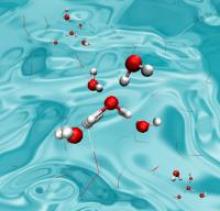
Scientists developed a procedure to reproduce the double peak feature of x-ray emission spectroscopy (XES) spectra in liquid water.
02 Sep 2021
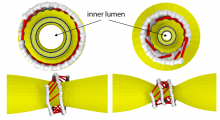
Researchers at Kanazawa University report in Proceedings of the National Academy of Sciences how a protein molecular motor can chop off a piece of cell membrane. The constrict-and-cut mechanism resembles that of a ratchet motor, and is of importance in processes mediating the entry of particles into cells.

05 Jul 2021
Osaka Prefecture University develops a method to design and control the path of electron flow in a polycrystalline material. Using epitaxial growth approach, researchers address the electrical conductivity problem of thin film materials by realizing a highly conductive in-plane orientation of a metal-organic framework. Furthermore, they show that it is possible to fabricate oriented thin film patterns by integration with UV lithography technology.
18 Jun 2021
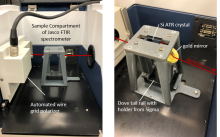
Researchers at Osaka Prefecture University have established an approach to identify the orientation of molecules and chemical bonds in crystalline organic-inorganic hybrid thin films deposited on substrates using Fourier transform infrared spectroscopy (FT-IR) and polarized infrared light with a 3D-printed attenuated total reflectance (ATR) unit. This inexpensive method with laboratory-grade equipment quickly reaches the crystal-structure model of even extremely thin films of less than 10 nm.

09 Jun 2021
Chemical rings of carbon and hydrogen atoms curve to form relatively stable structures capable of conducting electricity and more — but how do these curved systems change when new components are introduced? Researchers based in Japan found that, with just a few sub-atomic additions, the properties can pivot to vary system states and behaviors, as demonstrated through a new synthesized chemical compound.
10 Feb 2021
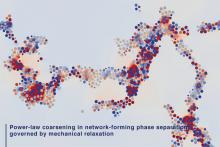
Researchers at The University of Tokyo discover a new law about how the complex network of phase-separated structures grows with time, which may lead to more efficient batteries and industrial catalysts
Events
Sorry, nothing coming up for this discipline
Researchers
Sorry, nothing coming up for this discipline
Giants in history

Gopalasamudram Narayanan Ramachandran (8 October 1922 – 7 April 2001) is best known for developing the Ramachandran plot to understand the structure of short chains of amino acids, known as peptides.