

Chemical Science
About Chemical Science
Chemical Science is a weekly peer-reviewed scientific journal covering all aspects of chemistry. It is the flagship journal of the Royal Society of Chemistry
News
25 Jun 2026
Tohoku University
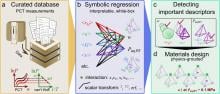
Hydrogen can store renewable energy, but then what stores the hydrogen? A new AI-powered, logic-based method provides probable materials for the job – and explains the reasoning behind its decision.
13 Mar 2026
Tohoku University
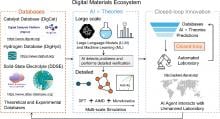
This invited publication highlights the contributions of Distinguished Professor Hao Li to AI and materials science – focusing on their original concept for a digital materials ecosystem.
04 Feb 2026
Tohoku University
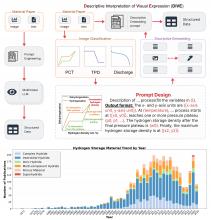
Take a dive into the streamlined workflow of DIVE (Descriptive Interpretation of Visual Expression)! DIVE combines multiple AI agents to extract images from about 4,000 scientific publications to propose new materials – all within minutes.

21 Jan 2026
Tohoku University
Macrolide antibiotics like azithromycin rely on a complex ring structure that’s powerful but notoriously hard to control. Researchers have uncovered how bacterial enzymes shape this ring during the biosynthesis of the antibiotic pikromycin, revealing new ways to fine-tune macrolide structures. Their findings could open the door to designing improved antibiotics through smarter biosynthetic engineering.
15 Jan 2026
Osaka Metropolitan University
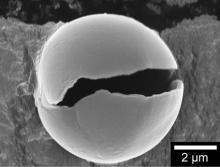
Researchers have developed technology to convert naturally derived monomers into polymers capsules
17 Nov 2025
Tohoku University
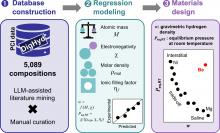
Researchers at Tohoku University used the Digital Hydrogen Platform - which combines data from over five thousand meticulously curated experimental records - as a tool to guide materials design for hydrogen storage.
03 Sep 2025
The University of Osaka
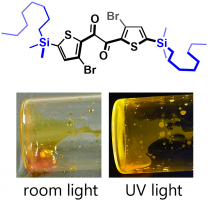
A metal-free organic liquid has been developed that phosphoresces at room temperature. Rapid phosphorescence endows the liquid with the highest phosphorescence efficiency in air among organic liquids. The new molecule has a 3-bromo-2-thienyl diketone backbone with attached dimethylocylsilyl (DMOS) groups. Attaching one DMOS group liquefies the backbone, whereas attaching two DMOS groups prevents molecular aggregation, which typically weakens phosphorescence. This new, flexible liquid can be applied to develop flexible electronic devices.
20 Aug 2025
The University of Osaka
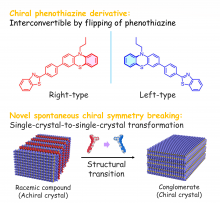
Researchers at The University of Osaka have discovered a new type of chiral symmetry breaking (CSB) in an organic crystalline compound. This phenomenon, involving a solid-state structural transition from an achiral to a chiral crystal, represents a significant advance in our understanding of chirality and offers a simplified model to study the origin of homochirality. This transformation also activates circularly polarized luminescence, enabling new optical materials with tunable light properties.

07 Oct 2024
The University of Osaka
Researchers from Osaka University have created a high-performance polymer that can be chemically recycled without compromising its heat and chemical resistance. The revolutionary design includes a directing group that allows links in the polymer to be broken easily with a catalyst and the original polymer to be reformed in few steps. The directing group could be included in many polymers, potentially providing a new generation of high-performance plastics that can be recycled indefinitely.

26 Jul 2024
Osaka Metropolitan University
Distinctive processes could provide hints on how to use next-generation materials

04 Jul 2024
The University of Osaka
A team led by Osaka University discovered that the new organic molecule thienyl diketone exhibits high-efficiency phosphorescence, achieving a rate over ten times faster than traditional materials. This breakthrough provides new guidelines for developing rare metal-free organic phosphorescent materials, promising advancements in applications like organic EL displays, lighting, and cancer diagnostics.
28 Mar 2024
Tohoku University
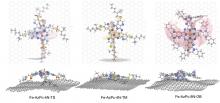
Tohoku University researchers have created a reliable means of predicting the performance of a new and promising type of catalysts. Their breakthrough will speed up the development of efficient catalysts for both alkaline and acidic environments, thereby saving time and effort in future endeavors to create better fuel cells.

21 Sep 2023
Tohoku University
A group of researchers have unraveled the mysteries behind a recently identified material—zirconium nitride (ZrN) —that helps power clean energy reactions. Their proposed framework will help future designs for transition metal nitrides, paving a path for generating cleaner energy.
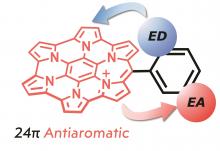
27 Jul 2023
Ehime University
Elucidation of global anti-aromaticity (aromaticity) in homoHPHAC+ (homoHPHAC3+) with electron-accepting to electron-donating substituents
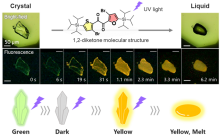
16 May 2023
The University of Osaka
Researchers at Osaka University discovered a new class of photo-responsive crystal compounds, heteroaromatic 1,2-diketones. Certain light irradiation causes the crystals in these materials to melt, dramatically changing the materials’ properties. One member of this class, SO, shows luminescent changes while melting, which enabled the research team to visualize the crystal-melting process at the molecular level. These findings provide fundamental insights into the mechanisms behind crystal melting and will enable future designs of light-responsive materials.
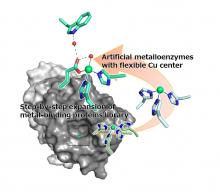
29 Mar 2023
Osaka Metropolitan University
A research group at Osaka Metropolitan University has succeeded in simply creating an artificial metalloenzyme with the common metal-binding motif 2-his-1-carboxylate, which is found in natural non-heme metalloenzymes. They created a library of 12 different proteins and screened the library and found that the H52A/H58E variant had the best stereoselectivity. It is expected that this research can be expanded to produce a variety of biocatalysts that work under mild conditions.
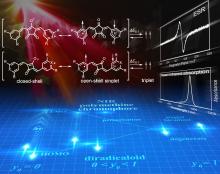
27 Mar 2023
Osaka Metropolitan University
An Osaka Metropolitan University joint research group has discovered that near-infrared absorbing dyes, which had previously been considered to have closed-shell electronic structures, have an intermediate electronic structure, between closed- and open-shell structures. They also found that as the wavelength of near-infrared light that can be absorbed becomes longer the contribution of open-shell forms increases within the dye. These newly discovered characteristics are expected to be utilized to develop new near-infrared absorbing dyes that can absorb longer wavelength near-infrared light.
18 Jun 2021
Osaka Prefecture University
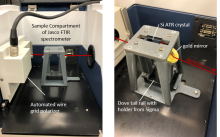
Researchers at Osaka Prefecture University have established an approach to identify the orientation of molecules and chemical bonds in crystalline organic-inorganic hybrid thin films deposited on substrates using Fourier transform infrared spectroscopy (FT-IR) and polarized infrared light with a 3D-printed attenuated total reflectance (ATR) unit. This inexpensive method with laboratory-grade equipment quickly reaches the crystal-structure model of even extremely thin films of less than 10 nm.
19 Jan 2021
Osaka City University
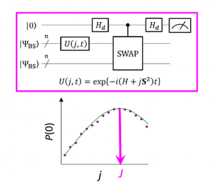
Researchers at Osaka City University use quantum superposition states and Bayesian inference to create a quantum algorithm, easily executable on quantum computers, that accurately and directly calculates energy differences between the electronic ground and excited spin states of molecular systems in polynomial time.
08 Jun 2020
Hokkaido University
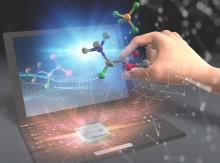
Hokkaido University scientists have succeeded in synthesizing an α,α-difluoroglycine derivative, a type of α-amino acid, based on a reaction path predicted by quantum chemical calculations. This novel method, combining experimental chemistry and computational chemistry, could innovate the development of new chemical reactions.

13 May 2020
Institute for Integrated Cell-Material Sciences (iCeMS) at Kyoto University
Hydrogen fuel cells made with coordination polymer glass membranes could produce as much energy as their liquid-based counterparts while adding strength and flexibility.
05 Mar 2020
Institute for Integrated Cell-Material Sciences (iCeMS) at Kyoto University
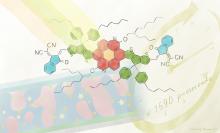
Molecular changes could improve the efficiency of next-generation photovoltaics.