
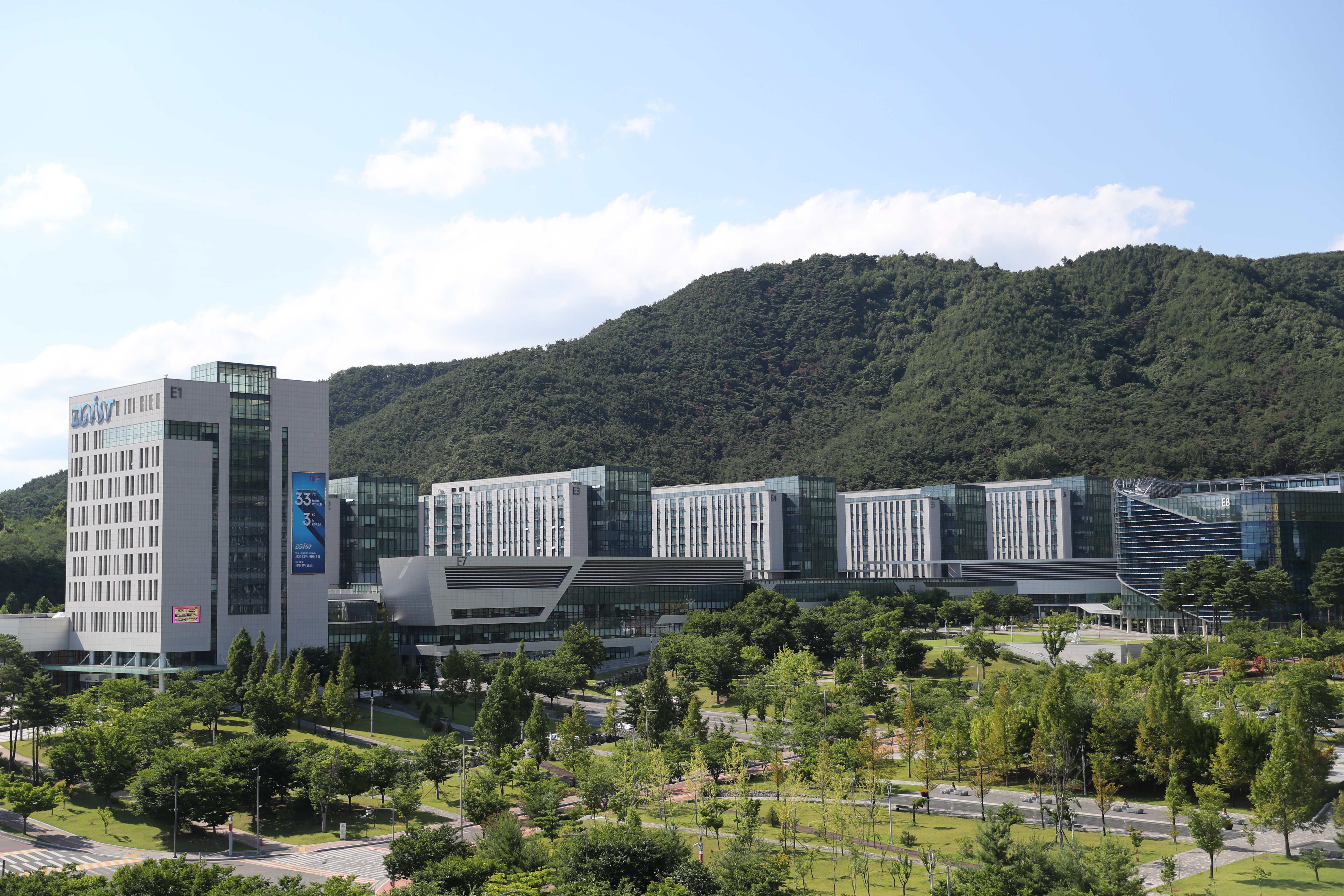
□ DGIST (President Kunwoo Lee) announced that it has been selected for a new project under the “Development of Agentic AI Technology for Active Behavior in the Real World” initiative led by the Ministry of Science and ICT and the Institute of Information and Communications Technology Planning and Evaluation (IITP). Through the project, DGIST will work with Medical Park Co., Ltd., the lead institution, and Yonsei University’s University Industry Foundation, a joint research and development institution, to commercialize an “intelligent breast ultrasound scanning solution applying autonomous robotic diagnostic technology.”
□ The project will be carried out for approximately two and a half years from July 2026 to December 2028, with a total budget of KRW 10.34 billion (KRW 8.5 billion in government funding). The Ministry of Science and ICT and IITP previously held a project kickoff meeting in Seoul on July 30, marking the full-scale launch of the government’s “Agentic AI Initiative.” In this project, Professors Jaesok Yu and Kyungseo Park of the DGIST Department of Robotics and Mechatronics Engineering will take the lead in developing the AI agents that form the core of the system.
□ Breast cancer is the most commonly diagnosed cancer among women in South Korea, and early detection is critical. However, breast ultrasound has limited accuracy as image quality and interpretation results can vary significantly depending on the operator’s skill. Existing robotic ultrasound systems have also been limited to following predefined scanning paths, making it difficult to flexibly adapt to each patient’s body shape or real-time situations.
□ To overcome these limitations, the joint research team is developing “US-AXBOT.” This is a three-dimensional automated breast ultrasound robot that applies “Agentic AI,” which senses, thinks, acts, and learns autonomously. A total of eight AI agents autonomously coordinate the entire examination workflow; the goal is to perform autonomous examinations at the level of a skilled specialist through a “closed-loop” structure in which AI-based image assessment immediately leads to robotic movement (control).
□ The DGIST research team will be exclusively responsible for developing five core AI agents out of the eight. Specifically, the team will develop and enhance 1) a “calibration” agent that aligns the device coordinate systems, 2) a “posture monitoring” agent that evaluates patient posture and positioning suitability, 3) a “scanning” agent that autonomously determines the optimal scan path and depth, 4) a “safety monitoring” agent that detects risks and responds immediately, and 5) a “quality assessment” agent that removes noise and evaluates image quality.
□ In particular, “safety” is the highest priority in design because the robot comes into direct contact with the patient’s body. DGIST plans to combine technologies that precisely control the interaction forces between humans and robots and detect hazardous situations in real time to autonomously avoid them, thereby ensuring the safety of both patients and examiners.
□ Medical Park Co., Ltd., the lead organization, will be responsible for robotic system integration, development of 3D image interpretation AI, and regulatory approval, while Yonsei University will develop the clinical workflow and conduct efficacy evaluations. By the end of the project, the research team plans to complete the system to Technology Readiness Level 7 (TRL 7), a near-commercialization stage for application in actual clinical settings, and lay a solid foundation for obtaining manufacturing approval from Korea’s Ministry of Food and Drug Safety and laying the groundwork for entry into the U.S. Food and Drug Administration (FDA) regulatory approval.
□ “This project represents an advanced technology that goes beyond simple automation, in which a robot repeatedly follows a predefined path, by enabling multiple AI agents to collaborate in real time to complete the examination,” said Professor Jaesok Yu of the Department of Robotics and Mechatronics Engineering at DGIST. “We aim to implement standardized ultrasound examinations that are not dependent on the operator’s skill, thereby increasing the early detection rate of breast cancer and contributing to strengthening the global competitiveness of domestically developed medical devices.”
□ Meanwhile, DGIST will establish three departments—Physical AI, Medical AI, and AI-X—within the “DGIST College of AI,” which will begin admitting students for the 2027 academic year, and will launch full-scale efforts to cultivate future interdisciplinary talent. DGIST plans to connect the outcomes of this project, which integrates capabilities in robot control (Physical AI) and medical imaging (Medical AI), with its education and the regional medical device industry, thereby fulfilling its role as a key hub supporting Korea’s national AI competitiveness.