

Lingnan University
These findings have been published in the leading international academic journal International Journal of Social Welfare.
Led by Lingnan University, the research team recruited 40 grandchildren aged between 15 and 63, who had previously cared for or were currently caring for ailing or disabled grandparents, for in-depth interviews conducted between April and December 2023 through social welfare organisations and school referrals. Those they cared for suffered from conditions such as cancer, heart disease, diabetes, stroke, dementia, limited mobility, or hearing impairment, and over half were aged 85 or above.
From detailed interviews, the research team identified four main motivations for grandchildren to care for their grandparents: first, shaped by traditional Chinese values, their grandparents had looked after them as children, inspiring a desire to reciprocate; second, respondents viewed their grandparents as an integral part of family care and support, considering the care of elderly relatives to be a "family responsibility"; third, respondents wished to alleviate their parents' caregiving burden as a form of "indirect filial piety" and to share their worries; and fourth, because the respondents' parents and adult relatives needed to work, and the younger generation in education had relatively flexible schedules, enabling them to become a vital part of the family care network.
For example, a 21-year-old university student has to care for both her grandfather, who suffers from cancer and dementia, and her grandmother, who has a disability. She said that her grandparents had looked after her while her parents were at work, and as a university student, she could flexibly arrange her time to look after them. Another respondent, a 16-year-old secondary school student, helps care for her maternal grandmother, who suffers from degenerative leg conditions, mobility issues, and dizziness, and she pointed out that as both her parents work full-time, and her younger sister is still in primary school and cannot take on caregiving responsibilities, she is the only one with time to help.
However, the study specifically notes that over 300,000 households in Hong Kong employ foreign domestic helpers for housework and childcare. This shift in family care models may reduce the traditional participation of grandparents in caring for grandchildren. The study raises concerns about how this shift in caregiving dynamics may impact grandparent-grandchild relationships and future intergenerational eldercare.
Prof Dickson Chan Chak-kwan, Research Professor and Director of APIAS at Lingnan University, said, “The government promotes an 'ageing in place' policy, which relies on 'informal caregivers' such as family members to support the elderly. Historically, society has paid little attention to the role of grandchildren as carers, yet this study found that being cared for by grandparents during childhood, upon reaching adulthood grandchildren are eager to reciprocate the care received from their ailing grandparents, remaining steadfast in their willingness to provide support despite the arduous nature of caregiving. Nowadays, due to a reliance on domestic helpers for childcare, fewer opportunities for grandparents to participate in their grandchildren’s upbringing may affect the chances of both generations building reciprocal relationships. Therefore, government and social welfare organisations should encourage more inclusive activities, introduce parents to the benefits of grandparental involvement in childcare, provide appropriate assistance to grandparents caring for their grandchildren, and increase opportunities for grandparent-grandchild interaction and bonding. Fostering emotional connections between the younger generation and their grandparents from early childhood is crucial to sustaining a long-term intergenerational eldercare support network.”
Prof Chan emphasised that society must not overlook the real-world dilemmas faced by these "invisible carers" who are grandchildren, as many young respondents mentioned their lack of nursing knowledge and caregiving skills. One respondent reported suffering from lower back pain and muscle strain from caring for her grandmother, requiring physiotherapy, and also sustained wrist and arm strains.
Prof Chan suggested that social welfare organisations could collaborate with secondary schools, tertiary institutions, and youth centres to provide young carers with basic knowledge and skills for looking after family members with chronic illnesses or disabilities. Furthermore, schools and universities might consider offering appropriate support and flexible arrangements to help students with caregiving responsibilities balance their studies and personal lives.
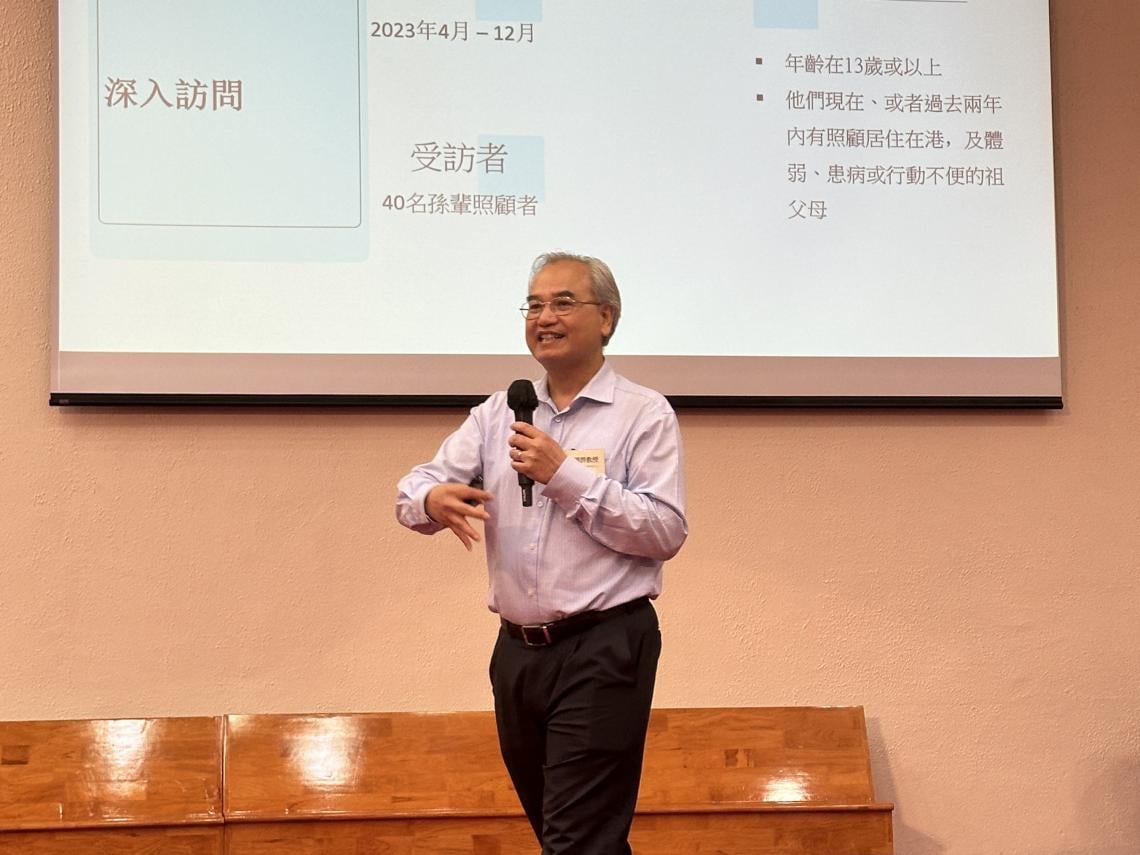
Prof Dickson Chan Chak-kwan, who led the study, explains that the findings show close relationships established with grandparents during childhood significantly influenced respondents' willingness to shoulder the responsibility of caring for their grandparents later in life.