
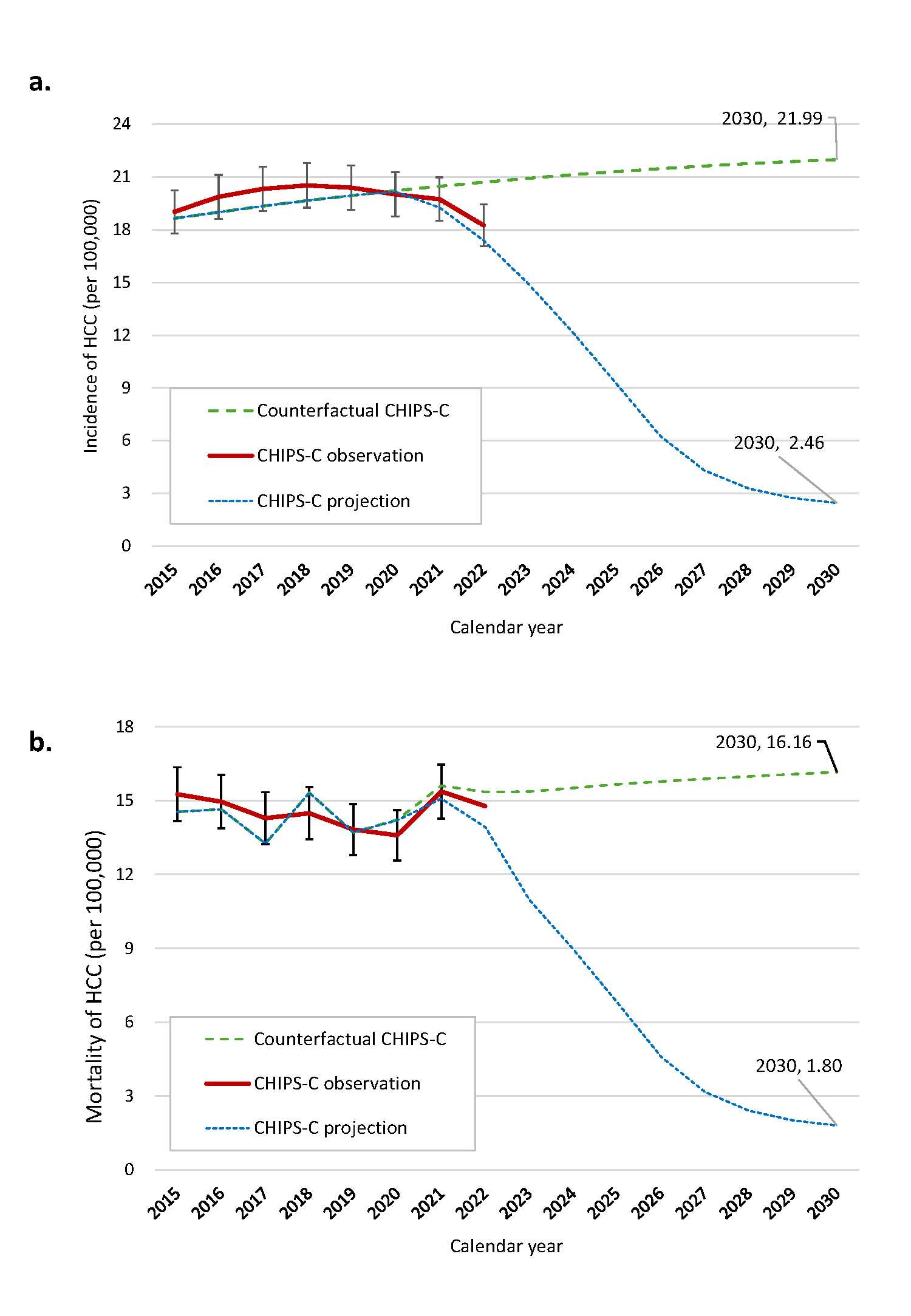

A county-wide program in Taiwan combined risk-based screening with decentralized treatment, dramatically improving hepatitis C diagnosis and cure while projecting liver cancer and mortality reductions that meet the World Health Organization's elimination targets by 2030.1.
Changhua County's integrated hepatitis C elimination program combines precision screening, rapid diagnosis, and community-based treatment, leading to projected reductions in liver cancer and liver-related deaths by 2030.
National Taiwan University
Hepatitis C remains a major cause of liver cirrhosis and liver cancer worldwide. Although highly effective antiviral medicines can cure most infections, many people remain undiagnosed or untreated because healthcare systems often fail to reach those at greatest risk.
Researchers from National Taiwan University and collaborating institutions have developed an innovative county-wide program in Changhua, Taiwan, that combines risk-based screening with decentralized community care to improve hepatitis C detection and treatment. Rather than relying solely on population-wide screening, the program proactively identifies high-risk groups—including people with chronic kidney disease, diabetes, HIV infection, people who inject drugs, incarcerated individuals, and dialysis patients—while integrating these efforts into existing community health services.
The study, published in Nature Communications, followed more than 1.27 million residents and found that the program increased hepatitis C screening coverage from 53.7% to 90.2%, doubled confirmatory RNA testing, and raised treatment initiation to 91.6%. Modern antiviral therapy achieved an impressive 99% cure rate, while the targeted approach improved efficiency by focusing healthcare resources where they were most needed.
Using advanced statistical modelling, the researchers projected that the program could reduce hepatitis C-related liver cancer incidence and mortality to levels that meet the World Health Organization's elimination targets by 2030. The Changhua experience demonstrates how precision public health, integrated healthcare networks, and data-driven decision-making can accelerate disease elimination and provide a scalable model for countries worldwide.
"Our study demonstrates that hepatitis C elimination depends not only on effective medicines but also on delivering the right care to the right people at the right time. By integrating precision risk-based screening with community-based healthcare, we provide a practical model that can help countries worldwide accelerate progress toward hepatitis C elimination," says co-corresponding author Prof. Tony Hsiu-Hsi Chen from Institute of Health Data Analytics and Statistics at National Taiwan University.
Prof. Tony Hsiu-Hsi Chen's email address: [email protected]
Advertisement