

Biology Genetics
News
26 May 2023
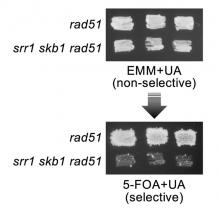
A research team, led by researchers from Osaka University, performed genetic screening of fission yeast lacking DNA repair gene Rad51 to identify genes that play a role in gross chromosomal rearrangement (GCR), a type of mutation that occurs at the centromere. Cells lacking Srr1 or Skb1 exhibited reduced GCR, indicating that these genes are important to the occurrence of GCR. These findings advance our understanding of the mechanisms underlying centromeric GCR.
11 May 2023
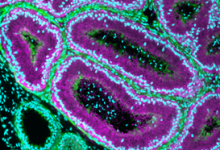
Researchers from Osaka University identified a new protein, NICOL, and described its crucial role in the maturation of sperm, which itself is necessary for male fertility. Mice who lacked this protein were sterile. Such a discovery may have implications for the development of male contraceptives.
13 Mar 2023
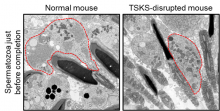
Researchers from Osaka University identified the role of a protein known as testis-specific kinase substrate (TSKS) in the process of spermiation, the release of mature sperm. Analysis of a gene-modified mouse model in which TSKS is disrupted revealed that TSKS is necessary for sperm to eliminate cytoplasm and become streamlined. These findings may lead to the development of diagnostic tests and male contraceptives.
10 Mar 2023
Two novel hypotheses address the “two-fold cost of sex”: one of the biggest enigmas in the evolution of sexual reproduction.
16 Feb 2023
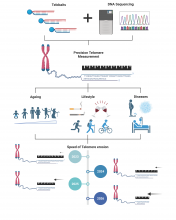
A new approach that ‘baits’ the caps or telomeres protecting the ends of chromosomes could provide information on how rapidly we are ageing and what we need to do to slow it down.
06 Feb 2023
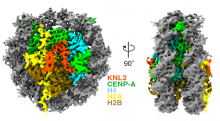
Researchers led by Osaka University used cryogenic electron microscopy to analyze the atomic structure of the centromeric region of the chromosome, essential for cell division. A protein called CENP-A marks the centromere; the researchers showed that during interphase, CENP-A is bound by a protein called KNL2 to maintain the location of the centromere. During mitosis, KNL2 is replaced by CENP-C, allowing correct formation of the kinetochore complex for cell division.
25 Jan 2023
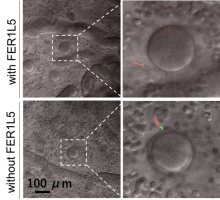
Researchers from Osaka University have identified a protein, FER1L5, that is essential for sperm to acquire fertilizing ability. Sperm from mice lacking this protein were unable to undergo the “acrosome reaction”, which releases molecules that facilitate fertilization, resulting in impaired male fertility. As FER1L5 is also present in human sperm, this work may lead to new diagnostic methods and treatments for male infertility in humans.

20 Jan 2023
Overeating mechanism: why "eating just one chip"🍟 is impossible, Measuring hidden energy of gamma-ray bursts, Marine species that can adapt to ocean acidification & A rough start can lead to a strong bond, Read all in our first Editor's Choice of 2023. Plus our interview on what dengue vaccine approval in EU💉means for global dengue protection.

12 Jan 2023
A team of Japanese researchers created a high-quality genome assembly of red perilla, a step toward harnessing the plant’s potentially useful bioactive chemicals — and its medicinal properties.
10 Jan 2023
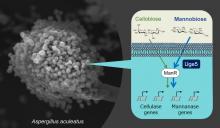
An Osaka Metropolitan University research team analyzed the regulatory mechanisms of carbohydrate-hydrolyzing enzyme production in Aspergillus aculeatus, a filamentous fungus that produces enzymes with an excellent ability to degrade plant biomass. The team found that UDP-glucose 4-epimerase (Uge5), an enzyme known for its involvement in galactose metabolism, also regulates the expression of degrading enzyme genes in A. aculeatus. This is the very first report of Uge5’s roles in selective gene expression in response to different types of inducing sugars in filamentous fungi.
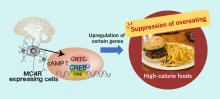
23 Dec 2022
Scientists reveal genetic mechanism associated with high-calorie food-fueled obesity
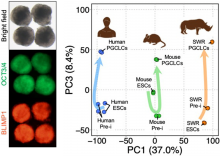
19 Dec 2022
Researchers from Osaka University have developed a culture system using pluripotent cells from southern and northern white rhinos, which was refined to produce primordial germ cell-like cells (PGCLCs). These cells are the equivalent of primordial germ cells, the origin of eggs and sperm. The study marks an important first step in the potential production of northern white rhino gametes, which could be used in breeding programs, and is the first to induce PGCLCs in a wild animal.

01 Dec 2022
Research led by Hong Kong Baptist University (HKBU) involving the use of a pioneering female sterility technique has led to a breakthrough in the production of hybrid rice seeds. Compared to the commonly used “three-line” male sterility technique in hybrid rice seeds production, the novel approach enhances the efficiency of hybrid rice production by eliminating rice seeds that have been produced due to the self-pollination of the “restorer line”. The novel technique enables fully automatic harvesting of hybrid seeds by machines, which can substantially reduce harvesting costs.
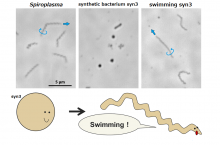
30 Nov 2022
Osaka Metropolitan University researchers introduced seven proteins, thought to let bacteria swim by switching the direction that their helical bodies spiral, into a strain of synthetic bacterium with minimal genetic information. As a result, they confirmed that the synthetic bacterium named syn3, which is normally spherical, formed a helix that could swim by spiraling. Further investigation revealed that only two of these newly added proteins were required to make syn3 capable of minimal swimming. This swimming synthetic bacterium can be said to be the smallest mobile lifeform genetically, as it contains the fewest number of genes.

06 Oct 2022
Giants in History: Archana Sharma (16 February 1932 - 14 January 2008) conducted research into plant and human genetics that expanded the understanding of both botany and human health.

29 Sep 2022
Linked lanthanides shine light on crystal engineering, New technique reveals hidden genome, Red, white and blue alerts for dangerous bacteria & Windows gain competitive edge over global warming. Read all in the September's Editor's Choice plus this month's Asia Research News 2022 magazine pick - Floating sensors to gather ocean data.
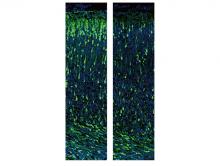
31 Aug 2022
Scientists understand genes related to intellectual disabilities, but are often unsure of how mutations in these genes cause developmental disorders. Now, a research group led by two Tohoku University researchers has uncovered the role of CHAMP1—a gene whose mutations are associated with intellectual disability—in neuronal development.
23 Aug 2022
Two new approaches could help scientists use existing sequencing technology to better-distinguish RNA changes that affect how their genetic code is read.
26 Apr 2022
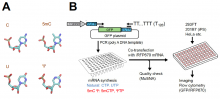
Researchers set out to find new ways to artificially induce mRNA to respond in ways that could eventually lead to therapeutic outcomes, expanding on the success of the mRNA-based COVID-19 vaccines and opening up new possibilities across a host of possible genetic therapies.
25 Apr 2022
Examination of endangered species’ stem cells unveils ancient genetic links between mammals.
04 Feb 2022
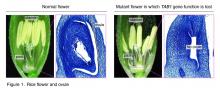
Rice has long been a staple food for more than half the global population. The United Nations even declared 2004 the International Year of Rice to raise awareness and encourage action to protect and advance the crop for a rapidly growing population. The genetic guidance rice uses to grow and reproduce, however, is still not fully understood. Now, a research team based in Japan is learning more, including how critical one gene is for the plant to develop grains of rice, which serve as both seeds and food.
23 Dec 2021
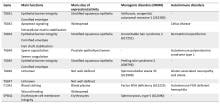
By searching for the protein transglutaminase 1 (TGM1) among patients with various autoimmune skin diseases, researchers have successfully identified a separate disease that
can be linked to autoimmunity against TGM1. This backward method
demonstrates a new way of identifying autoantigens as markers for various
diseases. By letting autoantigens point to the disease, diagnosis and
treatment can be facilitated, according to the study now published in PNAS.
22 Dec 2021
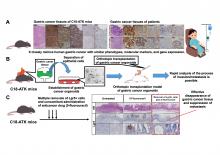
We have succeeded in establishing a mouse model that develops gastric cancer closely resembling advanced human gastric cancer. Using this model, we have discovered gastric cancer stem cells, i.e. Lgr5+ gastric cancer cells, essential for the development, maintenance, and metastasis of cancer. Our study provides an experimental system that enables detailed analysis of highly malignant gastric cancer and is expected to lead to the development of a breakthrough treatment for advanced human gastric cancer.

28 Oct 2021
Giants in History: Maqsudul Alam (14 December 1954 – 20 December 2014) was a biologist from Bangladesh who is renowned for his research on genome sequencing.
13 Sep 2021
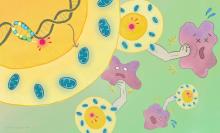
iCeMS scientists and colleagues have designed a molecular code that powers up cancer-fighting immune cells.
11 Sep 2021
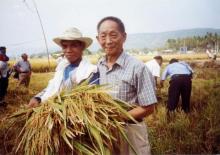
Giants in History: Chinese agronomist Yuan Longping (7 September 1930 – 22 May 2021) developed the first varieties of the high-yield, hybrid rice that brought food security to multiple countries including China, which had been ravaged by food shortages as recently as the mid-20th century.
10 Sep 2021
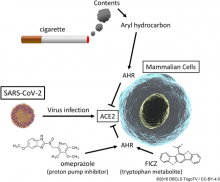
Researchers have identified a potential reason why lower numbers of COVID cases have appeared amongst smokers compared to non-smokers, even as other reports suggest smoking increases severity of the disease.
08 Sep 2021
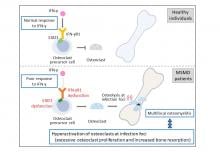
A research team led by Hiroshima University Professor Satoshi Okada has determined that enhanced bone resorption activity due to a faulty immune response may underpin multifocal osteomyelitis — painful, chronic bone infections — in children with MSMD, a rare genetic condition resulting from a range of immune system mutations.
26 Aug 2021
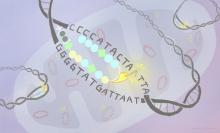
A multi-functional, small molecule can tag mutant genetic sequences inside mitochondria for removal.
26 Aug 2021
Researchers discover a link between an increase in protein Ba of the complement immune system and the eventual development of thrombotic microangiopathy in patients who have received an allogeneic hematopoietic stem cell transplantation.
Events
Sorry, nothing coming up for this discipline
Researchers
Sorry, nothing coming up for this discipline
Giants in history
Sorry, nothing coming up for this discipline