
ACS Applied Materials & Interfaces
About ACS Applied Materials & Interfaces
ACS Applied Materials & Interfaces is for chemists, engineers, physicists and biologists researching materials and interfacial processes for specific applications.
- Website: https://pubs.acs.org/journal/aamick
- Current Issue: https://pubs.acs.org/toc/aamick/current
News
02 Sep 2026
Tohoku University
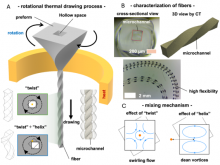
Researchers develop a new fabrication method for creating twisted microchannels inside polymer fibers, enabling efficient mixing of minute amounts of liquid.

16 Mar 2026
Daegu Gyeongbuk Institute of Science and Technology (DGIST)
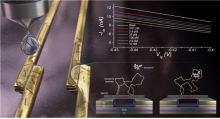
- Breaking through the limitations of conventional oxygen-defect-based memories... Simultaneously performing AI computation and storage through precise hydrogen atom control
- First case of successfully controlling hydrogen in a two-terminal vertical structure, accelerating the era of ultra-low-power, high-density neuromorphic chips
- Selected as cover paper for the prestigious international journal ACS Applied Materials & Interfaces
08 Sep 2025
Daegu Gyeongbuk Institute of Science and Technology (DGIST)
- DGIST research team led by Yoonhee Lee successfully fabricated CNT FET high-sensitivity biosensors based on surface tension-induced inkjet printing.
- The new technology enables low-cost and large-area fabrication without complicated processes.
- It is expected to contribute to fabricating next-generation, high-sensitivity biosensors.

01 Jul 2025
Xi'an Jiaotong-Liverpool University
A new nanoparticle capable of carrying much higher doses of drugs while staying stable for extended periods could make treatments more effective

05 Sep 2024
Tohoku University
A capacitor is like a highspeed battery that can quickly store and release energy. What happens when it becomes “super?” Researchers at Tohoku University have potential solutions to improve energy-efficiency.
24 Mar 2024
Daegu Gyeongbuk Institute of Science and Technology (DGIST)
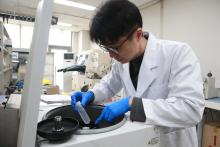
- Development of 'Inorganic-Organic Thermoelectric Composite' from Low-Temperature Inorganic Thermoelectric Materials and Conductive Polymers, Ensuring Efficiency and Flexibility
- Research findings published in ACS Applied Materials & Interfaces
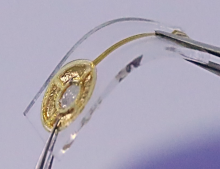
26 Dec 2023
Daegu Gyeongbuk Institute of Science and Technology (DGIST)
- Professor Kyung-In Jang’s research team at DGIST has developed a complex taste sensor that mimics the gustatory system and detects saltiness, sourness, bitterness, and sweetness in real-time.
- It is expected to be applied in various fields, including the food, cosmetics, and medicine industries
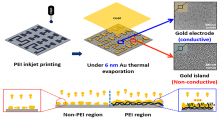
11 May 2023
Daegu Gyeongbuk Institute of Science and Technology (DGIST)
- DGIST Professor Hongki Kang’s team developed technology for selective photothermal layer formation and a transparent electrode based on a fine inkjet printing solution process.
- This has potential to efficiently measure various body signals through a flexible fine electrode array customized for patients.
- The research results are published in ACS Applied Materials & Interfaces.
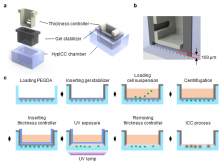
11 May 2023
Daegu Gyeongbuk Institute of Science and Technology (DGIST)
- The DGIST team of Professor Minseok Kim is jointly developing a platform that can analyze rare cells without loss with CTCELLS, Inc.
- A high cell preservation rate and reproducibility have been achieved as well as accurate immunocytochemistry technology implementation.
- Research results have been published in ACS Applied Materials & Interfaces.

10 Aug 2022
Daegu Gyeongbuk Institute of Science and Technology (DGIST)
- Joint research team comprising the DGIST Thin Film Solar Cell Research Center and the Department of New Material Engineering of Kyungnam University discovers the cause of pore formation in thin film solar cells of general-purpose materials and developed technology to resolve the problem
- Suggested strategies for developing eco-friendly general-purpose thin film solar cells by suppressing pore formation
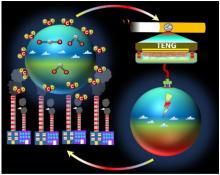
19 Jul 2022
Newcastle University in Singapore
An international team of scientists from India and Singapore has successfully developed a novel method to recycle waste cigarette filters for use in making the triboelectric nano generator, a clean energy generating device.
11 Jul 2022
Hokkaido University
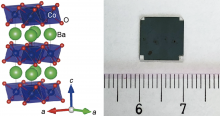
A thermoelectric metal oxide film with a thermoelectric figure of merit of ~0.55 at 600°C has been discovered, opening new avenues towards the widespread use of thermoelectric converters.
08 Jun 2022
Kanazawa University
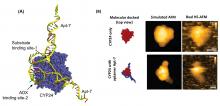
Researchers at Kanazawa University in collaboration with teams from Toyama Prefectural University and BioSeeds Corporation report in ACS Applied Materials & Interfaces the identification of a molecule with enhanced antiproliferative activity in cancer cells. The underlying biomolecular mechanism is the inhibition of an enzyme that is overproduced in several types of cancer.

07 Apr 2022
Singapore University of Technology and Design
With the enhancement of Freeform Liquid 3D Printing, engineers and designers are now able to fabricate more intricate, yet stronger 3D printed soft robots.
28 Oct 2021
Osaka Prefecture University
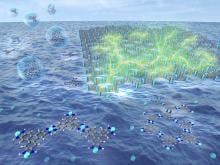
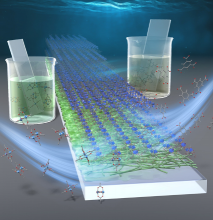
Spontaneous wide-area spreading of oil on water inspires a facile energy-saving route of crafting electrically conductive nanostructures for future sensor/energy devices
20 Apr 2021
Hiroshima University
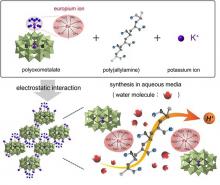
Protons are the next big thing when it comes to fuel cell technology. The subatomic exchange produces power on a scale that challenges contemporary solid-state fuel cell technology, used to help power space shuttles. To realize the proton-based technology sooner, an international team of researchers have developed a hybrid material that effectively transports protons at high temperatures and humidity — two major challenges in past attempts.
26 Jan 2021
Tohoku University
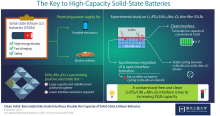
Solid-state lithium batteries (SSLB), unlike their liquid lithium-ion counterparts, are dry and do not need extra cooling, rendering them safer and capable of providing more energy. A research team has recently discovered that a clean electrolyte/electrode interface can double the capacity of SSLBs, paving the way for a more sustainable future.
09 Nov 2020
Tohoku University
A research team has developed a new method for creating metal-organic framework (MOF) thin films that can be applied to sensors and electric devices.

26 Jun 2020
Tohoku University
"Neuromorphic" refers to mimicking the behavior of brain neural cells. When one speaks of neuromorphic computers, they are talking about making computers think and process more like human brains-operating at high-speed with low energy consumption.
18 May 2020
Daegu Gyeongbuk Institute of Science and Technology (DGIST)
Researchers from Daegu Gyeongbuk Institute of Science and Technology develop a simple approach for controlling the otherwise random formation of cracks in flexible thin-film conductors, greatly increasing the durability of flexible electrodes and transistors against bending and folding.
12 May 2020
Daegu Gyeongbuk Institute of Science and Technology (DGIST)
Researchers from Daegu Gyeongbuk Institute of Science and Technology(DGIST) have developed an innovative method that allows them to visualize up to tens of different proteins simultaneously in the same cell. This technology could help scientists elucidate the complex protein interactions involved in degenerative diseases such as Alzheimer’s, deepening our understanding of their mechanisms and allowing for early detection and treatment.
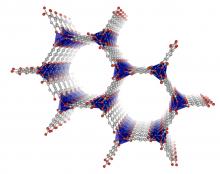
26 Feb 2020
Hokkaido University
Metal-organic frameworks (MOFs) are promising materials for inexpensive and less energy-intensive gas separation even in the presence of impurities such as water.
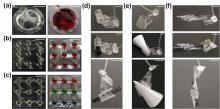
21 Oct 2019
Daegu Gyeongbuk Institute of Science and Technology (DGIST)
DGIST Professor Sohee Kim’s Team developed a technology to produce 3D soft and flexible devices by blowing balloons made of polymeric thin films. Can be made in various 3D shapes... Expected to have diverse medical and biomedical applications.
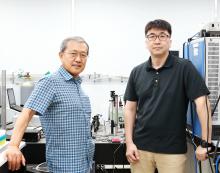
09 Aug 2019
Daegu Gyeongbuk Institute of Science and Technology (DGIST)
DGIST Research Fellow Jae Young Kim and Chair-professor Dae Won Moon’s team developed a mass spectrometric technology using graphene substrate and continuous wave laser without complex sample preparation. Expected to be used for precise medical diagnosis and surgery with easy high-resolution analysis image processing.
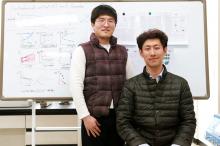
29 Apr 2019
Daegu Gyeongbuk Institute of Science and Technology (DGIST)
DGIST Senior Researcher Changsoon Choi’s team developed single-layer graphene based multifunctional transparent devices. Expected to be used in various devices such as electronics and skin-attachable devices with power generation and self-charging capability
07 Aug 2018
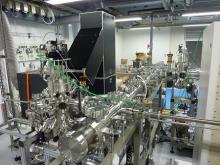
Scientists at Tokyo Institute of Technology and Tohoku University have addressed one of the major disadvantages of all-solid-state batteries by developing batteries with a low resistance at their electrode/solid electrolyte interface.
24 Jan 2018
Tohoku University
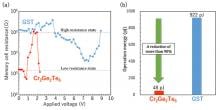
Researchers have made a discovery that could see a drastic reduction in power consumption for data recording.

20 Apr 2016
The Agency for Science, Technology and Research (A*STAR)
Silicon-based films that are useful for waveguides have been made at temperatures low enough to be compatible with standard manufacturing processes.

19 Mar 2015
The Agency for Science, Technology and Research (A*STAR)
An oxide/carbon composite outperforms expensive platinum composites in oxygen chemical reactions for green energy devices

20 Aug 2014
National Institute for Materials Science (NIMS)
Anticipated for applications in the development of "superplants" for radiocesium decontamination