

Small
About Small
Small is a nanoscience & nanotechnology journal providing the very best forum for fundamental and interdisciplinary applied research at the nano- and microscale, covering chemistry, energy, physical & materials science, engineering, and biomedical and life sciences.
News
01 Oct 2026
Institute of Industrial Science, The University of Tokyo (UTokyo-IIS)
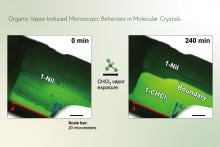
A study from the Institute of Industrial Science, The University of Tokyo used special instruments to investigate how crystals smaller than a strand of hair change and move as they draw in chloroform vapor
08 Sep 2026
Tohoku University
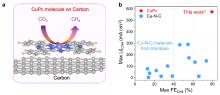
Scientists have turned a common blue pigment into a powerful tool for fighting climate change. Researchers at Tohoku University, Hokkaido University, and AZUL Energy created a copper phthalocyanine catalyst that converts carbon dioxide directly into methane fuel in a single step, reaching nearly 80% efficiency and sustaining performance for 80+ hours. The breakthrough could make carbon recycling more practical and scalable using an inexpensive, readily available material.
27 Aug 2026
The University of Osaka
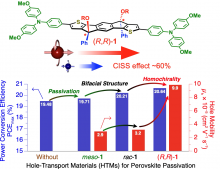
Researchers at the University of Osaka developed chiral hole-transport materials that selectively conduct electrons according to spin. Across three classes of materials, molecular handedness consistently determined the direction of spin polarization. The homochiral material also showed nearly threefold higher hole mobility and improved charge extraction and surface passivation in perovskite solar cells, highlighting new possibilities for controlling spin, charge transport, and interfaces through molecular design.
03 Aug 2026
National Taiwan University
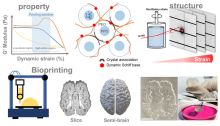
Researchers at National Taiwan University have designed a shear-protective hydrogel bioink that enables high-resolution bioprinting of pickable neural tissue patches with high cell survival.
06 Jul 2026
Tohoku University
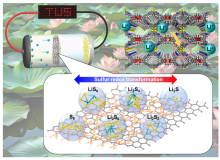
The abundance of sulfur not only makes lithium-sulfur batteries cheaper to manufacture, but they also boast superior energy-storage capacity to current lithium-ion technologies. But one problem preventing practical deployment is polysulfide shuttling—when polysulfides formed during battery cycling escape the cathode and drift into unwanted areas and cause the battery to erode. Now, a group of researchers from Tohoku University has solved this problem with a molecularly designed covalent organic framework (COF)–graphene interlayer. Like a security checkpoint that both identifies threats and efficiently streams people where they need to go, the interlayer combines chemical trapping, rapid charge transport, and sulfur-conversion promotion.
28 May 2026
Daegu Gyeongbuk Institute of Science and Technology (DGIST)
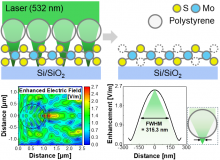
- Professor Hyuk-Jun Kwon's team developed ultrahigh-resolution optical doping technology based on microlenses
- The technology could potentially be implemented in next-generation 2D semiconductor-based CMOS
- The study was published in Small, an international journal in the nanotechnology field
13 May 2026
The University of Osaka
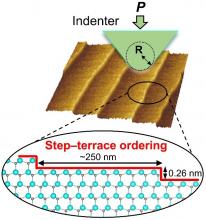
Researchers from The University of Osaka report the creation of step–terrace–ordered GaN surfaces using catalyst-referred etching (CARE). Mechanical testing on these surfaces demonstrates exceptional reproducibility across 100 measurements, achieving record-low stress scatter.
25 Mar 2026
National Taiwan University
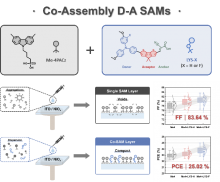
This study introduces a co-assembly strategy using two newly designed donor–acceptor self-assembled materials, LYS-H and fluorinated LYS-F, to overcome aggregation, wettability, interfacial contact, and crystallinity limitations of Me-4PACz in inverted perovskite solar cells. The fluorinated LYS-F delivers a power conversion efficiency of 25.02%, a fill factor of 83.64%, and improved ambient stability, highlighting its strong potential for the future commercialization of high-efficiency perovskite photovoltaic technologies.
20 Mar 2026
National Taiwan University
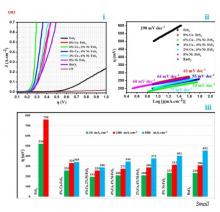
Enhancement of OER has been demonstrated via co-doping of Co/Ni into FeS2, which surpasses the performance of traditional expensive RuO2 as OER electrocatalyst.
19 Mar 2026
National Taiwan University
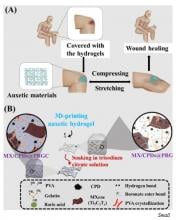
A study, published in Small, has introduced a breakthrough solution in the form of a 3D-printed, auxetic hydrogel dressing known as MX/CPDs@PBGC.
26 Jan 2026
National Taiwan University
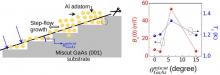
By utilizing the GaAs substrate miscut, we can modulate the superconducting critical temperature, current, and magnetic field of wafer-scale Al nanofilms grown by molecular beam epitaxy by approximately 10%, 100%, and 1000%, respectively. Our approach points to a simple method of tailoring grain architecture and superconductivity in Al, which is a critical requirement for advancements in quantum computation and engineering.
15 Dec 2025
National Taiwan University
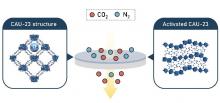
Researchers developed a highly selective membrane that efficiently separates carbon dioxide from other gases, supporting cleaner energy and industrial processes.
29 Oct 2025
Tohoku University
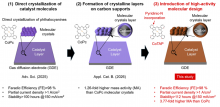
The Yabu Laboratory at the Tohoku University Advanced Institute for Materials Research (WPI-AIMR) has recently demonstrated a novel strategy that yields a highly efficient electrocatalyst.

27 Oct 2025
Daegu Gyeongbuk Institute of Science and Technology (DGIST)
- Research team led by DGIST Professor Hyukjun Kwon successfully covert the n-type of titanium oxide into the p-type with a laser-based integrated oxidation-doping process
- This highly reliable, high-speed process is expected to be applicable to next-gen electronic devices
17 Oct 2025
National Taiwan University
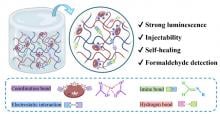
Researchers from the Institute of Polymer Science and Engineering at National Taiwan University have developed a multifunctional hydrogel sensor for detecting formaldehyde.
08 Oct 2025
Tohoku University
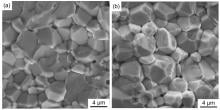
Tohoku University researchers dispel the “plasma effect” myth in spark plasma sintering, showing that both SPS and hot pressing achieve equally effective, rapid densification of LLZO solid electrolytes.
24 Aug 2025
Daegu Gyeongbuk Institute of Science and Technology (DGIST)
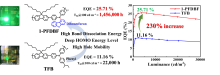
- Professor Youngu Lee’s team at DGIST develops a new hole transport layer material that dramatically enhances the efficiency and stability of QLED displays.
- Using a high-binding-energy organic hole transport layer material, the team achieves 25.7% external quantum efficiency and improves device lifetime by 66 times.
22 Aug 2025
National Taiwan University
Scientists from National Taiwan University System developed a next-generation nanomaterial-enhanced mass spectrometry system that dramatically boosts sensitivity and accuracy for detecting multiple classes of psychoactive substances. This approach overcomes traditional matrix interference, allowing rapid, reproducible, and interference-free drug screening for real-time diagnostics.
04 Aug 2025
Daegu Gyeongbuk Institute of Science and Technology (DGIST)
- DGIST develops a low-cost, high-performance fuel cell catalyst, paving the way for next-generation eco-friendly hydrogen technologies
- The catalyst shows enhanced performance and durability compared to conventional ones, exceeding the U.S. Department of Energy’s 2025 targets

04 Aug 2025
National Taiwan University
Researchers from the Department of Chemistry, National Taiwan University, develop a new synthesis route for ultrathin photoanodes, which enables a 100 nm tantalum nitride layer to outperform much thicker films fabricated through conventional oxide precursors.

26 Jun 2025
Kanazawa University
Researchers at the Nano Life Science Institute (WPI-NanoLSI), Kanazawa University, report in Small, a weekly peer-reviewed scientific journal covering nanotechnology, published by Wiley-WCH, Germany, how short peptides self-assemble linearly on atomically-thick solid surfaces, such as graphite and MoS₂. The research addresses a longstanding challenge in materials science: understanding the complex, sequence-specific interactions between peptides and solid substrates, and the critical role of local hydration structures in guiding nanoarchitecture formation. This work offers new strategies for integrating biomolecules with advanced materials in future bioelectronics and sensor devices.

07 May 2025
National Taiwan University
A breakthrough to tackle the long-standing challenges of heterogeneity and scarcity in extracellular vesicle (EV) research.

10 Apr 2025
National Taiwan University
Scientists visualize CO2 turning into carbon monoxide inside live cells using SERS and nanocatalysts.

27 Mar 2025
National Taiwan University
Researchers from the Institute of Polymer Science and Engineering, National Taiwan University, have developed a smart gel that responds to multiple stimuli for precise drug release.

26 Mar 2025
Tohoku University
A novel method to improve the photoluminescent efficiency of metal clusters has been developed – which could potentially be used in applications such as bioimaging or display technologies.

07 Mar 2025
Tohoku University
Soaking up pollutants like a sponge, porous organic polymers (POPs) may be the key to reducing greenhouse gas emissions, according to researchers at Tohoku University.

30 Dec 2024
Daegu Gyeongbuk Institute of Science and Technology (DGIST)
- Dr. Kim Jae-hyun’s team developed a stable, efficient polymer-based solid electrolyte
- Applicable to smartphones, EVs, and energy storage

13 Dec 2024
Tohoku University
We might all be able to breathe a bit easier thanks to copper nanoclusters that can help us reduce carbon emissions through an electrochemical reaction.

19 May 2024
Daegu Gyeongbuk Institute of Science and Technology (DGIST)
- Replacing conventional long-time heat treatments with pulsed, instantaneous light to improve the electrical conductivity of next-generation PbS Quantum Dot solar cells while suppressing defect formation
- Reduced build time and maximized efficiency with pulse-shaped fabrication
- Published the research results in an online paper in the international journal, “Small” (IF: 13.3)

19 May 2024
Daegu Gyeongbuk Institute of Science and Technology (DGIST)
- The DGIST·Kookmin University joint research team identifies triboelectricity as a source of soft mechanoluminescent complex and proposes a mechanism for light emission
- Emits bright light even under light stress and is durable; increased expectation for new applications upon identifying the cause