

Innovation
News
05 Mar 2020
Institute for Integrated Cell-Material Sciences (iCeMS) at Kyoto University
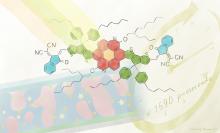
Molecular changes could improve the efficiency of next-generation photovoltaics.
05 Mar 2020
Ulsan National Institute of Science and Technology (UNIST)
An international team of researchers, affiliated with South Korea's Ulsan National Institute of Science and Technology (UNIST) has for the first time succeeded in demonstrating the ionization cooling of muons.
02 Mar 2020
Ulsan National Institute of Science and Technology (UNIST)
A recent study, affiliated with South Korea's Ulsan National Institute of Science and Technology (UNIST) has presented a new biofuel system that uses lignin found in biomass for the production of hydrogen.

26 Feb 2020
Ulsan National Institute of Science and Technology (UNIST)
A recent study, affiliated with South Korea's Ulsan National Institute of Science and Technology (UNIST) has succeeded for the first time in making the crystalline silicon solar cell transparent with dark and muddy colors.
25 Feb 2020
Ulsan National Institute of Science and Technology (UNIST)
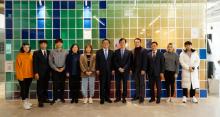
Mayor Cheol-ho Song (Ulsan, South Korea) visited the startup facilities of Ulsan National Institute of Science and Technology (UNIST) on January 4, 2020.
24 Feb 2020
Ulsan National Institute of Science and Technology (UNIST)
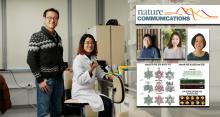
A recent study, affiliated with South Korea's Ulsan National Institute of Science and Technology (UNIST) has unveiled the structure and mechanism of proteins that are highly overexpressed in various cancers and associated with poor patient prognoses.
23 Feb 2020
Ulsan National Institute of Science and Technology (UNIST)
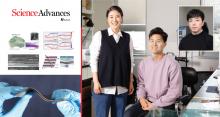
South Korea's Ulsan National Institute of Science and Technology (UNIST), in collaboration with POSTECH, have developed a new biomimetic ‘moving’ surface, inspired from the biomachanics of the pectoral fins of the Batoidea.

22 Feb 2020
Ulsan National Institute of Science and Technology (UNIST)
2 Gold, 3 Silver, 5 Bronze, and 2 Participation Awards have been bestowed upon South Korea's Ulsan National Institute of Science and Technology (UNIST) at this year's Samsung Humantech Paper Awards.

20 Feb 2020
Asia Research News Partnerships
Join over 20,000 delegates from 100+ countries at Asia’s largest innovation festival, with attendees ranging from startups to global brands, governments, academia and investors.

07 Feb 2020
The Chinese University of Hong Kong (CUHK)
A genetic engineering team of undergraduate students at The Chinese University of Hong Kong (CUHK) has been awarded a Gold medal at the International Genetically Engineered Machine (iGEM) 2019 Giant Jamboree held in Boston, USA. Under the project named “Banana Savior: The X Sense”, they have designed a rapid test for a new disease Banana Xanthomonas Wilt (BXW). They hope the novel design can help farmers in Africa and quarantine departments to realise early detection of the disease and help stop it from spreading. This is the sixth time that a CUHK team has won gold in the annual premier synthetic biology competition.
07 Feb 2020
The Chinese University of Hong Kong (CUHK)
A children’s library in a Dong minority village Gaobu, in Hunan Province, designed and built by Prof. Peter W. Ferretto and his team Condition_Lab at the School of Architecture of The Chinese University of Hong Kong (CUHK), has received the “Completed Buildings – Civic and Community” category award at this year’s World Architecture Festival (WAF).
06 Feb 2020
Hokkaido University
A nanoscale gold butterfly provides a more precise route for growing/synthesizing nanosized semiconductors that can be used in nano-lasers and other applications.
16 Jan 2020
Asia Research News Partnerships
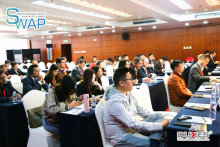
The Smart Wearable Device Asia Pacific Summit (SWAP) 2020, hosted by Duxes, took place at the Marco Polo Hotel in Shenzhen, China, from January 13-14.
15 Jan 2020
Duke-NUS Medical School
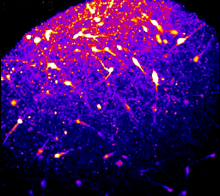
First-of-its-kind study led by Duke-NUS Medical School and National Neuroscience Institute (NNI) applies experimental methodology using human neural cells and brain organoids to investigate mechanism underlying epileptic seizures in Angelman syndrome, an autism spectrum disorder.

13 Jan 2020
National University of Singapore
A team of NUS researchers have come up with the pH Watch, an ‘add-on’ to a wearable health monitoring gadget that can tell users about the condition of their health from their sweat pH.
31 Dec 2019
Ulsan National Institute of Science and Technology (UNIST)
A research team, affiliated with South Korea's Ulsan National Institute of Science and Technology (UNIST) has unveiled a novel algorithm that identifies optimal pairs for composing metal-organic frameworks (MOFs).
20 Dec 2019
The Chinese University of Hong Kong (CUHK)
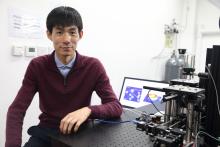
Professor Renjie Zhou, Assistant Professor, Department of Biomedical Engineering, The Chinese University of Hong Kong (CUHK), has been awarded the Croucher Innovation Award 2019 in the amount of HK$5 million in research expenses by the Croucher Foundation for his outstanding research achievements in optical diffraction tomography and in support of his future research works.
20 Dec 2019
The Chinese University of Hong Kong (CUHK)
Four top research academics from The Chinese University of Hong Kong (CUHK) were presented with prestigious awards from the Croucher Foundation. Professor Jianfang Wang, Professor, Department of Physics received the Croucher Senior Research Fellowship 2020. Two scholars from the Department of Medicine and Therapeutics of the Faculty of Medicine, Professor Ronald Ching Wan Ma, Professor and Head of the Division of Endocrinology and Diabetes, and Professor Siew Chien Ng, Professor, Division of Gastroenterology and Hepatology and Associate Director of the Centre for Gut Microbiota Research were awarded the Croucher Senior Medical Research Fellowships 2020. Professor Renjie Zhou, Assistant Professor, Department of Biomedical Engineering was awarded the Croucher Innovation Award 2019.
11 Dec 2019
Asia Research News Partnerships
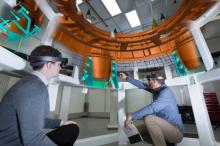
Join Shelley Peterson, Emerging Technologies Lead and Principal Investigator for Augmented Reality at Lockheed Martin, as she speaks at EmTech Asia this February.

10 Dec 2019
Springer Nature
Applications are now open for The Spinoff Prize – a new award for visionary, science- based companies that are on their way to making a commercial impact; winning Spinoff to receive a prize of €30,000; applications open until Feb 28, 2020

04 Dec 2019
Asia Research News Partnerships
MIT Technology Review’s ‘Innovators Under 35’ list for the Asia Pacific region honours 10 women and 10 men. In association with EmTech Asia 2020, the list celebrates 20 researchers, inventors, and entrepreneurs who are changing the world.
27 Nov 2019
Asia Research News Partnerships
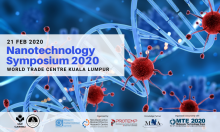
The Nanotechnology Symposium will be held on 21st February 2020 at World Trade Centre Kuala Lumpur, held in conjunction with the 19th edition of Malaysia Technology Expo.
22 Nov 2019
Asia Research News
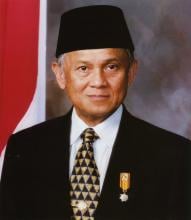
Bacharuddin Jusuf Habibie (25 June 1936 – 11 September 2019) was an Indonesian engineer who was President of Indonesia from 1998 to 1999.
22 Nov 2019
Asia Research News
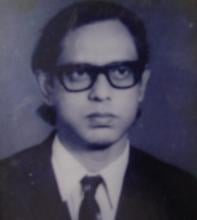
Abdus Suttar Khan (c. 1941 – 31 January 2008) was a Bangladeshi engineer who spent a significant part of his career conducting aerospace research with NASA, United Technology and Alstom.

22 Nov 2019
Asia Research News Partnerships
PwC, Rabobank and Temasek launch The Asia Food Challenge Report, highlighting $800 billion investment opportunity in Asia’s Agri-Food sector over the next decade. Report estimates market to grow 7% per year; Asia to double its spending on food to over US$8 trillion by 2030
22 Nov 2019
Asia Research News Partnerships
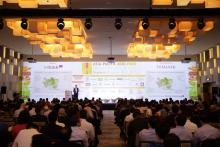
Region faces threats to food security, from climate change and soil degradation to population growth, obesity and diabetes.
800 agribusinesses, food brands, investors and innovators to discuss focus for innovation and investment.
20 Nov 2019
Tohoku University
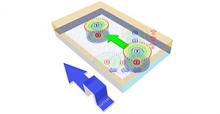
Researchers at Tohoku University have, for the first time, successfully demonstrated a formation and current-induced motion of synthetic antiferromagnetic magnetic skyrmions. The established findings are expected to pave the way towards new functional information processing and storage technologies.

19 Nov 2019
Asia Research News Partnerships
Joint media release from the Singapore FinTech Festival (SFF) and the Singapore Week of Innovation and TeCHnology (SWITCH)

13 Nov 2019
Asia Research News
Gregorio Y. Zara (8 March 1902 – 15 October 1978) was a Filipino engineer and physicist best remembered for inventing the first two-way video telephone.

11 Nov 2019
Asia Research News Partnerships
IPI helps Singapore enterprises collaborate for innovation
Events
Sorry, no events coming up for this topic.
- « first
- ‹ previous
- 1
- 2
- 3
Researchers
Sorry, no researchers coming up for this topic.
- « first
- ‹ previous
- 1
- 2
- 3
Giants in history

Tu Youyou (born 30 December 1930) is a Chinese pharmaceutical scientist who was awarded the 2015 Nobel Prize in Physiology or Medicine for her work on extracting artemisin from sweet wormwood to treat malaria.
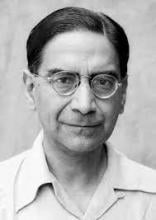
Physicist and statistician Prasanta Chandra Mahalanobis (29 June 1893– 28 June 1972), who founded the Indian Statistical Institute in 1931, is known for his pioneering application of statistics to practical problems.
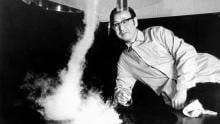
Tetsuya Theodore Fujita (23 October 1920 – 19 November 1998) was a Japanese-American meteorologist who created the Fujita scale that classifies the strength of tornadoes based on damage to structures and vegetation.
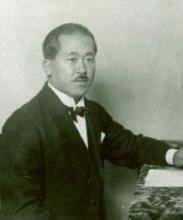
In 1915, Koichi Ichikawa along with pathologist Katsusaburo Yamagiwa became the first to prove that chronic exposure to chemicals can cause cancer.
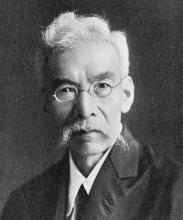
In 1915, pathologist Katsusaburo Yamagiwa and his research assistant Koichi Ichikawa became the first to prove that chronic exposure to chemicals can cause cancer.
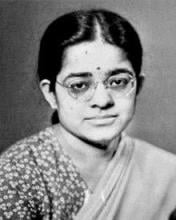
Rajeshwari Chatterjee (24 January 1922 – 3 September 2010) was the first female engineer from Karnataka in India.
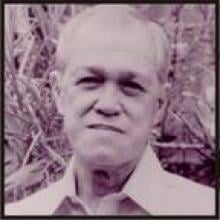
Julian Arca Banzon (13 March 1908 – 13 September 1988) was a biochemist from the Philippines who was a pioneer in alternative fuel research. Banzon investigated the use of indigenous crops as sources of renewable fuels and chemicals.
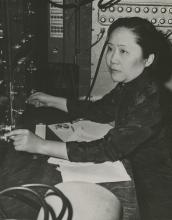
Chien-Shiung Wu (31 May 1912 – 16 February 1997) was an experimental physicist who made several important contributions to nuclear physics. Wu worked on the Manhattan Project – a top-secret program for the production of nuclear weapons during World War II and helped to develop a process for separating uranium into U235 and U238.
Bacharuddin Jusuf Habibie (25 June 1936 – 11 September 2019) was an Indonesian engineer who was President of Indonesia from 1998 to 1999.
Abdus Suttar Khan (c. 1941 – 31 January 2008) was a Bangladeshi engineer who spent a significant part of his career conducting aerospace research with NASA, United Technology and Alstom.
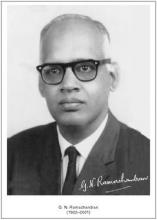
Gopalasamudram Narayanan Ramachandran (8 October 1922 – 7 April 2001) is best known for developing the Ramachandran plot to understand the structure of short chains of amino acids, known as peptides.
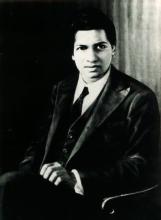
Srinivasa Ramanujan (22 December 1887 – 26 April 1920) was a math prodigy and widely considered one of India’s greatest mathematicians. Despite having almost no formal training in mathematics, he made substantial contributions to mathematical analysis, number theory, infinite series and continued fractions.
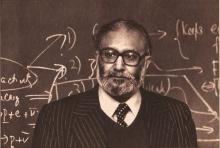
Mohammad Abdus Salam (29 January 1926 – 21 November 1996) was a theoretical physicist and the first Pakistani to receive a Nobel Prize in science.
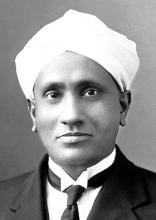
Sir Chandrasekhara Venkata Raman (7 November 1888 – 21 November 1970) was an Indian physicist who performed ground-breaking research in the field of light-scattering.
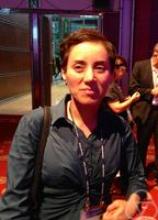
Mathematician Maryam Mirzakhani (12 May 1977 – 14 July 2017) was the first and only woman and Iranian to date to win the Fields Medal in 2014 for her work on curved surfaces.
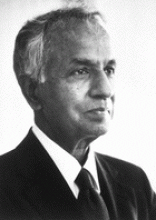
Subrahmanyan Chandrasekhar (19 October 1910 – 21 August 1995) was an Indian astrophysicist who studied the structure and evolution of stars.
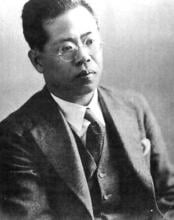
Woo Jang-choon (8 April 1898 – 10 August 1959) was a Korean-Japanese agricultural scientist and botanist.
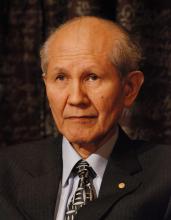
Osamu Shimomura (27 August 1928 – 19 October 2018) was a Japanese organic chemist and marine biologist who dedicated his career to understanding how organisms emitted light.
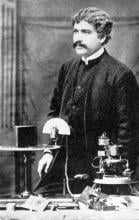
Sir Jagadish Chandra Bose (30 November 1858 – 23 November 1937) was a scientist and inventor who contributed to a wide range of scientific fields such as physics, botany and biology.
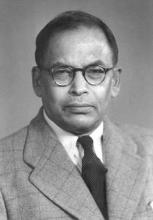
Meghnad Saha (6 October 1893 – 16 February 1956) was an Indian astrophysicist best known for formulating the Saha ionization equation which describes the chemical and physical properties of stars.
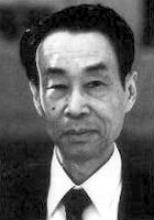
Motoo Kimura (13 November 1924 – 13 November 1994) was a Japanese theoretical population geneticist who is best remembered for developing the neutral theory of molecular evolution.
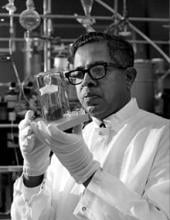
Cyril Andrew Ponnamperuma (16 October 1923 – 20 December 1994) was a Sri Lankan chemist who was interested in the origins of life on Earth. His research in chemical evolution showed how inanimate molecules may have given rise to the building blocks of life – a process known as abiogenesis.
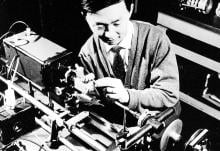
Charles Kuen Kao (Nov. 4, 1933 to Sept. 23, 2018) was an engineer who is regarded as the father of fibre optics. His work in the 1960s on long distance signal transmission using very pure glass fibres revolutionized telecommunications, enabling innovations such as the Internet.
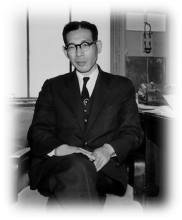
The field of solid-state ionics originated in Europe, but Takehiko Takahashi of Nagoya University in Japan was the first to coin the term ‘solid ionics’ in 1967. ‘Solid-state ionics’ first appeared in 1971 in another of his papers, and was likely a play on ‘solid-state electronics’, another rapidly growing field at the time.
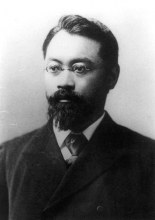
The techniques that make industrial pearl culturing possible were developed over a century ago at the Misaki Marine Biological Station in Japan. The station’s first director, Professor Kakichi Mitsukuri, emphasized to Kokichi Mikimoto in 1890 that stimulating pearl sac formation was important for pearl growth, and they went on to successfully develop methods for culturing pearls.
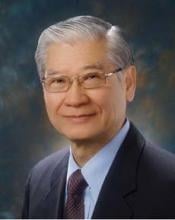
David T. Wong (born 1936) is a Hong Kong-born American neuroscientist who is best known for discovering the antidepressant drug fluoxetine, better known as Prozac.
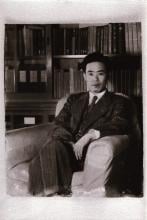
Japanese physicist Ukichiro Nakaya (1900-1962) made the world’s first artificial snowflakes. He started his research on snow crystals in the early 1930s at Hokkaido University, where there is an unlimited supply of natural snow in winter. By taking over 3,000 photographs, he established a classification of natural snow crystals and described their relationship with weather conditions.
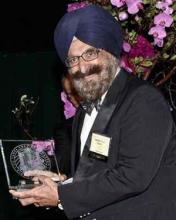
Physicist Narinder Singh Kapany (31 October 1926 – 4 December 2020) pioneered the use of optical fibres to transmit images, and founded several optical technology companies. Born in Punjab, India, he worked at a local optical instruments factory before moving to London for PhD studies at Imperial College. There, he devised a flexible fibrescope to convey images along bundles of glass fibres.
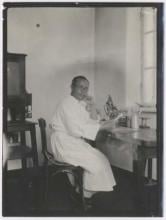
Wu Lien-teh (10 March 1879 – 21 January 1960) was a Malaysian-born doctor who invented a mask that effectively suppressed disease transmission. Winning the prestigious Queen’s Scholarship enabled Wu to become the first Chinese student to study medicine at the University of Cambridge.
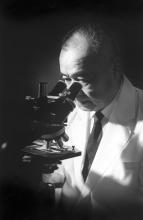
Minoru Shirota (April 23, 1899 – March 10, 1982) was a Japanese microbiologist who invented the popular fermented drink Yakult.
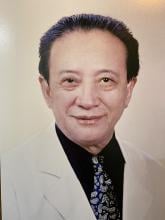
After witnessing death and suffering as a youth in his home village during World War II, Nguyễn Tài Thu (6 April 1931 – 14 February 2021) set his sights on alleviating pain by becoming a doctor. After studying Traditional Chinese Medicine in China in the 1950s, Thu returned to Vietnam to serve in military hospitals. Eventually, he became the country’s foremost practitioner of acupuncture, a technique he first learned by inserting needles into himself.
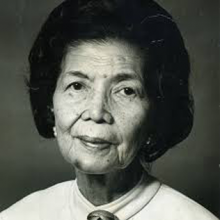
Fe Villanueva del Mundo (27 November 1911 – 6 August 2011) was a Filipina paediatrician who founded the Philippines’ first paediatric hospital.
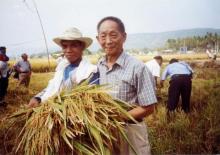
Chinese agronomist Yuan Longping (7 September 1930 – 22 May 2021) developed the first varieties of the high-yield, hybrid rice that brought food security to multiple countries including China, which had been ravaged by food shortages as recently as the mid-20th century.
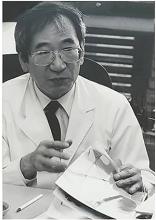
Korean parasitologist Seung-Yull Cho (16 November 1943 – 27 January 2019) is remembered largely for his pioneering works to control infections caused by helminthic parasites and his contribution to journal publishing.
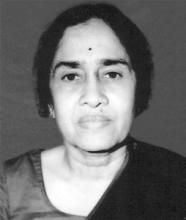
In 1939, biochemist Kamala Sohonie (18 June 1911 – 28 June 1998) became the first woman to be accepted into the Indian Institute of Science (IISc).
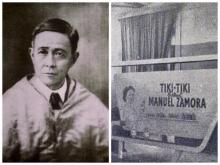
Filipino chemist and pharmacist Manuel A. Zamora (29 March 1870 – 9 July 1929) is best remembered for his discovery of the tiki-tiki formula to combat beriberi, a disease caused by Vitamin B1 deficiency.
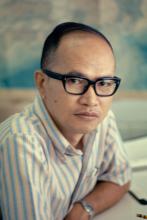
Research by Filipino plant scientist Benito Vergara (23 June 1934 – 24 October 2015) on the physiology of rice led to the development of deep-water and cold-tolerant rice varieties. Vergara also made several contributions to expanding public awareness of rice science.

Filipina chemist María Orosa (29 November 1892–13 February 1945) fought malnutrition and food insecurity in the Philippines by devising over 700 culinary creations including Soyalac, a nutrient rich drink made from soybeans, and Darak, rice cookies packed with Vitamin B1, which could prevent beriberi disease caused by Vitamin B1 deficiency. She was also a partisan of the guerrilla movement resisting Japanese occupation during World War II, and died after being struck by shrapnel while working in her laboratory during the Battle of Manila.
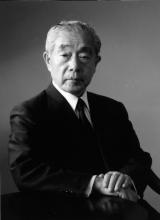
Japanese chemist Kenichi Fukui (4 October 1918 – 9 January 1998) was the first Asian scientist to be awarded the Nobel Prize in Chemistry. Together with Roald Hoffman, he received this honour in 1981 for his independent research into the mechanisms of chemical reactions.
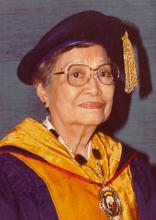
The research of Filipino pharmaceutical chemist Luz Oliveros-Belardo (3 November 1906 – 12 December 1999) focussed on essential oils and other chemicals derived from native Philippine plants.
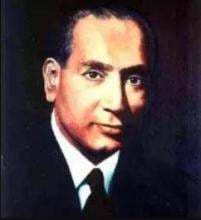
Birbal Sahni (14 November 1891 – 10 April 1949), a pioneer of Indian palaeobotanical research, and founder of what is now the Birbal Sahni Institute of Palaeosciences in Lucknow, made multiple contributions to the study of prehistoric plants. These include the discovery of a new group of fossil gymnosperms (named Pentoxylae), reconstruction of the extinct Williamsonia sewardiana plant, and description of a new type of petrified wood from the Jurassic age.

Ground-breaking cancer researcher Kamal Jayasing Ranadive (8 November 1917 – 11 April 2001) advanced the understanding of the causes of leukaemia, breast cancer and oesophageal cancer through the use of animal models. She was also among the first to recognise how susceptibility to cancer is linked to tumour-causing interactions between hormones and viruses.
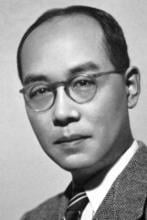
Hideki Yukawa (23 January 1907 – 8 September 1981) was awarded the Nobel Prize in Physics in 1949 for predicting the existence of the pi meson subatomic particle. Japan’s first Nobel laureate, Yakawa also expressed his support for nuclear disarmament by signing the Russell–Einstein Manifesto in 1955.

In his over 30 year career in rice research, Munshi Siddique Ahmad (1924 – 19 October 2011) developed more than 30 varieties of high-yielding rice, including the BRRI Shail strain, which was responsible for increasing the rice production of Bangladesh from 8 million tonnes in 1965 to 20 million tonnes in 1975.
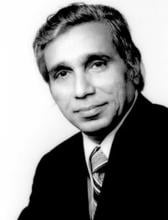
Fazlur Rahman Khan (3 April 1929 – 27 March 1982) was a Bangladeshi-American structural engineer and architect who invented the tube principle, which formed the basis for modern skyscraper design.
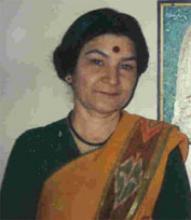
A pioneer of bio-organic chemistry, Darshan Ranganathan (4 June 1941 – 4 June 2001) is remembered for developing a protocol for synthesising imidazole, a compound used to make antifungal drugs and antibiotics. Widely considered India’s most prolific researcher in chemistry, she also published dozens of papers in renowned journals on protein folding, molecular design, chemical simulation of key biological processes, and the synthesis of functional hybrid peptides and nanotubes.