
Innovation
News

26 Aug 2022
Asia Research News
Researchers have made perovskite solar cells more efficient and stable, A new cause of Parkinson's related cell death, Hibernating superpower is in the blood, Common mechanism for cancer and atherosclerosis, COVID-19 antibody skin-based test. Read all in the August's Editor's Choice plus an Interview with Prof Sutee Yoksan on The story behind the new dengue vaccine & this month's Asia Research News 2022 magazine pick - The evolutionary history of puddle frogs.
12 Aug 2022
Hokkaido University
Rare earth metals, when linked, can act as a conduit for energy flow, and show promise for the development of novel materials.
08 Aug 2022
Hokkaido University
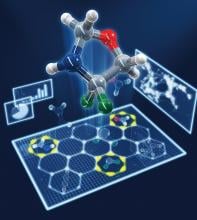
Reaction design framework proposed by computations leads to the discovery of a wealth of reactions, opening new paths for drug development.
19 Jul 2022
Newcastle University in Singapore
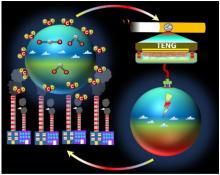
An international team of scientists from India and Singapore has successfully developed a novel method to recycle waste cigarette filters for use in making the triboelectric nano generator, a clean energy generating device.
11 Jul 2022
Hokkaido University
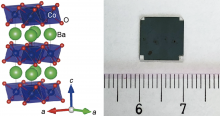
A thermoelectric metal oxide film with a thermoelectric figure of merit of ~0.55 at 600°C has been discovered, opening new avenues towards the widespread use of thermoelectric converters.
07 Jul 2022
Newcastle University in Singapore
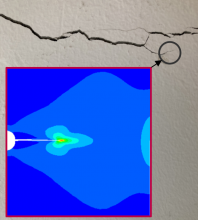
A novel practical way of modelling cracking and toughening of fibre composite materials has been developed. The novel approach also revealed new insights on the fracture behaviour of fibres reinforcing a composite laminate during intralaminar cracking. The new way can be used to complement inspection of laminated structures that are used as primary structures in many industries.

06 Jul 2022
The University of Osaka
Osaka University researchers described a novel effect in which the voltage generated by photovoltaic devices can change based on the color of incidence light. They show how this feature is due to random energy states that exist inside the antimony sulfiodide devices. This work may lead to more robust renewable energy generated by solar cells.

05 Jul 2022
Asia Research News Partnerships
23 Gold awarded at MTE 2022: COVID-19 International Innovation Awards and Advanced Healthcare & Life Sciences International Innovation Awards
28 Jun 2022
Chula Engineering and Chula Medicine co-invent an innovative device for a rapid and accurate gastrointestinal cancer detection hoping to foster preventive medicine and reduce the number of cancer patients.
05 Jun 2022
Newcastle University in Singapore
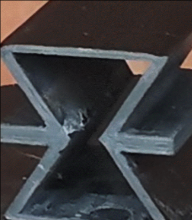
An international team of researchers, co-led by Changfang Zhao, from Nanjing University of Science and Technology, and Kheng Lim Goh (Newcastle University in Singapore), has developed a novel lightweight, high toughness auxetic structure made from plastic composite laminates. The auxetic structure may be used for constructing primary structures in the transport industry, such as electric vehicles, to maximize fuel efficiency.
31 May 2022
International Islamic University Malaysia (IIUM)
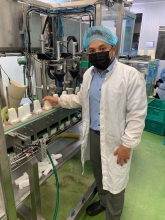
The food manufacturing industry could save significant costs by employing a 3D printing solution developed by researchers at International Islamic University Malaysia.

26 May 2022
Empowering the innovators to transition their new inventions, technologies and products into manufacturing and commercialisation prospects
26 May 2022
Asia Research News
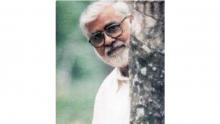
Giants in History: Known as Mr. Natural Rubber, chemist and researcher B. C. Shekhar (17 November 1929 – 6 September 2006) introduced a number of technical innovations that helped put Malaysia’s natural rubber industry on the world map.
19 May 2022
Hokkaido University
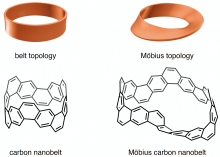
Scientists have synthesized the first belt-shaped molecular nanocarbon with a twisted Möbius band topology—a Möbius carbon nanobelt—that paves the way for the development of nanocarbon materials with complex topological structures.
25 Apr 2022
Hokkaido University
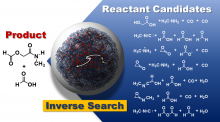
Researchers overcome computational limitations to predict the starting materials of multi-step reactions using only information about the target product molecule.

21 Apr 2022
Newcastle University in Singapore
An international team of researchers from India and Singapore has successfully developed a novel coating with enhanced water repellent properties using natural material from the waste crab shell.
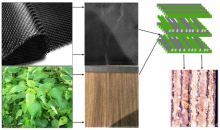
10 Apr 2022
Newcastle University in Singapore
A multidisciplinary international team of researchers, led by Professor Shukur Abu Hassan, offers new insights about how the load-uptake capacity in a novel hybrid fiber reinforced polymer composite materials can be enhanced.
10 Apr 2022
Newcastle University in Singapore
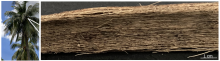
A team of materials researchers from India, Thailand, Malaysia, China and UK has successfully produced a fibre reinforced polymer composite material using natural fibres from the coconut stalk.

10 Apr 2022
Newcastle University in Singapore
Malaysian and UK medical device and composite materials experts have partnered up to research into using natural fibres for prosthetic limb technology to lower the cost of the prosthesis

30 Mar 2022
199 Gold, 188 Silver and 56 Bronze were awarded

21 Mar 2022
The theme of MTE 2022 is "Embracing the New Norm and Moving to New Frontiers," and this prestigious event is expected to attract over 10,000 online visitors from all over the world via its virtual exhibition platform.
14 Mar 2022
Hokkaido University
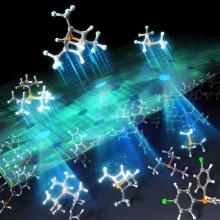
Researchers aim to streamline the time- and resource-intensive process of screening ligands during catalyst design by using virtual ligands.
11 Mar 2022
Hokkaido University
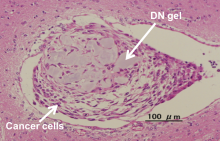
A soft hydrogel could help scientists find treatments for drug-resistant cancer stem cells.

02 Mar 2022
The Education University of Hong Kong (EdUHK)
Endocrine-disrupting chemicals (EDCs), pharmaceuticals and personal care products (PPCPs) are extensively used in industrial and consumer applications. They are widely recognised as typical contaminants of emerging concern because of their environmentally persistent and bio-accumulative properties. Even in very low concentrations, they can disturb our hormonal balance, leading to reproductive impairment, abnormal development and growth retardation. Water and wastewater treatment systems worldwide face the challenge of effectively removing these contaminants.
25 Feb 2022
Institute of Policy Studies of Sri Lanka
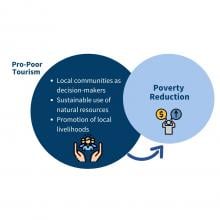
The tourism industry’s performance was hampered first by the Easter Sunday bomb explosions in 2019 and then the COVID-19 pandemic. Sri Lanka saw a decline in tourist arrivals from 1,913,702 in 2019 to 194,495 in 2021. It is estimated that revenue declined from USD 3600 million to USD 261 million during 2019-2021, reflecting a staggering 92.75% reduction due to a fall in arrivals.
25 Feb 2022
Hokkaido University
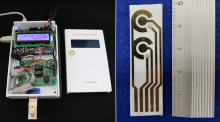
Scientists have developed a prototype sensor that could help doctors rapidly measure adenosine triphosphate (ATP) and lactate levels in blood samples from patients, aiding in the rapid assessment of the severity of some diseases.
22 Feb 2022
Hokkaido University
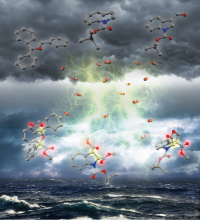
Using electricity, a new method offers the possibility of recycling CO2 while also performing a notoriously difficult reaction, producing compounds potentially useful for drug development.
16 Feb 2022
Hokkaido University
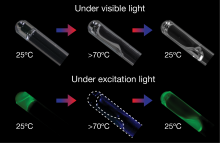
Simulations have led to the fabrication of a polymer-DNA gel that could be used in tissue regeneration and robotics.

11 Feb 2022
Asia Research News
Low volcanic temperature ushered in global cooling and thriving dinosaurs, Broccoli compound induces cell death in yeast, A single molecule makes big splash in quantum mechanics, Dengue virus makes mosquitos bite more often, and Asia Research News: How it all began, all in the February's Editor's Choice
27 Jan 2022
Hokkaido University
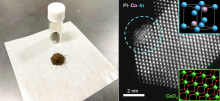
Researchers have developed an innovative catalyst for the synthesis of propylene, which has potential benefits for the chemical industry and carbon recycling.
Events
Sorry, no events coming up for this topic.
- « first
- ‹ previous
- 1
- 2
- 3
Researchers
Sorry, no researchers coming up for this topic.
- « first
- ‹ previous
- 1
- 2
- 3
Giants in history

Tu Youyou (born 30 December 1930) is a Chinese pharmaceutical scientist who was awarded the 2015 Nobel Prize in Physiology or Medicine for her work on extracting artemisin from sweet wormwood to treat malaria.
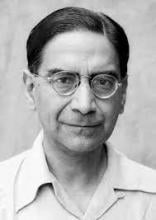
Physicist and statistician Prasanta Chandra Mahalanobis (29 June 1893– 28 June 1972), who founded the Indian Statistical Institute in 1931, is known for his pioneering application of statistics to practical problems.
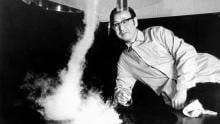
Tetsuya Theodore Fujita (23 October 1920 – 19 November 1998) was a Japanese-American meteorologist who created the Fujita scale that classifies the strength of tornadoes based on damage to structures and vegetation.
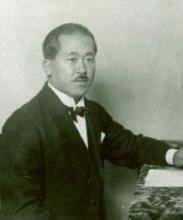
In 1915, Koichi Ichikawa along with pathologist Katsusaburo Yamagiwa became the first to prove that chronic exposure to chemicals can cause cancer.
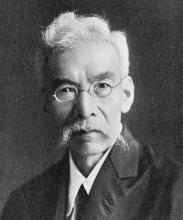
In 1915, pathologist Katsusaburo Yamagiwa and his research assistant Koichi Ichikawa became the first to prove that chronic exposure to chemicals can cause cancer.
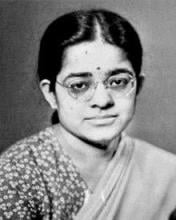
Rajeshwari Chatterjee (24 January 1922 – 3 September 2010) was the first female engineer from Karnataka in India.
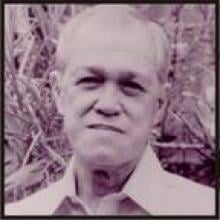
Julian Arca Banzon (13 March 1908 – 13 September 1988) was a biochemist from the Philippines who was a pioneer in alternative fuel research. Banzon investigated the use of indigenous crops as sources of renewable fuels and chemicals.
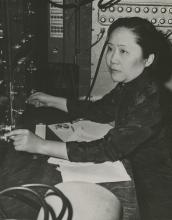
Chien-Shiung Wu (31 May 1912 – 16 February 1997) was an experimental physicist who made several important contributions to nuclear physics. Wu worked on the Manhattan Project – a top-secret program for the production of nuclear weapons during World War II and helped to develop a process for separating uranium into U235 and U238.
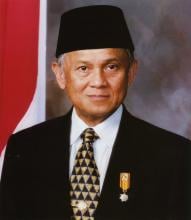
Bacharuddin Jusuf Habibie (25 June 1936 – 11 September 2019) was an Indonesian engineer who was President of Indonesia from 1998 to 1999.
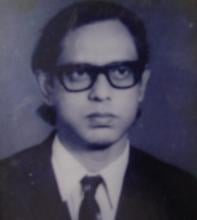
Abdus Suttar Khan (c. 1941 – 31 January 2008) was a Bangladeshi engineer who spent a significant part of his career conducting aerospace research with NASA, United Technology and Alstom.
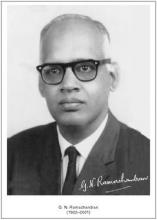
Gopalasamudram Narayanan Ramachandran (8 October 1922 – 7 April 2001) is best known for developing the Ramachandran plot to understand the structure of short chains of amino acids, known as peptides.
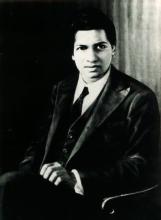
Srinivasa Ramanujan (22 December 1887 – 26 April 1920) was a math prodigy and widely considered one of India’s greatest mathematicians. Despite having almost no formal training in mathematics, he made substantial contributions to mathematical analysis, number theory, infinite series and continued fractions.
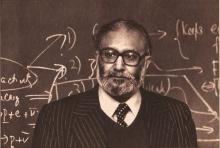
Mohammad Abdus Salam (29 January 1926 – 21 November 1996) was a theoretical physicist and the first Pakistani to receive a Nobel Prize in science.
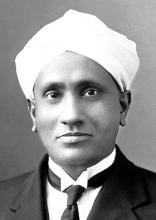
Sir Chandrasekhara Venkata Raman (7 November 1888 – 21 November 1970) was an Indian physicist who performed ground-breaking research in the field of light-scattering.
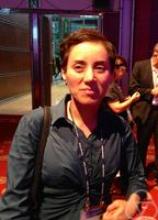
Mathematician Maryam Mirzakhani (12 May 1977 – 14 July 2017) was the first and only woman and Iranian to date to win the Fields Medal in 2014 for her work on curved surfaces.
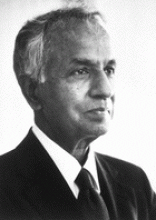
Subrahmanyan Chandrasekhar (19 October 1910 – 21 August 1995) was an Indian astrophysicist who studied the structure and evolution of stars.
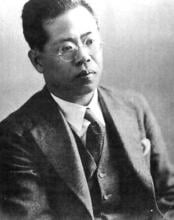
Woo Jang-choon (8 April 1898 – 10 August 1959) was a Korean-Japanese agricultural scientist and botanist.
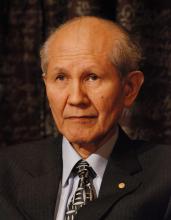
Osamu Shimomura (27 August 1928 – 19 October 2018) was a Japanese organic chemist and marine biologist who dedicated his career to understanding how organisms emitted light.
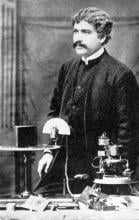
Sir Jagadish Chandra Bose (30 November 1858 – 23 November 1937) was a scientist and inventor who contributed to a wide range of scientific fields such as physics, botany and biology.
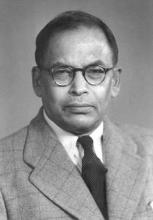
Meghnad Saha (6 October 1893 – 16 February 1956) was an Indian astrophysicist best known for formulating the Saha ionization equation which describes the chemical and physical properties of stars.
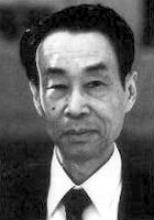
Motoo Kimura (13 November 1924 – 13 November 1994) was a Japanese theoretical population geneticist who is best remembered for developing the neutral theory of molecular evolution.
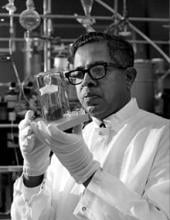
Cyril Andrew Ponnamperuma (16 October 1923 – 20 December 1994) was a Sri Lankan chemist who was interested in the origins of life on Earth. His research in chemical evolution showed how inanimate molecules may have given rise to the building blocks of life – a process known as abiogenesis.
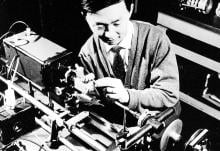
Charles Kuen Kao (Nov. 4, 1933 to Sept. 23, 2018) was an engineer who is regarded as the father of fibre optics. His work in the 1960s on long distance signal transmission using very pure glass fibres revolutionized telecommunications, enabling innovations such as the Internet.
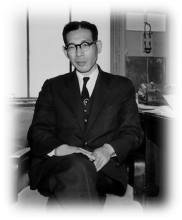
The field of solid-state ionics originated in Europe, but Takehiko Takahashi of Nagoya University in Japan was the first to coin the term ‘solid ionics’ in 1967. ‘Solid-state ionics’ first appeared in 1971 in another of his papers, and was likely a play on ‘solid-state electronics’, another rapidly growing field at the time.
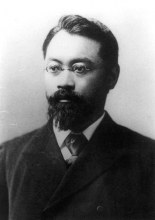
The techniques that make industrial pearl culturing possible were developed over a century ago at the Misaki Marine Biological Station in Japan. The station’s first director, Professor Kakichi Mitsukuri, emphasized to Kokichi Mikimoto in 1890 that stimulating pearl sac formation was important for pearl growth, and they went on to successfully develop methods for culturing pearls.
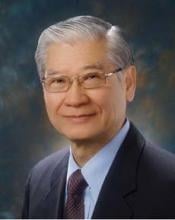
David T. Wong (born 1936) is a Hong Kong-born American neuroscientist who is best known for discovering the antidepressant drug fluoxetine, better known as Prozac.
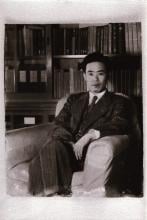
Japanese physicist Ukichiro Nakaya (1900-1962) made the world’s first artificial snowflakes. He started his research on snow crystals in the early 1930s at Hokkaido University, where there is an unlimited supply of natural snow in winter. By taking over 3,000 photographs, he established a classification of natural snow crystals and described their relationship with weather conditions.
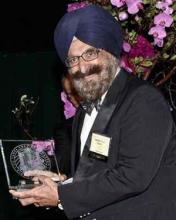
Physicist Narinder Singh Kapany (31 October 1926 – 4 December 2020) pioneered the use of optical fibres to transmit images, and founded several optical technology companies. Born in Punjab, India, he worked at a local optical instruments factory before moving to London for PhD studies at Imperial College. There, he devised a flexible fibrescope to convey images along bundles of glass fibres.
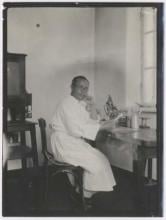
Wu Lien-teh (10 March 1879 – 21 January 1960) was a Malaysian-born doctor who invented a mask that effectively suppressed disease transmission. Winning the prestigious Queen’s Scholarship enabled Wu to become the first Chinese student to study medicine at the University of Cambridge.
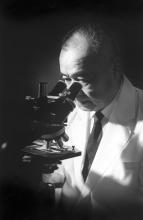
Minoru Shirota (April 23, 1899 – March 10, 1982) was a Japanese microbiologist who invented the popular fermented drink Yakult.
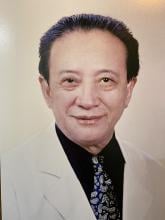
After witnessing death and suffering as a youth in his home village during World War II, Nguyễn Tài Thu (6 April 1931 – 14 February 2021) set his sights on alleviating pain by becoming a doctor. After studying Traditional Chinese Medicine in China in the 1950s, Thu returned to Vietnam to serve in military hospitals. Eventually, he became the country’s foremost practitioner of acupuncture, a technique he first learned by inserting needles into himself.
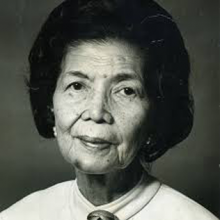
Fe Villanueva del Mundo (27 November 1911 – 6 August 2011) was a Filipina paediatrician who founded the Philippines’ first paediatric hospital.
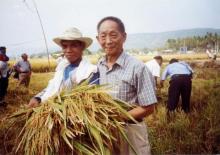
Chinese agronomist Yuan Longping (7 September 1930 – 22 May 2021) developed the first varieties of the high-yield, hybrid rice that brought food security to multiple countries including China, which had been ravaged by food shortages as recently as the mid-20th century.
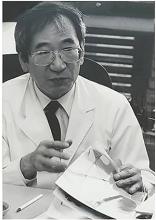
Korean parasitologist Seung-Yull Cho (16 November 1943 – 27 January 2019) is remembered largely for his pioneering works to control infections caused by helminthic parasites and his contribution to journal publishing.
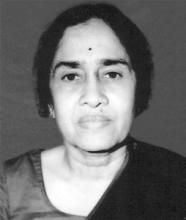
In 1939, biochemist Kamala Sohonie (18 June 1911 – 28 June 1998) became the first woman to be accepted into the Indian Institute of Science (IISc).
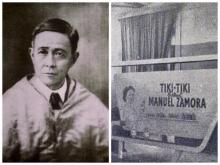
Filipino chemist and pharmacist Manuel A. Zamora (29 March 1870 – 9 July 1929) is best remembered for his discovery of the tiki-tiki formula to combat beriberi, a disease caused by Vitamin B1 deficiency.
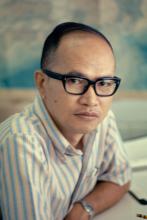
Research by Filipino plant scientist Benito Vergara (23 June 1934 – 24 October 2015) on the physiology of rice led to the development of deep-water and cold-tolerant rice varieties. Vergara also made several contributions to expanding public awareness of rice science.
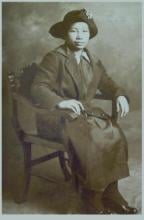
Filipina chemist María Orosa (29 November 1892–13 February 1945) fought malnutrition and food insecurity in the Philippines by devising over 700 culinary creations including Soyalac, a nutrient rich drink made from soybeans, and Darak, rice cookies packed with Vitamin B1, which could prevent beriberi disease caused by Vitamin B1 deficiency. She was also a partisan of the guerrilla movement resisting Japanese occupation during World War II, and died after being struck by shrapnel while working in her laboratory during the Battle of Manila.
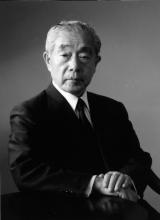
Japanese chemist Kenichi Fukui (4 October 1918 – 9 January 1998) was the first Asian scientist to be awarded the Nobel Prize in Chemistry. Together with Roald Hoffman, he received this honour in 1981 for his independent research into the mechanisms of chemical reactions.
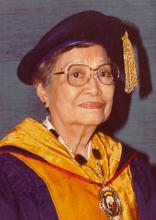
The research of Filipino pharmaceutical chemist Luz Oliveros-Belardo (3 November 1906 – 12 December 1999) focussed on essential oils and other chemicals derived from native Philippine plants.
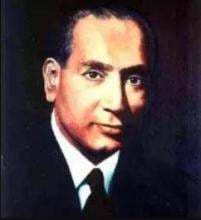
Birbal Sahni (14 November 1891 – 10 April 1949), a pioneer of Indian palaeobotanical research, and founder of what is now the Birbal Sahni Institute of Palaeosciences in Lucknow, made multiple contributions to the study of prehistoric plants. These include the discovery of a new group of fossil gymnosperms (named Pentoxylae), reconstruction of the extinct Williamsonia sewardiana plant, and description of a new type of petrified wood from the Jurassic age.

Ground-breaking cancer researcher Kamal Jayasing Ranadive (8 November 1917 – 11 April 2001) advanced the understanding of the causes of leukaemia, breast cancer and oesophageal cancer through the use of animal models. She was also among the first to recognise how susceptibility to cancer is linked to tumour-causing interactions between hormones and viruses.
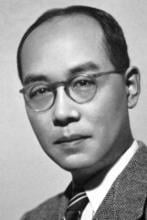
Hideki Yukawa (23 January 1907 – 8 September 1981) was awarded the Nobel Prize in Physics in 1949 for predicting the existence of the pi meson subatomic particle. Japan’s first Nobel laureate, Yakawa also expressed his support for nuclear disarmament by signing the Russell–Einstein Manifesto in 1955.
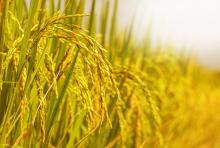
In his over 30 year career in rice research, Munshi Siddique Ahmad (1924 – 19 October 2011) developed more than 30 varieties of high-yielding rice, including the BRRI Shail strain, which was responsible for increasing the rice production of Bangladesh from 8 million tonnes in 1965 to 20 million tonnes in 1975.
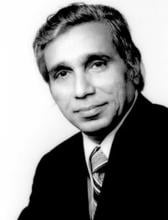
Fazlur Rahman Khan (3 April 1929 – 27 March 1982) was a Bangladeshi-American structural engineer and architect who invented the tube principle, which formed the basis for modern skyscraper design.
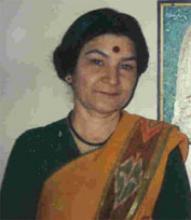
A pioneer of bio-organic chemistry, Darshan Ranganathan (4 June 1941 – 4 June 2001) is remembered for developing a protocol for synthesising imidazole, a compound used to make antifungal drugs and antibiotics. Widely considered India’s most prolific researcher in chemistry, she also published dozens of papers in renowned journals on protein folding, molecular design, chemical simulation of key biological processes, and the synthesis of functional hybrid peptides and nanotubes.