

Nanotech
News
13 Jan 2023
Hokkaido University
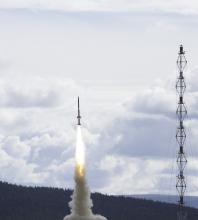
Understanding how dust grains form in interstellar gas could offer significant insights to astronomers and help materials scientists develop useful nanoparticles.
15 Dec 2022
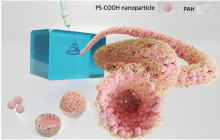
A research team led by the University of Hong Kong (HKU) and Lawrence Berkeley National Laboratory has invented an all-water robotic system that resolves the constraints of bio-inspired robots through revolutionary scientific advances.

15 Dec 2022
Asia Research News
Understanding how bats tolerate viral infections, Material separates water from...water, The virtual sense of touch polished to next level and COVID-19 negatively impacted early-careers and female researchers. Read all in the December's Editor's Choice.
12 Dec 2022
Institute of Industrial Science, The University of Tokyo (UTokyo-IIS)
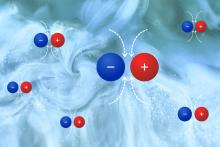
Researchers at The University of Tokyo show how including the effects of the surrounding water during the aggregation of charged particles can improve the accuracy of simulations, which may help elucidate biological self-assembly
09 Nov 2022
Institute for Integrated Cell-Material Sciences (iCeMS) at Kyoto University
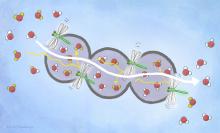
A flipping action in a porous material facilitates the passage of normal water to separate it out from heavy water.

01 Nov 2022
Kanazawa University
6th NanoLSI Symposium: International symposium on Nanoprobe Technology for Understanding Molecular Systems in Kanazawa, Japan
01 Nov 2022
Osaka Metropolitan University
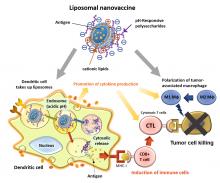
A research group at Osaka Metropolitan University has developed a drug delivery system that activates a strong cellular immune response to attack cancer cells, using one-tenth of the amount of antigen needed in the group’s previous work. By incorporating positively charged cationic lipids into liposomes and adding negatively charged pH-responsive polysaccharides to the surface, the research group increased the uptake efficiency of liposomes encapsulating cancer antigens by dendritic cells by approximately five times, which increased cytokine production by about 100 times. This increased M1-type macrophages, which activate cancer immunity, and decreased M2-type macrophages, which promote cancer growth.
17 Oct 2022
Kanazawa University
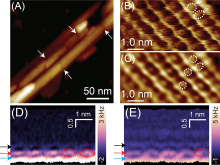
Chemists in Japan, Canada and Europe have uncovered flaws in the surface structure of cellulose nanocrystals—an important step toward deconstructing cellulose to produce renewable nano-materials relevant to biochemical products, energy solutions, and biofuels.
05 Sep 2022
Ehime University
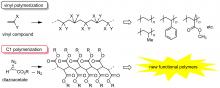
The research team directed by H. Shimomoto and E. Ihara in Ehime University successfully developed a new Pd-based initiating system affording carbon–carbon main-chain polymers bearing end-functional groups. This achievement will contribute to progress in the field of polymer chemistry and will allow us to develop new types of functional polymers.
23 Aug 2022
Institute for Integrated Cell-Material Sciences (iCeMS) at Kyoto University
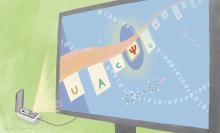
Two new approaches could help scientists use existing sequencing technology to better-distinguish RNA changes that affect how their genetic code is read.
29 Jun 2022
Osaka Metropolitan University
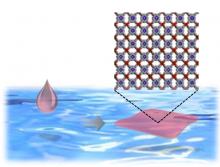
Rie Makiura, Associate Professor at the Graduate School of Engineering, Osaka Metropolitan University has published a review article on the facile synthesis of nanosheet materials with precise regular nanoscale pores. In 2010, Professor Makiura’s research group succeeded in fabricating the world's first MOF (metal-organic framework) nanosheets on the surface of water using a simple low-energy process. The procedure, which involved adding drops of suitably chosen molecular components to the water surface took advantage of the same phenomenon that causes the formation of oil films and led to the creation of nanosheets of exceptional integrity and stability. In the present review article, Professor Makiura describes the MOF nanosheets developed by her group so far and provides a detailed description of their characteristics and comparison with other MOF nanosheets reported around the world. In addition, she describes the formation mechanism of the MOF nanosheets on the water surface.

22 Jun 2022
Asia Research News
New dinosaur species used claws to graze along the coast, More accurate rainfall predictions, Magnetism helps futuristic cell research, Do compression garments facilitate muscle recovery? Science journalism and why it matters for democracy and our Image of the month. Read all in the June's Editor's Choice and this month's Asia Research News 2022 magazine pick - Lessons from the dead.
18 Jun 2022
Institute for Integrated Cell-Material Sciences (iCeMS) at Kyoto University
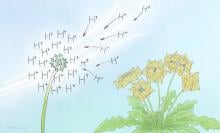
The molecule is unusual and has ‘great potential’ in catalysis, conduction and other applications.
31 May 2022
Osaka Metropolitan University
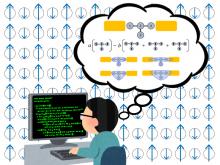
Dr. Nishikawa at Osaka Metropolitan University focused on the Kondo effect on minimal ferrimagnetism and attempted to elucidate it theoretically. As a result, they found that the Kondo effect occurred via multiple "quantum entangled states" depending on temperature and other factors. They also found that the Kondo effect suppressed electrical conductivity through minimal ferrimagnetism, when usually it is amplified in many other cases.

20 May 2022
Asia Research News
Asia Research News monitors the latest research news in Asia. Some highlights that caught our attention this week are smart contact lenses, cat communication, elephant mourning, and a hitchhiking drone.
19 May 2022
Hokkaido University
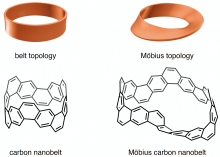
Scientists have synthesized the first belt-shaped molecular nanocarbon with a twisted Möbius band topology—a Möbius carbon nanobelt—that paves the way for the development of nanocarbon materials with complex topological structures.
19 May 2022
Institute for Integrated Cell-Material Sciences (iCeMS) at Kyoto University
Structural color printing creates new pathways for medical diagnostics and miniaturized sensors
13 May 2022
Osaka Metropolitan University
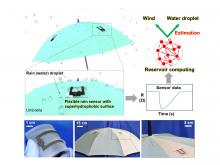
The new multi-tasking weather sensor simultaneously measures rain volume and wind speed. Incorporating machine learning to analyze the output data, a single sensor can provide localized weather data in a timely manner, improving disaster preparedness.

13 May 2022
Asia Research News
Molecular robots work cooperatively in swarms, LED lights made from rice husk, Muonic x-rays safely see inside samples, Making a luminescent material shine brighter and How to counter vaccine hesitancy, Read all in the May Editor's Choice and this month's Asia Research News 2022 magazine pick - Absorbing impact: Inside the Head of a Woodpecker.
03 May 2022
Daegu Gyeongbuk Institute of Science and Technology (DGIST)
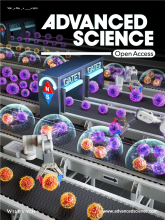
A new platform effectively sorts and clusters single cells according to their physical properties and could provide clues for understanding individual cell interactions.
20 Apr 2022
Hokkaido University
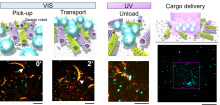
In a global first, scientists have demonstrated that molecular robots are able to accomplish cargo delivery by employing a strategy of swarming, achieving a transport efficiency five times greater than that of single robots.

13 Apr 2022
Institute of Industrial Science, The University of Tokyo (UTokyo-IIS)
Researchers at The University of Tokyo used a hybrid of Monte Carlo and molecular dynamics simulations to predict the self-assembly of charged Janus particles, which may lead to biomimetic nanostructures that can assemble like proteins
28 Feb 2022
Osaka City University
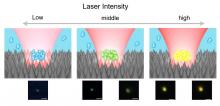
Scientists demonstrate an optical trapping technique using nanotextured black silicon that can efficiently trap polymer chains. By adjusting the laser intensity, these “optical tweezers” can control the florescence color emitted through a local concentration of a perylene-modified polymer solution. From a low intensity blue to high intensity orange, this reversible and fully remote technology can almost reach the entire RGB spectrum.
25 Feb 2022
Hiroshima University
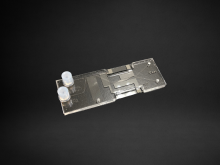
A Japanese research team created a new way to sort living cells suspended in fluid using an all-in-one operation in a lab-on-chip that required only 30 minutes for the entire separation process.
18 Feb 2022
National Institute for Materials Science (NIMS)
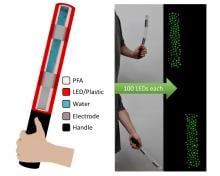
The compact, lightweight device generates electricity when shaken and can power 100 LEDs.

16 Dec 2021
Institute for Integrated Cell-Material Sciences (iCeMS) at Kyoto University
In a study published in Nature Energy this month, researchers led by Kyoto University’s Institute for Integrated Cell-Material Sciences (iCeMS) describe how nanodiamond-reinforced composite membranes can purify hydrogen from its humid mixtures, making the hydrogen generation processes vastly more efficient and cost-effective.

15 Dec 2021
Singapore University of Technology and Design
Inspired by the ‘Game of Life’ SUTD researchers are applying cellular automation to efficiently model phase change materials with multiple optical phases for next-generation photonics devices.
29 Nov 2021
Hokkaido University
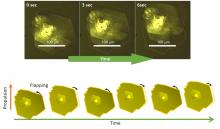
Synthesized microrobots that are capable of converting their mechanical motion into a means of self-propulsion in water have been developed by scientists at Hokkaido University.
22 Nov 2021
Daegu Gyeongbuk Institute of Science and Technology (DGIST)
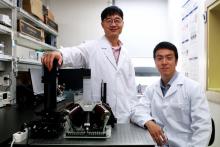
The joint research team of Prof. Hongsoo Choi(DGIST) & Prof. Sung Won Kim(Seoul St. Mary’s Hospital), developed an hNTSC-based microrobot for minimally invasive delivery into the brain tissue via the intranasal pathway
28 Oct 2021
Osaka Prefecture University
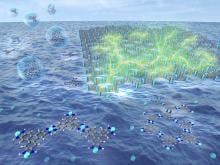
Spontaneous wide-area spreading of oil on water inspires a facile energy-saving route of crafting electrically conductive nanostructures for future sensor/energy devices
Events
Sorry, no events coming up for this topic.
Researchers
Sorry, no researchers coming up for this topic.
- « first
- ‹ previous
- 1
- 2
- 3
Giants in history
Sorry, no researchers coming up for this topic.