

Nanotech
News

24 Oct 2024
National Taiwan University
National Taiwan University (NTU) researchers develop organic thermoelectric materials that convert waste and body heat into electricity, published in leading journals.

02 Oct 2024
Asia Research News Partnerships
2024 Taiwan Innotech Expo takes place from October 17 to 19 at the Taipei World Trade Center. Witness cutting-edge inventions and innovations from Taiwan and around the world.

19 Sep 2024
Osaka Metropolitan University
Light-induced immunoassay coated with novel coronavirus spike proteins found highly sensitive even with weak light like a laser pointer

12 Sep 2024
The University of Osaka
Researchers from Osaka University created ‘smart’ microparticles that self-assemble in response to the addition of a specific molecule. This work can help explain the behavior of biomolecular complexes, as well as pave the way for novel polymers that respond to their environment.

02 Sep 2024
Institute for Integrated Cell-Material Sciences (iCeMS) at Kyoto University
A re-analysis of early gas storage materials shows that they could adjust their shape to hold more gas, a property generally associated with newer, more advanced materials

29 Aug 2024
Kanazawa University
Researchers at Nano Life Science Institute (WPI-NanoLSI), Kanazawa University, implement modifications to their high-speed atomic force microscopy that simultaneously improve resolution and speed, while enabling direct measurements of 3D structures to provide conclusive evidence of a contested hydration layer forming as calcite dissolves.

28 Aug 2024
Kanazawa University
Researchers at Kanazawa University report in eLife on deciphering the actin structure-dependent preferential cooperative binding of cofilin.

21 Aug 2024
Osaka Metropolitan University
Clean energy products could be made from metal-organic frameworks

08 Aug 2024
Hokkaido University
A catalyst that significantly enhances ammonia conversion could improve wastewater treatment, green chemical and hydrogen production.
30 Jul 2024
Applied Microbiology International has announced that it has recruited 11 new Global Ambassadors from around the world.

25 Jul 2024
Daegu Gyeongbuk Institute of Science and Technology (DGIST)
- DGIST Prof. Lee Kwang and team propose new neural law of dopamine that differs from existing theory
- Developed original technology that simultaneously monitors electrical and chemical brain signals, redefining the correlation between changes in dopamine signaling within physiological range and neural signal processing in the brain
- Findings are published in Nature Neuroscience

25 Jul 2024
Osaka Metropolitan University
Using optical vortex enhances printing technology, shows promise in creating well-formed single ferrite crystals

19 Jun 2024
Tohoku University
Topological insulators have an interior that acts as an electrical insulator, with a surface that acts as an electrical conductor. Most of the discovered topological insulators to date have been either three or two-dimensional. But researchers have recently unveiled a one-dimensional topological insulator, with the discovery paving the way for further developments in qubits and solar cells.

11 Jun 2024
Hokkaido University
The selective bond-breaking powers of enzymes bring new versatility for building nanoparticles with a wide range of technical and medical potential.

20 May 2024
Daegu Gyeongbuk Institute of Science and Technology (DGIST)
DGIST-Yonsei University-Korea University Collaborative research team has developed a suture-type electronic component that can wirelessly monitor vital signs in the body
This new technology is expected to be easily applicable in orthopedic/medical rehabilitation, including personalized rehabilitation
20 May 2024
Osaka Metropolitan University
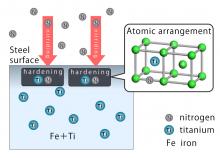
Calculations consider how a dozen metals such as titanium combine with nitrogen or carbon to form bonds
13 May 2024
Kanazawa University
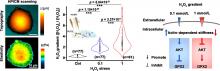
In a recent study published in the multidisciplinary academic journal Science Bulletin, a semi-monthly high-caliber peer-reviewed research outlet covering a broad range of natural sciences and high-tech fields, researchers from the Nano Life Science Institute (WPI-NanoLSI) at Kanazawa University utilized hopping probe scanning ion conductance microscopy (HPICM) and highly sensitive platinum-functionalized nanoelectrodes to conduct an in-depth investigation of the dynamic response of individual living colorectal cancer Caco-2 cells to changes in intracellular and extracellular hydrogen peroxide (H2O2) gradients, specifically focusing on eustress, at the single-cell level and in real-time. Their findings hold promise for innovative therapies against cancer and H2O2-related inflammatory diseases.
05 Apr 2024
Osaka Metropolitan University
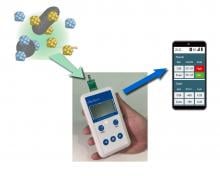
Disease-causing E. coli among species labeled electrochemically using organic metallic nanohybrids
11 Mar 2024
The University of Osaka
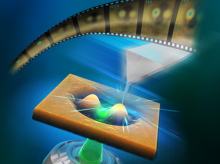
Researchers from Osaka University used tip-scan high-speed atomic force microscopy combined with an optical microscope to observe light-induced deformation of azo-polymer films. The process could be followed in real time, and the film patterns were found to change with the polarization of the light source. The observations will contribute to the use of azo-polymers in applications such as optical data storage, and the approach is expected to be useful across materials science and physical chemistry.
28 Feb 2024
Daegu Gyeongbuk Institute of Science and Technology (DGIST)
Magnetic nanorobots delivering nerve cells to targeted tissues could potentially be used to repair damaged brain tissue, as well as other organs.
28 Feb 2024
National Institute for Materials Science (NIMS)
A new technique allows researchers to map how the cellular “skeleton” adapts to external stress.
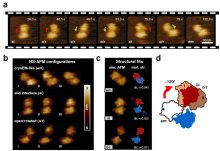
27 Feb 2024
Kanazawa University
Researchers from Nano Life Science Institute (WPI-NanoLSI), Kanazawa University report in Nature Communications that TMEM16F, a transmembrane protein that facilitates the passive movement of phospholipids and ions across membranes, explores a larger conformational landscape than previously thought to perform its unique functions. The finding refines our molecular understanding of crucial physiological processes such as blood coagulation and COVID-19 pathogenesis, and highlights the importance of probing membrane proteins in native-like environments.
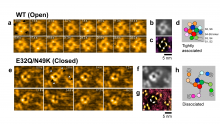
18 Jan 2024
Kanazawa University
Researchers at Nano Life Science Institute (WPI-NanoLSI), Kanazawa University report in Nature Communications a high-speed atomic force microscopy study of the structural dynamics of sodium ion channels in cell membranes. The findings provide insights into the mechanism behind the generation of cell-membrane action potentials.
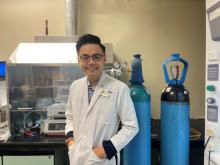
15 Jan 2024
Nanyang Technological University
Research by Assistant Professor Edison Ang Huixiang and his team from National Institute of Education/Nanyang Technological University Singapore
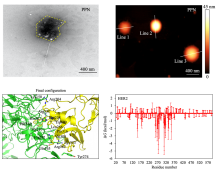
19 Dec 2023
Singapore University of Technology and Design
SUTD researchers developed an advanced system of breast cancer cell detection with improved speed and sensitivity, using a viral mechanism to enhance the tool’s sensing accuracy.
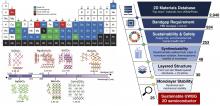
15 Dec 2023
Singapore University of Technology and Design
Riding the momentum of the environment-aware agenda, SUTD researchers were part of an international collaboration that developed a sustainable approach to discover and identify materials for next-generation electronics.
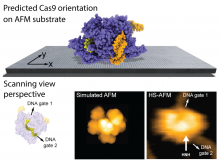
13 Dec 2023
Kanazawa University
Researchers at Kanazawa University report in Frontiers in Molecular Biosciences a computational method to predict the placement of proteins on AFM substrates based on electrostatic interactions.
10 Dec 2023
The University of Osaka
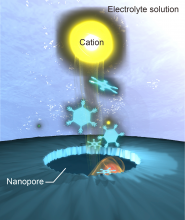
Researchers from Osaka University investigated the thermal energy changes across nanopores that allow the selective flow of ions. Switching off the flow of ions in one direction led to a cooling effect. The findings have applications in nanofluidic devices and provide insight into the factors governing ion channels in cells. The nanopore material could be tailored to tune the cooling and arrays could be produced to scale up the effect.
08 Dec 2023
Daegu Gyeongbuk Institute of Science and Technology (DGIST)
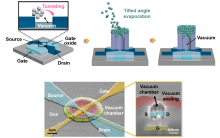
- Doctor Heo Su-jin and Professor Jang Jae-eun’s research team from DGIST developed an ultra-small nano vacuum tube transistor that stably operates in atmospheric pressure without being affected by extreme environments.

16 Oct 2023
The shortlist for the Applied Microbiology International Awards 2023 has now been announced.
The AMI Awards programme is designed to celebrate the brightest minds in our field and promote the research, group, projects, products and individuals who continue to help shape the future of applied microbiology.
Events
Sorry, no events coming up for this topic.
Researchers
Sorry, no researchers coming up for this topic.
- « first
- ‹ previous
- 1
- 2
- 3
Giants in history
Sorry, no researchers coming up for this topic.