

Technology
News

30 Sep 2007
Universiti Putra Malaysia (UPM)
UPM researchers have developed BiOX, a new type of bismuth oxide nanoparticle, which is cheap and ecologically friendly to produce. Bismuth oxide is important in everyday life its non-toxic properties. It can be used as a substitute for lead, eradicating peptic ulcer bacteria, in cosmetics and in solid oxide fuel cell

28 Sep 2007
RIKEN
One jellyfish can throw a swimmer into a panic, but relentless swarms can disrupt entire economies. The isolation of a promising new protein by Japanese researchers could help reverse the economic damage being done by exploding jellyfish populations
28 Sep 2007
RIKEN
Scientists have confirmed that a powerful particle accelerator has recreated the intense conditions that existed just microseconds after the beginning of the universe.
23 Sep 2007
Universiti Sains Malaysia
Streaming JMCS is the next step in providing rich multimedia experience for 3G mobile users. A 3G mobile user can download and install a Java based application that will enable him to dynamically “stream” video contents to his mobile device using the high speed 3G network.
21 Sep 2007
RIKEN
Collective motion of molecules in a crystal could lead to new electronic devices

17 Sep 2007
The Hong Kong Polytechnic University (PolyU)
The world’s first database storing 3D head and face measurements of ethnic Chinese has come into use, after 18 months of dedicated efforts by pioneering researchers of The Hong Kong Polytechnic University. As a result of this important ergonomic data, industrial designers will now be able to design products that fit Chinese people properly.
16 Sep 2007
Universiti Putra Malaysia (UPM)
Infectious bursal disease (IBD) also known as Gumboro disease is the second most important poultry disease after Newcastle disease. In this study, we reported for the first time the use of Sybr Green I based real-time PCR to differentiate different strains of IBD virus.

15 Sep 2007
The Asian Institute of Technology
Thailand is the world’s largest exporter of shrimps, yet its share of the world largest shrimp market - the European Union - is proportionally far lower. This project aims to understanding the problems and devise solutions and training to boost the incomes of many poor farmers and improve access to the European Union market.

13 Sep 2007
Keio University
The Ecole des Mines is the oldest school in Paris, it can claim a French president and Nobel Prize winner amongst its many graduates; it is ranked in the top three universities for science and technology in France.

12 Sep 2007
International Center for Agricultural Research in the Dry Areas (ICARDA)
"Biotechnology has the potential to produce more food to meet the increasing demand in developing countries, but it must be nutritionally and environmentally safe." Representatives and scientists from 16 countries and three international organizations met in Syria to develop an integrated regional framework on biotechnology and biosafety.
11 Sep 2007
Universiti Sains Malaysia
Producing food for the increasing human population generally results in increased use of pesticides, which is finding its way into drinking water supplies. This research is proven to filter up to 85 % of dimethoate and more than 95% of atrazine.

11 Sep 2007
UNDP Asia-Pacific Development Information Programme
This e-primer introduces policy makers and development practitioners to the application of different information and communications technology (ICT) for disaster management, with case studies from the Asia-Pacific region.
09 Sep 2007
Universiti Putra Malaysia (UPM)
In rice-producing Malaysia, rice bran is a rice-milling by-product that is normally considered wasteful. However, researchers at University Putra Malaysia have developed antioxidant neutraceutical formulations from rice bran oil and palm oil.
09 Sep 2007
RIKEN
Two researchers from RIKEN’s SPring-8 Center in Harima have demonstrated the conversion of x-rays into longer wavelengths that preserves some of their useful properties, such as high spatial resolution.
09 Sep 2007
RIKEN
A three-component catalytic system enables the formation of carbon–fluorine bonds at precise positions in organic molecules
09 Sep 2007
RIKEN
Researchers find superconductivity in a material typically used as cement
05 Sep 2007
Nature Publishing Group
As the economical and technological growth of China increases exponentially, the country has a great opportunity to become an environmentally clean society.
05 Sep 2007
Nature Publishing Group
Information from distant seismic events is revealing a complex picture of the tectonic plate boundary in southeast China
04 Sep 2007
UNDP Asia-Pacific Development Information Programme
This APDIP e-Note intends to give a brief introduction to government interoperability frameworks (GIFs), explain how they are classified and provide details of their common features. It also discusses the importance of open standards in GIFs and why governments should consider open standards seriously when designing or evaluating their GIFs.
04 Sep 2007
The Asian Institute of Technology
Asian Institute of Technology aims to focus its work on six areas : information and communications technology for development; food and aquatic systems (bio-resources); urban and rural sustainability (climate change); the Asian model of management; water; and robotic and sensor networks for an intelligent environment.

03 Sep 2007
Universiti Malaysia Sarawak
The eBario’s project won international acclaim for the innovative application of ICT to sustain social and economic development in rural communities. The research team was recently awarded a RM4 million grant to replicate the eBario project in five remote sites in Malaysia.

02 Sep 2007
Asia Research News
Do you use ICT in your teaching or in your education work? Are you using it in an innovative way? If so, you might be eligible for an award from UNESCO Bangkok!

02 Sep 2007
Nanyang Technological University
Researchers from NTU have come up with a new nanotechnology process that enables smaller and faster computer chips to be built.
02 Sep 2007
Asia Research News
Information and Communication Technologies have revolutionised our lives in many ways and promise to continue doing so. This section will highlight ICT research and experts featured on ResearchSEA including the latest technologies and ICT for Development
01 Sep 2007
RIKEN
Researchers from the RIKEN SPring-8 Center in Harima and from the universities of Tsukuba and Tokyo have demonstrated that laser light of a single wavelength can induce reversible transformations in the molecular bond, leading to changes in a material’s magnetic properties.
29 Aug 2007
UNDP Asia-Pacific Development Information Programme
This APDIP e-Note explores the benefits of using FOSS applications in telecentres with case studies from Bangladesh, India, Pakistan, Brazil, Egypt and Sub-Saharan Africa.
28 Aug 2007
Universiti Sains Malaysia
Researchers in Universiti Sains Malaysia developed Bio-Coat from oil palm empty fruit bunches as an alternative to commercial geosynthetic and geotextile materials for slope protection, reinforced earth wall and other soil improvement uses.
26 Aug 2007
Universiti Putra Malaysia (UPM)
Researchers from Universiti Putra Malaysia have discovered a simple technique to immobilise the enzyme lipase onto a support providing a derivatised enzyme that shows a high capacity to resolve between chiral pairs. This ability aids in the synthesis of specific compounds in its pure form which is very much sought after by the chemical industry
24 Aug 2007
RIKEN
Ultrahigh-energy cosmic particles are an intriguing puzzle in high-energy physics, and RIKEN is involved in a project to solve it. RIKEN proposal for the second utilization plan of the Japanese Experiment Module (JEM) on board the International Space Station was recently accepted
24 Aug 2007
RIKEN
Yongyuth Yuthavong, Minister of Science and Technology of Thailand, with over 20 dignitaries including the director of Thailand’s National Synchrotron Radiation Center, visited SPring-8 (the world’s biggest synchrotron radiation facility) in Harima, Hyogo Prefecture.
Giants in history

Turkish astrophysicist Dilhan Eryurt (29 November 1926 – 13 September 2012) conducted research on how the sun affects environmental conditions on the moon.
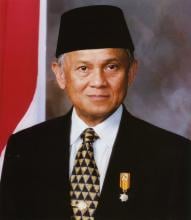
Bacharuddin Jusuf Habibie (25 June 1936 – 11 September 2019) was an Indonesian engineer who was President of Indonesia from 1998 to 1999.

Physicist Narinder Singh Kapany (31 October 1926 – 4 December 2020) pioneered the use of optical fibres to transmit images, and founded several optical technology companies. Born in Punjab, India, he worked at a local optical instruments factory before moving to London for PhD studies at Imperial College. There, he devised a flexible fibrescope to convey images along bundles of glass fibres.

Sir Mokshagundam Srinivasa Shastry Vishveshwarayya (15 September 1860 – 14 April 1962) is widely regarded as India’s most outstanding engineer. In a career that spanned almost his entire life, Vishveshwarayya played a pivotal role in several engineering projects, including designing the Krishnarajasagara dam that is still the source of irrigation and drinking water for parts of Karnataka today.
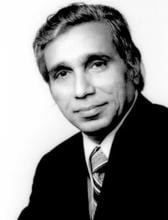
Fazlur Rahman Khan (3 April 1929 – 27 March 1982) was a Bangladeshi-American structural engineer and architect who invented the tube principle, which formed the basis for modern skyscraper design.
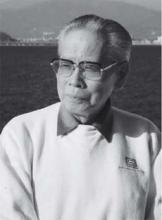
A Japanese surgeon, Tetsuzo Akutsu (20 August 1922 – 9 August 2007) built the first artificial heart capable of keeping an animal alive.

Lin Lanying (7 February 1918 – 4 March 2003) was a Chinese material engineer remembered for her contributions to the field of semiconductor and aerospace materials. Lanying was born into a family who did not believe in educating girls and she was not allowed to go to school.

Gregorio Y. Zara (8 March 1902 – 15 October 1978) was a Filipino engineer and physicist best remembered for inventing the first two-way video telephone. Zara’s video telephone invention enabled the caller and recipient to see each other while conversing, laying the foundation for video-conferencing