

Technology
News

23 Nov 2006
International Center for Agricultural Research in the Dry Areas (ICARDA)
The International Center for Agricultural Research in the Dry Areas (ICARDA), a non-profit international research center with staff from 45 countries, has an opening for Head of Genetic Resources Unit, to be based at the headquarters in Aleppo, Syria
23 Nov 2006
International Center for Agricultural Research in the Dry Areas (ICARDA)
The International Center for Agricultural Research in the Dry Areas (ICARDA), a non-profit international research center with staff from 45 countries, has an opening for a Faba Bean Breeder, to be based at the headquarters in Aleppo, Syria
23 Nov 2006
International Center for Agricultural Research in the Dry Areas (ICARDA)
The International Center for Agricultural Research in the Dry Areas (ICARDA), a non-profit international research center with staff from 45 countries, has an opening for a Science Writer/Editor, to be based at the headquarters in Aleppo, Syria
22 Nov 2006
NAM S&T Centre
In order to provide to the specialists and professionals from the developing countries a platform for an interactive dialogue, the NAM S&T Centre is organising a 5-day International Roundtable, jointly with the Centre for Disaster Mitigation & Management (CDMM) and Vellore Institute of Technology (VIT)
22 Nov 2006
NAM S&T Centre
Many developing countries are at the crossroad in understanding the implication of new policy contexts and create S&T policies that are interlinked with production and service sectors, competition and other national public policies.

20 Nov 2006
Tokyo University of Science
Members of the Tokyo University of Science teaching staff were among the recipients of the recent "Tetrahedron: Asymmetry Most Cited Paper (2003-2006) Awards".
20 Nov 2006
Tokyo University of Science
Professor Kenso Soai is the first Japanese national to be elected as an Honorary Member of Italy's Modena National Academy of Science, Letters and Arts. He specializes in research on asymmetrical autocatalytic reaction in the field of organic chemistry.
19 Nov 2006
Universiti Sains Malaysia
MCSv6 introduces a new Network Address Translator (NAT) traversal solution that allows clients behind NAT to automatically send and receive multimedia data. The solution transientsly detects the user's settings and allows the user to successfully send and receive data.
06 Nov 2006
De La Salle University
The possibility of higher concentration of contaminants in buses and air-conditioned buildings pose potential health problems to users and occupants.
03 Nov 2006
NAM S&T Centre
Scientific benefits to the member countries of the Centre For Science And Technology Of The Non-Aligned and Other Developing Countries include participating in policy decision, financial support, news dissemination and many more

02 Nov 2006
Universiti Malaysia Sarawak
The eBario project wins gold medal at Commonwealth Innovation Award. The research project uses innovative application of ICTs with the goal of continually sustaining social and economic programs in a rural community in Sarawak which does not have the basic amenities such as electricity, water and telecommunications.
02 Nov 2006
Tokyo University of Science
The project aims to develop innovative alternative technologies that utilize pollution-free solar light energy as the most abundant, efficient and environmentally-harmonious energy resource. The TOSLEC-1, hosted jointly by Tokyo University of Science (TUS) and Nissan Science Foundation, was held at Tokyo University of Science.
01 Nov 2006
Nature Publishing Group
An unprecedented look at the prospects for science and technology in the Muslim world is offered in Nature's News section this week.
31 Oct 2006
Tokyo University of Science
A research group headed by Takashi Tsuji of the Tokyo University of Science's Tissue Engineering Research Center identified mechanisms behind outbreaks of adult T-cell leukemia.
31 Oct 2006
Tokyo University of Science
The research team from a joint research program of Tokyo University of Science (TUS)and the Japan Science and Technology Agency have succeeded in producing hydrogen from water through the use of gallium nitride (GaN) crystals for the first time.
20 Oct 2006
Asia Research News
People around the world can access information about harmful introduced species easier than ever thanks to the September 2006 launch of a new website for the Global Invasive Species Database (GISD).
19 Oct 2006
Universiti Sains Malaysia
This innovation offers versatility and is applicable on virtually all types of materials regardless of it nature or origin such as semi-metals like silicon, silicates, glasses, ceramics as well as non-metals like plastics, woods and shells.
18 Oct 2006
Malaysian Biotechnology Information Centre
The Asia Pacific Conference on Plant Tissue Culture and Agribiotechnology (APaCPA) 2007 will be a comprehensive professional platform to promote research in all aspects of basic and applied biotechnology, especially in the areas of plant tissue culture and agribiotechnology.
16 Oct 2006
Forest Research Institute Malaysia (FRIM)
Their expertise include Bamboo Management, Silviculture, Non-Wood Forest Produce Furniture, Mangrove, Forestry, Tissue Culture Horticulture, Seed Science, Microbiology Pharmaceutical, Drug Discovery, Natural Products Chemistry, Herbal Product Essential Oils, Wood Composite, Biomass Utilisation, Manufacturing Mechanisation and Automation
04 Oct 2006
Universiti Sains Malaysia
The electronic nose is an array of gas sensors which measure the frequency changes of volatile vapors on its surfaces. The 'electronic tongue' consists of lipid polymer membrane electrodes (to mimic human tongue) for the analysis of liquid samples.
04 Oct 2006
Nature Publishing Group
The last thing most people want in their computer's memory is a virus. But now a team of scientists has used a virus to make a memory device, according to research in this month's Nature Nanotechnology.
03 Oct 2006
NAM S&T Centre
International conference on S&T Policy Research and Statistics, International Roundtable on Lessons from Natural Disasters, Policy Issues and Mitigation Strategies, International Roundtable on Lightning Protection, International workshop on Medicinal Plants and Herbal Medicine
01 Oct 2006
Islamic University of Gaza
Abstract submission deadline is October 15, 2006. The conference will be held at the Islamic University of Gaza (IUG) from 18-19 June 2007. It will focus on important engineering issues relevant to construction and development, which will stimulate construction efforts and development.
24 Sep 2006
Malaysian Institute for Nuclear Technology Research (MINT)
MINT’s R&D projects include decontamination of Cosmetics, Agrochemicals for Tropical Agriculture, Hydrogel, Bone Allograft, Study of Pesticides in Vegetables, Breeding of New Varieties of Bananas, developing new Radiopharmaceuticals and many more
21 Sep 2006
NAM S&T Centre
Activities in the latest technologies in Cement Manufacture & Construction, Plant Tissue Culture, Herbal Medicine, Surface Engineering Technology, Wireless Technology & MEMS, Prediction of Monsoon, Science Centres & Museums, Pharmaceuticals & Neutraceuticals, Crop & Forage Production using Saline Waters in Dry Areas and Coastal Ecosystems

18 Sep 2006
International Rice Research Institute
A gene that enables rice to survive complete submergence has been identified by a team of researchers at the International Rice Research Institute (IRRI) in the Philippines and at the University of California's Davis and Riverside campuses.
17 Sep 2006
Universiti Sains Malaysia
Being the world largest producer of palm oil, Malaysia generates a huge quantities of oil palm biomass. This research project aims to develop a technology to convert palm oil biomass to green fuel using supercritical water technology.

14 Sep 2006
Gulf Research Center
The Arab countries are surrounded by countries with nuclear capabilities. Israel, Pakistan, India and, sooner or later, Iran. It is in this context that the GCC secretary-general issued a wake-up call to the "Arab Nation" to adopt a new regional strategy on the nuclear issue by abandoning the current zero nuclear option
14 Sep 2006
International Development Research Centre (IDRC)
The workshop, supported by AIT, IDRC, and Rockefeller Foundation, will examine existing policies on bio-innovations in the region, identify existing research gaps and recommend a strategy for information sharing, learning and partnering.
13 Sep 2006
Nature Publishing Group
Nature VOL.443. Summaries of newsworthy papers include Why summer heatwaves could be more common, Changes in the Sun’s luminosity are not responsible for climate change, How oxygen gangs up under pressure, Shaking a quantum bridge, Galaxy formation kicks off
Giants in history

Turkish astrophysicist Dilhan Eryurt (29 November 1926 – 13 September 2012) conducted research on how the sun affects environmental conditions on the moon.
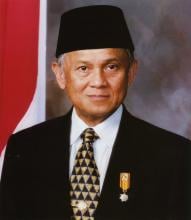
Bacharuddin Jusuf Habibie (25 June 1936 – 11 September 2019) was an Indonesian engineer who was President of Indonesia from 1998 to 1999.
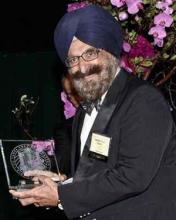
Physicist Narinder Singh Kapany (31 October 1926 – 4 December 2020) pioneered the use of optical fibres to transmit images, and founded several optical technology companies. Born in Punjab, India, he worked at a local optical instruments factory before moving to London for PhD studies at Imperial College. There, he devised a flexible fibrescope to convey images along bundles of glass fibres.
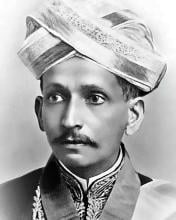
Sir Mokshagundam Srinivasa Shastry Vishveshwarayya (15 September 1860 – 14 April 1962) is widely regarded as India’s most outstanding engineer. In a career that spanned almost his entire life, Vishveshwarayya played a pivotal role in several engineering projects, including designing the Krishnarajasagara dam that is still the source of irrigation and drinking water for parts of Karnataka today.
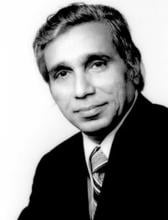
Fazlur Rahman Khan (3 April 1929 – 27 March 1982) was a Bangladeshi-American structural engineer and architect who invented the tube principle, which formed the basis for modern skyscraper design.
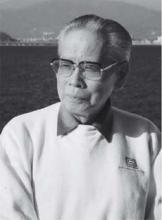
A Japanese surgeon, Tetsuzo Akutsu (20 August 1922 – 9 August 2007) built the first artificial heart capable of keeping an animal alive.

Lin Lanying (7 February 1918 – 4 March 2003) was a Chinese material engineer remembered for her contributions to the field of semiconductor and aerospace materials. Lanying was born into a family who did not believe in educating girls and she was not allowed to go to school.
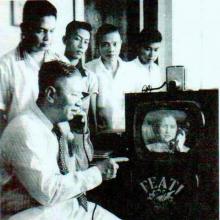
Gregorio Y. Zara (8 March 1902 – 15 October 1978) was a Filipino engineer and physicist best remembered for inventing the first two-way video telephone. Zara’s video telephone invention enabled the caller and recipient to see each other while conversing, laying the foundation for video-conferencing