Cryo-electron microscopy and computer simulations uncover how a cellular protein helps transport omega-3 fatty acids to the brain and eye, with implications for drug development.
Researchers from Hiroshima University now have a better understanding of the mechanism underlying how certain bacteria can transfer genetic material across taxonomic kingdoms, including to fungi and protists. Their work, published in Frontiers in Microbiology, could have applications in changing how bacteria perform certain functions or react to changes in their environment.
Institute of Industrial Science, The University of Tokyo (UTokyo-IIS)
16 Jun 2021
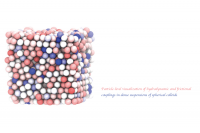
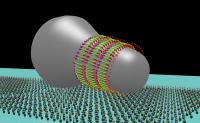
Researchers from The University of Tokyo Institute of Industrial Science report colloidal spheres that can be used to determine the rotational dynamics of dense suspensions
Paris, June 11 – Spending on science worldwide increased (+19%) between 2014 and 2018, as did the number of scientists (+13.7%). This trend has been further boosted by the COVID crisis, according to UNESCO’s new Science Report, The Race against Time for Smarter Development.
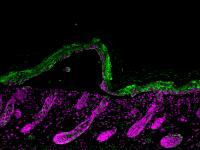
A team of scientists has shown that the healing of skin blisters is driven by hair follicle stem cells, which delay their own development in the process.
Malaysia Technology Expo (MTE) 2021 – COVID-19 International Innovation Awards returns from 14-18 June 2021 with a virtual show, allowing immersive experience for visitors with live interactions.
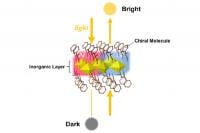
A multi-institutional Japanese team has developed new magnetic design that has magic mirror-like properties. Based on organic-inorganic hybrid perovskite type compounds, the brightness of transmitted light changes depending on whether the material is viewed from the front or the back.
• Glioblastoma (GBM) is a highly aggressive type of brain cancer. Even with current standard of care, 50% of patients die within 15 months of diagnosis.
• This complex cancer is difficult to treat due to its location, structure, ability to spread quickly, high recurrence rate and severely limited treatment options.
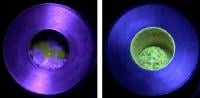
Hokkaido University researchers have developed a simple method that converts existing generic polymers into luminescent polymers using mechanical force.
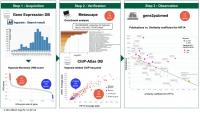
Publication bias, or the tendency of researchers and journals to not publish uninteresting findings, plagues much of the natural sciences and especially biomedical research. Hiroshima University researchers have developed a meta-analytic technique exploiting publicly available transcriptome databases that avoids the problem—and in so doing, discovered four genes previously unknown to be associated with responding to low-oxygen stress.
Chemical rings of carbon and hydrogen atoms curve to form relatively stable structures capable of conducting electricity and more — but how do these curved systems change when new components are introduced? Researchers based in Japan found that, with just a few sub-atomic additions, the properties can pivot to vary system states and behaviors, as demonstrated through a new synthesized chemical compound.
A research group has revealed more about the lifespan of supermassive black holes. They accidentally caught a bright phase AGN signal from the Arp 187 galaxy with no signal from the nucleus.
The chances of restoring fertility through sperm stem cell transplant are as random as a coin toss. But a team of scientists developed a new strategy that serves as a “weighted coin” that can favorably rig the odds to achieve outcomes where fertility is successfully restored.
Kavli Institute for the Physics and Mathematics of the Universe (Kavli IPMU)
08 Jun 2021
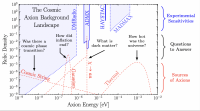
No one knows what happened in the Universe for its first 400,000 years, but a new paper suggests discovering the hypothetical particle axion could shed light on the early history of the Universe. What's more, current dark matter experiments may have already detected it in its data.
ARN's June newsletter features research on a hands-off approach to discipline, better robot hand design, nucleosomes and marine biodiversity, plus the latest Beyond the Journal and a feature from the ARN magazine.
Institute for Integrated Cell-Material Sciences (iCeMS) at Kyoto University
02 Jun 2021
Scientists have found a way to make hydrogen move faster through a solid material at cooler temperatures, paving the way for more sustainable and practical energy storage devices.
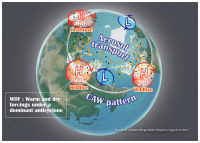
Scientists have uncovered a summertime climate pattern in and around the Arctic that could drive co-occurrences of European heatwaves and large-scale wildfires with air pollution over Siberia and subpolar North America.
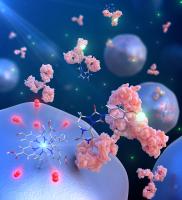
A new nanometer-scale proximity labeling system can target histidine residues quicker than conventional methods thanks to the inorganic chemical singlet oxygen. The discovery generates a new chemical tool in protein chemical modification.
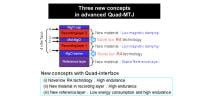
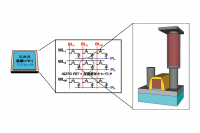
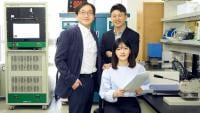
Professor Tetsuo Endoh's Group at Tohoku University's Center for Innovative Integrated Electronics has announced a new magnetic tunnel junction (MTJ) quad-technology that provides better endurance and reliable data retention - over 10 years - beyond the 1X nm generation.
Researchers from the Institute of Industrial Science at The University of Tokyo, Kobe Steel, Ltd, and Kobelco Research Institute, Inc, develop high-density, energy-efficient 3D embedded RAM for artificial intelligence applications.
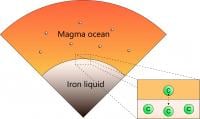
Carbon degassed from planetary mantles by volcanic activity plays an important role in the planetary surface environment. However, how the carbon content in the Earth’s mantle was established is still poorly understood. Here we show that the mantle of planetary embryos may have been nearly saturated with carbon by new high-pressure experiments and pointed out that the carbon solubility of magma is very consistent with the estimated carbon contents in terrestrial and lunar mantles.
Institute for Integrated Cell-Material Sciences (iCeMS) at Kyoto University
31 May 2021
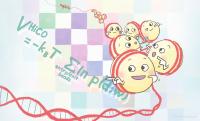
High-resolution genome structural analyses combined with large-scale simulations show the arrangements of the genome’s spool-like structures affecting gene expression.
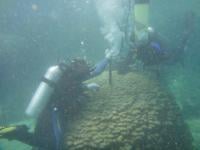
Scientists have shown that the population of the Yakushima sika deer has declined due to natural factors, suggesting that the population can be regulated without culling.
Inquiry-based science learning supported by information and communications technology tools has been a desirable innovative approach to instructional practices with effective teacher orchestration in school education. Teacher orchestration refers to how a teacher manages real-time, multi-layered activities in a context with multi-constraints for effective instructional practices, particularly with technology support.
A look at Japan’s mimamoru approach suggests that adults’ non-intervention in kids’ fights allows children to nurture social and interpersonal skills on their own. Is it worth a try in other countries?
In collaboration with Kanazawa University, researchers from Osaka City University used high-speed atomic force microscopy (HS-AFM) to visualize at the nanometer level the movement of individual particles within the parasitic bacterium Mycoplasma mobile.