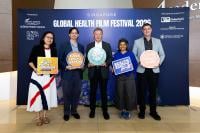
The two-evening programme on 27-28 January at The Ngee Ann Kongsi Auditorium at the SingHealth Duke-NUS campus convened clinicians, students, policymakers and partners to focus on the importance of outbreak preparedness and planetary health.
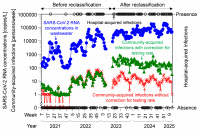
The University of Osaka study shows that declining clinical tests lead to an underestimation of COVID-19 cases. By analyzing wastewater, researchers found viral loads remained high even as reported cases dropped. This highlights wastewater surveillance as a crucial, objective tool for accurately monitoring community-wide infection levels.
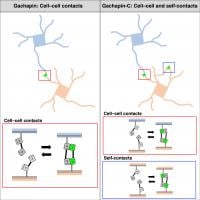
Researchers from The University of Osaka report the development of two fluorescent indicators, Gachapin and Gachapin-C, that can be used to monitor cell–cell contacts and contacts between different processes of the same neuronal cell. Unlike split GFP indicators, the reversible and instant fluorescence from the Gachapin/Gachapin-C chromophore upon contact enables real-time imaging of dynamic contact events.
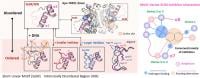
A collaborative team from National Taiwan University and National Yang Ming Chiao Tung University identified an alternative strategy to regulate an immune enzyme linked to cancer and inflammation.
Sticky life beginnings. Precarious pitcher plant, Breaking the cobalt "cage", Toxic algae killer & “Pure-bred” stem cell medium. Read all in the latest Editor's Choice. Plus Asia Research News 2026 is out now and SciCom Coffee talk by Rachael Smith at Wellcome Sanger Institute.
Kavli Institute for the Physics and Mathematics of the Universe (Kavli IPMU)
28 Jan 2026
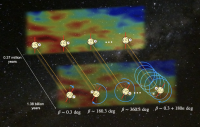
Researchers have developed a method to reduce uncertainties in observational measurements of cosmic birefringence, which might help explain the Universe’s symmetry.
Kavli Institute for the Physics and Mathematics of the Universe (Kavli IPMU)
28 Jan 2026
Researchers have developed a method to reduce uncertainties in observational measurements of cosmic birefringence, which might help explain the Universe’s symmetry.
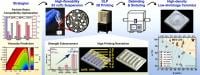
National Taiwan University researchers have developed an ultrahigh-solid-loading (83 vol%) yet highly flowable suspension for 3D printing that produces ceramic parts with extremely low shrinkage and 100% density, overcoming a major barrier in precision ceramic manufacturing.
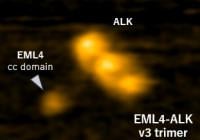
Researchers at Nano Life Science Institute (WPI-NanoLSI) and the Cancer Research Institute at Kanazawa University led have uncovered how targeted lung cancer drugs alter the shape and behavior of a key cancer-driving protein—revealing a hidden mechanism that helps explain why some treatments stop working over time.
Daegu Gyeongbuk Institute of Science and Technology (DGIST)
27 Jan 2026
- “Neuro-Replica Workshop” successfully held at DGIST on the 21st…
KRW 15.3 billion investment over 9 years
- Keynote address by world-renowned scholar Professor Denis Noble of the University of Oxford. Discussed the revitalization of the regional industrial ecosystem
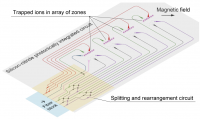
Researchers from The University of Osaka have developed a unique approach to delivering laser light through photonic circuitry for controlling the states of trapped ions, representing a potential novel method for overcoming challenges in quantum computing technology.
Researchers have developed a new strategy to overcome a long-standing limitation in plasmonic loss by reshaping light–matter interactions through substrate engineering.
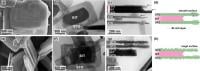
This study demonstrated a new strategy for engineering the surface and functional properties of 2D SrTiO₃ perovskite nanoplatelets through the hydrothermal transformation of Aurivillius phase Bi₄Ti₃O₁₂ nanoplatelets. We successfully synthesised both heterostructural SrTiO₃/Bi₄Ti₃O₁₂ photocatalyst which exhibited significantly higher H2 evolution rate than those of traditional heterojunction photocatalysts.
• AI models can support doctors in making critical decisions and expand access to care in low-resource settings
• However, gaps in infrastructure, skills and governance continue to limit safe and effective adoption
• Researchers call for an international consortium to guide regulation and responsible use of AI in healthcare
Daegu Gyeongbuk Institute of Science and Technology (DGIST)
27 Jan 2026
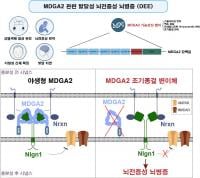
- Professor Jaewon Ko’s research team at DGIST, in collaboration with international researchers, identified that the loss of function of the MDGA2 gene induces severe developmental and epileptic encephalopathy
- This discovery is expected to pave the way for early diagnosis and the development of new therapies
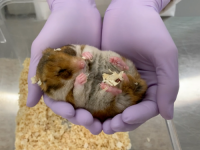
Skeletal muscle stem cells in hibernating Syrian hamsters preserve their ability to function by suppressing their activation during the hibernation period, a research team led by Hiroshima University has shown. This insight may lead to a broader understanding of the maintenance of muscle tissue under prolonged low temperature conditions and may eventually lead to therapeutic applications.
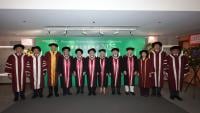
Lingnan University held its Honorary Doctorate Conferment Ceremony today, 26 January. The Hon Andrew Yao Cho-fai, Council Chairman of Lingnan University, conferred honorary doctoral degrees on six distinguished individuals in recognition of their outstanding achievements and valuable contributions to humanity.
Lymphatic Drug Delivery System (LDDS) is an emerging type of cancer treatment, but its efficacy depends on how efficiently the drugs reach the lymphatic system. A research team from Tohoku University has clarified how the physical and chemical features of medicines affect how they move through the lymphatic and blood systems, helping to advance the clinical development of LDDS.
A recent review article explores how software-based AI systems are changing the design process of solid electrolytes, enabling faster development of solid-state batteries.
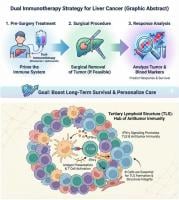
Immune checkpoint inhibitor (ICI) therapy before surgery for hepatocellular carcinoma (HCC) may produce major pathological response in about one-third of the surgical patients. The clinical and pre-clinical research highlighted that the formation of organized immune hubs within the tumor (tertiary lymphoid structure) after ICI therapy is critical for the induction of antitumor immunity.
New research led by WCS (Wildlife Conservation Society) documents recovery of Critically Endangered Siamese crocodiles through local stewardship and long-term protection.
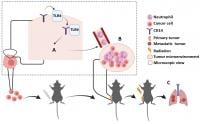
Scientists at the National Taiwan University Cancer Center and National Taiwan University Hospital have shed light on rare but important situations where radiotherapy to one tumor is accompanied by cancer growth or metastasis at untreated sites.
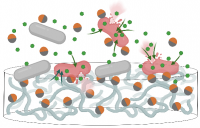
An international research team led by The University of Osaka has demonstrated that two-faced Janus nanoparticles can restore the effectiveness of antibiotics against drug-resistant bacteria. These particles disrupt the protective outer membrane of Gram-negative bacteria, which normally blocks antibiotics. This allows conventional drugs to regain access and kill the once-resistant microbes.
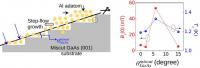
By utilizing the GaAs substrate miscut, we can modulate the superconducting critical temperature, current, and magnetic field of wafer-scale Al nanofilms grown by molecular beam epitaxy by approximately 10%, 100%, and 1000%, respectively. Our approach points to a simple method of tailoring grain architecture and superconductivity in Al, which is a critical requirement for advancements in quantum computation and engineering.
Daegu Gyeongbuk Institute of Science and Technology (DGIST)
26 Jan 2026
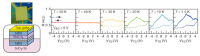
- DGIST Professor Youngwook Kim’s research team uncovers a new principle for “ultralow-power memory” without artificial deformation
- Presents a novel physical principle for the realization of next-generation low-power electronic devices and quantum memory
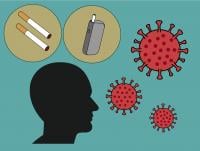
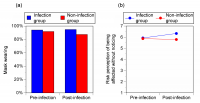
A study by The University of Osaka reveals that people who have had COVID-19 are more likely to wear masks. This is driven not by fear, but by an increased awareness of being a potential "silent carrier." The finding suggests that public health messages based on patients' real experiences, highlighting the risk of asymptomatic spread, could be more effective in encouraging preventive behaviors in the general population for future pandemics.
As global demand for EVs and renewable energy surges, establishing sustainable practices in lithium-ion battery production, recycling, and disposal has become critical. A collaborative study co-led by a young professor in the School of Energy and Environment at City University of Hong Kong (CityUHK) presents a promising roadmap for this transition. The study was published in Nature Communications.