To celebrate International Day of Women and Girls in Science on Feb. 11, we are highlighting Giants in History - Asia's Women in Science, as well as tips for boosting women's voices in science communication and other organizations working to support women in research.
Institute of Industrial Science, The University of Tokyo (UTokyo-IIS)
10 Feb 2021
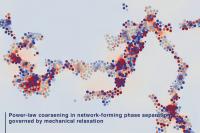
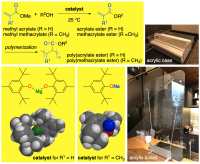
Researchers at The University of Tokyo discover a new law about how the complex network of phase-separated structures grows with time, which may lead to more efficient batteries and industrial catalysts
A research group has created a device that measures how our bodies metabolize fat via our breath, allowing for the development of efficient fat burning exercises.
The global problem of unowned domestic cats, driven by the cats’ phenomenal reproductive success, carries significant economic, animal welfare and biodiversity costs. Big-data research led by an expert on veterinary medicine and infectious diseases at City University of Hong Kong (CityU), has found that although more than 80% of cats in Australia were desexed, only a fraction have had surgery before reaching puberty, thus creating a “pregnancy gap”.
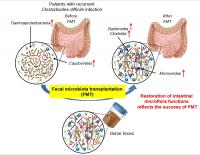
In a study published in Gastroenterology – Researchers at Osaka City University and The Institute for Medical Science, The University of Tokyo, in collaboration with Brigham and Women's Hospital in Boston, report the intestinal bacterial and viral metagenome information from the fecal samples of patients with recurrent Clostridioides difficile infection (rCDI).
The Faculty of Business of Lingnan University in Hong Kong (LU) recently received the accreditation from the Association to Advance Collegiate Schools of Business (AACSB International) for another five-year term. This is the third time in a row that the Faculty of Business has been received accreditation from AACSB International since 2011, reaffirming the Faculty’s continuing outstanding performance in teaching and learning, engagement, strategic management and innovations.
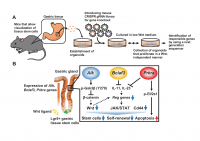
Tissue stem cells can self-renew and differentiate, supplying cells necessary for tissues at various developmental stages. However, detailed analysis in vivo is difficult, so the molecular mechanisms underlying the stemness of gastric tissue stem cells have remained a mystery. Here, by using organoids that mimic tissue structure and function in vivo and GeCKO screening to inactivate arbitrary genes, Alk, Bclaf3 and Prkra have been identified as genes regulating stemness.
Kavli Institute for the Physics and Mathematics of the Universe (Kavli IPMU)
08 Feb 2021
Betelgeuse is normally one of the brightest, most recognizable stars of the winter sky, marking the left shoulder of the constellation Orion. But lately, it has been behaving strangely: an unprecedentedly large drop in its brightness has been observed in early 2020 (Figure 1), which has prompted speculation that Betelgeuse may be about to explode.
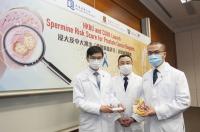
Researchers from Hong Kong Baptist University (HKBU) and the Faculty of Medicine at The Chinese University of Hong Kong (CU Medicine) have jointly developed the Spermine Risk Score which, coupled with the use of a urine test, provides a non-invasive and more reliable method for the diagnosis of prostate cancer. In a study conducted by the researchers, about 37% of the patients, who were ultimately found to have no prostate cancer, can avoid undergoing a prostate biopsy procedure.
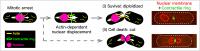
Cells replicate their genetic material and divide into two identical clones to perpetuate life. Some cells pause in the process with a single, undivided nucleus. When the cell resumes division after such a pause, the nucleus can become caught in the fissure, splitting violently, and killing both cells. But that is not always the case. Researchers from Hiroshima University in Japan are starting to understand how active nuclear displacement rescues cell death.
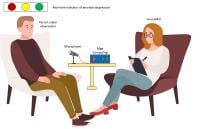
A deep learning algorithm can detect emotion, including depression, using a voice signal. The system, developed by Teddy Surya Gunawan at the International Islamic University Malaysia, could be used by suicide prevention call centres and psychological counsellors.
Carbon dioxide (CO2) is one of the major greenhouse gases causing global warming. If the carbon dioxide could be converted into energy, it would be killing two birds with one stone in addressing the environmental issues. A joint research team led by City University of Hong Kong (CityU) has developed a new photocatalyst which can produce methane fuel (CH4) selectively and effectively from carbon dioxide using sunlight.
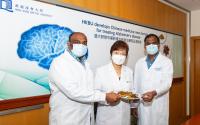
Researchers from the School of Chinese Medicine (SCM) at Hong Kong Baptist University (HKBU) have developed a Chinese medicine formula named NeuroDefend that offers a potential novel treatment for Alzheimer’s disease (AD). Mouse model experiment results showed that the formula reduces the levels of amyloid-beta (Aβ) and insoluble hyperphosphorylated-tau protein, which are the major hallmarks of AD, in mice brains. It also improves cognitive function and memory in mice.
Hokkaido University scientists show that under laboratory conditions, ultraviolet light reacts with nitrophenol to produce smog-generating nitrous acid.
Dentists could soon be using a ready-to-use formulation containing an antibiotic and natural healing oils to treat periodontitis patients. The treatment, called PeriodoxTM, was developed by researchers who are members of IIUM Biofilm Interest Research Group (BIG) at International Islamic University Malaysia (IIUM).
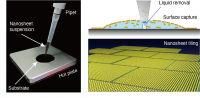
A surprisingly simple method improves ‘drop casting’ fabrication of tiled nanosheets that could be used in next-generation electronic devices. All you need is a pipette and a hotplate.
Nagoya University scientists find a rare mineral in nuclear power plant walls, significantly improving their strength following years of full operation.
Although genome sequencing has come leaps and bounds over the past 20 years, there did not exist a reference genome specific to the Japanese. That is until now. Researchers at Tohoku University have completed and released the first Japanese reference genome by analyzing the genomes of three Japanese individuals using high coverage, long-read next-generation sequencing technologies.
The Education University of Hong Kong (EdUHK) participated for the first time in the International Innovation and Invention Competition (IIIC) Taiwan held in November 2020. Six innovations covering education technology, wellness and environmental science received four gold and two silver medals, including three out of a possible four gold medals in the EdTech innovation category.
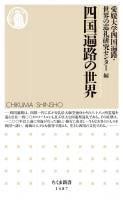
The Shikoku pilgrimage (in Japanese, Shikoku Henro) is a large, circular route approximately 1,400 kilometers in length around the island of Shikoku that has eighty-eight sacred sites related to the Buddhist priest, Kūkai (Kōbō Daishi).
COVID-19 has led to psychological distress among one in three adults, large-scale meta-analysis by researchers at Duke-NUS Medical School, Singapore, reveals.
A joint research led by City University of Hong Kong (CityU) has built a mathematical model to explore and analyse the relationship between disease transmission, people’s awareness about the disease and their resulting behaviours, as well as disease information spread by the mass media and opinion leaders. The research may shed some insights on responding to COVID-19 and other similar infectious diseases.
Solid-state lithium batteries (SSLB), unlike their liquid lithium-ion counterparts, are dry and do not need extra cooling, rendering them safer and capable of providing more energy. A research team has recently discovered that a clean electrolyte/electrode interface can double the capacity of SSLBs, paving the way for a more sustainable future.