

Research led by the Singapore University of Technology and Design finds that comfort in Singapore homes depends not only on air-conditioning and building design, but also on airflow, daily routines and how families share their living spaces.
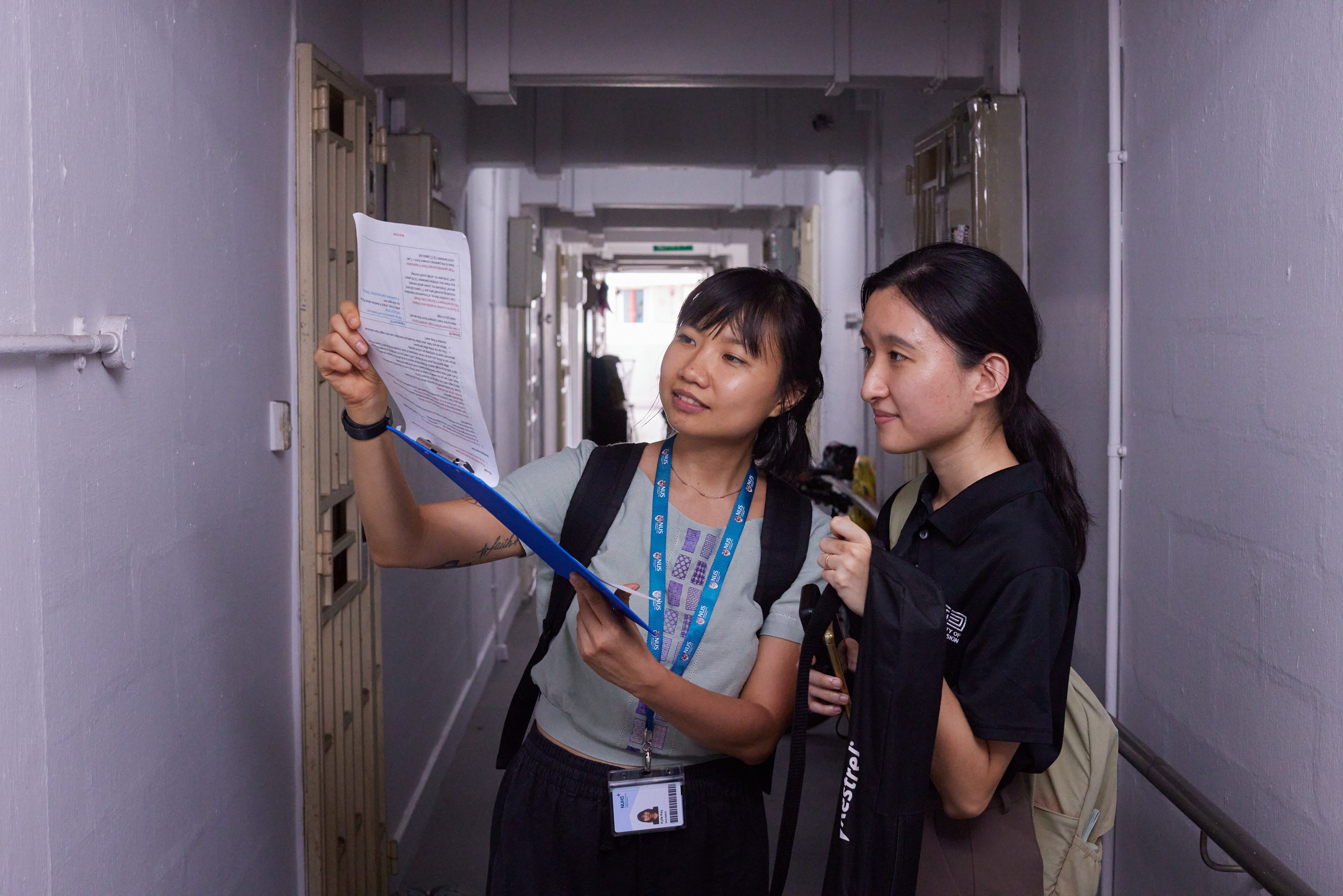
Researchers visiting a household to understand how residents experience and manage heat at home.
Tote Board
Feeling hot at home may seem like a simple matter of temperature or whether the air-conditioning is switched on. But a new study suggests that less visible factors — from closed windows and blocked airflow to household routines and the different ways family members experience heat — also play an important role.
A research team led by Research Fellow Dr Sarah Chan of the Lee Kuan Yew Centre for Innovative Cities at the Singapore University of Technology and Design (SUTD) studied how residents experience and manage heat in Singapore’s high-rise homes.
Published in Urban Climate, the study surveyed over 1,000 respondents across 416 households. The researchers combined the survey with home audits, on-site temperature readings and in-depth interviews with 13 families.
Seven in ten respondents said they felt warm or hot at home without air-conditioning. Their experiences were also linked to personal habits, household dynamics, airflow and the surrounding environment.
“Coping well with heat at home is not just about whether a flat is ‘hot’ or whether a household has air-conditioning,” said Dr Chan. “It is also shaped by everyday routines, how families share space, whether airflow is blocked and how people have become used to managing heat. In other words, homes are where climate adaptation begins.”
The researchers describe this as “conditioned comfort”. Put simply, people’s sense of comfort depends not only on cooling equipment, but also on their expectations, routines, living conditions and previous experiences of heat. Two people in similar flats — and even members of the same household using the same cooling methods — may therefore experience the same temperature differently.
“Coping well with heat at home is not just about whether a flat is ‘hot’ or whether a household has air-conditioning, It is also shaped by everyday routines, how families share space, whether airflow is blocked and how people have become used to managing heat. In other words, homes are where climate adaptation begins."
Dr Sarah Chan, Research Fellow, Lee Kuan Yew Centre for Innovative Cities, SUTD
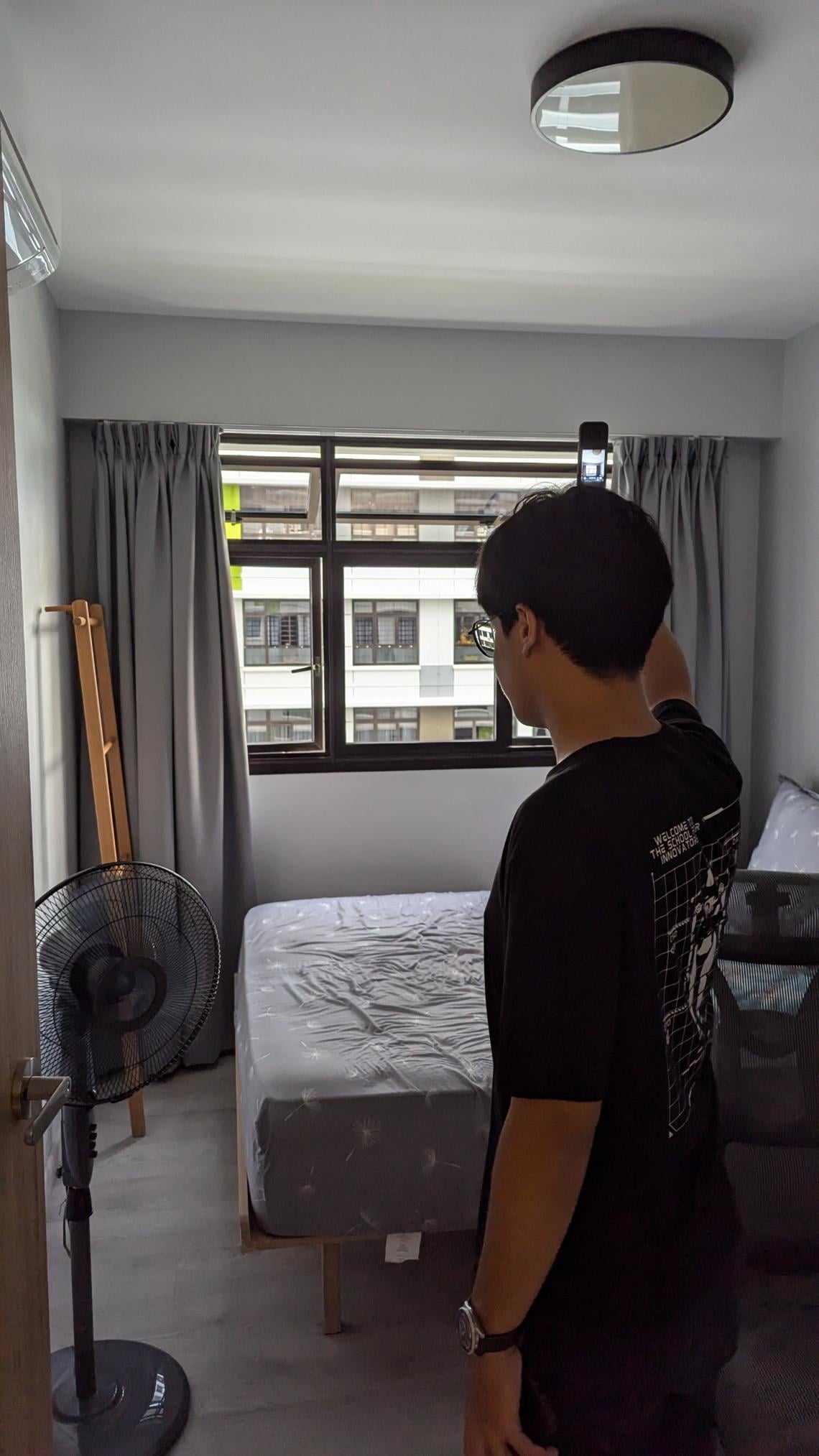
Research team taking 360-degree images of a home to support spatial analysis and thermal comfort modelling
SUTD
Most urban heat research focuses on outdoor spaces such as streets, neighbourhoods and public infrastructure. In Singapore, however, people move regularly between outdoor heat and indoor cooling. What they experience in one environment may affect what feels comfortable in another.
By looking inside people’s homes, the SUTD-led study identified several influences that residents may not usually think of as cooling strategies.
People who spent more time outdoors tended to report greater comfort indoors without air-conditioning. Households where windows were kept closed more often, or where furniture and belongings obstructed airflow, were more likely to report feeling hot.
Opening a window, however, is not always a straightforward solution. Noise, insects, air pollution and smells may lead residents to keep windows shut. Over time, closed windows and blocked airflow can contribute to warmer rooms, even when residents do not immediately connect these conditions with their discomfort.
Cooling is also negotiated within families. Night-time air-conditioning may become part of a household routine because one person prefers a colder room, even when another feels uncomfortable at the same setting. Couples may adjust the temperature, use fans, make compromises or, in some cases, sleep in separate rooms.
Dr Joshua Sim, Senior Research Fellow at the Human Potential Translational Research Programme and the Heat Resilience & Performance Centre, both housed at the National University of Singapore’s Yong Loo Lin School of Medicine, said heat resilience needs to be understood through the realities of everyday life.
“Air-conditioning remains important for sleep, health and comfort, especially when heat becomes unsafe,” said Dr Sim. “The challenge is not to tell households to stop using it, but to understand how comfort habits form, and how we can support safer, lower-energy ways of staying cool at home.”
The researchers emphasise that household behaviour alone cannot solve indoor heat. Housing conditions, neighbourhood temperatures, household income, health needs and access to cooling all affect how people cope.
“Air-conditioning remains important for sleep, health and comfort, especially when heat becomes unsafe. The challenge is not to tell households to stop using it, but to understand how comfort habits form, and how we can support safer, lower-energy ways of staying cool at home."
Dr Joshua Sim, Senior Research Fellow, Heat Resilience & Performance Centre, NUS
For many families, air-conditioning remains necessary, particularly during hot nights or when vulnerable household members are present. The findings instead point to additional ways of supporting residents without placing responsibility solely on them.
Home design, renovation guidance and public education could consider how air moves through rooms, where furniture is placed, when windows are opened and how fans and air-conditioning are used together. Practical advice could help households recognise less visible influences on indoor heat while acknowledging the limits on the choices available to them.
The team is now developing tools to help residents understand how heat and airflow behave in their own homes and test small, realistic changes. The researchers are also extending the work into renovation guidance and community engagement, so that managing heat becomes part of everyday household decisions rather than something considered only during periods of extreme heat.
“People should not be blamed for feeling hot or for using air-conditioning,” said Dr Chan. “But if we can make the hidden factors in the home more visible, households may have more choices. Better heat resilience starts with understanding how people actually live.”
Advertisement