
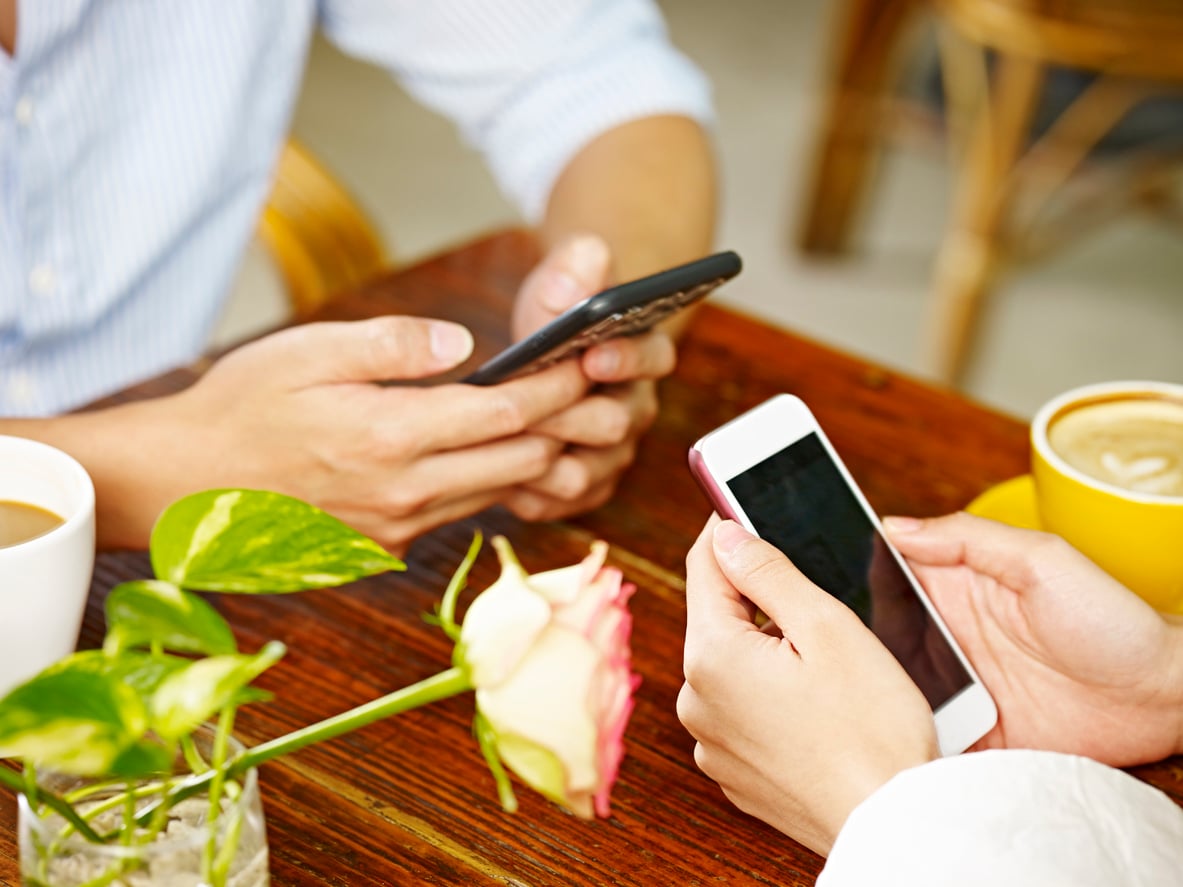


The study aims to provide more insight for approaches to digital detox and addressing smartphone dependence, highlighting moving beyond restricting device use and more psychological interventions.
A joint longitudinal study involving Lingnan University finds that participants with higher scores on the Nomophobia Questionnaire are more likely to spend longer, more frequently on social media when experiencing negative emotions during less busy periods. These findings have been published in the Special Issue "Addressing Behavioural Addictions and Promoting Emotional Well-Being: Insight, Challenges, and Solutions" of the international medical journal Healthcare.
Lingnan University
Smartphones have become an essential part of everyday life. The anxiety or discomfort experienced when people are unable to use their mobile phones or when their phones are not within reach is known as nomophobia in psychology. A joint longitudinal study involving Lingnan University found that participants with higher scores on the Nomophobia Questionnaire were more likely to spend longer and more frequent periods on social media when experiencing negative emotions and when less rushed, and findings suggest that increased smartphone use may be associated with the way individuals regulate negative emotions as a "temporarily escape". In fact, interventions addressing smartphone addiction should not focus solely on limiting screen time, but also help people exhibiting smartphone dependence to develop effective coping skills.
The joint research team, comprising the Department of Psychology and the Lingnan University Cognitive Science Research Centre (CSRC) at Lingnan University, the Center for Psychological Sciences at Zhejiang University, and Huawei Technologies Company Limited, designed a customised smartphone tracking application and recruited 37 Android smartphone users aged between 18 and 39. Their use across different categories of applications was objectively tracked over four consecutive weeks by recording both the duration and frequency of app use. Participants also made daily self-assessments of their emotional state and perceived busyness. A total of 837 valid daily tracking records were collected.
The research team also assessed participants' levels of anxiety or discomfort associated with being unable to use their mobile phones through the internationally recognised Nomophobia Questionnaire (NMP-Q). Higher scores indicate a greater dependence on smartphones. By integrating their scores with the daily tracking records, they looked at how different emotional states and daily life contexts influenced smartphone use, and found that participants with higher NMP-Q scores spent more time on social media and used it more often. Among those who reported experiencing negative emotions during less busy periods, both the duration and frequency of smartphone use rose significantly on platforms such as Facebook, X, TikTok, and Weibo. Instant Messaging applications such as WhatsApp, WeChat, QQ, and Messenger, and non-social media applications, including entertainment, utility, and productivity apps, did not exhibit the same behavioural pattern.
In contrast, participants with lower NMP-Q scores maintained relatively stable smartphone use patterns, regardless of their emotional state or level of busyness.
Prof Jie (Jay) Xu, Director of the CSRC and Associate Professor of the Department of Psychology at Lingnan University, said that nomophobia is a common psychological condition in modern society that exists along a continuum of severity. Previous studies have relied primarily on questionnaire surveys where participants recalled their overall daily smartphone use from memory, but by combining objectively tracked smartphone use with daily assessments of participants' lives, this study provides a more comprehensive understanding of how emotional states and daily routines influence smartphone use.
Prof Xu said, "Social media browsing is a form of passive social use. Platform algorithms recommend content based on users' daily interactions, allowing immediate psychological gratification and a 'micro escape' through continuous browsing, temporarily distancing negative emotions and relieving stress. Over time, however, this pattern may develop into dependence. By comparison, Instant Messaging represents active social use involving unpredictable interpersonal interactions that may impose additional social pressure and cognitive demands. As a result, messaging may be less likely than social media to serve as a tool for alleviating negative emotions."
The professor also explained that many current approaches to digital detox, and even attempts to overcome smartphone addiction, focus mainly on restricting screen time on the assumption that reducing smartphone use alone can address smartphone dependence. However, the research team believes that greater attention should actually be paid to the situations in which people increase their smartphone use.
Prof Xu said, "Our findings suggest that social media may serve as a tool for temporarily escaping negative emotions. When these coincide with periods of low busyness, some people are more likely to turn to social media to regulate them. Future interventions should therefore focus on addressing underlying emotional issues. Psychological interventions should move beyond restricting device use, and instead encourage coping skills, helping people develop healthier ways, such as sports or reading, to regulate their emotions without relying on smartphones, particularly when they experience negative emotions or have more unstructured free time."
Prof Jie (Jay) Xu, Director of the Lingnan University Cognitive Science Research Centre (CSRC) and Associate Professor of the Department of Psychology at Lingnan University.
Lingnan University
Advertisement