
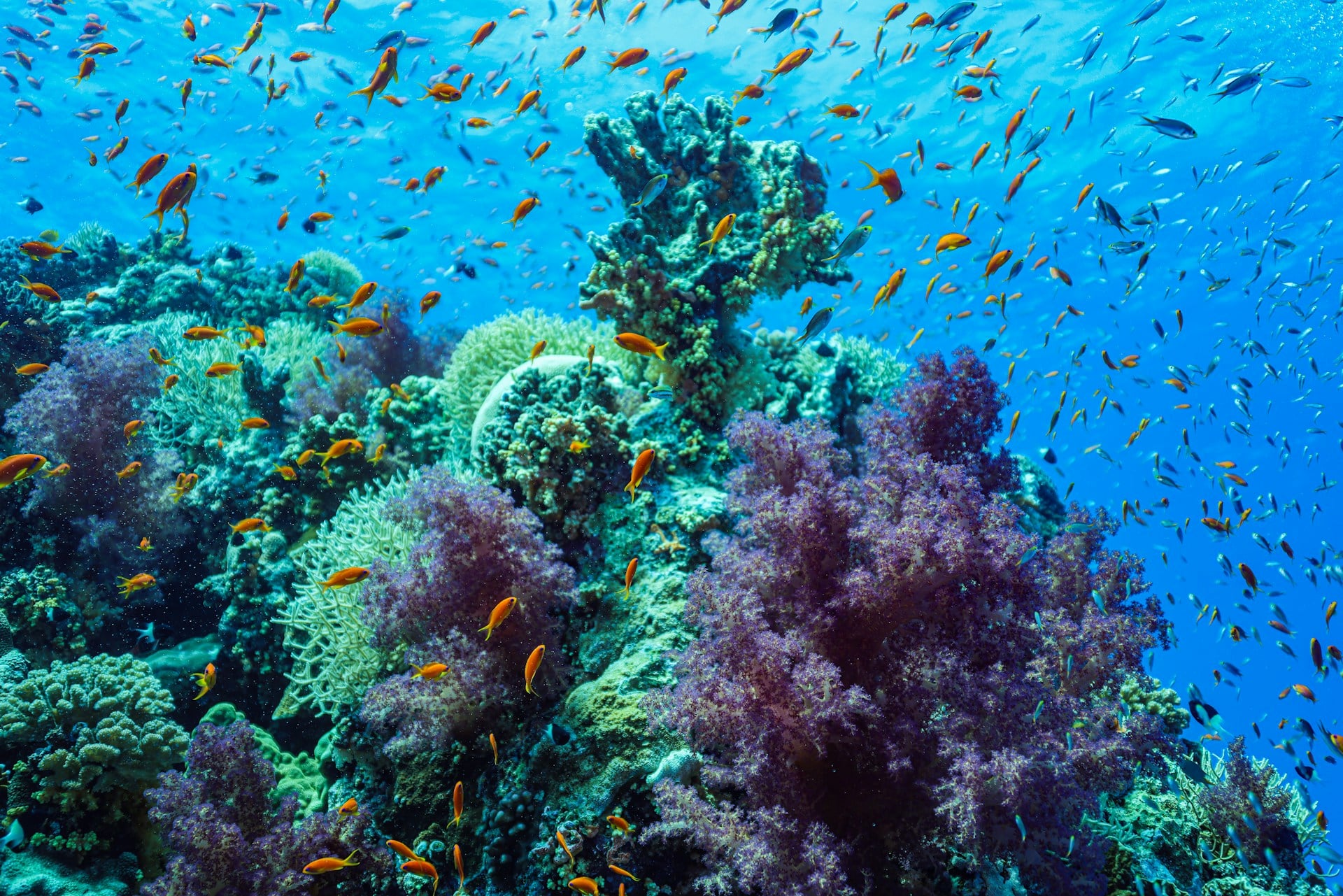

New research identifies coastal regions at heightened risk of non-native marine species, including the eastern United States, Gulf of Mexico, coastlines bordering the North Sea, southeastern China and northern Australia.
Ekaterina Zlotnikova / Unsplash
More than two-thirds of newly flooded coastlines worldwide could become suitable habitat for 122 non-native marine species — including Chinese mitten crabs, Pacific oysters and Asian tiger shrimp — by the middle and end of this century. The research, published in Nature Ecology & Evolution, identifies coastal regions at heightened risk, including the eastern United States, Gulf of Mexico, coastlines bordering the North Sea, southeastern China and northern Australia.
Biological invasions are a major cause of biodiversity loss and ecosystem change. Although previous studies have examined how climate change may alter species distributions, the potential for non-native marine species to spread into coastal land newly flooded by rising seas has not been assessed globally. Estuaries may be especially vulnerable because they connect land and sea, and are centres of human activity.
Qiang Lin, Xuan Liu and colleagues modelled the future distributions of 122 established non-native marine animal species, including Atlantic blue crabs, European green crabs and Northern Pacific sea stars, under future climate change scenarios that project continued sea-level rise. Under a moderate emissions scenario (SSP2–4.5), global median sea level is projected to rise by 20 cm by 2050 and 56 cm by 2100.
The authors project that between 290,000 and 470,000 square kilometres of newly inundated coastal land could become suitable habitat for these species. This equates to an area roughly equivalent to the size of Italy at the lower end and Sweden at the upper end of the estimate, particularly in mid-latitude estuaries. Across all scenarios, invasive species were projected to be able to colonise more than two-thirds of inundated coastal land in regions where they are already established. Marine invaders were projected to spread most extensively in areas close to estuaries, where newly flooded land is likely to provide suitable habitat.
The findings reveal a previously overlooked pathway for biological invasions and highlight the need to incorporate sea-level rise into invasion-risk assessments. According to the authors, early monitoring and management strategies may help to limit effects on biodiversity, fisheries productivity, and other ecosystem services in coastal regions. However, they caution that uncertainties remain and that newly inundated habitats may not always support rapid colonisation.
Article details: Global sea-level rise will create a new biological invasion front
DOI: 10.1038/s41559-026-03181-4
Corresponding Author:
Qiang Lin
Chinese Academy of Sciences, Guangzhou, China
Email: [email protected]
Xuan Liu
Beijing Normal University, Beijing, China
Email: [email protected]
Press contacts:
From Japan
Ayako Miyazaki, Springer Nature, Tokyo
Email: [email protected]
From China
Xi Chen, Springer Nature, Shanghai
Email: [email protected]
From United Kingdom
Isobel Lisowski, Springer Nature, London
Email: [email protected]
From United States
Kevin Hurler, Springer Nature, New York
Email: [email protected]
Advertisement