

Advanced Functional Materials
About Advanced Functional Materials
Advanced Functional Materials, part of the prestigious Advanced portfolio and a top-tier materials science journal, publishes outstanding research related to improving chemical and physical properties of materials.
News
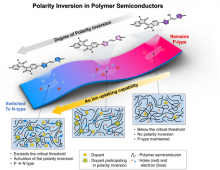
24 Mar 2026
Sungkyunkwan University
A research team led by Prof. Boseok Kang at Sungkyunkwan University has uncovered the origin of polarity inversion—a long-standing phenomenon in polymer semiconductors that occurs only in certain materials—attracting significant attention.
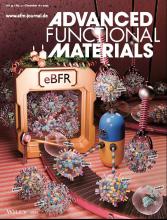
16 Jan 2026
National Taiwan University
Researchers at National Taiwan University have developed a modular platform to reprogram tumor-derived extracellular vesicles (EVs), transforming them from oncogenic messengers into safe, customizable drug delivery vehicles through precise molecular editing.
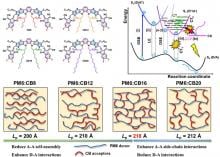
08 Jan 2026
National Taiwan University
A joint research team from National Taiwan University, National Yang Ming Chiao Tung University, and National Tsing Hua University has discovered a precise molecular engineering strategy. By adjusting the side chains of organic materials, they have achieved a power conversion efficiency of 18.13 percent.

19 Nov 2025
Tohoku University
Producing this critical item consumes vast amounts of electricity, with current electrodes relying on noble metals that are costly and limited. However, a research group has used “volcano” modeling to identify new catalyst candidates that do not require scarce metals.
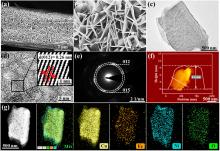
26 Sep 2025
Tohoku University
Producing ammonia – a valuable chemical compound used in many fields – takes enormous amounts of energy. Researchers at Tohoku University have found a more efficient option that converts harmful pollutants in water to ammonia.
21 Aug 2025
National Taiwan University
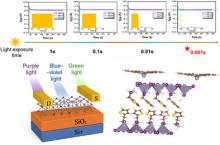
This study demonstrates that the addition of porphyrin-like additives (H₂Pc and SnPc) to 2D tin-based perovskite transistors significantly enhances charge transport and suppresses Sn²⁺ oxidation, achieving a high hole mobility of 4.40 cm² V⁻¹ s⁻¹. Moreover, the devices exhibit fast (0.001 s) and stable nonvolatile photomemory behavior under multi-wavelength optical stimuli, paving the way for neuromorphic computing applications.
20 Aug 2025
National Taiwan University
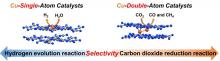
Researchers report a Cu-based catalyst on graphitic carbon nitride with tunable atomic configurations, revealing that intercalated Cu dual-atom selectively drives CO2 reduction to methane with 88% efficiency while single-atom and nanoparticle catalysts favor hydrogen evolution.

06 Aug 2025
Tohoku University
A research team led by Distinguished Professor Hao Li at WPI-AIMR, Tohoku University has reported new findings on copper/cobalt-based catalysts that improve the efficiency of electrochemical nitrate reduction.

04 Jul 2025
Tohoku University
Machine learning potential can create accurate, large-scale models of catalytic activity for a reaction that turns carbon dioxide into a sustainable energy source.

19 Jun 2025
National Taiwan University
Research groups from National Taiwan University (NTU), and City University of Hong Kong (CityUHK) developed a new class of small organic molecules for efficient cancer photothermal therapy.

19 May 2025
Daegu Gyeongbuk Institute of Science and Technology (DGIST)
- Dr. Lim Sang-kyu Kim's team has developed 3D-structured smart fiber, enhancing performance and facilitating real-time Bluetooth transmission without external power
- Research results published in Advanced Functional Materials

02 May 2025
Daegu Gyeongbuk Institute of Science and Technology (DGIST)
- DGIST Professor Chun-Yeol You’s research team has successfully induced ferromagnetism in pure vanadium oxide.
- The team has demonstrated the potential to control magnetic properties by simply tuning oxidation states without complex processing.

28 Apr 2025
Kanazawa University
The power conversion efficiency of all-organic solar cells was doubled through the development of novel organic electrodes that can be fabricated using a moderate process.

11 Mar 2025
Tohoku University
By incorporating gadolinium into a catalyst, its efficiency in a reaction that produces hydrogen fuel increases. This could be the boost we need to lower greenhouse gas emissions.

19 Feb 2025
Tohoku University
In a breakthrough for hydrogen technology, researchers have introduced an innovative electronic fine-tuning approach that enhances the interaction between zinc and ruthenium.

06 Jan 2025
Daegu Gyeongbuk Institute of Science and Technology (DGIST)
A new compact magnetic system enables precise cell manipulation, providing a portable and cost-effective solution for diagnostics and lab-on-chip technologies.

16 Aug 2024
Singapore University of Technology and Design
SUTD researchers developed a new method of producing metallic structures at room temperature and pressure using the same process that insects and lobsters use to create their shells, unlocking a new type of energy-efficient metalworking.

02 Aug 2024
Daegu Gyeongbuk Institute of Science and Technology (DGIST)
- DGIST-Sungkyunkwan University research team successfully develops a next-generation bioelectronic suture that can monitor inflammation around wounds in real time
- Maintains the functionality of traditional surgical sutures while monitoring inflammation... Expected to contribute to advances in wound care and related medical fields

25 Jul 2024
Daegu Gyeongbuk Institute of Science and Technology (DGIST)
- DGIST Prof. Lee Hongkyung, LG ENERGY SOLUTION, and Yonsei Univ. Prof. Lee Yong-min collaboratively develop a protective film for lithium metal cathodes to improve the lifespan of Li-S batteries
- Unlike conventional methods, the film prevents the initial protective layer from peeling off, which is expected to lengthen the operation time of Li-S batteries

12 Jun 2024
Singapore University of Technology and Design
Silicone-based elastomeric 3D microchannel networks were created using direct ink writing 3D printing with simultaneous incorporation of electronic components into the microchannel. By injecting liquid metal into the coil-shaped multilayered microchannel, flexible and stretchable microfluidic antenna coils with a high Q factor were developed.
15 Dec 2023
Singapore University of Technology and Design
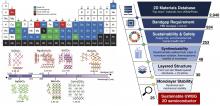
Riding the momentum of the environment-aware agenda, SUTD researchers were part of an international collaboration that developed a sustainable approach to discover and identify materials for next-generation electronics.
08 Dec 2023
Daegu Gyeongbuk Institute of Science and Technology (DGIST)
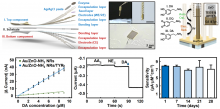
- A research team led by Professor Jang Kyung-in at DGIST developed a brain-implantable dopamine measurement sensor for applying a stable structure based on a three-electrode system.
- The developed sensor facilitates a real-time dopamine concentration analysis by using only one flexible probe, increasing expectations for its application for developing customized probes for patients with degenerative brain diseases.

05 Jul 2023
The University of Osaka
A new method for connecting neurons in neuromorphic wetware has been developed by researchers from Osaka University and Hokkaido University. The wetware comprises conductive polymer wires grown in a three-dimensional configuration, done by applying square-wave voltage to electrodes submerged in a precursor solution. The voltage can modify wire conductance, allowing the network to be trained. This fabricated network is able to perform unsupervised Hebbian learning and spike-based learning.
02 Jun 2023
Tohoku University
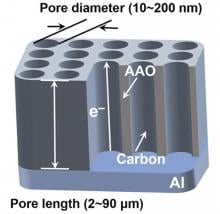
Researchers at Tohoku University and Tsinghua University have introduced a next-generation model membrane electrode that promises to revolutionize fundamental electrochemical research.
21 Feb 2023
Hokkaido University
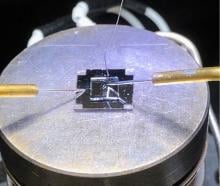
An effective, stable solid-state electrochemical transistor has been developed, heralding a new era in thermal management technology.
14 Dec 2022
Daegu Gyeongbuk Institute of Science and Technology (DGIST)
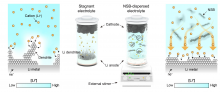
- DGIST Professor Lee Hong-Kyung's joint research team develops convection-induced new concept electrolyte through magnetic nanoparticles, dramatically improving the lifespan of next-generation lithium metal batteries
- Recognized for its excellence, selected as the cover study in the prestigious international journal ‘Advanced Functional Materials’
27 Sep 2022
Daegu Gyeongbuk Institute of Science and Technology (DGIST)
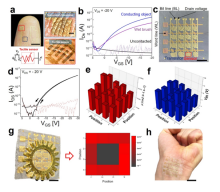
- A research team led by Professor Lee Sungwon from DGIST succeeded in developing the world’s first mesh (nanomesh) structured electronic skin device (organic field-effect transistor)
- An electronic skin device comprising only a mesh (nanomesh) structure that can measure and process bio-signals for a prolonged period indicates a big step toward integrated systems for electronic skin devices.

06 Jul 2022
The University of Osaka
Osaka University researchers described a novel effect in which the voltage generated by photovoltaic devices can change based on the color of incidence light. They show how this feature is due to random energy states that exist inside the antimony sulfiodide devices. This work may lead to more robust renewable energy generated by solar cells.
28 Oct 2021
Osaka Prefecture University
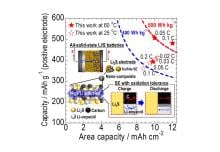
Researchers succeed in developing a lithium sulfide cathode containing a solid electrolyte with high decomposition resistance, enabling the realization of all-solid-state lithium-sulfur batteries that exceed the energy density of lithium-ion batteries

02 Aug 2021
Daegu Gyeongbuk Institute of Science and Technology (DGIST)
The Research Center for Thin Film Solar Cell, DGIST succeeded achieving the world’s highest PCE of 12.2% for flexible CZTS thin film solar cells.