

Advanced Energy Materials
About Advanced Energy Materials
Advanced Energy Materials, part of the prestigious Advanced portfolio, is your prime applied energy journal for research providing solutions to today’s global energy challenges.
News
07 Oct 2026
Daegu Gyeongbuk Institute of Science and Technology (DGIST)
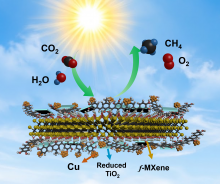
- Polymer protective layer applied to moisture-sensitive MXene surface improves stability
- Combining MXene with copper nanoparticles promotes electron transfer and methane formation
- Published in Advanced Energy Materials (IF: 25.5), an international journal in the fields of energy and materials
10 Feb 2026
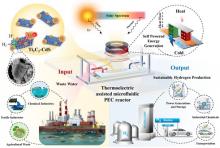
National Taiwan University
Researchers developed a compact device that converts sunlight and waste heat into clean hydrogen fuel while simultaneously purifying water. This innovative system improves energy efficiency and offers a promising solution for sustainable energy and environmental remediation.
21 Jul 2025
Daegu Gyeongbuk Institute of Science and Technology (DGIST)
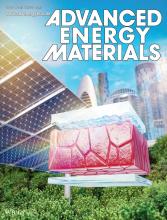
- DGIST’s Daehwan Kim and Shijoon Sung implemented high-efficiency bifacial solar cells on transparent electrodes at low processing temperatures
- Expected to contribute to improved performance in both bifacial and tandem solar cells

25 Apr 2025
Tohoku University
Researchers found a strategy to create catalysts that make the production of hydrogen for clean fuel more efficient and affordable.

09 Apr 2025
Daegu Gyeongbuk Institute of Science and Technology (DGIST)
- Professor Yu Jong-sung’s team at DGIST, in collaboration with Pusan National University, develops a technology to enhance the stability of ultra-thin lithium metal anodes

24 Mar 2025
Daegu Gyeongbuk Institute of Science and Technology (DGIST)
- Implemented powerful solar cells without lead and cadmium! Improved power conversion efficiency by 8.26%.
- Increased solar cell efficiency by greatly increasing charge carrier diffusion length! Birth of an eco-friendly innovative technology.

11 Sep 2024
National Taiwan University
Ceramic-rich composite electrolytes: An overview of the paradigm shift from high-performance lithium metal batteries to solid-state electrolytes

08 Aug 2024
Hokkaido University
A catalyst that significantly enhances ammonia conversion could improve wastewater treatment, green chemical and hydrogen production.
08 Dec 2023
Daegu Gyeongbuk Institute of Science and Technology (DGIST)
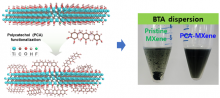
- Professor Jong-min Choi’s research team at DGIST develops a stabilization technology that simultaneously increases efficiency and stability by applying MXene to quantum dot photovoltaic cells
- The introduction of MXene is expected to improve the performance of various electronic devices
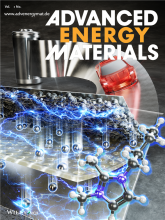
08 Dec 2023
Daegu Gyeongbuk Institute of Science and Technology (DGIST)
- Successfully developed polymer-based solid-state electrolytes with high ionic conductivity and flame-retardant properties
- Research results published in Advanced Energy Materials
03 Nov 2023
Daegu Gyeongbuk Institute of Science and Technology (DGIST)
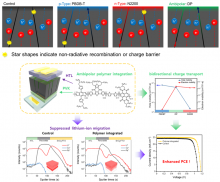
- A research team led by Professor Jong-min Choi at the Department of Energy Science and Engineering, DGIST, collaborated with a research team of Professor Bum-joon Kim’s research team at the Department of Chemical and Biomolecular Engineering, KAIST, to develop bipolar polymers, which can improve the efficiency and stability of perovskite solar cells
- Developed a process that can repair defects and maximize multifunctionality with the double introduction of bipolar polymers
15 Sep 2023
Daegu Gyeongbuk Institute of Science and Technology (DGIST)
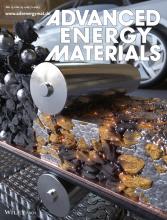
- DGIST-ETRI joint research team developed high-energy-density, high-stability all-solid-state battery electrode by applying the prelithiation technology to graphite-silicon electrodes
- Selected as the back cover study by “Advanced Energy Materials,” the best international academic journal in energy
04 Jul 2023
Daegu Gyeongbuk Institute of Science and Technology (DGIST)
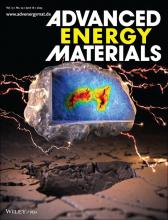
- DGIST-Chungnam National University Team Creates Real-Time Digital Twin Multiphysics Model for Predicting Electrochemical and Mechanical Properties of Micro-Particles for the First Time
- Cover Paper Recognition: Chosen by Prominent Journal Advanced Energy Materials

13 Jul 2021
Tohoku University
As rechargeable batteries get more powerful, the chance of batteries overheating –thermal runaway - increases. Seeking a way to make batteries safer, researchers have investigated one of thermal runaway’s main triggers: oxygen release.
01 Jun 2021
Daegu Gyeongbuk Institute of Science and Technology (DGIST)
Researchers from Korea utilized LiNO3 pre-planted lithium particles to design a stable, long-lasting lithium metal battery
18 Mar 2021
The Chinese University of Hong Kong (CUHK)
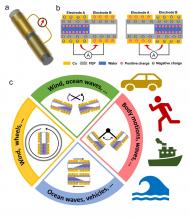
A research team from the Faculty of Engineering of The Chinese University of Hong Kong (CUHK) has recently developed a water-tube-based triboelectric nanogenerator that can efficiently convert various irregular and low-frequency mechanical energies, including ocean wave energy, into electricity, providing a new avenue for the development of “blue energy”.
20 Nov 2020
Ulsan National Institute of Science and Technology (UNIST)
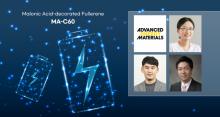
A research team, affiliated with South Korea's Ulsan National Institute of Science and Technology (UNIST) has developed an electrolyte additive (MA-C60) to reduce the problematic behaviors induced by water contamination and the ROS generated from Li‐rich cathodes.
20 Nov 2020
Ulsan National Institute of Science and Technology (UNIST)
A recent study, affiliated with South Korea's Ulsan National Institute of Science and Technology (UNIST) has unveiled a novel technology that can improve the efficiency of quantum dot solar cells to 11.53% has been unveiled.

19 Nov 2020
Ulsan National Institute of Science and Technology (UNIST)
A recent study, affiliated with South Korea's Ulsan National Institute of Science and Technology (UNIST) has presented new electrolyte additives for high-performance LIBs that would enable an electric vehicle (EV) to travel longer distances on a single charge.
25 Jun 2020
Daegu Gyeongbuk Institute of Science and Technology (DGIST)
Most common thin-film solar panels consist of expensive rare-earth elements like indium and gallium, or highly toxic metals like cadmium. Environment-friendly solar panels consisting of the abundant materials Cu, Zn, Sn offer attractive alternatives, but are hindered by their low practical efficiency compared to their theoretical potential. Researchers from DGIST have now discovered a way to overcome these hurdles.
03 Jun 2020
Daegu Gyeongbuk Institute of Science and Technology (DGIST)
Scientists from the Daegu Gyeongbuk Institute of Science and Technology, Korea, develop a novel silica-based cathode for lithium–sulfur batteries, thereby enabling the realization of batteries that can last for over 2000 charge/discharge cycles. The possibility of successfully using the unconventional silica could spark a paradigm shift in rechargeable battery designs.
09 Mar 2020
Ulsan National Institute of Science and Technology (UNIST)
A recent study, affiliated with South Korea's Ulsan National Institute of Science and Technology (UNIST) has developed high‐efficiency, solution‐processed, hybrid series, tandem photovoltaic devices featuring CQDs and organic bulk heterojunction (BHJ) photoactive materials.

20 Feb 2020
Ulsan National Institute of Science and Technology (UNIST)
A recent study, affiliated with South Korea's Ulsan National Institute of Science and Technology (UNIST) has demonstrated bipolar all‐solid‐state Li–S batteries (ASSLSBs) that exhibit exceptional safety, flexibility, and aesthetics, for the first time.
28 Jan 2019
Ulsan National Institute of Science and Technology (UNIST)
Researchers have taken a major step toward the development of a new generation of solar cells, using lead-free perovskites.

09 Oct 2018
King Abdullah University of Science and Technology (KAUST)
Tantalum nitride as thin layers improve the extraction of electrons from silicon solar cells.

30 Jul 2018
King Abdullah University of Science and Technology (KAUST)
Laser-scribed disordered graphene significantly improves sodium-ion battery capacity.
13 Feb 2018
Daegu Gyeongbuk Institute of Science and Technology (DGIST)
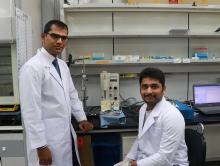
A team of researchers in Korea has successfully developed an alternative and cheap anode material for excellent and ultra-stable alkaline water electrolysis.

30 Jan 2018
King Abdullah University of Science and Technology (KAUST)
Ultrathin, rigid silicon segments that are wired through interdigitated metal contacts produce ultraflexible high-performance solar cells.
26 Jan 2018
Ulsan National Institute of Science and Technology (UNIST)
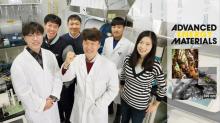
A team of researchers, affiliated with South Korea's Ulsan National Institute of Science and Technology (UNIST), has succeeded in developing world's first stretchable aqueous Li-ion batteries that may power the next generation of wearable devices.

23 Nov 2016
King Abdullah University of Science and Technology (KAUST)
Microscale energy storage units for wearable and miniaturized electronic devices are improved using porous materials.