
Peer Reviewed
News
08 May 2017
Nagoya University
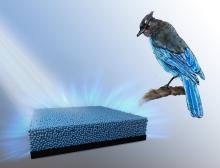
A Nagoya University-led research team mimics the rich color of bird plumage and demonstrates new ways to control how light interacts with materials.

05 May 2017
The Hong Kong Polytechnic University (PolyU)
World-renowned innovators from higher education, government and business sectors will gather in an international summit in Hong Kong this summer to explore how to enhance universities’ impacts through innovative research and teaching for the benefit of the society and mankind.
04 May 2017
University of Malaya
Members of the Association of Southeast Asian Nations (ASEAN) welcome initiatives The ‘One Belt, One Road (OBOR)’ and ASEAN Infrastructure Investment Bank (AIIB). However, there are some reservations and concerns to these initiatives.
04 May 2017
Ulsan National Institute of Science and Technology (UNIST)
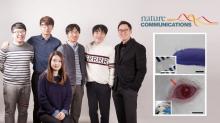
A research team, led by South Korea's Ulsan National Institute of Science and Technology (UNIST) has proposed the possibility of in situ human health monitoring simply by wearing a contact lens with built-in wireless smart sensors.
04 May 2017
Ulsan National Institute of Science and Technology (UNIST)
A research team, led by South Korea's Ulsan National Institute of Science and Technology (UNIST) has engineered a self-sustaining sensor platform to continuously monitor the surrounding environment without having an external power source.

02 May 2017
Korea Advanced Institute of Science and Technology (KAIST)
Researchers in Korea have developed a novel diagnostic strip for gout patients using a single teardrop.
02 May 2017
University of Malaya
The University of Malaya worked with the Malacca Portuguese-Eurasian Association to produce a book to learn Malacca Portuguese, an endangered language in Malaysia. This is part of the ongoing efforts to revitalise this endangered language.
02 May 2017
Hokkaido University
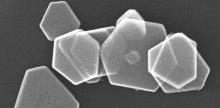
A new method combining tumor suppressor protein p53 and biomineralization peptide BMPep successfully created hexagonal silver nanoplates, suggesting an efficient strategy for controlling the nanostructure of inorganic materials.
01 May 2017
The Hong Kong Polytechnic University (PolyU)
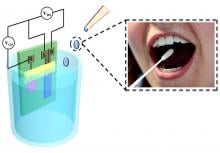
A new biological sensor can detect glucose levels in saliva more accurately and cost-efficiently than the conventional blood test.
01 May 2017
King Abdullah University of Science and Technology (KAUST)
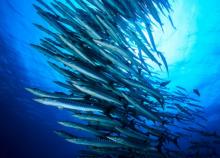
Careful marine management and stricter fishing laws could enable Saudi Arabia’s coral reefs to thrive.
28 Apr 2017
Institute for Integrated Cell-Material Sciences (iCeMS) at Kyoto University
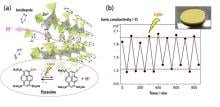
Adding photoacid to a special kind of melted polymeric crystal allows better and switchable proton conductivity. This could lead to new materials for memory, supercapacitor and transistor technologies.
27 Apr 2017
The Hong Kong Polytechnic University (PolyU)
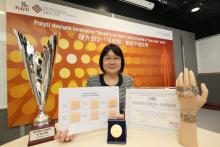
An innovative "Smart Scar-Care" pad which serves the dual functions of reinforcing pressure and occlusion has been designed by The Hong Kong Polytechnic University (PolyU) to treat hypertrophic scars from burns, surgeries and trauma.
27 Apr 2017
Asia Research News
Marked on 24-30 April 2017, World Immunisation Week raises awareness about the importance of vaccines in protecting people against disease and the role of immunization in achieving the 2030 Sustainable Development Goals.
27 Apr 2017
Tohoku University
Affordable gas sensor setup developed by Tohoku University team monitors trace levels of health-indicating chemicals, paving the way for future non-invasive studies.
27 Apr 2017
Tohoku University
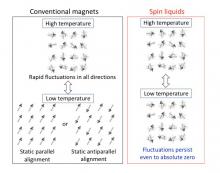
Fuel such as petrol is made up of hydrocarbons - a family of molecules consisting entirely of carbon and hydrogen. Pigment and dye, coal and tar are made up of hydrocarbons too.
27 Apr 2017
Nagoya University
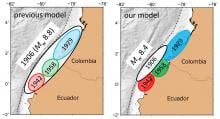
A Nagoya University-led team reveals the mechanisms behind different earthquakes at a plate boundary on the west coast of South America, shedding light on historical seismic events and potentially aiding prediction of the future risk from these natural disasters.
25 Apr 2017
Daegu Gyeongbuk Institute of Science and Technology (DGIST)
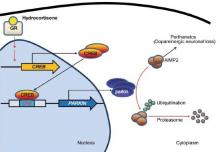
A research team in Korea has identified the mechanism of dopaminergic neuronal death inhibition using stress hormone cortisol. The study suggests new direction for studies on degenerative brain disease by changing the perception of stress.
25 Apr 2017
King Abdullah University of Science and Technology (KAUST)
A new tool uses genetic and clinical information to find the root cause of unexplained illnesses.
25 Apr 2017
Ulsan National Institute of Science and Technology (UNIST)
A new study, affiliated with South Korea's Ulsan National Institute of Science and Technology (UNIST), developed a new technique to understand the correct architectures of IMM proteins, using special chemical tools.

25 Apr 2017
IOP Publishing
Template modification could speed up the fabrication of sensing substrates and other novel structures.
24 Apr 2017
Institute for Integrated Cell-Material Sciences (iCeMS) at Kyoto University
Scientists have developed new fluorescent probes that prove the existence of cell membrane structures called ‘lipid rafts’, allowing researchers to study how toxins and viruses invade cells.
24 Apr 2017
Hokkaido University
Cells in the brain’s master circadian clock synchronize voltage rhythms despite asynchronous calcium rhythms, which might explain how a tissue-wide rhythm is maintained.
24 Apr 2017
Ulsan National Institute of Science and Technology (UNIST)
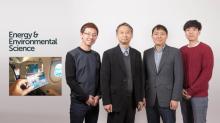
A new study, affiliated with South Korea's Ulsan National Institute of Science and Technology (UNIST), introduced a new battery charging technology that uses light to charge batteries.
21 Apr 2017
The Hong Kong Polytechnic University (PolyU)
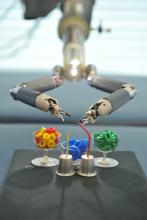
Researchers in Hong Kong have developed a novel surgical robotic system that provides tactile feedback and is capable of single-incision and natural orifice (incision-free) robotic surgery. The system minimizes surgical trauma and is safer than currently available robotic systems.
21 Apr 2017
University of Malaya
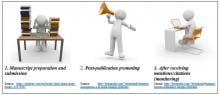
Publication is the beginning of research impact and visibility, thus dissemination of research publications have to be proactive. Researchers can promote their research work in three stages: (1) manuscript preparation and submission; (2) post-publication promoting; and (3) after receiving mentions/citations (monitoring).
21 Apr 2017
Daegu Gyeongbuk Institute of Science and Technology (DGIST)
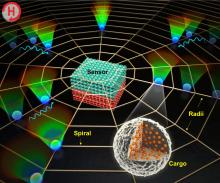
A research team in Korea develops technology which is 20 times faster than the existing biosensors using micromagnetic pattern of spider web. The technology can be used for early diagnosis and recurrence diagnosis of diseases such as cancer.
21 Apr 2017
University of Malaya
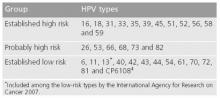
New developments in cervical cancer screening and vaccination against human papillomavirus (HPV) infection, a causal agent for cervical cancer provide new opportunities for the prevention of this disease. HPV testing as oppose to the conventional pap smear is now recommended while 3 HPV vaccines are now approved to combat HPV associated diseases.
21 Apr 2017
Institute of Transformative Bio-Molecules (WPI-ITbM), Nagoya University
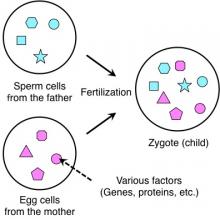
Discovery of parental factors that lead to asymmetric division of the zygote.

20 Apr 2017
Tohoku University
Mass production technology for silicon based ultraviolet (UV) light sensors, suitable for smartphones and wearable devices in the Internet of Things (IoT) era, has been jointly developed by a research team at Tohoku University and SII Semiconductor Corporation, a semiconductor manufacturer at Seiko Instruments Group.

20 Apr 2017
The Agency for Science, Technology and Research (A*STAR)
A new technique for investigating the action of molybdate on carbon steel could lead to safer treatments for protecting metal alloys.
Events
Sorry, no events coming up for this topic.
Researchers
Sorry, no researchers coming up for this topic.
Giants in history
Sorry, no researchers coming up for this topic.