
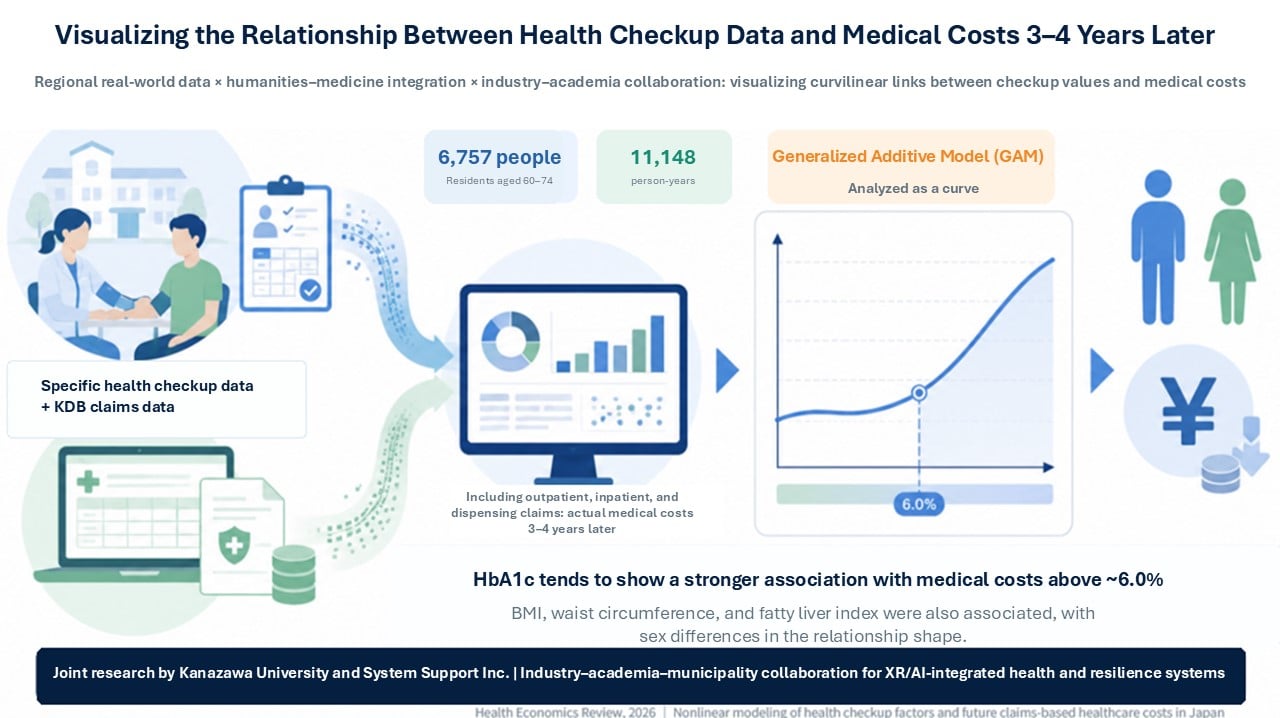
Figure1. Study overview: Visualizing associations between health checkup data and healthcare costs 3–4 years later
Specific Health Checkup data were linked with National Health Insurance Database (KDB) claims data. Using generalized additive models, the study visualized nonlinear and sex-specific associations between routine health checkup measures and healthcare costs 3–4 years later. HbA1c showed a stronger association with future healthcare costs above approximately 6.0%.
As populations age and healthcare expenditures continue to rise worldwide, there is growing interest in understanding how routinely collected health data may help characterized future healthcaaare needs and costs.
A multidisciplinary research team led by Kanazawa University investigated how routinely collected health checkup measurements are associated with healthcare costs several years later. The researchers linked Specific Health Checkup data with claims data from Japan’s National Health Insurance Database (KDB) and analyzed 6,757 adults aged 60–74 years, corresponding to 11,148 person-years of observation.
Using generalized additive models (GAMs), which can capture curved rather than strictly linear relationships, the team examined associations between health indicators measured at checkups and outpatient, inpatient, and prescription-drug costs incurred 3–4 years later.
Age and glycated hemoglobin (HbA1c) showed consistent associations with future healthcare costs in both men and women. In particular, HbA1c showed a J-shaped pattern, with the association becoming stronger above approximately 6.0%. Body mass index (BMI), waist circumference, and fatty liver index (FLI) were also associated with future healthcare costs, but the patterns differed by sex.
In men, waist circumference and FLI showed relatively prominent associations with future healthcare costs. In women, stronger associations were observed at higher levels of BMI and waist circumference. These findings indicate that the relationship between health checkup values and later healthcare expenditure cannot always be adequately described by a simple straight line.
A key feature of the study is that it visualizes the ranges of health checkup values in which associations with future healthcare costs become stronger, rather than interpreting each measurement only as “normal” or “abnormal.” These findings characterize population-level associations between health checkup values and future healthcare costs, rather than providing precise predictions of individual healthcare costs.
The researchers plan to integrate additional information, including disease history, prescribed medications, healthcare utilization, and lifestyle factors, to develop more comprehensive approaches to health-risk assessment and preventive planning.
Researcher Quote
“Many health checkup results are just numbers, and this can make it difficult for people to connect them with their own health, especially for lifestyle-related diseases that may progress without noticeable symptoms. Healthcare costs offer a different perspective by expressing future health burden in an economic dimension. By showing how checkup values are associated with later medical spending, we hope to provide another way for people to reflect on their health. Although this study did not directly examine behavior change, such information may eventually help support preventive action and the design of community health programs,” said Shigehiro Karashima, the corresponding author.