
This story is featured in the Asia Research News 2026 magazine. Book space in the next issue now.
Get the news in your inbox
Clean water, nutritious food, and a stable energy supply are essential for the survival of all living things. But in an accelerated climate-changing world, these three vital ingredients are under threat from drought, pollution, conflict, resource shortages, and inequity — and that threat is felt most keenly by people living in low-income settings and nations.
This is why City University of Hong Kong (CityUHK) launched its 10-year, UNESCO-endorsed Fostering Innovation for Resilience and Sustainable Transformation (FIRST) initiative, with the goal to deliver affordable and sustainable technologies to improve standards of living for communities.
Keeping cool

For people in wealthy countries, dealing with hot weather can be as simple as turning on the air conditioning. But that’s not only expensive; it is unsustainable in a world where such technologies still largely run on fossil fuel-generated electricity.
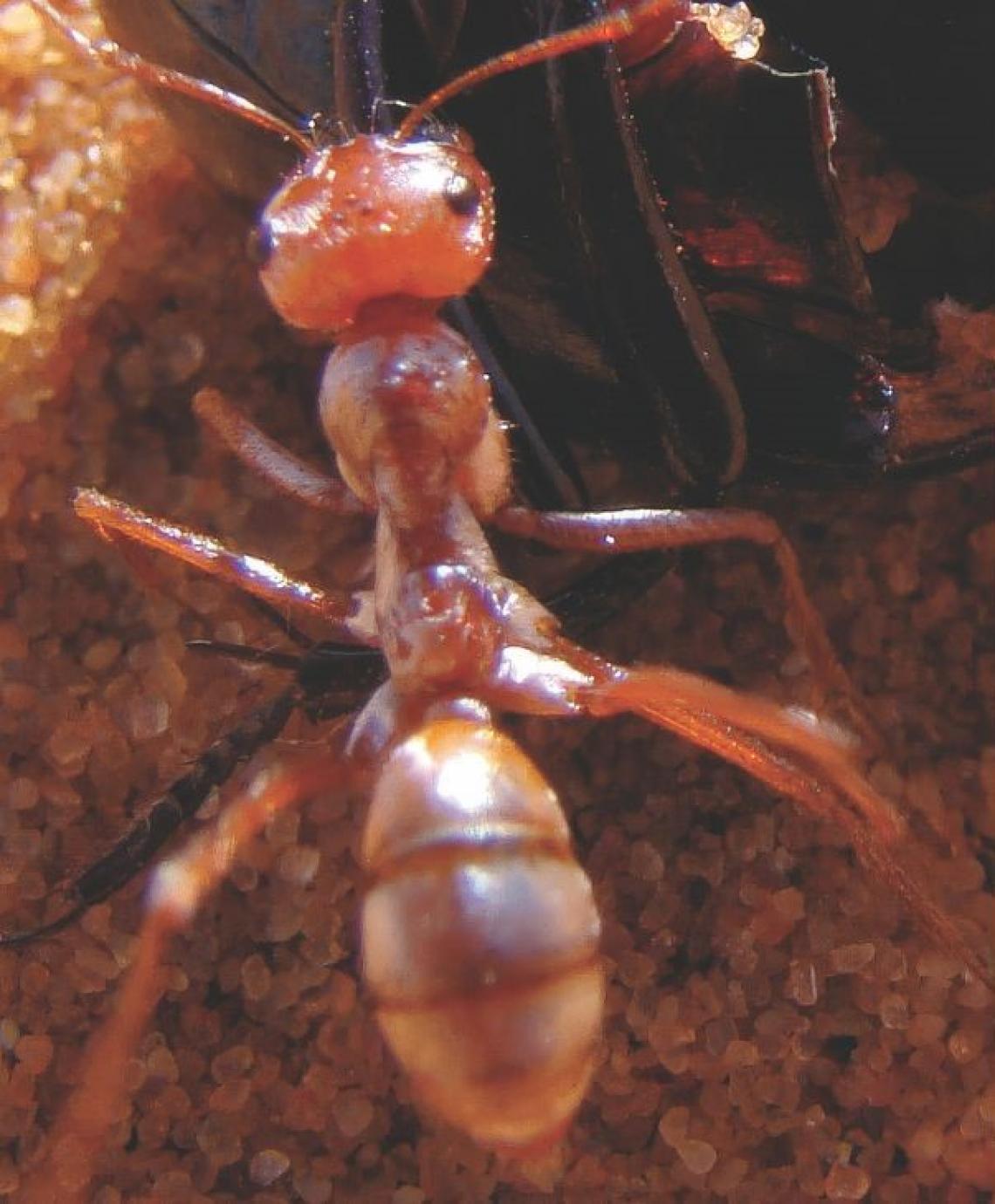
Looking for simple, low-cost, low-energy solutions, researcher Edwin Tso drew inspiration from the Saharan silver ant (Cataglyphis bombycina), whose body is coated with highly reflective hairs that reflect radiation and offload excess heat through thermal radiation. Tso and colleagues have developed a coating for buildings that does the same thing: reflects sunlight to reduce heat absorption and also emits infrared radiation so efficiently that it can reduce surface temperatures by as much as 30°C.
Did you know?
The Saharan silver ant’s body is coated with reflective hairs which enable it to reflect radiation and offload excess heat. It is also the fastest of 12,000 known ant species with speeds over 3.1 kms per hour.
The coating is sustainably made, using local waste materials such as seashells, ceramic debris, rice husks, construction sand, and crushed glass. These materials are cleaned and ground up into nano-sized particles, which are then mixed with a specially formulated binding agent. The resulting coating can then be painted or sprayed onto rooftops and walls.
Read the papers
Science: https://doi.org/10.1126/science.adi4725
Science Advances: https://www.science.org/doi/10.1126/sciadv.adu2895
Nature Sustainability: https://www.nature.com/articles
Further information
Prof Edwin Tso
[email protected]
City University of Hong Kong
Sun power
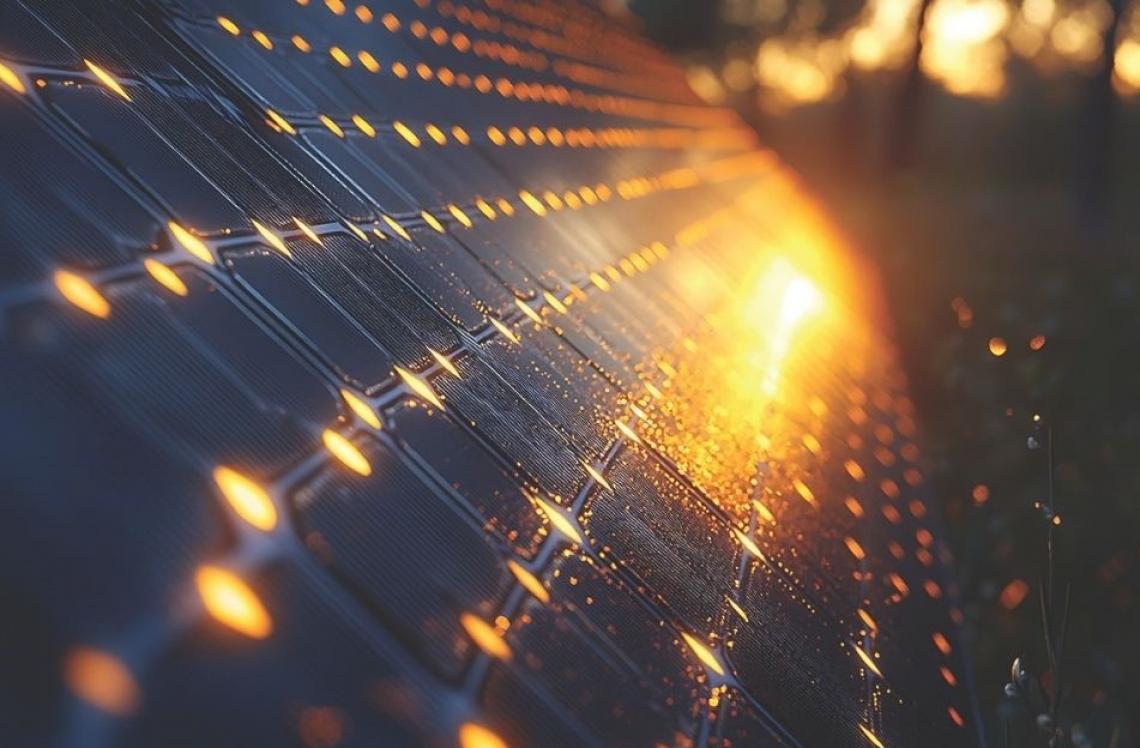
Rooftop solar panels have become a common sight in cities and are playing a pivotal role in decarbonising the electricity supply. But standard silicon-based photovoltaic panels can be heavy, costly, resource-intensive, and require a lot of infrastructure to install and operate.
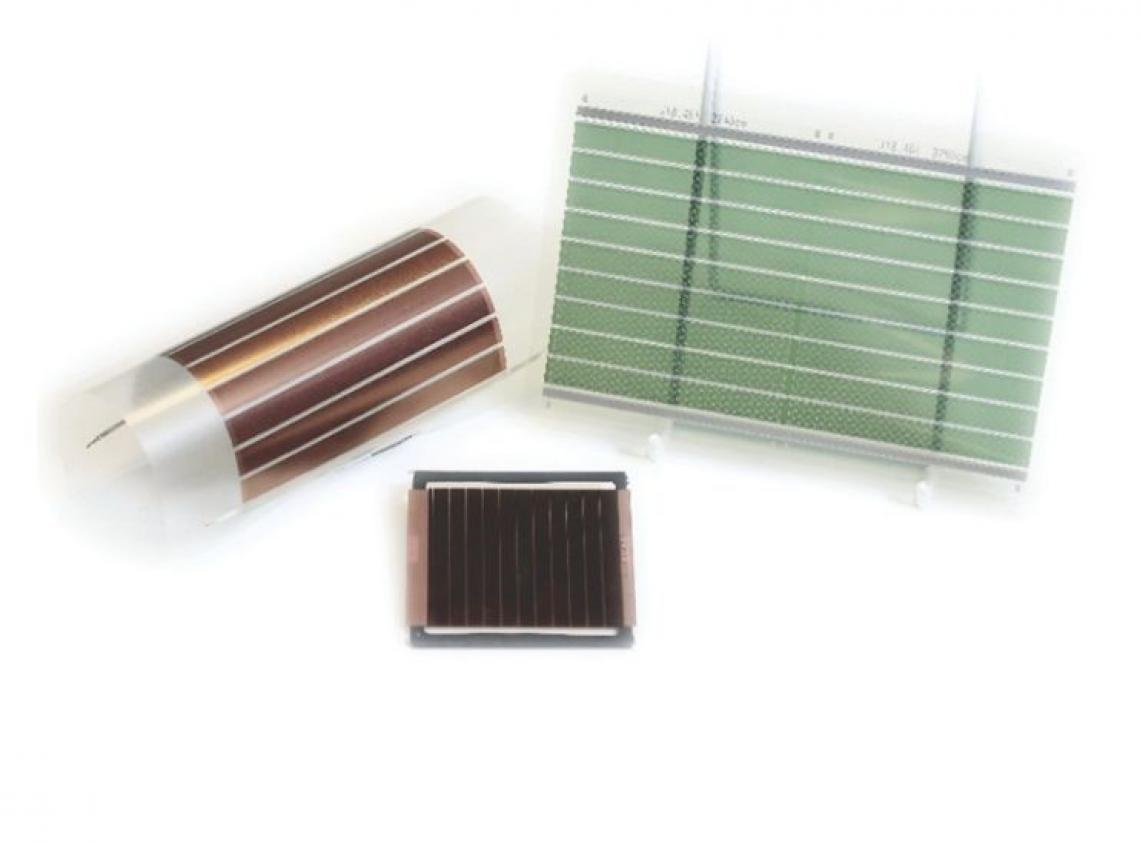
Lightweight perovskite-based solar cells are cheaper, thinner, and more flexible than conventional solar cells.
A research team led by Alex Jen and Angus Yip has developed a much more cost-efficient alternative, which is based on solar photovoltaic technology using easy-to-make metalhalide-based perovskites instead of silicon. These materials are not only relatively cheap but can be thinner and more flexible than conventional solar cells. Perovskite-based solar cells are also becoming much more efficient at converting solar energy into electricity, even in less-than-ideal conditions such as low-light or high-temperature settings.
The ability to print and install these lightweight solar panels enables a stable and clean energy generation, replacing polluting traditional energy sources.
Read the papers
Nature: https://doi.org/10.1038/s41586-025-09509-7
Nature Energy: https://doi.org/10.1038/s41560-024-01451-8
Nature Photonics: https://doi.org/10.1038/s41566-024
Further information
Prof Angus Yip
[email protected]
City University of Hong Kong
Prof Alex Jen
[email protected]
City University of Hong Kong
Waste to energy

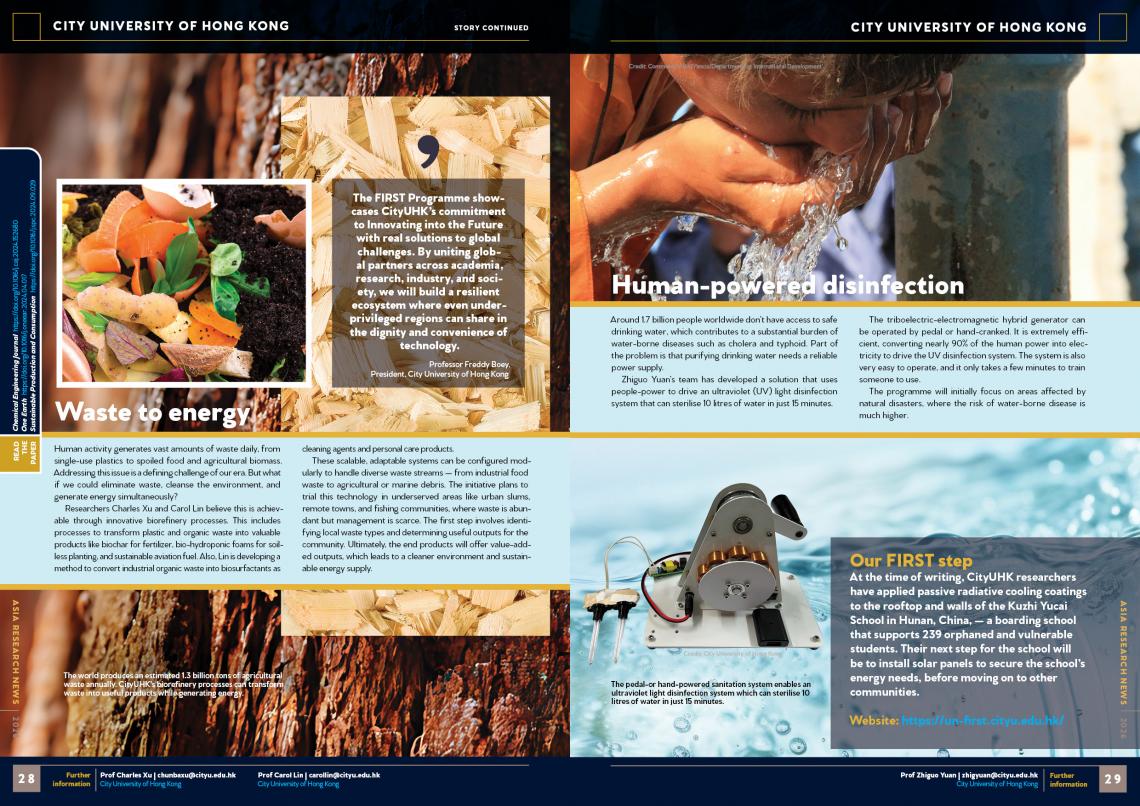
Human activity generates vast amounts of waste daily, from single-use plastics to spoiled food and agricultural biomass. Addressing this issue is a defining challenge of our era. But what if we could eliminate waste, cleanse the environment, and generate energy simultaneously?
Researchers Charles Xu and Carol Lin believe this is achievable through innovative biorefinery processes. This includes processes to transform plastic and organic waste into valuable products like biochar for fertilizer, bio-hydroponic foams for soilless planting, and sustainable aviation fuel. Also, Lin is developing a method to convert industrial organic waste into biosurfactants as cleaning agents and personal care products.

The world produces an estimated 1.3 billion tons of agricultural waste annually. CityUHK's biorefinery processes can transform waste into useful products while generating energy.
These scalable, adaptable systems can be configured modularly to handle diverse waste streams — from industrial food waste to agricultural or marine debris. The initiative plans to trial this technology in underserved areas like urban slums, remote towns, and fishing communities, where waste is abundant but management is scarce.
The first step involves identifying local waste types and determining useful outputs for the community. Ultimately, the end products will offer value-added outputs, which leads to a cleaner environment and sustainable energy supply.
Read the papers
Chemical Engineering Journal: https://doi.org/10.1016/j.cej.2024.152680
One Earth: https://doi.org/10.1016/j.oneear.2024.04.017
Sustainable Production and Consumption: https://doi.org/10.1016/j.spc.2024.09.029
Further information
Prof Charles Xu
[email protected]
City University of Hong Kong
Prof Carol Lin
[email protected]
City University of Hong Kong
Human-powered disinfection
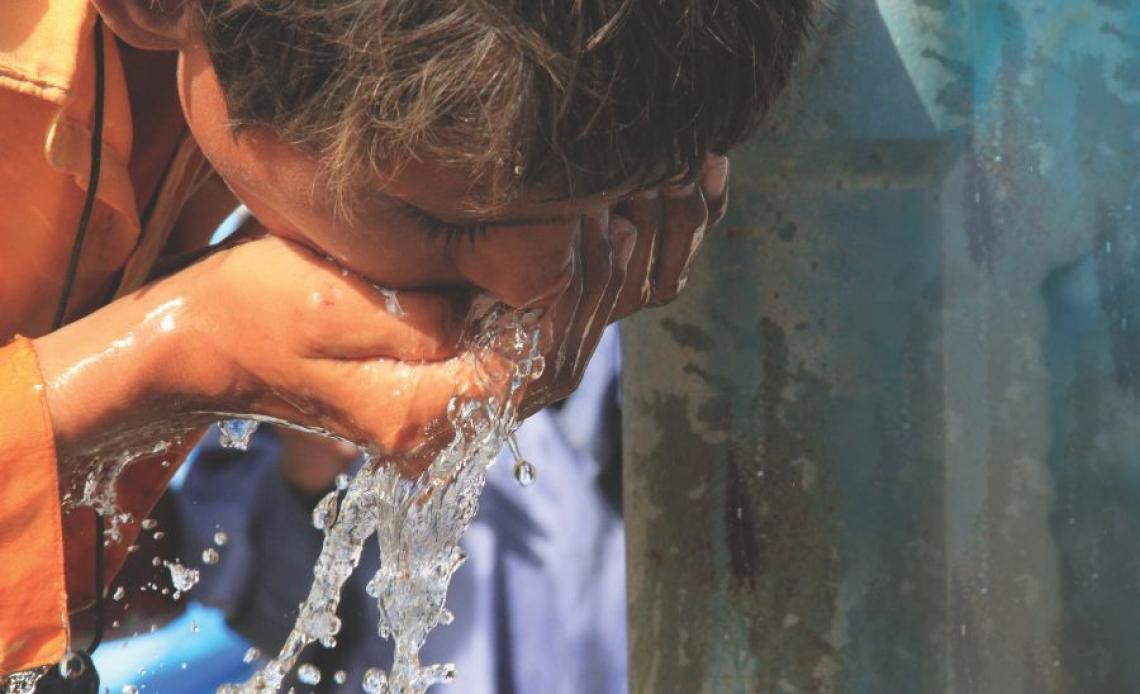
Around 1.7 billion people worldwide don’t have access to safe drinking water, which contributes to a substantial burden of water-borne diseases such as cholera and typhoid. Part of the problem is that purifying drinking water needs a reliable power supply.
Zhiguo Yuan’s team has developed a solution that uses people-power to drive an ultraviolet (UV) light disinfection system that can sterilise 10 litres of water in just 15 minutes.
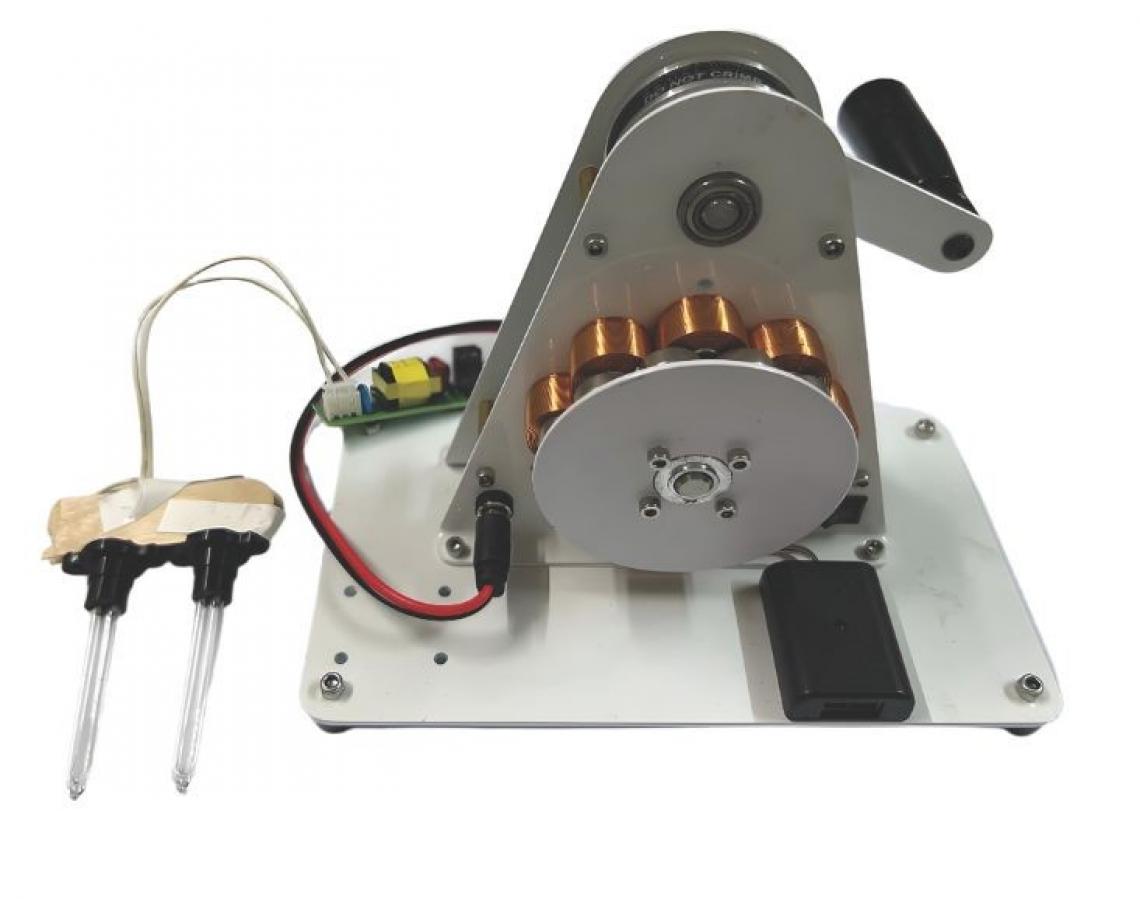
The pedal-or hand-powered sanitation system enables an ultraviolet light disinfection system which can sterilise 10 litres of water in just 15 minutes
The triboelectric-electromagnetic hybrid generator can be operated by pedal or hand-cranked. It is extremely efficient, converting nearly 90% of the human power into electricity to drive the UV disinfection system. The system is also very easy to operate, and it only takes a few minutes to train someone to use.
The programme will initially focus on areas affected by natural disasters, where the risk of water-borne disease is much higher.
Further information
Prof Zhiguo Yuan
[email protected]
City University of Hong Kong
At the time of writing, CityUHK researchers have applied passive radiative cooling coatings to the rooftop and walls of the Kuzhi Yucai School in Hunan, China — a boarding school that supports 239 orphaned and vulnerable students. Their next step for the school will be to install solar panels to secure the school’s energy needs, before moving on to other communities.
Website: https://un-first.cityu.edu.hk/
Further information
City University of Hong Kong
cityu.edu.hk/en
Download this story

Advertisement