
Water
News

09 Oct 2026
Asia Research News
DNA breakdown in real time, How crystals bend without breaking, Mini-brain for Parkinson’s,
Heavy water helps weather forecasts, Exploring fish diversity and Mindfulness and self-stigma. Read it all in this month's Editor's Choice
05 Oct 2026
National Taiwan University
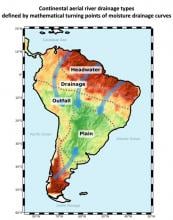
Bringing together expertise in geography, atmospheric sciences and civil engineering, a National Taiwan University team has discovered that invisible “rivers in the sky” form drainage systems much like rivers on land. Their new method identifies the critical upwind areas that sustain rainfall, offering a new perspective on land and water management.
29 Sep 2026
Tohoku University
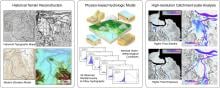
Researchers at Tohoku University ran flood simulations on current-day Marumori Town, Japan, and compared it to data from over one hundred years ago. Their analysis shows how flood risk changes as we install anti-flooding infrastructure, and how this also affects where communities deem it safe to put down roots.
03 Sep 2026
Institute of Industrial Science, The University of Tokyo (UTokyo-IIS)
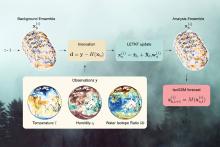
Isotopes of atmospheric water leave fingerprints that can improve weather modelling
26 Aug 2026
The University of Osaka
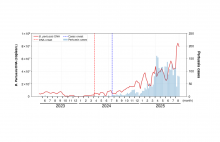
Researchers at the University of Osaka and the Osaka Institute of Public Health found that pertussis-associated DNA in wastewater increased weeks before reported cases, with the main analysis showing a 10-week lead. The findings suggest that wastewater monitoring could complement clinical surveillance by detecting changes in community transmission earlier, although further research is needed before it can be used as a validated forecasting tool.

13 Aug 2026
Asia Research News
Black hole "blast", Bacteria-detecting robot, A crab's tale, Sensors that remember, and Silk in cycling. Plus submission deadline for 2027 magazine. Read all in the latest Editor's Choice.
23 Jul 2026
Lingnan University
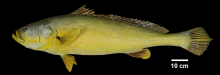
The Chinese bahaba (Bahaba taipingensis), a marine fish species endemic to the Chinese coast and known as the “Panda of the Sea”, is a critically endangered species and one of the few marine fish listed as a first-class protected wild animal in China. Collaborative research led by the Division of Science at Lingnan University has now developed a cost-effective environmental DNA (eDNA) monitoring qPCR approach specifically designed for the Chinese bahaba. Using the new technology, the research has detected traces of the species in western Hong Kong SAR waters, marking the first scientific discovery of the fish in the city in over a decade. The researcher highlights that the technology enables experts to monitor the species non-invasively and to evaluate conservation outcomes without capturing or disturbing rare marine animals, thus providing important scientific evidence to assist in marine conservation planning in China.
03 Jul 2026
Ateneo de Manila University
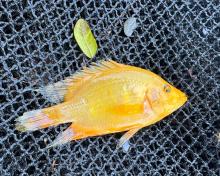
Invasive Flowerhorn cichlids threaten Lake Sampaloc’s native fish, aquaculture, and public health, Ateneo researchers warn.
02 Jul 2026
Hiroshima University
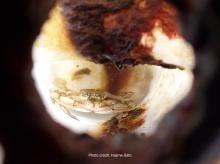
How did a large crab end up trapped inside a plastic bottle with an opening smaller than its body? Hiroshima University researchers investigated this unusual marine mystery, revealing a lesser-known impact of marine plastic pollution on crustaceans.

19 Jun 2026
Institute of Industrial Science, The University of Tokyo (UTokyo-IIS)
Researchers at the Institute of Industrial Science, The University of Tokyo, carry out computer experiments to track how water nanodroplets wet surfaces
09 Jun 2026
Institute of Industrial Science, The University of Tokyo (UTokyo-IIS)
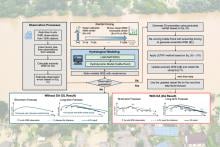
Researchers at the Institute of Industrial Science, The University of Tokyo (UTokyo-IIS) have developed a real-time data assimilation system that substantially improves streamflow and flood forecasting accuracy across Japan.
02 Jun 2026
Ateneo de Manila University
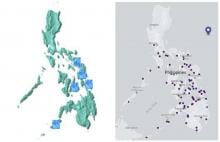
The Philippines can strengthen national energy security by harnessing tidal power for a clean, predictable, and locally-rooted alternative to imported fossil fuels.
01 Jun 2026
Tohoku University
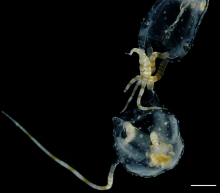
Researchers at Tohoku University look beyond the life-taking venomous stings of box jellyfish, and focus on life-creating processes in a new comprehensive study of their reproductive traits.
15 May 2026
National Taiwan University
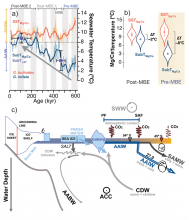
Researchers at National Taiwan University and partner institutions, led by research associate Dr. Raúl Tapia and Associate Professor Sze Ling Ho at the Institute of Oceanography, have uncovered new evidence that Antarctic Intermediate Water (AAIW) — a distinct layer sitting 500–1,500 meters below the ocean surface — played a pivotal role in a major atmospheric carbon dioxide transition that occurred roughly 450,000 years ago. The findings, published in Science Advances, challenge the prevailing view that changes in the deepest layers of the Southern Ocean alone drove this shift, and point instead to intermediate-depth circulation as a previously underestimated regulator of Earth’s carbon cycle.

15 May 2026
Tohoku University
Recent research at Tohoku University is providing a major update to our current knowledge of the biodiversity of a type of highly venomous box jellyfish of the genus Chironex, such as an entirely new species found in Singapore.
14 May 2026
National Taiwan University
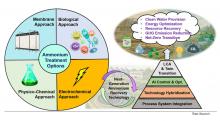
Researchers have developed a new framework that uses artificial intelligence to monitor wastewater treatment in real time, ensuring environmental safety while maximizing resource recovery. This “twin transition” approach allows facilities to predict system health and optimize energy use simultaneously.
14 May 2026
Tohoku University
We don’t have time to count every fish in the ocean! Environmental DNA or eDNA allows us to see where fish live by analyzing DNA in seawater – such as from shed scales or skin. This Japan-wide eDNA survey conducted by the Advanced Institute for Marine Ecosystem Change (WPI-AIMEC), Tohoku University & JAMSTEC, revealed hidden factors of the ecological niches that affect shifts in fish distributions.
05 May 2026
National Taiwan University
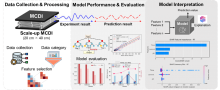
Data-driven models provide precise prediction on charging-phase of desalination technology building a bridge between data-driven insights and physicochemical principle to lay a strong foundation for system parameter optimization.
27 Apr 2026
City University of Hong Kong (CityUHK)
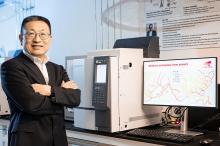
An international research team led by a scholar from City University of Hong Kong (CityUHK) has broken through the overlooked role of sewers as a source of methane, developing the first-ever globally applicable estimation tool and offering a new perspective on mitigating climate change.
21 Apr 2026
City University of Hong Kong (CityUHK)
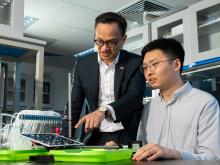
An international research team led by the Department of Mechanical Engineering at CityUHK has successfully developed a breakthrough technology, called “Liquid Droplet Mops”, which only uses a minimal amount of water to effectively remove dust and pollutants from solar panel surfaces, significantly enhancing cleaning efficiency while conserving water.
10 Apr 2026
Hiroshima University
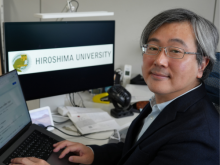
Major international recognition for research exploring largely unknown microbial life in groundwater

09 Apr 2026
Hiroshima University
As climate change intensifies harmful algal blooms worldwide, an international team led by Hiroshima University has developed a hybrid modeling approach that combines algal movement simulations, AI, and long-term monitoring data to sharpen forecasts of these bloom events—linked to environmental damage, mass fish die-offs, economic losses, and risks to human health.

20 Mar 2026
Springer Nature
A newly developed spray-on fabric coating could allow clothes to be cleaned using only water, reducing water and detergent needs.
27 Feb 2026
Osaka Metropolitan University
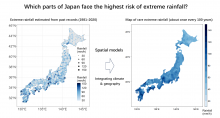
An Osaka Metropolitan University-led research team used hourly precipitation data from 1981 to 2020 and spatial modeling to predict extreme precipitation events for the next 100 years in Japan.
05 Feb 2026
National Taiwan University
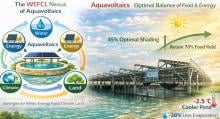
Researchers in Taiwan demonstrate that installing solar panels above clam ponds can simultaneously support aquaculture and renewable energy under increasing climate stress. Using real-world farm data, the study shows that moderate shading lowers pond temperatures, reduces water demand, and generates clean electricity. This reveals novel, practical synergies across the Water–Energy–Food–Climate–Land nexus.
30 Jan 2026
Tohoku University
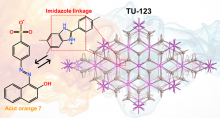
Researchers at Tohoku University developed a wastewater treatment method to help clear pollution caused by toxic, non-biodegradable dyes. The method uses a 3D, sponge-like covalent organic network to purify wastewater in a sustainable manner.

29 Jan 2026
Asia Research News
Sticky life beginnings. Precarious pitcher plant, Breaking the cobalt "cage", Toxic algae killer & “Pure-bred” stem cell medium. Read all in the latest Editor's Choice. Plus Asia Research News 2026 is out now and SciCom Coffee talk by Rachael Smith at Wellcome Sanger Institute.

22 Jan 2026
City University of Hong Kong (CityUHK)
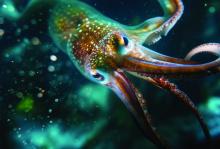
A research team from City University of Hong Kong (CityUHK) recently collaborated with an international research team to publish a study revealing a correlation between global contamination of per- and polyfluoroalkyl substances (PFAS) in globally consumed edible marine fish and associated human health risks.
The study found that consumers may be exposed to elevated levels of PFAS by consuming imported fish such as salmon, tuna, swordfish and cod — even in regions with low environmental pollution — thereby increasing food‑safety risks.
21 Jan 2026
Hokkaido University
Yasuhiro Iba and his colleagues use complex imaging systems to reveal the secrets of Earth’s ancient creatures.

21 Jan 2026
City University of Hong Kong (CityUHK)
Scientists from City University of Hong Kong and collaborators from more than 20 countries are taking FIRST steps towards safeguarding communities most affected by climate change.
Events

07 Apr 2026
ASIAWATER 2026, ‘The Region's Leading Water and Wastewater Platform for Developing
Asia,’ returns from 7–9 April 2026 at Kuala Lumpur Convention Centre (KLCC), Malaysia.

18 Sep 2025
With the theme "Earth, Energy, and Environment: Navigating the Future," National Geoscience Conference (NGC) 2025 is the premier gathering of geoscience professionals, researchers, and students.

23 Aug 2025
We are pleased to announce the 7th edition of the International Conference on Biospheric Harmony (ICOBAR), hosted by BINUS University in collaboration with the Ikatan Ilmuwan Indonesia Internasional (I4) under the auspices of the Indonesian Diaspora Scientific Forum (FIDI).
11 Nov 2024
Looking to make a meaningful impact on regional research and scientific capacity development in the Asia-Pacific region? The APN’s 2024 Call for Proposals invites you to submit proposals that tackle global change challenges, foster regional partnerships and support the development of sustainable solutions.

16 Oct 2024
The Malaysia Technology Expo (MTE) 2024: Sustainable Development Goals International Innovation Awards & Expo (SDG IIAE) stands at the forefront of global efforts to foster innovative solutions that advance the United Nations Sustainable Development Goals (SDGs). As we navigate the critical decade of action towards 2030, this prestigious event serves as a beacon of inspiration, showcasing groundbreaking innovations and facilitating meaningful dialogue among the brightest minds across the globe.

01 Oct 2024
The Geological Society of Malaysia is pleased to announce that the 37th National Geoscience Conference (NGC 2024) will be held at Kuala Lumpur during 1st-3rd October 2024.

27 May 2024
The 4th International Conference on Small Island Developing States (SIDS4), co-chaired by New Zealand and the Maldives, will take place from 27 to 30 May 2024 in Antigua and Barbuda under the theme “Charting the Course Towards Resilient Prosperity”.

23 Apr 2024
Join us at ASIAWATER 2024, the 13th edition of the leading water and wastewater platform for developing Asia, on 23-25 April 2024 at Kuala Lumpur Convention Centre, Malaysia.
09 Nov 2023
Seeking to build experience in collaborative regional research and scientific capacity development in the Asia-Pacific region? Interested in writing grant proposals for global environmental change projects? Come and join our open capacity building seminars to receive grant proposal writing guidance and an introduction to the Asia-Pacific Network for Global Change Research (APN)'s 2023 Call for Proposals. Two seminars are available on the 9th and 10th of November, and we warmly welcome participation from early career professionals and global change practitioners in the Asia-Pacific region.

18 Oct 2023
The Malaysia Technology Expo (MTE) 2023: Sustainable Development Goals International Innovation Awards & Expo (SDG IIAE) is the first in the region focused on recognizing innovations, initiatives, programmes and ideas which contribute to sustainability, eradicating poverty, improving well-being, protecting our planet, and building peace and prosperity.

28 Jun 2023
DSA2023 conference will take place as a hybrid (online and in person) conference and is organised and hosted by the University of Reading,

25 Oct 2021
First in the region focused on recognizing innovations, initiatives, programmes and ideas which contribute to sustainability, eradicating poverty, improving well-being, protecting our planet, and building peace and prosperity.

16 Mar 2021
In times that the Mekong has just dropped to worrying levels, we hope that the issue is brought into wider attention through this 2-week long exhibition.

26 Mar 2021
Springer Nature and the University of Tokyo to hold SDGs Symposium 2021, “Interdisciplinary science solutions for food, water, climate and ecosystems Sustainable Development Goals”

30 Nov 2020
ASIAWATER Virtual Event 2020 is the region’s leading water and wastewater expo and forum for developing Asia, bringing together leading industry players in one event.
The Khwarizmi International Award (KIA) acknowledges the efforts made by researchers, innovators and inventors from across the globe and to appreciate their high quality research work and contributions to different fields of science and technology.


01 Oct 2019
Advancing Innovation, Embracing Transformation and Securing the future
Researchers

I am a scientist with a broad interest in climate science. Currently my research focuses on understanding climate variability across scales, climate change, extreme weather and climate events, weather and climate risks, and the economics of climate change. I am a Professor and Project Leader at the Center for Climate Physics, Institute for Basic Science, Pusan National University. I teach in the Department of Carbon Neutrality and Climate Change. I am also active in organizing EGU activities.

Dr. Syed is accomplished environmental and climate scientists. He supervised PhD and Post-Doc researches on climate, environment, water, remote sensing (optical & RADAR, hyperspectral, LiDAR) atmospheric modeling.

Dr. Muhammad Abdul Basit is an established academician who is concomitantly working in science and arts, accomplishing the publications of multiple books as well as more than 100 international research publications in the field of nanomaterials, thin-film techniques, and photoenergy applications. Dr. completed did his PhD & Post-Doc. from Hanyang University, south Korea and currently serving as an Associate Professor at the Institute of Space Technology, Pakistan where he is leading the Nanomaterials for Advanced Energy Applications research group and lab. Dr. Basit has won multiple intellectual capability awards from various agencies such as HEC Pakistan, PCK Korea and DAAD-Germany.

Shimi Chak is a climate advocate and Indigenous youth leader. Her interest lies in renewable energy, policy advocacy, and community-led solutions, helping refugees and Indigenous groups adapt to climate change and preserve traditions.

Tahiya Tasnim is a distinguished academic researcher and educator driving research-driven interventions that bridge academia and communities. She specializes in education, planetary health, and sustainability, empowering marginalized communities through research, developing curricula, and advocacy.

Sadia Salim is an environmental and public health researcher working on climate change, planetary and environmental health, WASH, sustainability, education and empowerment, and grassroots community development and resilience in vulnerable regions.

Nazifa Rafa is an interdisciplinary researcher with a strong commitment to addressing global challenges through innovative, equitable, and sustainable approaches. She is thought leader in the intersections of climate justice and humanitarian research, contributing actionable insights for policy and practice, and a solution-driven academic focused on pragmatic approaches that benefit vulnerable populations and ecosystems.
She combines scientific rigor, policy relevance, and social equity to address complex, interrelated challenges in climate resilience, sustainability, and public health. Her work spans multiple disciplines, integrating environmental science, energy technology, social justice, and disaster risk management, often with a focus on marginalized and vulnerable populations.

Nehaluddin Ahmad (born in 1952) is a public figure and prominent academician from India who served as a law professor at the Sultan Haji Hassanal Bolkiah Faculty of Law, Sultan Sharif Ali Islamic University (UNISSA) in Brunei Darussalam

I am an efficient Professor able to Develop courses with IT skills & sound teaching skills in a manner attractive to students. I have vast experience in supervising postgraduate research & Contribute in a well manner to the ongoing academic development of the School’s postgraduate courses and research.

I'm currently an adjunct professor at the Asian Institute of Management in Manila. I crafted a course called Art-Science Thinking based on my dissertation on Culture as Transformative Innovation: Filipino Care in the Practice of Family Medicine. Since 2017, my consultancy & studio has been collaborating with the Dept. of Science & Technology in the Philippines.
Universiti Teknologi MARA (UiTM)
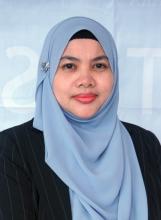
Norhafezah binti Kasmuri has obtained her Degree in Civil and Environmental Engineering from Universiti Kebangsaan Malaysia in 2001. She has received her Master of Science in Water Resources Engineering and Management (WAREM) from Universitat Stuttgart, Germany in 2004. She has completed her study of Doctor of Philosophy in Chemical Engineering from Swansea University, Wales, the United Kingdom in 2014. She has been serving UiTM since August 2014 as a senior lecturer at the School of Civil Engineering, College of Engineering, Universiti Teknologi MARA, Shah Alam.

ChM. Ts. Dr. Uganeeswary Suparmaniam, AMIChemE (UK) is a multiple award-winning young scientist, sustainability advocate, and climate activist attached to the HICoE-Centre for Biofuel and Biochemical Research, Institute of Self-Sustainable Building, PETRONAS University of Technology, Malaysia.
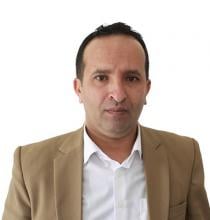
I am a microbiologist currently working as a lecturer in the Medical Microbiology Department, Faculty of Applied Science, Hajjah University, Yemen. I am interested in research areas related to the prevalence of infectious diseases caused by bacteria, viruses, fungi, and parasites in different areas in Yemen.
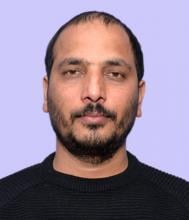
Dr. Niranjan Devkota is a distinguished researcher in climate change, agriculture, and poverty. He actively contributes to policy dialogues and has extensive experience in governmental and non-governmental sectors, demonstrating his commitment to driving positive change.
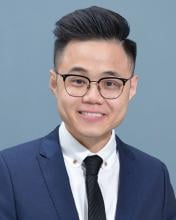
Nanyang Technological University
Dr. Edison Huixiang Ang is a Singaporean Materials Scientist who born in 28 July 1987. He has a background in materials science and engineering along with a diverse skill set. He completed his undergraduate studies, earning B.S. degrees, at Nanyang Technological University in Singapore in 2012. Later, in 2017, Dr. Ang received his Ph.D. from the same university. He gained additional experience as a Postdoctoral Fellow at the National University of Singapore from 2016 to 2017 and later served as a Research Fellow at Nanyang Technological University from 2017 to 2019. In mid-2018, he also took on a Visiting Scholar role at the Technical University of Munich in Germany.
Currently, Dr. Edison H. Ang serves as an Assistant Professor at the National Institute of Education/Nanyang Technological University.
His expertise encompasses various areas, including 2D Nanomaterials and Nanotechnology, Energy Storage and Conversion, Sensor Technology, Membrane Technology, Additive Manufacturing, Catalysis, Waste-to-Wealth, Surface Coating and Film, Circular Economy, Renewable Energy, Sustainability, and Chemistry and Chemical Engineering.

City University of Hong Kong (CityUHK)
Dr. An is an associate professor at the School of Energy and Environment, City University of Hong Kong (CityU), where she also heads the Water and Membrane Technologies Laboratory.
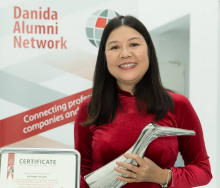
Dr. Van was previously the Director of the Research Institute for Aquaculture No.1 (RIA1) under Vietnam’s Ministry of Agriculture and Rural Development. She has extensive expertise in aquatic animal health and aquaculture safety management.
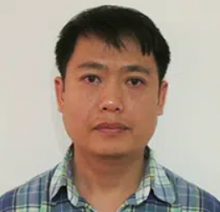
Nguyen Huu Nghia is the Director of the Center for Environment and Disease Monitoring in Aquaculture (CEDMA) at the Research Institute for Aquaculture No.1 (RIA1) under Vietnam’s Ministry of Agriculture and Rural Development. He has co-managed various research efforts in Vietnam aquaculture as well as published recent research into the use of nanobubbles.
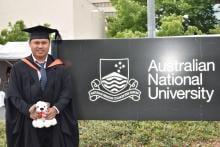
Advancing Life and Regenerating Motherland (ALARM)
A researcher/program director at ALARM - for land & environmental justice and climate & environmental integration in development planning of Myanmar & a graduate of YAU (Myanmar), AIT (Thailand) & ANU (Australia).

Universiti Teknologi MARA (UiTM)
Department of Microbiology / Biomolecular Sciences
Universiti Teknologi MARA
Malaysia
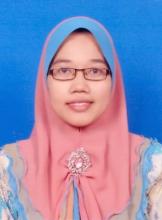
Zunaida Zakaria is researcher at Faculty of Chemical Engineering Technology, Universiti Malaysia Perlis (UniMAP). She has more than 15 years of experience in Polymeric Materials, Processing, and Characterization. Her main research interest are in Polymeric Foam, Syntactic Foam, Epoxy Macroballoon, Failure Mechanism in Polymeric Foam, Microbeads/Porous, and Activated Carbon from RHA for wastewater treatment.

Morshed Hossan Molla, Ph.D. Research Fellow in the Department of Geography and Environmental Studies, University of Chittagong and working at YPSA (Young Power in Social Action) as a Research, Monitoring & Evaluation Officer, Chittagong, Bangladesh. He received B.Sc. (Honours) and MS (thesis) Degrees in the Department of Geography and Environmental Studies, University of Chittagong in 2009 and 2011 respectively. He received also M.Phil degree from the same department in the field of Water Resource Management. He has attended a number of national and international conferences and published more than thirty research articles in national and international journals and books, mainly on urban service delivery (supply water), urban environment & environmental health, climate change & disaster management, and water resources management. He has a desire to contribute to different aspects of the planning process for underprivileged groups.

Lecturer in Forensic Chemistry field. Actively engaging in agricultural waste upcycling into nanatechnology products.
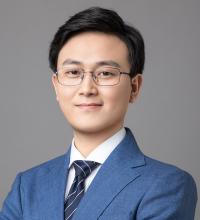
City University of Hong Kong (CityUHK)
Dr. Zhu Pingan is currently an Assistant Professor at the Department of Mechanical Engineering of City University Hong Kong.
Universiti Teknologi MARA (UiTM)
Dr. Fariha is a Senior Lecturer and a Civil Engineer at Universiti Teknologi MARA, Malaysia. She is actively conducting research on Kenaf-sorb beads that is potentially for wastewater treatment at the factory’s effluent point.
Ulsan National Institute of Science and Technology (UNIST)
Prof. Cho Jae-Weon is a professor of environmental engineering at the National Institute of Science and Technology (UNIST) in Ulsan, South Korea and has devised a way to convert human waste into power.

Universiti Malaysia Sabah
Dr. Connie Cassy Ompok is an early childhood education expert and a Senior Lecturer at the Faculty of Psychology and Education, Universiti Malaysia Sabah. She Started her career in Early Childhood Education as a preschool teacher (2004-2007), a lecturer in early childhood education at the Malaysian Institute of Teacher Education (2008-2016) before serving as a Senior Lecturer in Early Childhood Education at UMS (2016 until now).

Universiti Teknologi MARA (UiTM)
Senior lecturer at School of Chemical Engineering, Universiti Teknologi MARA, Cawangan Pulau Pinang, Malaysia. He is also Head of Lab EMZI-UiTM Nanoparticles Colloids

Currently a research assistant in the laboratory of green energy in Zhejiang University of Technology.
Giants in history

Sir Mokshagundam Srinivasa Shastry Vishveshwarayya (15 September 1860 – 14 April 1962) is widely regarded as India’s most outstanding engineer. In a career that spanned almost his entire life, Vishveshwarayya played a pivotal role in several engineering projects, including designing the Krishnarajasagara dam that is still the source of irrigation and drinking water for parts of Karnataka today.