
This story is featured in the Asia Research News 2026 magazine. Book space in the next issue now.
Get the news in your inbox
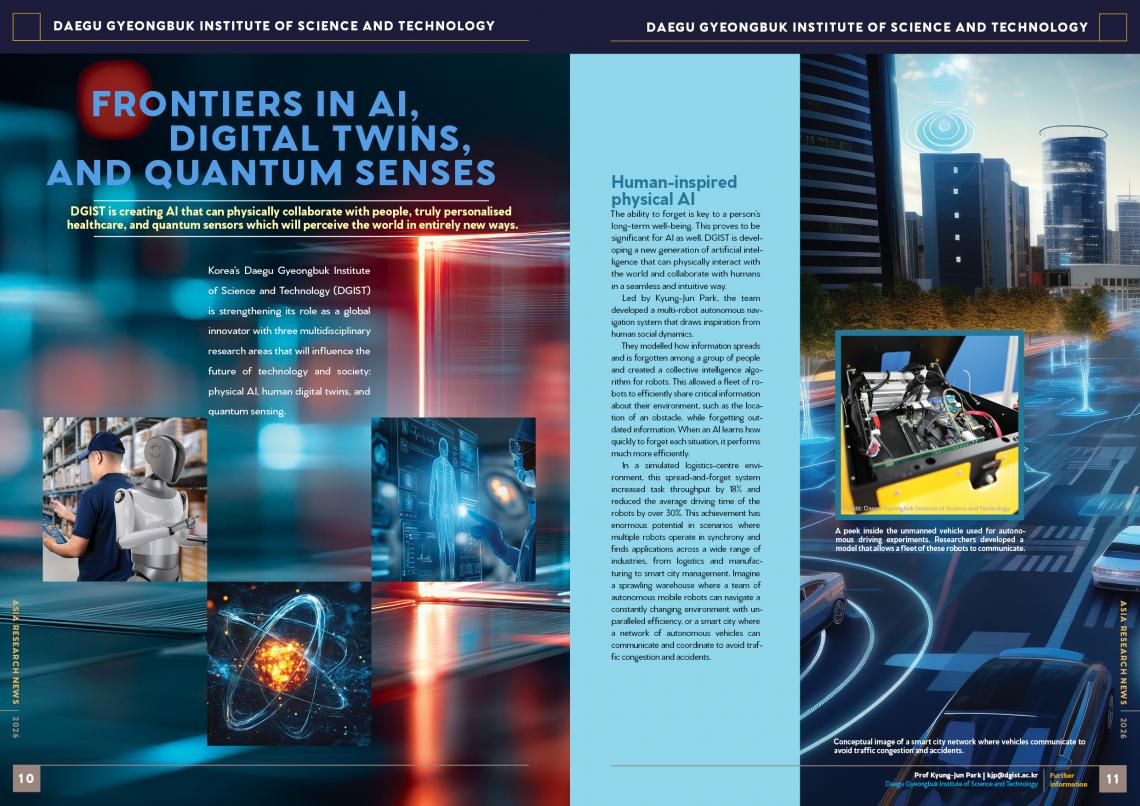
Korea’s Daegu Gyeongbuk Institute of Science and Technology (DGIST) is strengthening its role as a global innovator with three multidisciplinary research areas that will influence the future of technology and society: physical AI, human digital twins, and quantum sensing.
Human-inspired physical AI
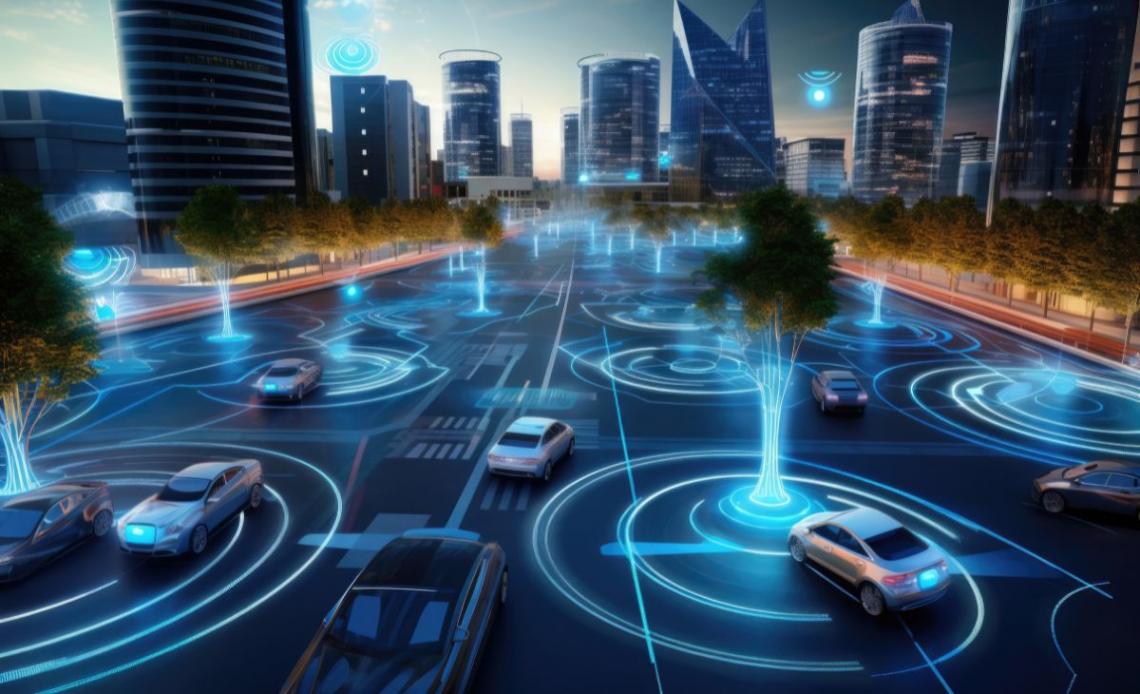
Conceptual image of a smart city network where vehicles communicate to avoid traffic congestion and accidents
The ability to forget is key to a person’s long-term well-being. This proves to be significant for AI as well. DGIST is developing a new generation of artificial intelligence that can physically interact with the world and collaborate with humans in a seamless and intuitive way.
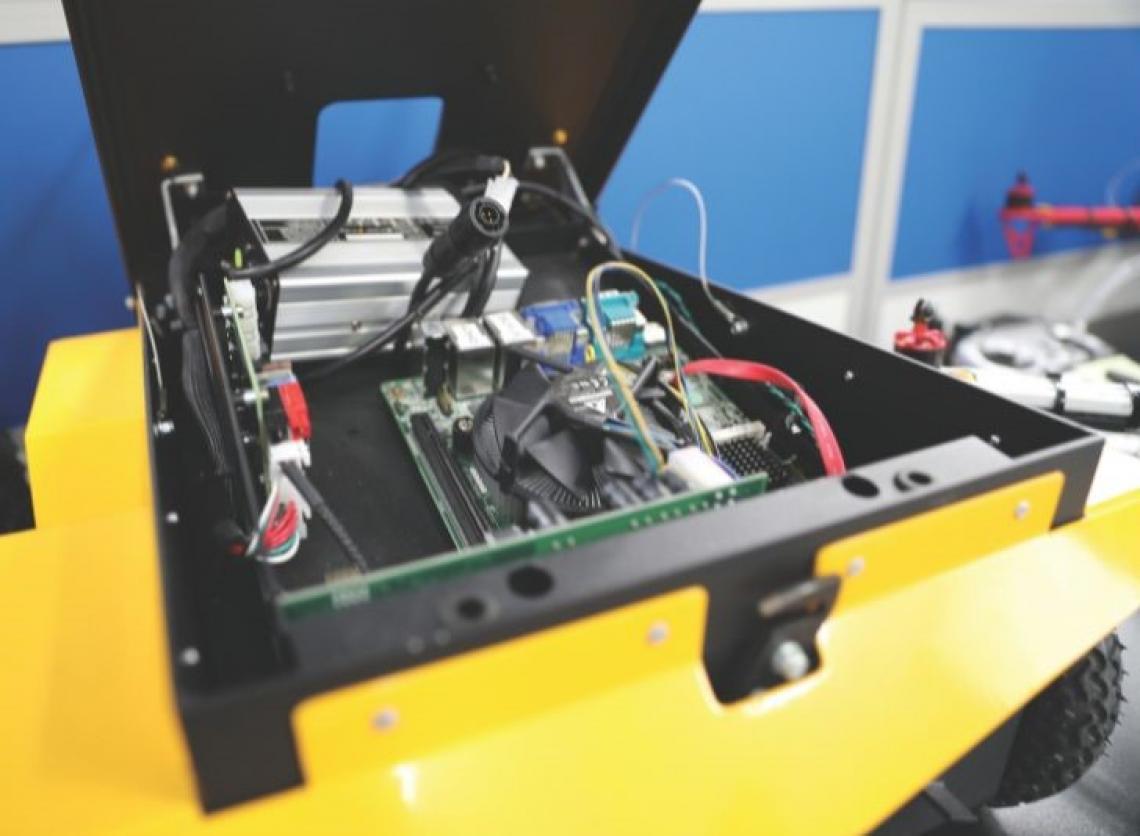
A peek inside the unmanned vehicle used for autonomous driving experiments. Researchers developed a model that allows a fleet of these robots to communicate.
Led by Kyung-Jun Park, the team developed a multi-robot autonomous navigation system that draws inspiration from human social dynamics.
They modelled how information spreads and is forgotten among a group of people and created a collective intelligence algorithm for robots. This allowed a fleet of robots to efficiently share critical information about their environment, such as the location of an obstacle, while forgetting outdated information. When an AI learns how quickly to forget each situation, it performs much more efficiently.
In a simulated logistics-centre environment, this spread-and-forget system increased task throughput by 18% and reduced the average driving time of the robots by over 30%. This achievement has enormous potential in scenarios where multiple robots operate in synchrony and finds applications across a wide range of industries, from logistics and manufacturing to smart city management. Imagine a sprawling warehouse where a team of autonomous mobile robots can navigate a constantly changing environment with unparalleled efficiency, or a smart city where a network of autonomous vehicles can communicate and coordinate to avoid traffic congestion and accidents.
Further information
Prof Kyung-Jun Park
[email protected]
Daegu Gyeongbuk Institute of Science and Technology
Human digital twins
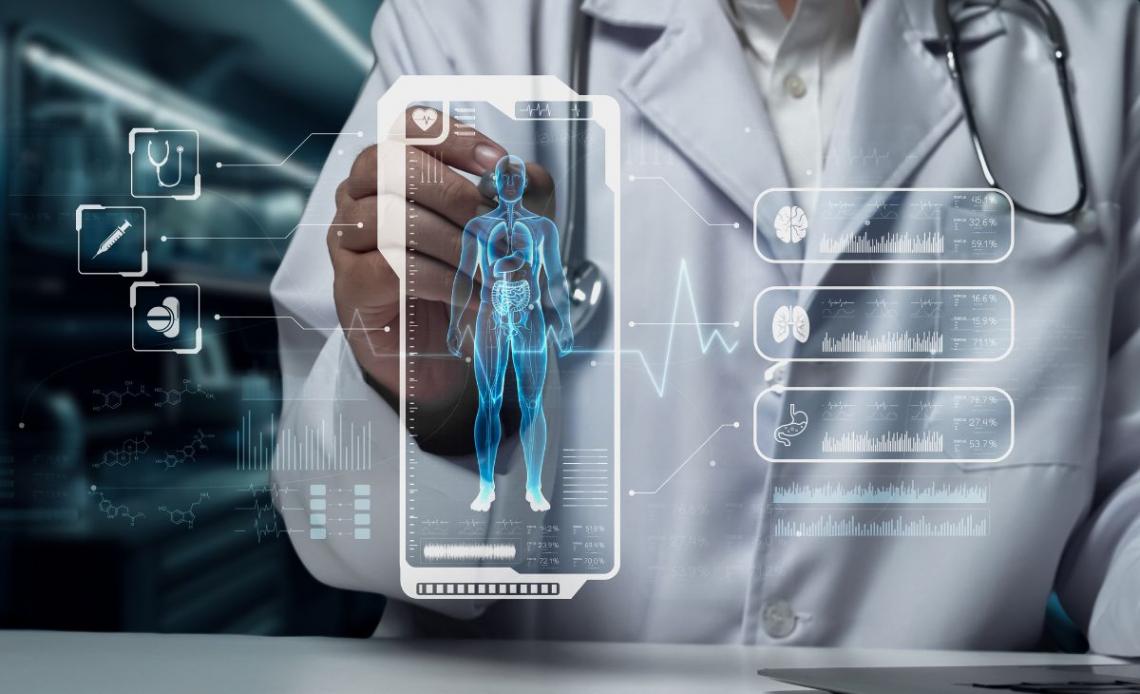
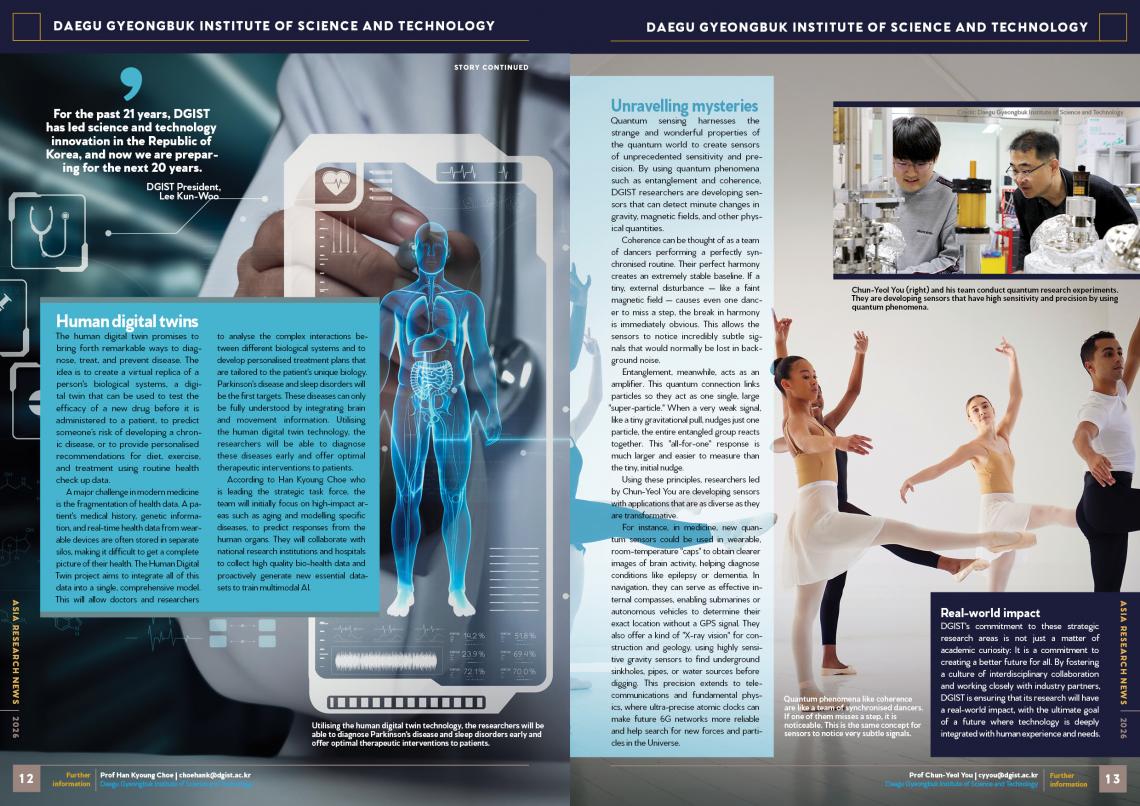
Utilising the human digital twin technology, the researchers will be able to diagnose Parkinson's disease and sleep disorders early and offer optimal therapeutic interventions to patients.
The human digital twin promises to bring forth remarkable ways to diagnose, treat, and prevent disease. The idea is to create a virtual replica of a person's biological systems, a digital twin that can be used to test the efficacy of a new drug before it is administered to a patient, to predict someone’s risk of developing a chronic disease, or to provide personalised recommendations for diet, exercise, and treatment using routine health check-up data.
A major challenge in modern medicine is the fragmentation of health data. A patient's medical history, genetic information, and real-time health data from wearable devices are often stored in separate silos, making it difficult to get a complete picture of their health. The Human Digital Twin project aims to integrate all of this data into a single, comprehensive model. This will allow doctors and researchers to analyse the complex interactions between different biological systems and to develop personalised treatment plans that are tailored to the patient's unique biology. Parkinson's disease and sleep disorders will be the first targets. These diseases can only be fully understood by integrating brain and movement information. Utilising the human digital twin technology, the researchers will be able to diagnose these diseases early and offer optimal therapeutic interventions to patients.
According to Han Kyoung Choe who is leading the strategic task force, the team will initially focus on high-impact areas such as aging and modelling specific diseases, to predict responses from the human organs. They will collaborate with national research institutions and hospitals to collect high-quality bio-health data and proactively generate new essential datasets to train multimodal AI.
Further information
Prof Han Kyoung Choe
[email protected]
Daegu Gyeongbuk Institute of Science and Technology
Unravelling mysteries

Quantum phenomena like coherence are like a team of synchronised dancers. If one of them misses a step, it is noticeable. This is the same concept for sensors to notice very subtle signals.
Quantum sensing harnesses the strange and wonderful properties of the quantum world to create sensors of unprecedented sensitivity and precision. By using quantum phenomena such as entanglement and coherence, DGIST researchers are developing sensors that can detect minute changes in gravity, magnetic fields, and other physical quantities.
Coherence can be thought of as a team of dancers performing a perfectly synchronised routine. Their perfect harmony creates an extremely stable baseline. If a tiny, external disturbance — like a faint magnetic field — causes even one dancer to miss a step, the break in harmony is immediately obvious. This allows the sensors to notice incredibly subtle signals that would normally be lost in background noise.
Entanglement, meanwhile, acts as an amplifier. This quantum connection links particles so they act as one single, large "super-particle." When a very weak signal, like a tiny gravitational pull, nudges just one particle, the entire entangled group reacts together. This "all-for-one" response is much larger and easier to measure than the tiny, initial nudge.
Using these principles, researchers led by Chun-Yeol You are developing sensors with applications that are as diverse as they are transformative.
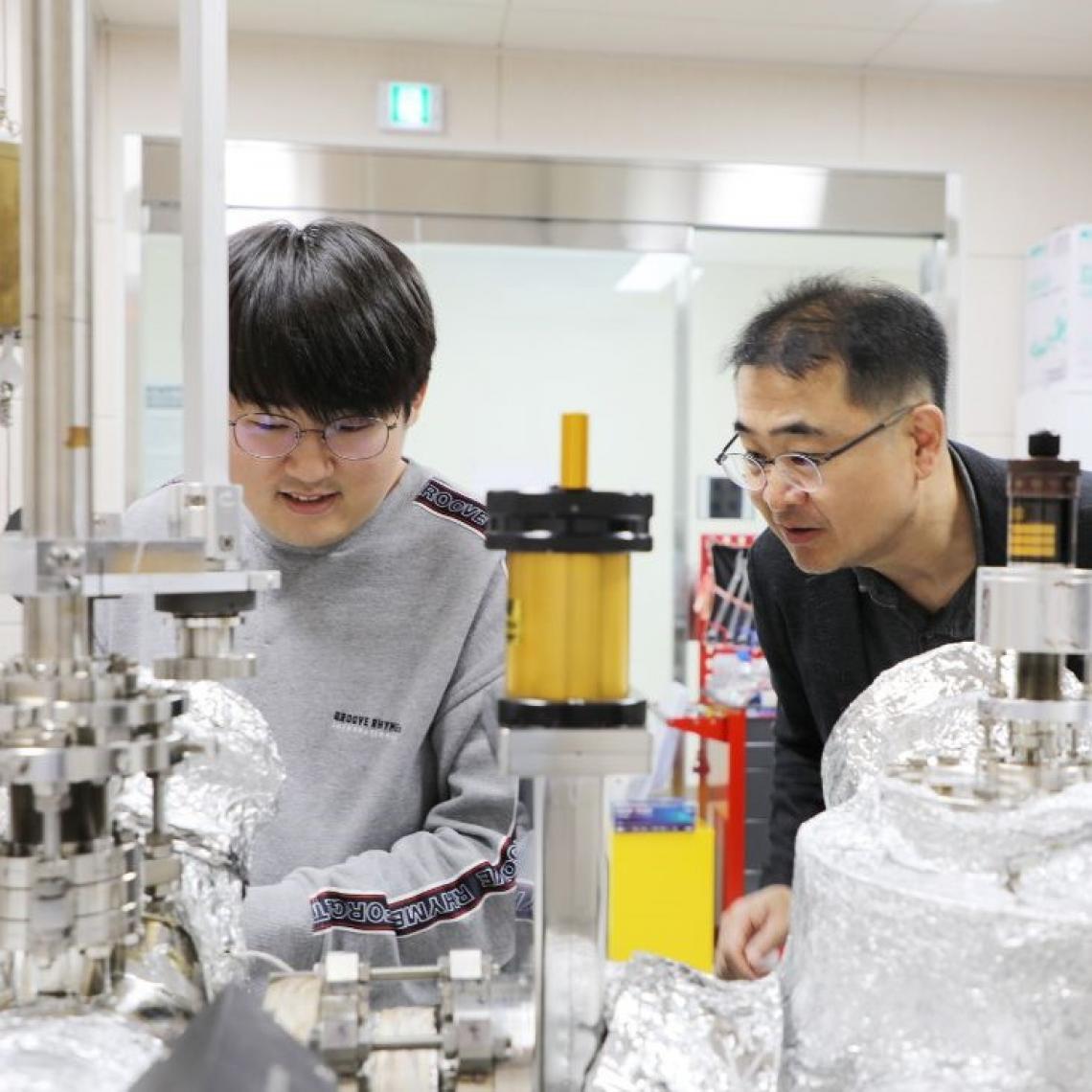
Chun-Yeol You (right) and his team conduct quantum research experiments. They are developing sensors that have high sensitivity and precision by using quantum phenomena.
For instance, in medicine, new quantum sensors could be used in wearable, room-temperature "caps" to obtain clearer images of brain activity, helping diagnose conditions like epilepsy or dementia. In navigation, they can serve as effective internal compasses, enabling submarines or autonomous vehicles to determine their exact location without a GPS signal.
They also offer a kind of "X-ray vision" for construction and geology, using highly sensitive gravity sensors to find underground sinkholes, pipes, or water sources before digging. This precision extends to telecommunications and fundamental physics, where ultra-precise atomic clocks can make future 6G networks more reliable and help search for new forces and particles in the Universe.
Further information
Prof Chun-Yeol You
[email protected]
Daegu Gyeongbuk Institute of Science and Technology
Real-world impact
DGIST's commitment to these strategic research areas is not just a matter of academic curiosity: It is a commitment to creating a better future for all. By fostering a culture of interdisciplinary collaboration and working closely with industry partners, DGIST is ensuring that its research will have a real-world impact, with the ultimate goal of a future where technology is deeply integrated with human experience and needs.