


A study of more than 4,000 patients in southern Taiwan suggests that older adults may play an under-recognised role in tuberculosis transmission. It also reveals how patterns of spread differ across bacterial groups and locations, offering clues for more targeted prevention.
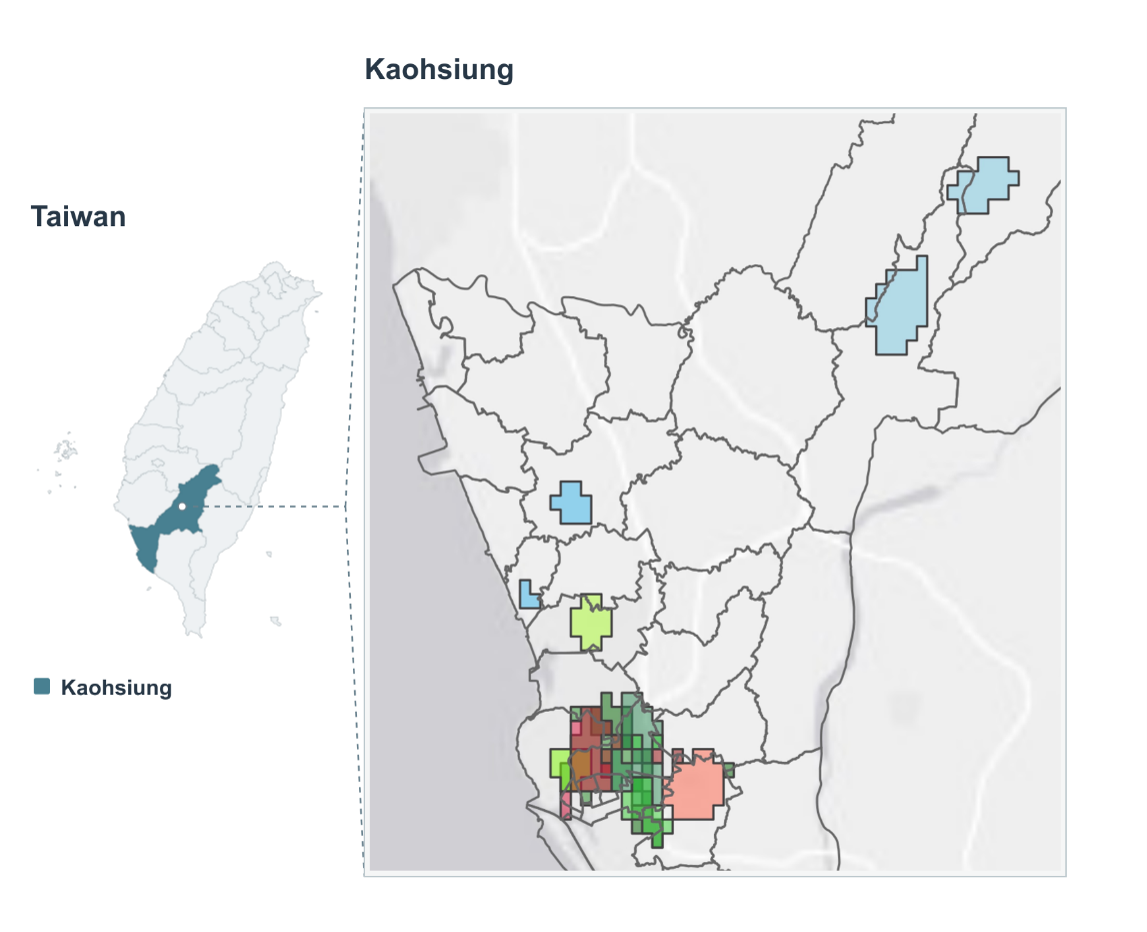
Mapping tuberculosis in Kaohsiung, Taiwan. Coloured areas highlight spatial clustering identified in the study, illustrating how genetic and geographic information can help researchers investigate local patterns of spread.
*Adapted from Figure 3B of the research. Chieh-Yin Wu et al., Lineage-specific transmission and spatial clustering of Mycobacterium tuberculosis in Kaohsiung, Taiwan, in 2019–23: a population-based genomic study, The Lancet Microbe (2026).
National Taiwan University
Tuberculosis (TB) is still the world's deadliest infectious disease. In Taiwan, where the population is ageing quickly, most TB patients are now over 65. A new study from Kaohsiung, southern Taiwan, published in The Lancet Microbe, suggests that older adults may play a larger role in spreading TB than previously recognised. Understanding their role could help public health teams find new ways to prevent infections.
A team led by researchers at National Taiwan University and Kaohsiung Medical University studied TB bacteria from 4,168 patients diagnosed between 2019 and 2023. The researchers read the complete DNA of the bacteria and looked for similarities between samples. Nearly identical bacteria suggest that TB was passed on recently from one person to another. The team then combined these findings with patient information and location data to work out how TB was spreading across the city.
About one in four patients was linked to others in this way. People aged 65 and above accounted for about four in ten linked cases, and people aged 55 to 74 appeared to be the source of about half of all the cases of spread the team could trace. TB also tended to spread between people of similar ages.
The study also found that different types of TB bacteria spread in different ways. One group, known as the Beijing strain, spread easily throughout the city. Another group, by contrast, spread more readily only in rural mountain areas. Why this happens is not yet clear and needs further study.
The study shows how combining bacterial DNA with information about patients and where they live can reveal where TB is spreading and which groups of people need closer attention. This could help health authorities focus limited resources where they are needed most and design prevention efforts that fit local needs.
"We often think of older people with tuberculosis as patients who need treatment, not as part of the chain of transmission. Our results suggest they may be both. As many countries face rapidly ageing populations, reading the genetic code of TB bacteria can show us where the disease is really spreading and help us act earlier," says co-corresponding author Prof. Hsien-Ho Lin, director of Institute of Epidemiology and Preventive Medicine at National Taiwan University.
Prof. Hsien-Ho Lin‘s email address: [email protected]
Advertisement