This story is featured in the Asia Research News 2026 magazine. Book space in the next issue now.
Get the news in your inbox
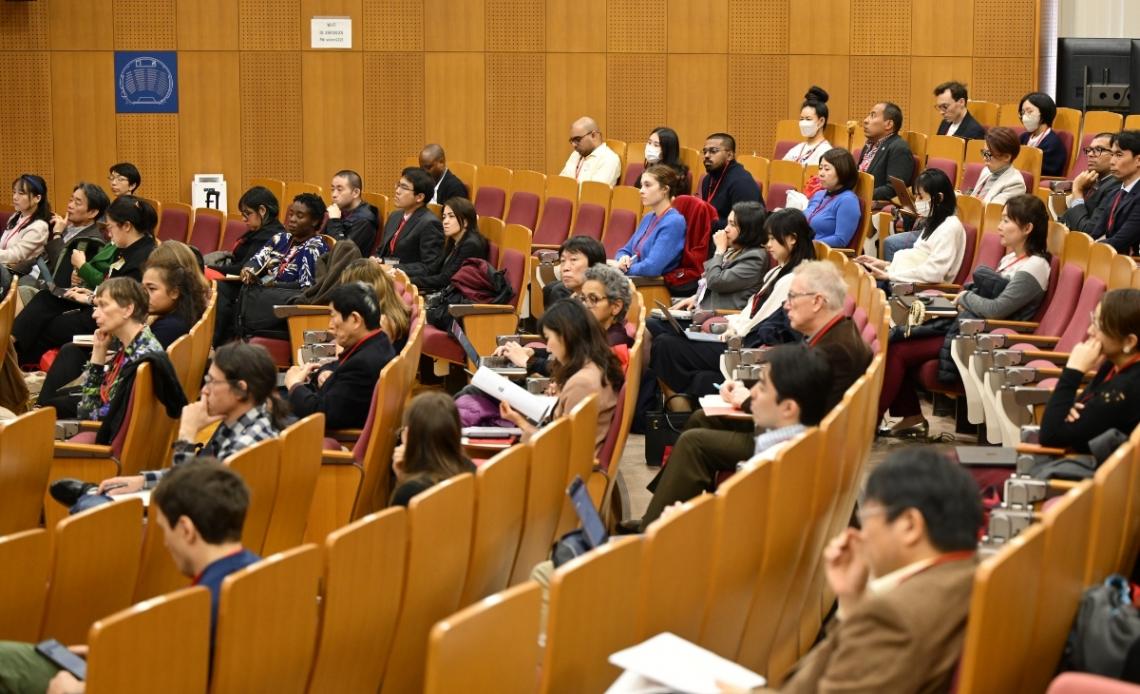
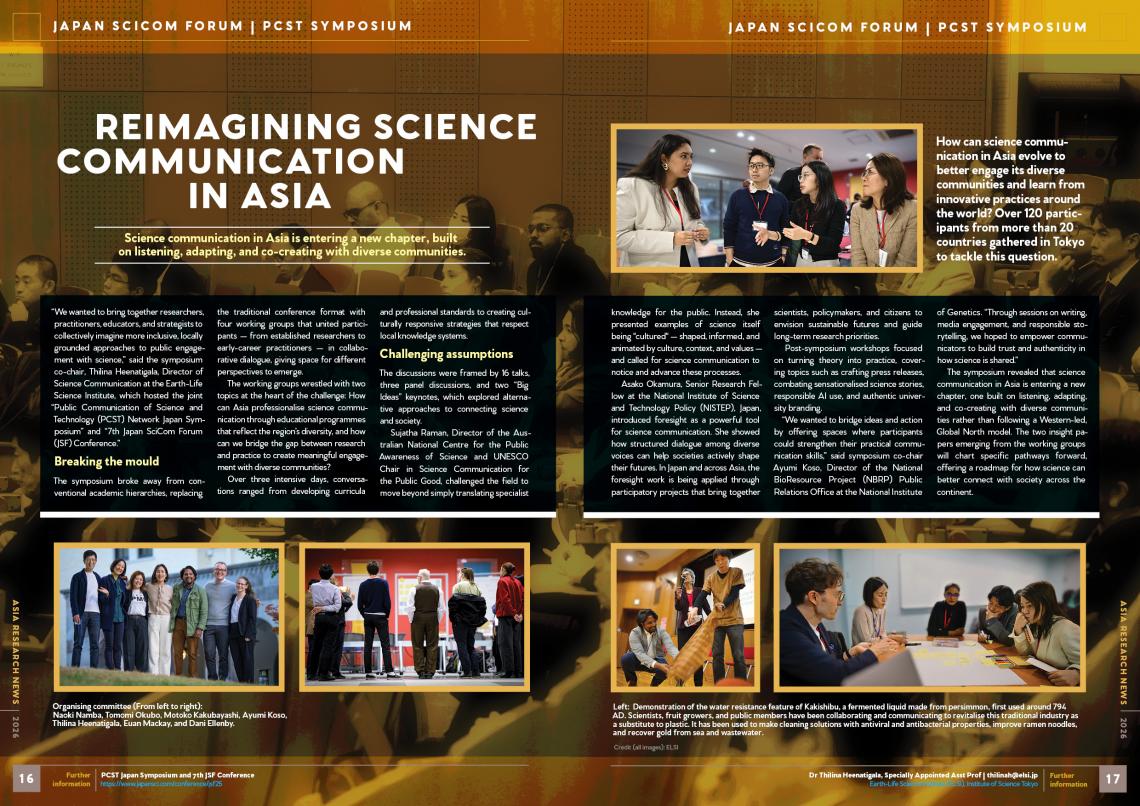
How can science communication in Asia evolve to better engage its diverse communities and learn from innovative practices around the world? Over 120 participants from more than 20 countries gathered in Tokyo to tackle this question.
“We wanted to bring together researchers, practitioners, educators, and strategists to collectively imagine more inclusive, locally grounded approaches to public engagement with science,” said the symposium co-chair, Thilina Heenatigala, Director of Science Communication at the Earth-Life Science Institute, which hosted the joint “Public Communication of Science and Technology (PCST) Network Japan Symposium” and “7th Japan SciCom Forum (JSF) Conference.”
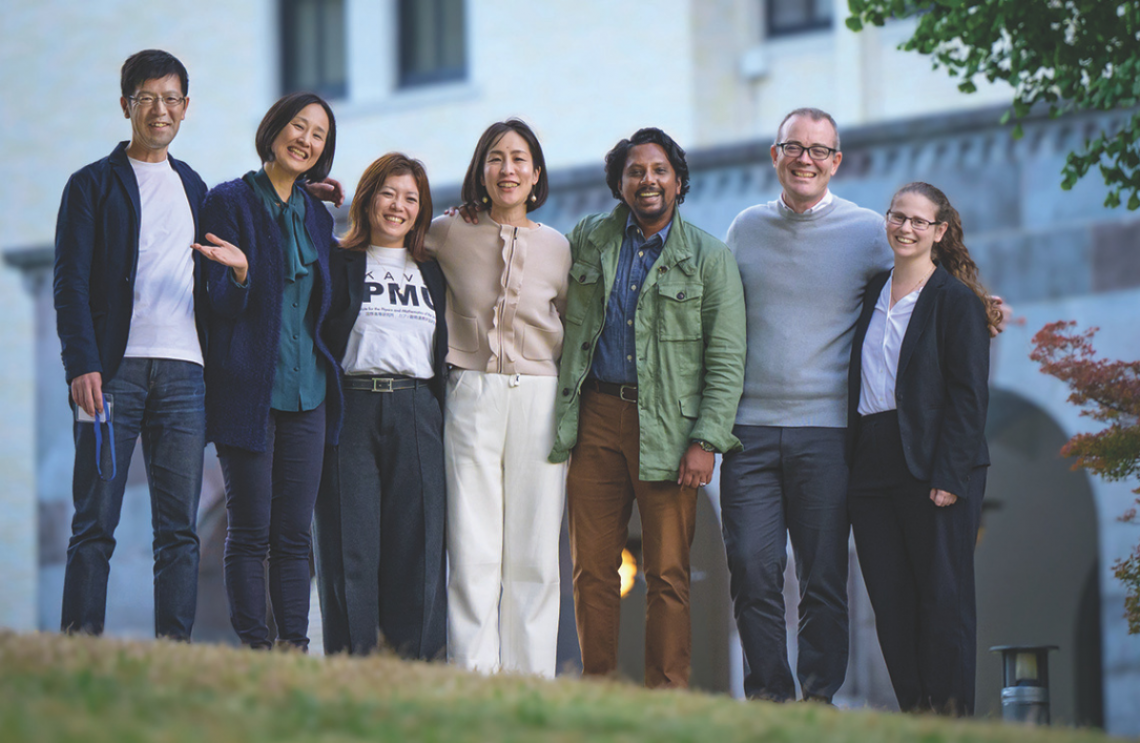
Organising committee L-R Naoki Namba, Tomomi Okubo, Motoko Kakubayashi, Ayumi Koso, Thilina Heenatigala, Euan Mackay, and Dani Ellenby.
Breaking the mould
The symposium broke away from conventional academic hierarchies, replacing the traditional conference format with four working groups that united participants — from established researchers to early-career practitioners — in collaborative dialogue, giving space for different perspectives to emerge.
The working groups wrestled with two topics at the heart of the challenge: How can Asia professionalise science communication through educational programmes that reflect the region’s diversity, and how can we bridge the gap between research and practice to create meaningful engagement with diverse communities? Over three intensive days, conversations ranged from developing curricula and professional standards to creating culturally responsive strategies that respect local knowledge systems.
Challenging assumptions
The discussions were framed by 16 talks, three panel discussions, and two “Big Ideas" keynotes, which explored alternative approaches to connecting science and society.
Sujatha Raman, Director of the Australian National Centre for the Public Awareness of Science and UNESCO Chair in Science Communication for the Public Good, challenged the field to move beyond simply translating specialist knowledge for the public. Instead, she presented examples of science itself being "cultured" — shaped, informed, and animated by culture, context, and values — and called for science communication to notice and advance these processes.
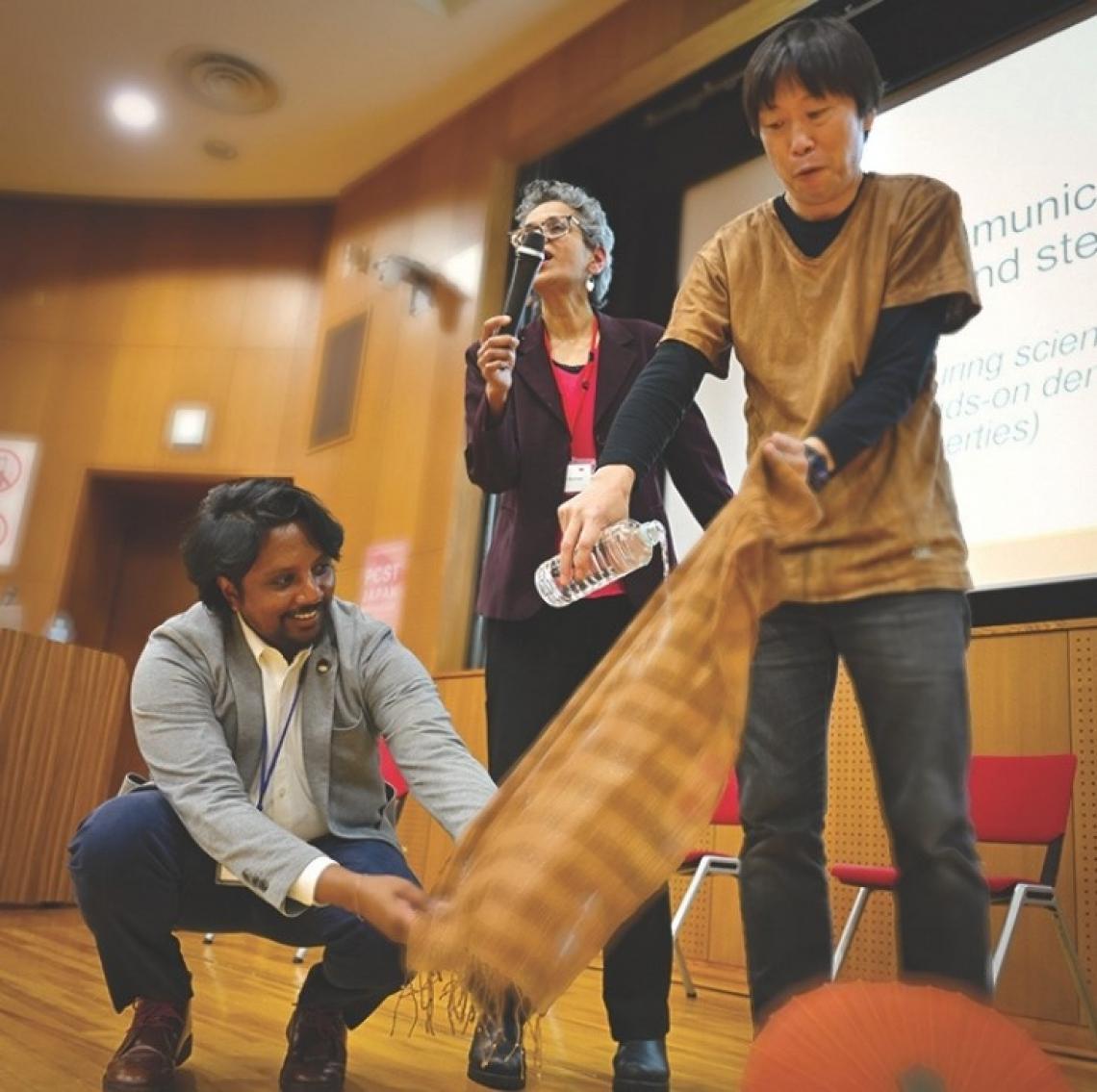
Demonstration of the water resistance feature of Kakishibu, a fermented liquid made from persimmon, first used around 794 AD. Scientists, fruit growers, and public members have been collaborating and communicating to revitalise this traditional industry as a substitute to plastic. It has been used to make cleaning solutions with antiviral and antibacterial properties, improve ramen noodles, and recover gold from sea and wastewater.
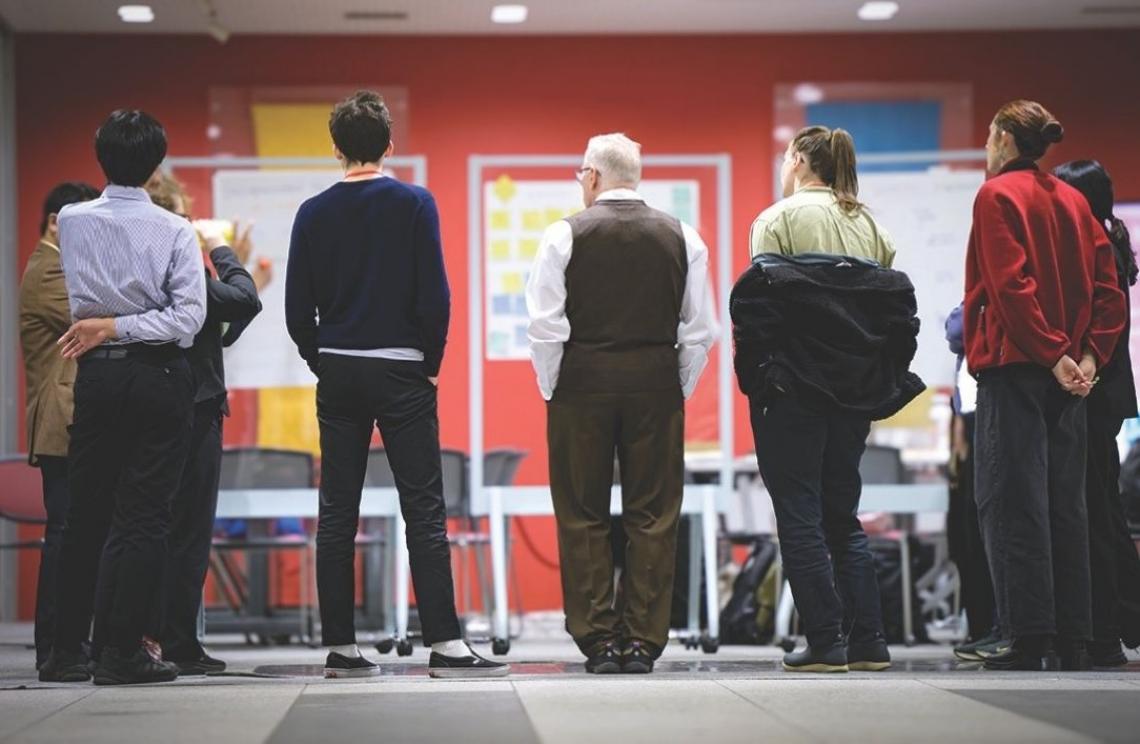
Asako Okamura, Senior Research Fellow at the National Institute of Science and Technology Policy (NISTEP), Japan, introduced foresight as a powerful tool for science communication. She showed how structured dialogue among diverse voices can help societies actively shape their futures. In Japan and across Asia, the foresight work is being applied through participatory projects that bring together scientists, policymakers, and citizens to envision sustainable futures and guide long-term research priorities.
Post-symposium workshops focused on turning theory into practice, covering topics such as crafting press releases, combating sensationalised science stories, responsible AI use, and authentic university branding.
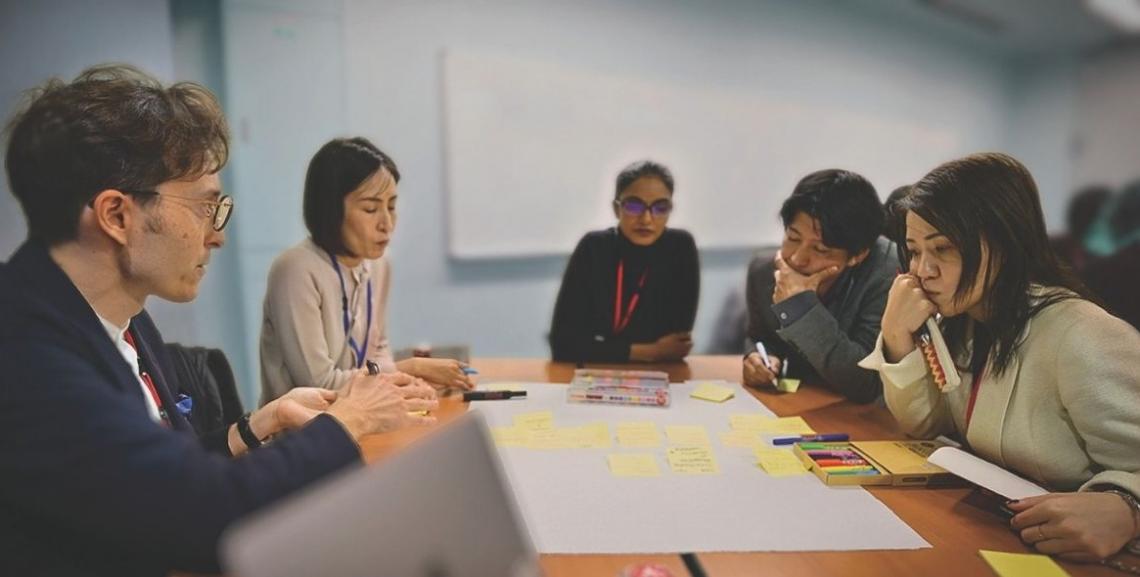
“We wanted to bridge ideas and action by offering spaces where participants could strengthen their practical communication skills,” said symposium co-chair Ayumi Koso, Director of the National BioResource Project (NBRP) Public Relations Office at the National Institute of Genetics. “Through sessions on writing, media engagement, and responsible storytelling, we hoped to empower communicators to build trust and authenticity in how science is shared.”
The symposium revealed that science communication in Asia is entering a new chapter, one built on listening, adapting, and co-creating with diverse communities rather than following a Western-led, Global North model. The two insight papers emerging from the working groups will chart specific pathways forward, offering a roadmap for how science can better connect with society across the continent.
Further information
Dr Thilina Heenatigala, Specially Appointed Asst Prof
[email protected]
Earth-Life Science Institute (ELSI), Institute of Science Tokyo
PCST Japan Symposium and 7th JSF Conference
www.japansci.com/conference/jsf25