This story is featured in the Asia Research News 2026 magazine. Book space in the next issue now.
Get the news in your inbox
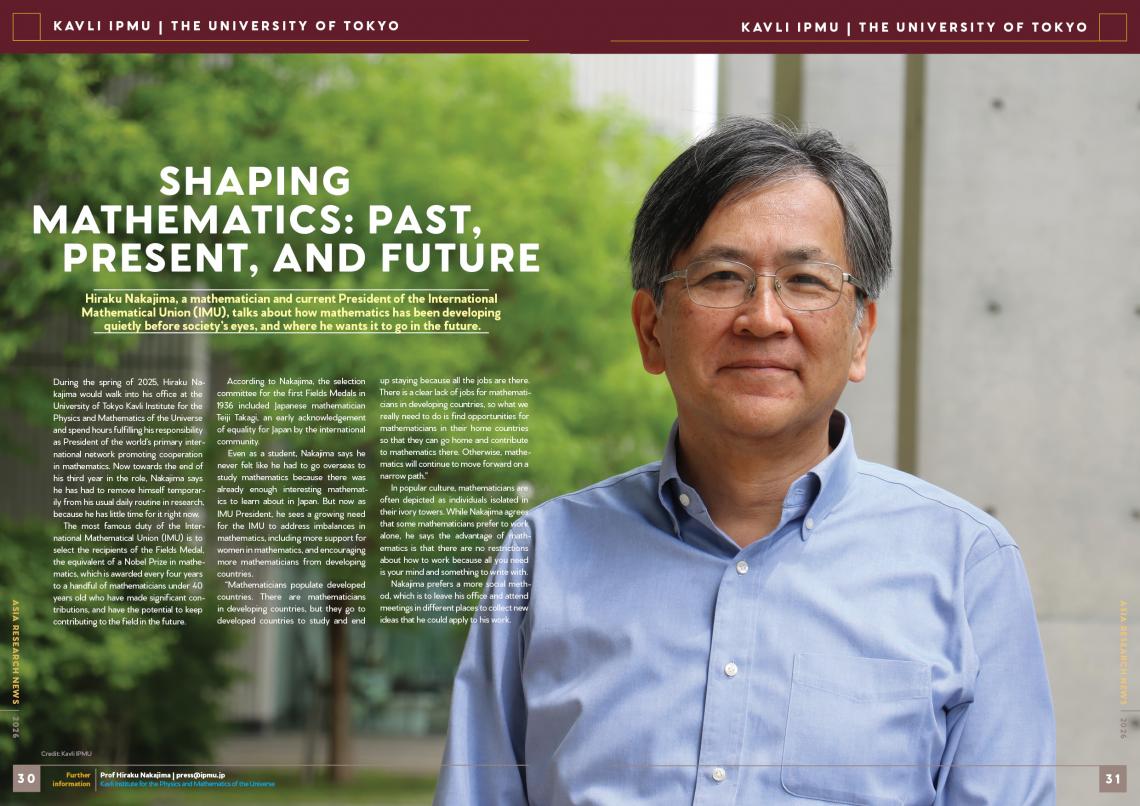
During the spring of 2025, Hiraku Nakajima would walk into his office at the University of Tokyo Kavli Institute for the Physics and Mathematics of the Universe and spend hours fulfilling his responsibility as President of the world’s primary international network promoting cooperation in mathematics. Now towards the end of his third year in the role, Nakajima says he has had to remove himself temporarily from his usual daily routine in research, because he has little time for it right now.
The most famous duty of the International Mathematical Union (IMU) is to select the recipients of the Fields Medal, the equivalent of a Nobel Prize in mathematics, which is awarded every four years to a handful of mathematicians under 40 years old who have made significant contributions, and have the potential to keep contributing to the field in the future.
According to Nakajima, the selection committee for the first Fields Medals in 1936 included Japanese mathematician Teiji Takagi, an early acknowledgement of equality for Japan by the international community.
Even as a student, Nakajima says he never felt like he had to go overseas to study mathematics because there was already enough interesting mathematics to learn about in Japan. But now as IMU President, he sees a growing need for the IMU to address imbalances in mathematics, including more support for women in mathematics, and encouraging more mathematicians from developing countries.
“Mathematicians populate developed countries. There are mathematicians in developing countries, but they go to developed countries to study and end up staying because all the jobs are there. There is a clear lack of jobs for mathematicians in developing countries, so what we really need to do is find opportunities for mathematicians in their home countries so that they can go home and contribute to mathematics there. Otherwise, mathematics will continue to move forward on a narrow path.”
In popular culture, mathematicians are often depicted as individuals isolated in their ivory towers. While Nakajima agrees that some mathematicians prefer to work alone, he says the advantage of mathematics is that there are no restrictions about how to work because all you need is your mind and something to write with.
Nakajima prefers a more social method, which is to leave his office and attend meetings in different places to collect new ideas that he could apply to his work.
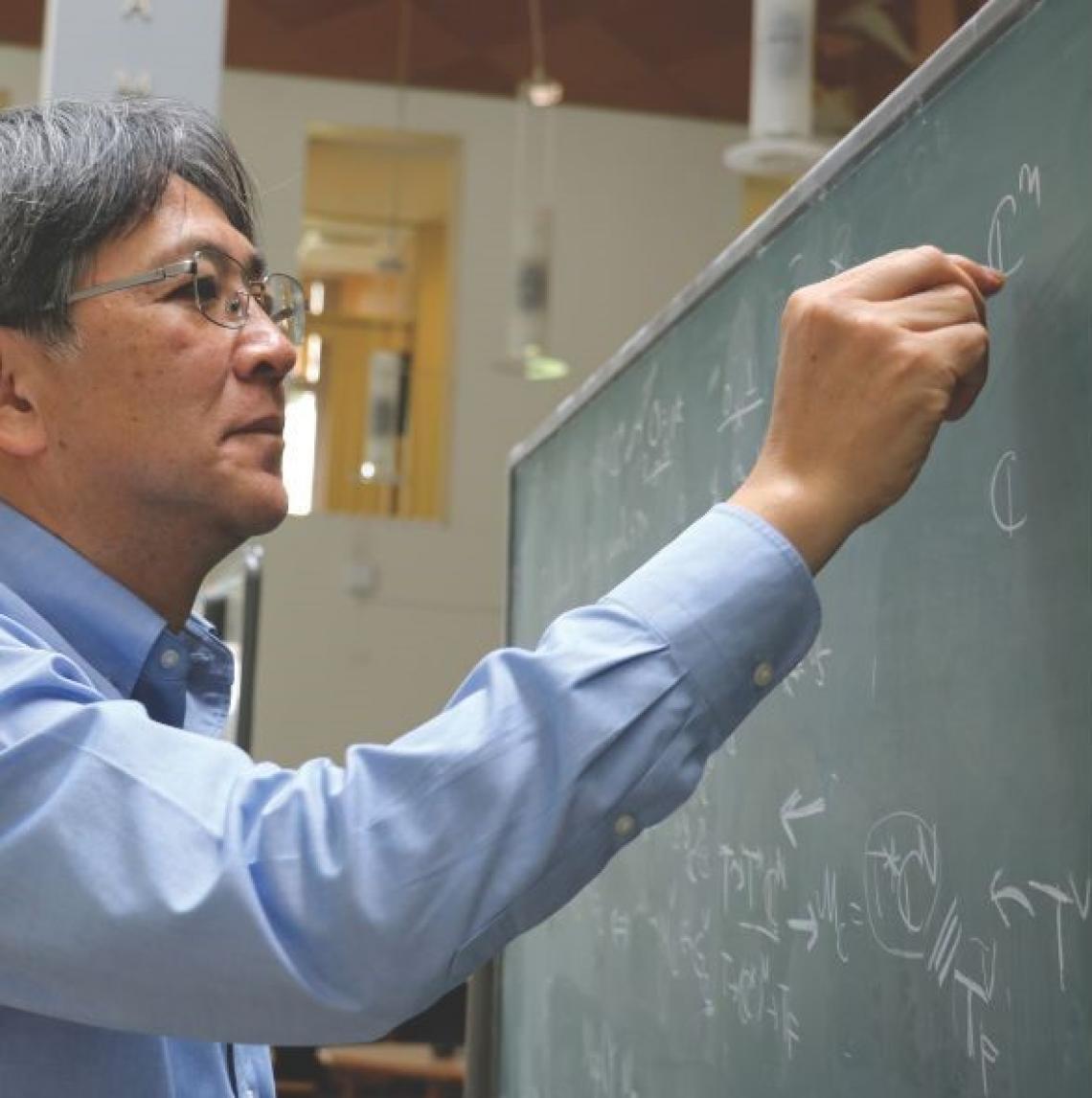
“I’ll go overseas maybe once or twice a month, both as the president and as a researcher. Mathematics meetings tend to crowd around the summer season, especially now that the pandemic has died down,” he said.
His field is geometric representation theory, which is the study of symmetry. Nakajima describes his field as standing in the centre of mathematics, because “symmetry appears in many places in mathematical context.”
When it comes to doing research, Nakajima explains it as a process of creating a hypothesis and then calculating various examples until the hypothesis works. “Instead of using experiments, we experiment with our brains.”
Today, Nakajima says his inspiration for calculating these examples comes from mathematical physics and quantum field theory. In particular, the mathematical structures behind gauge theory, which describes the interaction of particles.
Nakajima describes gauge theory as a hot topic amongst mathematicians, who first noticed its interesting mathematical features around the 1970s to 1980s when he was still a student. But then mathematicians really started using gauge theory in their work after seeing how 1986 Fields Medalist Simon Donaldson had used gauge theory to study topology — the study of shapes and geometries — in a striking way that no one had ever thought of before.
In this way, one researcher’s idea can provide a whole community with a new way to do research, but Nakajima says it can also drive competitiveness, particularly amongst younger researchers who are under pressure to publish papers.
Of course, not all mathematicians are driven by competition. Nakajima says his own research style is more laid-back. He prefers to maintain a balance between discussing new ideas with colleagues and analysing a problem slowly at his own pace.
Perhaps, that is the reason why Nakajima does not appear to be so anxious about how his duty with the IMU is keeping him away from his research right now.
“Mathematics allows you to do it at your own pace. That is probably what makes it different from other science experiments.”
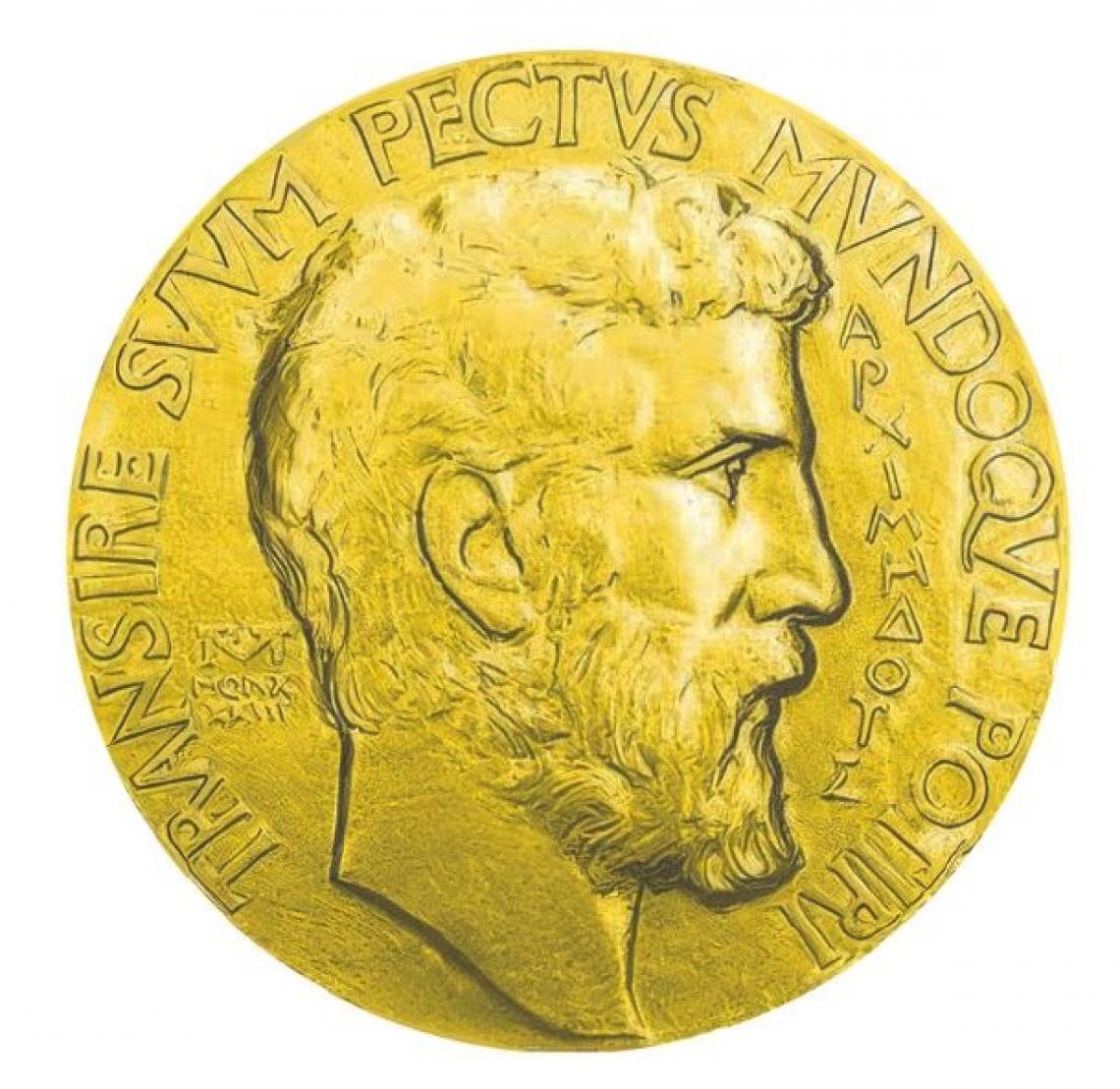
The Fields Medal originated from the 1932 International Congress of Mathematicians (ICM) in Zurich, which resolved that at every ICM, two gold medals should be awarded for outstanding mathematical achievements. The award is named after Canadian mathematician J.C. Fields, who was Secretary of the 1924 Congress, and donated funds to establish the medals. The first medals were awarded in 1936, and then the number of medals raised to four in 1966 in light of the rapid expansion of research in the field.
The medal is 6.35 cm in diameter and made from 14-karat gold. One side features Archimedes, with his name in Greek, the artist’s signature, date, and an inscription in Latin. The other side shows a tablet with a Latin inscription that translates to “The mathematicians having congregated from the whole world awarded (this medal) because of outstanding writings". The name of the awardee is engraved along the edge of the medal.
Did you know?
Unlike the Nobel Prize where the recipients are contacted a few hours before the announcement, Fields Medal recipients are contacted months before the announcement to give the organisers enough time to write and prepare a video explaining the winner’s research. This helps clarify the researcher’s achievements to the public, and even to other mathematicians.
Further information
Prof Hiraku Nakajima
[email protected]
Kavli Institute for the Physics and Mathematics of the Universe