

Japan
News
08 Jan 2014
Waseda University
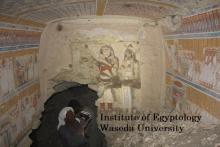
Tokyo, 8 Jan - Waseda university researchers discovered a new private tomb in the el-Khokha area of the Theban necropolis, across the Nile from Luxor. The owner of the tomb is Khonsuemheb, who was called Chief of the Workshop for Mut and Chief Brewer of the Temple of Mut.
07 Jan 2014
National Institute for Materials Science (NIMS)
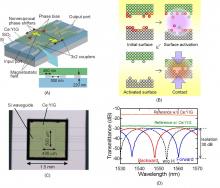
Tokyo, 7 Jan - In a paper published in Science and Technology of Advanced Materials today, researchers demonstrated the first optical isolator on silicon waveguide platforms.
06 Jan 2014
Tokyo Institute of Technology
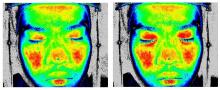
(Tokyo, 6 Jan 2014) Researchers at Tokyo Institute of Technology identify links between the palatability of various tastes and circulation in different parts of the face.
02 Jan 2014
Waseda University
New research by Professor Emmanuel Manalo of Waseda University and Assistant Professor Yuri Uesaka of University of Tokyo has found that mnemonic images and explicit sound contrasting help Japanese children learn more effectively the sounds of the English alphabet.

20 Dec 2013
Organization of Frontier Science and Innovation, Kanazawa University
(Kanazawa, Japan, 20 December 2013) Kanazawa University researchers report on a study of the personal profiles and motivations behind the ‘message board surrogacy’ observed in Thailand, where potential surrogates and infertile couples connect through online forums.
20 Dec 2013
Organization of Frontier Science and Innovation, Kanazawa University
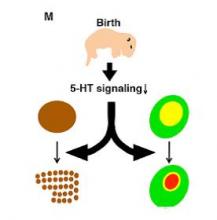
(Kanazawa, Japan, 20 December 2013) Hiroshi Kawasaki and colleagues at Kanazawa University, Tokyo University, Tokyo Institute of Technology and Kumamoto University in Japan have identified how sensory map development is regulated in mice pups at birth, and the molecular signalling responsible.
17 Dec 2013
International Center for Materials Nanoarchitectonics (MANA)
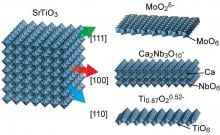
(Tsukuba, 17 December 2013) Molecularly thin two-dimensional crystals can alleviate the lattice matching restrictions of epitaxial crystalline thin film growth, as reported by researchers in Japan.
17 Dec 2013
Waseda University
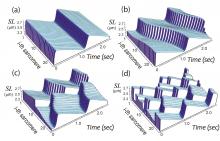
Researchers have successfully developed a realistic theoretical model that provides a rational explanation for the spontaneous oscillatory contraction (SPOC) of muscle. The findings were published in Physical Review Letters recently.
11 Dec 2013
Okayama University
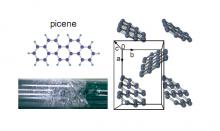
(Okayama, Japan, 12 Dec 2013) Focus on the only group in the world researching on superconducting picene. Prof Yoshihiro Kubozono team's work at Okayama University has potential for innovative applications of solid picene and organic superconductors, graphene and other functional materials.

11 Dec 2013
Okayama University
(Okayama, Japan, 12 Dec 2013) Content highlights include research on superconducting solid picene; naturally occurring nanobacteria-like particles and ectopic calcification; rice plants and manganese; earth science; nano-pathophysiology; and large porous zeolite.

11 Dec 2013
Waseda University
Power shortages are a major issue after the Great East Japan Earthquake. This technology will enable houses and buildings to conserve energy even in times of highly power demand and could help avoid scheduled blackouts. This test is the first attempt of its kind in Japan.
09 Dec 2013
Waseda University
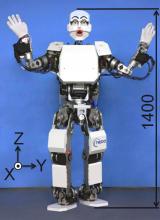
Some of Waseda University's robots include TWENDY-ONE which supports the elderly, WABIAN-2 and KOBIAN bi-pedal robots with emotions, SCHEMA, the robot that can converse with many people and TWIns institute for breast cancer tumor surgery

08 Dec 2013
Toyohashi University of Technology
Prof. Naohiro Hozumi of Toyohashi Tech explains “Instead of waiting an hour or more, tissue can be tested almost immediately and because the reflected sound varies depending on the type of cancer, a doctor can interpret the type of disease from the image by comparing it to a reference material.”

08 Dec 2013
Toyohashi University of Technology
Highlights include nanoscale photonic integrated circuit using surface plasmon polaritons on silicon; High pressure cold spray technology; Nitride semiconductor Hall effect magnetic field sensors for extreme environments and innovative analytical tool for the life sciences and biotechnology

06 Dec 2013
Waseda University
Tokyo, 6 Dec - Waseda University announces the formation of an international base for research on compound disasters due to tsunamis, earthquakes, storm surges and volcanic eruptions. The team will include researchers from Canada, the United Kingdom, Iran, Indonesia, Thailand, Tanzania, Bhutan, Chile, and Vietnam
29 Nov 2013
Waseda University
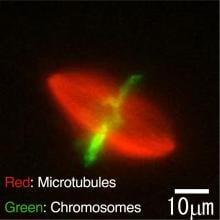
Tokyo, 29 Nov- Researchers at Waseda University in Japan have identified key information to help explain the formation of the “spindle apparatus”, a structure required for cell division. Their findings shed light on the mechanisms behind “self-organization” – an essential characteristic of biological structures.
27 Nov 2013
Waseda University
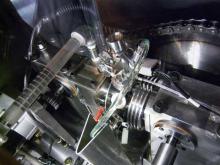
Professor Naitoh of Waseda University has discovered a new compressive combustion principle that can yield engines with the ultimate level of efficiency. With a thermal efficiency of 60% or more in applications including automobiles, power generation, and aircraft, will their low fuel consumption be superior to that of HV vehicles!?
26 Nov 2013
Waseda University
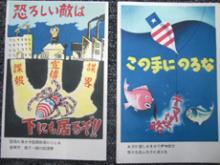
"Why do we need a new secrecy law now? What are the reasons to justify this legislation?" Prof. Asaho Mizushima of Waseda University explains more.
26 Nov 2013
Waseda University
Opinion article on Japan's labor deregulation in the new strategic economic zones by Prof. Yutaka Harada of Waseda University

26 Nov 2013
National Institute for Materials Science (NIMS)
A Signing Ceremony was held on October 29 at University of Rennes 1(UR1). This Agreement is aimed to pursue collaboration on exchanging students and researchers.
25 Nov 2013
Waseda University
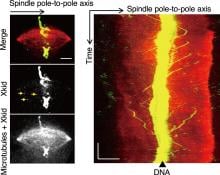
Tokyo, 25 Nov - Researchers at Waseda University in Japan have for the first time directly observed the “molecular motor”, called Xkid, that plays a critical role in facilitating the proper alignment of chromosomes during cell division. The study provides invaluable knowledge on the mechanisms of materials transport in biological systems.
24 Nov 2013
Tokyo Institute of Technology
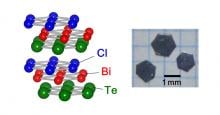
(Tokyo, 25 November 2013) A new compound developed at Tokyo Tech shows highly unusual conducting properties that could be used in future electronic components.

24 Nov 2013
Tokyo Institute of Technology
(Tokyo, 25 November 2013) Topics include Origin of water on Mars inferred from hydrogen isotopic compositions of primitive martian meteorites; Chemical transformation of carbon dioxide; DNA-based maleimide compound enables titration of reactive cysteinyl thiols in proteins
13 Nov 2013
National Institute for Materials Science (NIMS)
NIMS researchers elucidated the relationship between the photocurrent and the peculiar changes in the absorption structure occurring in the vicinity of the molecular-electrode interface in dye-sensitized solar cells

08 Nov 2013
National Institute for Materials Science (NIMS)
In a paper published in the Science and Technology of Advanced Materials, Bhadeshia introduces the world’s first bulk nanostructured metal in commercial production.
01 Nov 2013
National Institute for Materials Science (NIMS)
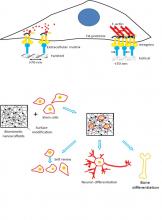
Nanotechnology may provide new strategies for regenerative medicine, including better tools to improve or restore damaged tissues, according to a review paper by Taiwanese researchers
30 Oct 2013
National Institute for Materials Science (NIMS)
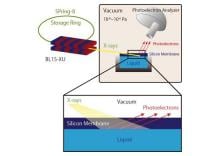
The results may elucidate the process at solid/liquid interfaces of energy devices like rechargeable batteries and fuel cells. It will also contribute to the development and performance of cell electrodes and catalyst materials.
29 Oct 2013
Waseda University
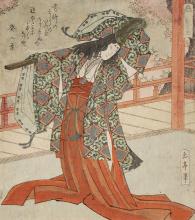
The Tale of the Heike was reinvented as a national epic at the end of the Meiji period to gratify national pride. Opinion article by Prof. Yuichi Otsu of Waseda University.
20 Oct 2013
National Institute for Materials Science (NIMS)
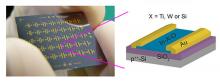
For the first time in the world, researchers have found what is needed for a thin film to behave as a semiconductor. The research will reduce power consumption of displays, lead to stable higher-definition TVs and contribute towards conserving precious resources by not using zinc, gallium
15 Oct 2013
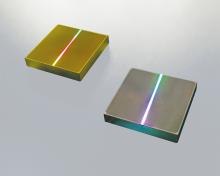
Diffraction grating elements for 633 nm to 1064 nm waveband with 1600 lines/mm, exhibit a diffraction efficiency of 98%—the highest in this category of technology. This feature is important for expansion and compression of laser pulses for light sources used in laser processing.
Researchers
Sorry, no researchers coming up for this topic.
Giants in history

Japanese biochemist Akira Endo (1933 – 2024) discovered the first statin, called mevastatin, which lowered cholesterol levels in the blood by inhibiting a key enzyme in the cholesterol biosynthesis pathway. His work laid the foundation for the development of statins to help patients lower their blood cholesterol levels and reduce their risk of heart disease or stroke.
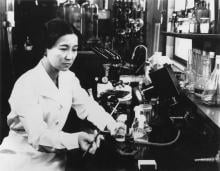
Ruby Sakae Hirose (1904 – 1960) was a Japanese-American scientist whose research contributed significantly to our understanding of blood clotting, allergies and cancer.
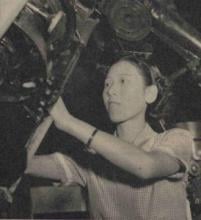
Haisako Koyama (1916 – 1997) was a Japanese solar observer whose dedication to recording sunspots – cooler parts of the sun’s surface that appear dark – produced a sunspot record of historic importance.
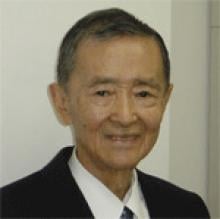
Michiaki Takahashi (17 February 1928 – 16 December 2013) was a Japanese virologist who developed the first chickenpox vaccine.
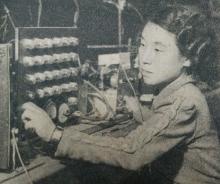
Toshiko Yuasa (11 December 1909 – 1 February 1980) was the first Japanese female physicist whose research on radioactivity shed light on beta decay – the process in which an atom emits a beta particle (electron) and turns into a different element.
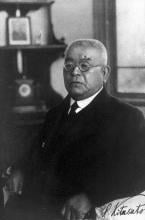
Baron Kitasato Shibasaburo (29 January 1856 – 13 June 1931) was a Japanese physician and bacteriologist whose work led to a new understanding of preventing and treating tetanus, diphtheria and anthrax.
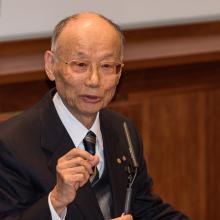
By isolating soil microorganisms and studying the compounds they produce, Satoshi Omura (born 1935) discovered almost 500 organic compounds with unique properties that were produced by these microorganisms, including many new antibiotics.
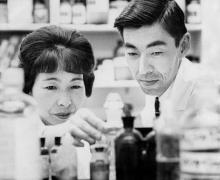
Husband and wife team, Kimishige (3 December 1925 – 6 July 2018) and Teruko Ishizaka (28 September 1926 – 4 June 2019) discovered the antibody class Immunoglobulin E (IgE) that triggers allergic reactions. They also discovered that IgE antibodies attach to white blood cells, known as mast cells, releasing histamine, which causes allergic reactions.
Husband and wife team, Kimishige (3 December 1925 – 6 July 2018) and Teruko Ishizaka (28 September 1926 – 4 June 2019) discovered the antibody class Immunoglobulin E (IgE) that triggers allergic reactions. They also discovered that IgE antibodies attach to white blood cells, known as mast cells, releasing histamine, which causes allergic reactions.
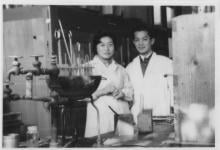
Reiji Okazaki (8 October 1930 – 1 August 1975) and Tsuneko (7 June 1933) were a Japanese couple who discovered Okazaki fragments – short sequences of DNA that are synthesized during DNA replication and linked together to form a continuous strand.
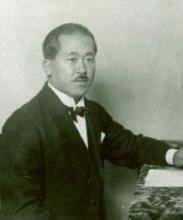
In 1915, Koichi Ichikawa along with pathologist Katsusaburo Yamagiwa became the first to prove that chronic exposure to chemicals can cause cancer.
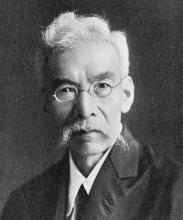
In 1915, pathologist Katsusaburo Yamagiwa and his research assistant Koichi Ichikawa became the first to prove that chronic exposure to chemicals can cause cancer.
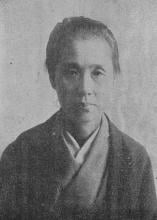
Ogino Ginko (3 March 1851 – 23 June 1913) was the first registered female doctor to practise modern medicine in Japan.
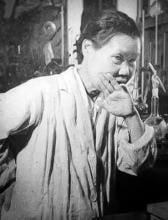
Michiyo Tsujimura (17 September 1888 – 1 June 1969) was a Japanese agricultural scientist and biochemist recognized for her research of green tea components.
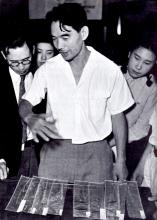
Hitoshi Kihara (1893 – 1986) was one of the most famous Japanese geneticists of the 20th century. One of his most significant contributions was identifying sex chromosomes (X and Y) in flowering plants.
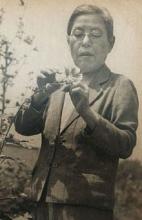
Kono Yasui (16 February 1880 – 24 March 1971) was a Japanese botanist who researched the genetics of poppies, corn and spiderworts and surveyed the plants that had been affected by the nuclear fallout after the atomic bombings of Hiroshima and Nagasaki.
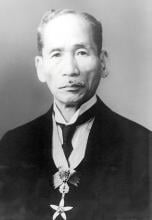
Umetaro Suzuki (7 April 1874 – 20 September 1943) was a Japanese scientist best remembered for his research on beriberi, a disease caused by vitamin B1 deficiency, characterized by limb stiffness, paralysis and pain.
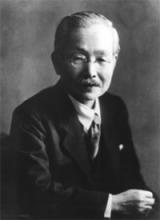
Kikunae Ikeda (8 October 1864 – 3 May 1936) was a Japanese chemist who discovered the fifth basic taste, umami.
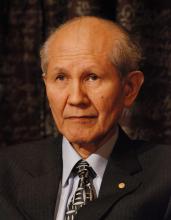
Osamu Shimomura (27 August 1928 – 19 October 2018) was a Japanese organic chemist and marine biologist who dedicated his career to understanding how organisms emitted light.
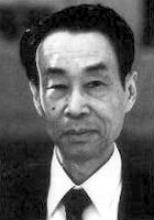
Motoo Kimura (13 November 1924 – 13 November 1994) was a Japanese theoretical population geneticist who is best remembered for developing the neutral theory of molecular evolution.

Chika Kuroda (24 March 1884 – 8 November 1968) was a Japanese chemist whose research focussed on the structures of natural pigments.
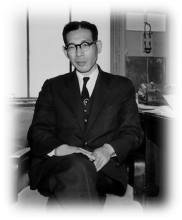
The field of solid-state ionics originated in Europe, but Takehiko Takahashi of Nagoya University in Japan was the first to coin the term ‘solid ionics’ in 1967. ‘Solid-state ionics’ first appeared in 1971 in another of his papers, and was likely a play on ‘solid-state electronics’, another rapidly growing field at the time.
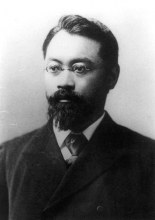
The techniques that make industrial pearl culturing possible were developed over a century ago at the Misaki Marine Biological Station in Japan. The station’s first director, Professor Kakichi Mitsukuri, emphasized to Kokichi Mikimoto in 1890 that stimulating pearl sac formation was important for pearl growth, and they went on to successfully develop methods for culturing pearls.
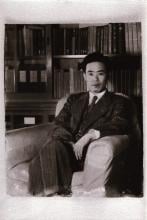
Japanese physicist Ukichiro Nakaya (1900-1962) made the world’s first artificial snowflakes. He started his research on snow crystals in the early 1930s at Hokkaido University, where there is an unlimited supply of natural snow in winter. By taking over 3,000 photographs, he established a classification of natural snow crystals and described their relationship with weather conditions.
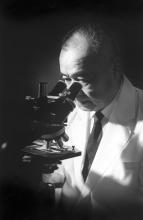
Minoru Shirota (April 23, 1899 – March 10, 1982) was a Japanese microbiologist who invented the popular fermented drink Yakult.
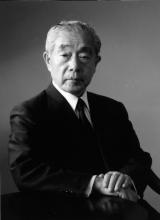
Japanese chemist Kenichi Fukui (4 October 1918 – 9 January 1998) was the first Asian scientist to be awarded the Nobel Prize in Chemistry. Together with Roald Hoffman, he received this honour in 1981 for his independent research into the mechanisms of chemical reactions.
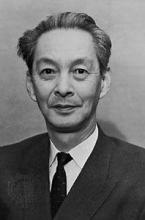
Shinichiro Tomonaga (31 March 1906 – 8 July 1979), together with Richard Feynman and Julian Schwinger, was awarded the Nobel Prize in Physics in 1965, for their contributions to advance the field of quantum electrodynamics. Tomonaga was also a strong proponent of peace, who actively campaigned against the proliferation of nuclear weapons and promoted the peaceful use of nuclear energy.
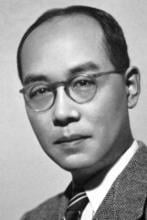
Hideki Yukawa (23 January 1907 – 8 September 1981) was awarded the Nobel Prize in Physics in 1949 for predicting the existence of the pi meson subatomic particle. Japan’s first Nobel laureate, Yakawa also expressed his support for nuclear disarmament by signing the Russell–Einstein Manifesto in 1955.
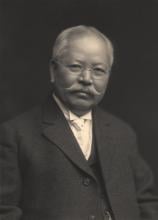
Japanese chemist Takamine Jokichi (3 November 1854 – 22 July 1922) founded the Tokyo Artificial Fertilizer Company, where he isolated a starch-digesting enzyme (named takadiastase) from the fungus Aspergillus oryzae.
Tsuneko (7 June 1933) and Reiji Okazaki (8 October 1930 – 1 August 1975) were a Japanese couple who discovered Okazaki fragments – short sequences of DNA that are synthesized during DNA replication and linked together to form a continuous strand.
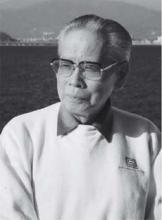
A Japanese surgeon, Tetsuzo Akutsu (20 August 1922 – 9 August 2007) built the first artificial heart capable of keeping an animal alive.
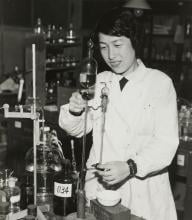
Japanese geochemist Katsuko Saruhashi developed the first method and tools for measuring carbon dioxide in seawater