
Nature Communications
About Nature Communications
Nature Communications is an open access journal that publishes high-quality research from all areas of the natural sciences. Papers published by the journal represent important advances of significance to specialists within each field.
- Website: https://www.nature.com/ncomms/
News
12 Jul 2018
Institute for Integrated Cell-Material Sciences (iCeMS) at Kyoto University
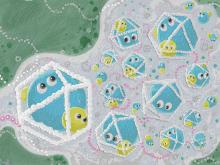
Researchers control the self-assembly of molecules to form an ultralight, porous gel. This could lead to wide-ranging applications for construction, aerospace, electronics and the environment.

05 Jul 2018
Asia Research News
Results are the first to demonstrate a causal link between testosterone and rank-related consumer preference for status-enhancing goods.

05 Jul 2018
Hokkaido University
Based on a new study of how near-Earth asteroid Phaethon reflects light at different angles, astronomers think that its surface may reflect less light than previously thought. This is an exciting mystery for the recently approved DESTINY+ mission to investigate when it flies past Phaethon.

26 Jun 2018
Springer Nature
Researchers show that female nipples are more diverse in size than male nipples – going against assumptions from evolutionary biology.
18 Jun 2018
Hokkaido University
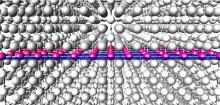
Researchers more than doubled the ability of a material to convert heat into electricity, which could help reduce the amount of wasted heat, and thus wasted fossil fuel, in daily activities and industries.
14 Jun 2018
Springer Nature
Researchers discover gold nanoparticles in natural plant tissues.

07 Jun 2018
Springer Nature
Researchers investigate how the blue-tongued skink uses a full-tongue display to deter attacking predators.
06 Jun 2018
Springer Nature
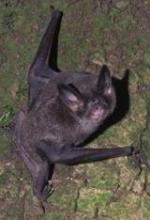
Research shows that endemic New Zealand bat’s courtship song is complex and gives clues about the physiological characteristics of potential mates
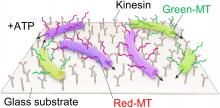
30 May 2018
Hokkaido University
A team of researchers from Hokkaido University and Kansai University has developed DNA-assisted molecular robots that autonomously swarm in response to chemical and physical signals, paving the way for developing future nano-machines. [This release was originally published on 31st January. This new version contains a video clip in the link below]

24 May 2018
Ulsan National Institute of Science and Technology (UNIST)
A team of researchers, affiliated with South Korea's Ulsan National Institute of Science and Technology (UNIST) has demonstrated the possibility to induce and control a magnetic response in a nonmagnetic layer material though selective excitation of specific vibration of the material.
13 May 2018
Ulsan National Institute of Science and Technology (UNIST)
Radioactive materials could soon be detected from up to a few hundred metres away.
10 May 2018
Hokkaido University
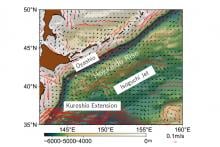
Low rises on the ocean floor at a depth of 5,500 meters in the western North Pacific regulate surface flows and create sharp sea surface temperature (SST) fronts, which have tremendous effects on the climate and marine resources.
13 Apr 2018
Springer Nature
Researchers show how a fish species in Lake Tanganyika works together to secure additional food sources.
13 Apr 2018
Springer Nature
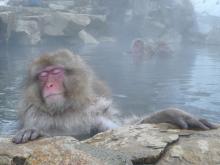
New data reveal that female Japanese macaques bathe in hot springs to lower stress from cold weather.
13 Apr 2018
Springer Nature
Research shows that rats can detect tuberculosis in children with higher accuracy than standard microscopy tests.
26 Mar 2018
Nagoya University
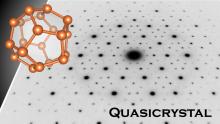
Japanese researchers have observed superconductivity in a quasicrystal for the first time.
13 Mar 2018
The Hong Kong University of Science and Technology (HKUST)
HKUST Scientists Find New Way to Produce Chiral Molecules which may Bring Safer and More Affordable Medicine
05 Mar 2018
Asia Research News
New study shows that female hunting spiders do not respond to chemical signals given out by potential mates, preferring silk-wrapped food gifts instead.

21 Feb 2018
Daegu Gyeongbuk Institute of Science and Technology (DGIST)
A soft, stick-on patch collects, analyses and wirelessly transmits a variety of health metrics from the body to a smartphone.
20 Feb 2018
Tohoku University
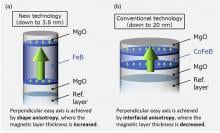
Researchers have developed ultra-small magnetic tunnel junctions with high retention properties for use in semiconductor technologies.
08 Feb 2018
Hong Kong Baptist University (HKBU)
HKBU's smart globular macromolecular machine vehicle for actively controlled cancer drug delivery

15 Jan 2018
Hong Kong Baptist University (HKBU)
A research team from the School of Chinese Medicine (SCM) of Hong Kong Baptist University (HKBU) has developed the world’s first model framework and “LogicTRN” algorithm to accurately establish a gene regulatory route to analyse the genetic function and understand the biological processes.
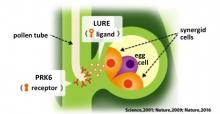
29 Dec 2017
Institute of Transformative Bio-Molecules (WPI-ITbM), Nagoya University
~ Solving the cocrystal structure of a pollen tube attractant and its receptor ~

26 Dec 2017
Daegu Gyeongbuk Institute of Science and Technology (DGIST)
A research team from Korea succeeded develop mass spectrometry imaging system to analyze living biological samples in the atmospheric pressure environment at resolution of 3 several micrometers. The approach could be applied in molecular biology and medical diagnosis fields.
14 Dec 2017
Hong Kong Baptist University (HKBU)
The toxic nature of chemotherapy poses a great challenge to clinical treatment of cancer. A team of scholars from the School of Chinese Medicine (SCM) of Hong Kong Baptist University (HKBU) devoted their efforts to the development of a new generation of smart anti-cancer drug molecules.
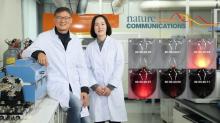
29 Nov 2017
Ulsan National Institute of Science and Technology (UNIST)
A team of Korean researchers, affiliated with South Korea's Ulsan National Institute of Science and Technology (UNIST), has presented a new synthetic protocol to produce three-dimensional porous organic materials in the blink of an eye, like firing bullets.
22 Nov 2017
Asia Research News
Ten visionaries from Singapore, Australia and Taiwan honoured
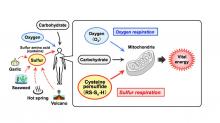
30 Oct 2017
Tohoku University
A common sulfur metabolite having antioxidant activity appears to be formed with the help of an enzyme found in mitochondria, highlighting a potential area of research for future treatments of various diseases.

16 Oct 2017
King Abdullah University of Science and Technology (KAUST)
Microbes are dispersed widely over the oceans with islands acting as stepping-stones to help transport of land-based organisms.